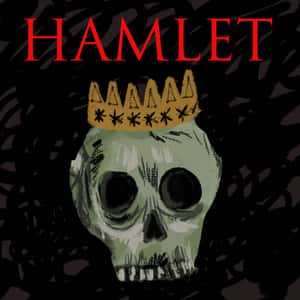
Hamlet Quotes
To be, or not to be, that is the question
Hamlet's soliloquy explores his deep internal conflict over existence, suffering, and the morality of action versus inaction, using elevated poetic language and literary devices...
To be, or not to be, that is the question:
Whether 'tis nobler in the mind to suffer
The slings and arrows of outrageous fortune
Or to take arms against a sea of troubles,
And by opposing end them...
[...]
To sleep -- perchance to dream. Ay, there's the rub!
For in that sleep of death what dreams may come,
When we have shuffled off this mortal coil,
Must give us pause -- there's the respect
That makes calamity of so long life.
This above all: to thine own self be true,
Polonius's advice to Laertes is both a sincere call for authenticity and a source of irony, as Polonius himself fails to embody the integrity he espouses. The lines highlight the...
This above all: to thine own self be true,
And it must follow, as the night the day,
Thou canst not then be false to any man.
How weary, stale, flat, and unprofitable / Seem to me all the uses of this world
Hamlet, overwhelmed by grief and disillusionment, wishes for death but is restrained by religious prohibitions against suicide. His language reveals a longing for escape and...
O, that this too, too sullied flesh would melt,
Thaw, and resolve itself into a dew,
Or that the Everlasting had not fixed
His canon 'gainst self-slaughter! O God, God,
How weary, stale, flat, and unprofitable
Seem to me all the uses of this world.
How strange or odd soe'er I bear myself / To put an antic disposition on
Hamlet reveals to his friends that he will pretend to be mad as part of his plan for revenge, making them swear to keep his intentions secret. This introduces the motif of feigned...
Here, as before, never, so help you mercy,
How strange or odd soe'er I bear myself,
As I perchance hereafter shall think meet
To put an antic disposition on,
That you, at such times seeing me, never shall,
With arms encumber'd thus, or this headshake,
Or by pronouncing of some doubtful phrase,
As 'Well, well, we know,' or 'We could, an if we would,'
Or 'If we list to speak,' or 'There be, an if they might,'
Or such ambiguous giving out, to note
That you know aught of me: this not to do,
So grace and mercy at your most need help you, Swear.
The play's the thing / Wherein I'll catch the conscience of the King
Hamlet devises a plan to use a staged play to confirm Claudius's guilt, reflecting his need for certainty, his moral hesitation, and the play's broader themes of deception,...
I'll tent him to the quick. If he but blench,
I know my course. The spirit that I have seen
May be a devil; and the devil hath power
T' assume a pleasing shape; yea, and perhaps
Out of my weakness and my melancholy,
As he is very potent with such spirits,
Abuses me to damn me. I'll have grounds
More relative than this. The play's the thing
Wherein I'll catch the conscience of the King.
Is the main motive of our preparations
Fortinbras is portrayed as a decisive and energetic leader who seeks to reclaim his father's lost honor and lands, highlighting themes of revenge, political instability, and...
Now, sir, young Fortinbras,
Of unimproved mettle hot and full,
Hath in the skirts of Norway here and there
Shark'd up a list of lawless resolutes,
For food and diet, to some enterprise
That hath a stomach in't; which is no other--
As it doth well appear unto our state--
But to recover of us, by strong hand
And terms compulsatory, those foresaid lands
So by his father lost: and this, I take it,
Is the main motive of our preparations,
The source of this our watch and the chief head
Of this post-haste and romage in the land.
Rightly to be great / Is not to stir without great argument
Hamlet, witnessing Fortinbras lead an army to risk their lives for a trivial cause, reflects on his own inaction and questions the value of honor and ambition when they lead to...
Witness this army of such mass and charge
Led by a delicate and tender prince,
Whose spirit with divine ambition puffed
Makes mouths at the invisible event,
Exposing what is mortal and unsure
To all that fortune, death and danger dare,
Even for an eggshell. Rightly to be great
Is not to stir without great argument,
But greatly to find quarrel in a straw
When honor's at the stake. How stand I then,
That have a father killed, a mother stained,
Excitements of my reason and my blood,
And let all sleep -- while, to my shame, I see
The imminent death of twenty thousand men,
That for a fantasy and trick of fame
Go to their graves like beds, fight for a plot
Whereon the numbers cannot try the cause,
Which is not tomb enough and continent
To hide the slain?
Now might I do it pat, now he is praying;
Hamlet hesitates to kill Claudius while he is praying, fearing that doing so would send Claudius's soul to heaven and fail to achieve true revenge. This moment highlights Hamlet's...
HAMLET. Now might I do it pat, now he is praying;
And now I'll do't. And so he goes to heaven,
And so am I revenged. That would be scann'd.
A villain kills my father; and for that,
I, his sole son, do this same villain send
To heaven.
O, this is hire and salary, not revenge!
But I have that within which passeth show
Hamlet insists his grief is genuine and not just outward show, contrasting his deep sorrow with the superficial displays of others and introducing the play's central concern with...
Good Hamlet, cast thy nighted color off,
And let thine eye look like a friend on Denmark.
Do not for ever with thy vailed lids
Seek for thy noble father in the dust.
Thou know'st 'tis common. All that lives must die,
Passing through nature to eternity.
Ay, madam, it is common.
If it be,
Why seems it so particular with thee?
Seems, madam? Nay, it is. I know not seems.
'tis not alone my inky cloak, good mother,
Nor customary suits of solemn black,
Nor windy suspiration of forced breath,
No, nor the fruitful river in the eye,
Nor the dejected havior of the visage,
Together with all forms, modes, shapes of grief,
That can denote me truly. These indeed seem,
For they are actions that a man might play;
But I have that within which passeth show,
These but the trappings and the suits of woe.
The serpent that did sting thy father's life / Now wears his crown
The Ghost reveals to Hamlet that Claudius murdered his father and now rules Denmark, using serpent imagery to evoke themes of deception, moral decay, and the loss of innocence....
Now, Hamlet, hear.
'tis given out that, sleeping in mine orchard,
A serpent stung me. So the whole ear of Denmark
Is by a forged process of my death
Rankly abused. But know, thou noble youth,
The serpent that did sting thy father's life
Now wears his crown.
