

Warning! Unmarked spoilers ahead!
L and Watari
L Lawliet (エル・ローライト, Eru Rōraito)
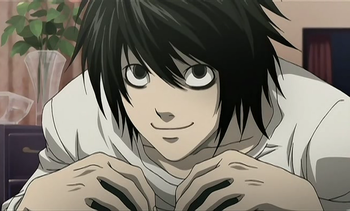
The Antagonist of the series, but not the villain.
L is the greatest detective in the Death Note world, able to control and work through the police force worldwide and notorious for uncovering seemingly unsolvable crimes, he's called in to work on the Kira (as Light is known) case. Since Kira needs a face and name to be able to kill people and L does not make public appearances and hides behind aliases (L being the most famous) he is the ideal opponent for Kira since neither knows the identity of the other. He establishes Kira's location by tricking him into killing an unknown death row inmate announcing himself as "L" on a live TV broadcast filmed only in the Kanto region of Japan and deduces his age soon afterward by observing his simplistic, somewhat immature concept of justice and out-of-school-hours killings.
Having established which members of the Japanese police department he can trust (which include Light's father) he names Light as a suspect for Kira and with a simple combination of remorseless logic, barely legal methods and sugar intake, he places obstacles for him—and eventually Misa—to prove his theory, leaving them barely able to stay two steps ahead of him.
He is the opposing Deuteragonist of the series. His real name, revealed in an encyclopedia of the series (How To Read 13), is L Lawliet.
- 20% More Awesome: He occasionally gives statistics about how right he is. The official guide claims that he makes these up to sound more credible, while another claims that whenever he mentions a statistic at all, he's always 99% sure. So all that "5%" or "47%" or whatever meant he was almost totally sure every time, a claim that seems dubious when you consider that L frequently uses these statistics in his inner monologues. However, this makes sense when one considers that his statistics likely only factor in hard evidence. So when he says the likelihood of Light being Kira is near zero, it means he has no evidence at all that Light is Kira since Light is smart enough to leave none at all. However, he realizes from profiling Light that he is almost certainly Kira due to how perfectly he matches Kira's own profile. So when he states these statistics, it is likely just a ruse to get Light to lower his guard.
- Adaptational Attractiveness:
- Though not exactly ugly, as there are far uglier human characters in the series, L is a disheveled, weird-looking and off-putting guy. The 2015 drama has him played by Kento Yamazaki (who, besides being an actor, is also a model), without a single attempt to make him look even slightly less pretty. He loses a lot of his mannerisms, is more put together and is also seen as attractive in-universe.
- In the 2006 movies, Kenichi Matsuyama is a downplayed version, as he is quite handsome and his L comes off as rather cute, but they at least covered his eyebrows and made him look sickly, pale and messy. He also keeps his weird mannerisms and his simple outfit.
- Adaptational Comic Relief: The anime exaggerates his quirkiness a little bit, and makes some of his reactions more over-the-top, such as his massive overreaction to the confirmation that Shinigami existed.
- Adaptational Dye-Job
- In the Korean production of the stage musical, he sports short, light brown hair
 ◊ as opposed to long and black.
 - Him being exceptionally pale was a stylistic choice in the anime. He is colored more naturally in the manga.
- In the Korean production of the stage musical, he sports short, light brown hair
- Adaptational Intelligence: In both the live action film and the TV Drama, he unambiguously bests Light and has him dead to rights. In the former, he writes his own name in the Death Note and gives himself an extra 23 days to save himself from Rem, and has the Task Force follow and deceive Misa by giving her a fake Death Note and creating fake broadcasts of the criminals whose name she wrote down, finally arresting the two of them when they meet up. In the latter, he fakes having admitted defeat and tricks Light into writing his real name (which he got from Mikami) into a fake Death Note by pretending he was going to kill Light with it. He's killed by Mikami shortly afterwards, but for reasons completely outside of Light's plan, and even then, L still had a contingency plan to best him even after his death, and it's revealed in the climax that the entire Task Force (including Soichiro Yagami) already knew Light was Kira at this point.
- Adaptational Jerkass: Is a lot more arrogant and condescending in the TV drama. He makes Watari change his shirt every time it gets stained, generally shrugs off any criticism from the Task Force, and is much more blatantly antagonistic towards Light when they're working together. Despite this, their final conversation is much more personal and genuine than in the source material, and it's heavily implied this time around that he wasn't lying when he called Light his friend.
- Adaptational Nice Guy: In the original manga and the anime, L is explicitly described by the creators as "slightly evil." In the live action film continuity, he's shown to be much more sympathetic, with his sequel film L: Change The World, portraying him as a lonely, misunderstood Action Hero guy who cares for sick orphans, and bringing his caring side to the forefront with his relationship with Near.
- Adaptational Sympathy: In the manga, his and Watari's deaths are sudden, unexpected, and happen while he's halfway through solving a case (and halfway through the volume as well). In the anime, he's given a scene to contemplate his inevitable doom and shows both calmness and somberness in the face of loss, even implying he doesn't hold it against Light (and portraying his downfall in a Messiah-like way rather as just the loser in their battle of wits), and he gets to see his life flash before his eyes before his death, making it all the more tragic. The "Relight" films also give him a funeral scene (where Light laughs at his grave).
- Adaptation Personality Change: This L is calm and collected to the point of apathy with a tendency to rarely actually lose control of his temper. However, his counterpart in the American Netflix movie is a lot more Hot-Blooded and emotional.
- Admiring the Abomination: L only takes on cases that interest him and though understated he finds Kira/Light quite fascinating and regards him as a Worthy Opponent. L gets very annoyed at the appearance of a Second Kira because it's not his Kira and not playing by the same rules. In the live action movies he's clearly entertained by watching Light manipulate Naomi Misora on the monitors.Soichiro Yagami: We have to stop this!
L: We're just getting to the good part. - Allegorical Character: L, for his part, can be read as an allegory for the contemporary, security-driven pragmatism of institutions (the gray zone: morally questionable, but effective), in contrast to the moralizing dogmatism embodied by Light. While Light is moralizing and on the path toward becoming authoritarian/totalitarian, L's sense of justice is logical, cold, and surgical. He is not guided by romantic or utopian ideals, but by what the facts indicate: evidence, hypotheses, deduction, probability, logic. Likewise, his anonymity gives him a symbolic character: L is not just a detective with a name, but a role—an instance of authority that operates above the personal, similar to the way government institutions function: impersonal, abstract, more concerned with results than with empathy. You can see the parallels in the way L operates and the way government institutions act in the 21st century: he spies on Light and his family without a warrant, detains, coerces, and imprisons without conclusive evidence, manipulates and uses innocents as pawns to advance his objectives, and justifies dubious means because they are necessary to catch Kira.
- Allergic to Routine: Very easily bored, and according to Watari he doesn't have a consistent sleeping or eating schedule either. He also seems to eat a different meal every day.
- Alliterative Name: His full name is L Lawliet. This is only alliterative spelling-wise, though.
- Always Someone Better: To Light, in terms of pure intellect. L usually manages to stay a step ahead of Light during their mind games, simply due to Light being unable to grasp the bigger picture. For instance, L's deduction test with the photos of Kira's victims, Light assumes that L is simply trying to bait him into saying something Kira would know. However, he fails to realize that L is actually profiling him with behavior that lines up with Kira's actions. Indeed, Light lets slip that he is a sore loser with a bit of an ego streak, and demonstrates a brilliant intellect that perfectly matches Kira's capabilities, raising L's suspicions. Additionally, Light finds refuge in his ability to play the part of innocence perfectly, but L has the clarity to realize that it is suspicious for a suspect to appear completely immaculate when it is normal for even unlikely suspects to have some traits that suggest guilt. It is this that cements L's hunch that Light is Kira as certainty, and only then does he completely lock on to Light in search of evidence.
- I Am a Monster: Says this almost word for word in a flashback in Relight 2 when one of the children at Wammy's asks him what he's afraid of.L:"Lying monsters are a real nuisance. They are much more cunning than other monsters. (...) If I were to encounter such a monster, I would likely be eaten by it. Because in truth, I am that monster."
- Ambiguously Evil: The creator referred to him as "slightly evil", and a member of the interpol asserts that he only takes in cases that he's personally interested in. Though he appears to be more empathetic and emotionally mature than Light at the very least, he's extremely deceitful and manipulative, sinks to some lows in his pursuit of Kira, while managing to not break the law in most of them, and seems to see himself as both a paragon of justice and a childish Sore Loser at the same time. The many adaptations of the series don't seem to agree on this either, as The Live action film series gives him a more outwardly heroic and selfless personality in the continuity where he wins against Kira, while the TV Drama and musical both focus more heavily into his egocentrism and self-righteousness.
- Ambiguous Situation: Though the creator has stated that L was lying about being Light's friend, the lie occurred very early on in their relationship, and some of his scenes in the Yotsuba arc make it unclear if he knew he was Kira to the very end or if his suspicion ever diminished in the slightest during their time together. His last internal monologue in the manga is also deliberately meant to be ambiguous, as he trails off halfway through, but it was originally written as "I was right, but I lost... for now".
- I Am the Noun!: "I am JUSTICE!"
- Antagonist in Mourning: L in his Alternate Continuity movie (L: change the WorLd) seems to miss Light just as Light seemed to miss L back in canon. He too experiences a bizarre sense of loss with the death of his adversary. This is hinted at in the way he kept Light's watch. He’s also very protective of Light's potato chips.
- Anti-Hero: L's not exactly your ideal type of hero. While he does try to capture Kira because he's a murderer, his main motivation is because he sees Kira as a challenge, and he appears to have no issue endangering the lives of criminals in the process. Furthermore, he strongly detests physical contact with anyone and is close to emotionally dead, though he does appear to care about the people he works with to a degree. As far as his morality is concerned, he is willing to achieve the good goal of capturing Kira (Light) with evil means, such as kidnapping, not preventing murder, invasion of privacy, and torture.
- Arch-Enemy: To Kira / Light Yagami. He sees his chase with Kira as a great challenge, and since the beginning of meeting Light, he had always suspected him of being the serial killer he has hunted down. On Light's side, he despises L for mocking his ideology and trying to bring him down and seeks to kill him to ensure his victory. In the end, Light gets his wish and ensures L's death. And despite gloating about his victory and mocking L, he does appear to miss him, as he mocks his successors, Near and Mello, and regards them as inferior to L.
- Armor-Piercing Question: Alone with Light on a roof in the rain, clearly able to tell he's about to die, he asks Light one question that makes the rain go silent.L: Tell me, Light, from the moment you were born has there ever been a moment where you told the truth?
- At Least I Admit It: For all his similarities to Light, L at least has enough self-awareness to be aware of his flaws, even admitting he shares the same childishness and Sore Loser tendencies as Kira in front of the rest of the Task Force. Light, meanwhile, is a perfectionist who would sooner declare himself God than admit he made a mistake.
- Awesomeness by Analysis: In the second episode, L is able to deduce several different things about Kira from one televised broadcast. Throughout the show, L is also shown assessing situations, analyzing happenings and their effects, and planning his next move.
- Back for the Finale: Anime-only. In the final episode, he appears before a dying Light. Whether his ghost is actually there, he's Back from the Dead or whether he's just a Dying Dream is never made clear.
- Badass Boast: When first revealing himself to Kira after Light took his bait:L: But I assure you — L is real. I do exist. Now — try to kill me!
- Badass Bookworm: He's a brilliant detective, and quite able to hold his own in the occasional fistfight with Light.L: I'm a lot stronger than I look, y'know.
- Badass Normal: Unlike Light, he does not have a magic notebook or shinigami eyes, and his badassery is largely due to his own intellect and Chessmaster abilities. He also happens to be a pretty good fighter, despite his looks and build.
- Bad Liar: Most people catch on to L's lies pretty quickly, and unlike Light, L usually doesn't bother to maintain a bluff once he's confronted about it. An example is when he has Watari "conveniently" mention how L was ready to provide for the Task Force's families if they were to die in the line of duty, which Aizawa calls out as a blatant attempt to guilt-trip him into staying.
- Bare-Fisted Monk: The kick he delivers to Light after getting punched was identified by a fan to be a move in Capoeira. The creator decided to make it canon that L is skilled in it.
- Barefoot Loon: Is a brilliant but eccentric detective who has a penchant for going barefoot. The only times he even wears shoes is when he is in public and outdoors.
- Batman Gambit: L is probably only second to the trope namer himself when it comes to this. The Do Not Adjust Your Set one being only his first in the series. He was counting on Kira's ego being bigger than his reason. He manages trip Light up multiple times through Light's own efforts to keep from being discovered. He deliberately reveals that he believes Kira to be a high schooler because of the killings coinciding with the times Japanese schools let out, which he did specifically because he knew Light would likely find out and change up his murder spree to avoid suspicion, which not only confirmed to him that Kira was a highschooler, but had to be a highschooler close to the task force due to the pattern changing shortly after he revealed that fact, which only served to further prove to him that Light was indeed Kira. He also likes to pull logic traps on Light by making him respond in a way he could only respond if he actually was Kira.
- Benevolent Boss: As opposed to Light's Bad Boss nature to Misa, Ryuk, and Rem. L treats his allies very politely and, though far from affectionate, shows genuine concern for their well-being while they hunt down the serial killer Kira.
- Big Eater: L is only ever shown eating sweets, and it's all the time.
- Big Good: He fulfills this role as the one heading the Task Force to take down the serial killer Kira and remains Light's biggest opponent through the series. Subverted in that his reason to do so is not out of morality, but boredom.
- Big Sleep: When he dies in the episode "Silence." L sees the triumphant smirk on Light's face, realizes he was indeed Kira all along, and closes his eyes as he passes.
- A Birthday, Not a Break: Downplayed, since his birthday is never mentioned and the events don't happen exactly on that day, but according to the timeline, L's birthday (October 31st) falls on what's possibly the most stressful week of the Kira case, as it's a few days after Higuchi is captured and Light regains his memories, forcing L to free Light due to lack of evidence and work even harder to prove him guilty, making it very unlikely that he spent his birthday in peace. He ultimately dies only a few days after.
- Blue Is Heroic: Usually L has blue lightings as opposed to Light's red, and he's the Hero Antagonist to the latter's Villain Protagonist. While the trope is downplayed since L himself is far from flawless, and is motivated out of boredom rather than any sense of virtue, he's still practically a saint compared to Light.
- Break the Haughty: Downplayed as L never slows down or even considers backing out of the investigation even when things become progressively more dangerous, but the generally determined and impeccable L is reduced to sulking in defeat more than once as his prey escapes him time and time again. In the anime, after being skeptical of the existence of the Shinigami, L screams his head off and falls off his chair upon receiving apparent proof that they're indeed real.
- Brilliant, but Lazy: Sometimes. He apparently takes 2 months off of his own investigation and refuses to work on it again until Light points to the Yotsuba Group as potential suspects.
- Brutal Honesty: Some of the first words he says to Light are "I'm L and I suspect you of being Kira". He also doesn't hesitate to restate his suspicions time and time again even in the face of overwhelming "evidence" of Light's innocence.
- Bullying a Dragon: L's main tactic to reveal Light as Kira seems to be to just keep annoying him. Justified in that there really is no evidence other than to test Light's reactions.
- Bunny-Ears Lawyer: His diet consists almost entirely of sweets, he's permanently unkempt and barefoot, and has too many strange mannerisms to count. He's also the smartest character in the series.
- But Not Too Foreign: He's "...a quarter Japanese, a quarter English, a quarter Russian and... maybe a quarter French or Italian..."
- Byronic Hero: The series' additional material largely seems to imply that he's unhappy. There are suggestions that he experiences loneliness, internal conflict, and struggles with low self-worth, having even referred to himself as "a monster" on occasion. However, like Light, he's incredibly cunning, intelligent, ruthless, and while he's designed to be unattractive, he has fangirls who say otherwise, both in-universe and out.
- Catchphrase: "I am JUSTICE!" (Both he and Light have this catchphrase.)
- Celibate Hero: He was never interested in romantic relationships.
- The Chains of Commanding: As L, he lives under constant threat of death, has to contend with people dying on his watch, mistrust from the police and from the public and avoiding choosing a successor. Oh, and no social life.
- Characterization Marches On: His introduction scene (where his face is obscured) ends with L vowing to catch Kira because "I am justice", implying he's as self-righteous as Light. However, during his first proper meeting with the Task Force (and by extension, the audience), L introduces himself as a childish Sore Loser, and throughout the story he generally seems uninterested in discussing the actual moral ramifications of the Kira case. Though L's actual moral integrity is mostly left ambiguous, the "C-Kira" one-shot shows him retroactively sticking to the latter characterization by telling the Wammy kids that he's not driven by a sense of justice and that he only solves crimes for fun.
- Characterizing Sitting Pose: He has a penchant for sitting with both of his feet in the chair, which helps him to think and demonstrates his eccentricity.
- Character Tics: He has a habit of scratching his ankle with the toes of the other foot.
- Cheated Death, Died Anyway: In the live action film, he avoids getting killed by Rem by setting his death to 24 days after, becoming immune to the Death Note for that time, which is more than enough for him to catch Kira, but dying once it runs out.
- The Chessmaster: He is the world's smartest detective and has used various strategies and tactics to get even closer to Kira.
- Cloudcuckoolander: He has odd gestures and a very unusual personality. It is unclear how much of it is genuine, however.
- Collector of the Strange: L collects criminals, which is all well and good for a detective, but his way is a bit... creepy. Along with Aiber and Wedy, in the manga, L has an army of peepers at his disposal who do his bidding and help him set up surveillance cameras everywhere. Also in Another Note there's the implication that he steals the names of his vanquished rivals and uses them as his detective aliases.
- Color-Coded for Your Convenience: Official color seems to be blue. According to Obata, his assigned color is gold. Grey also seems to be a recurring color.
- The Comically Serious: He has a dry sense of humor, after all.
- Comically Small Bribe: In the anime, after revealing to the Task Force that the three greatest detectives in the world are all him, he tells a puzzled Mogi that he can keep the strawberry from his cake if he promises not to tell anyome.
- Complexity Addiction: He performs most of his day-to-day life tasks (such as eating, answering phone calls, sitting, sleeping, and even going to the bathroom) in very ineffective and complicated ways that even Watari is occasionally confused by, as shown in the "L:One Day" side-story. When testing Light, he occasionally gives him information in a deliberately disorganized way to trail him off or get a desired reaction out of him, which Light almost always catches on the spot.
- Composite Character: In the live action continuity, he ousts Light as Kira and assesses him, much like Near does in the source material.
- In the 2015 drama and in the musical, he's the one who confronts Light in the warehouse, just like Near, once again.
- In the musical, he's the one who shoots Light, since Matsuda is Adapted Out. He also uncharacteristically threatens Light with a gun (while being controlled by the Death Note) and ultimately shoots himself, similar to Naomi Misora with Light's girlfriend in the live-action movies. Light also checks his watch while waiting for his Psychic-Assisted Suicide, like he did with Naomi in the original manga.
- Confirmed Bachelor: He is canonically of the Married to the Job variety as opposed to Armored Closet Gay. Regardless, he shows no interest in romance.
- Consummate Liar: To the point where no one can be sure if L is telling the truth, or lying.
- Contrived Coincidence: He just happened to have previously worked with Naomi Misora prior to her being involved in the Kira case. Had he not experienced her strong-willed personality firsthand, he wouldn't have been so quick to dismiss her death as merely being grief-driven suicide or focused in so hard on Light as a result.
- Cool Car: L uses a modified pink angel crepe van as his personal batmobile.
- Covert Pervert: Subverted, perhaps, because he may have grabbed Misa's magnificent ass, but only to steal her phone.
- Crazy-Prepared: He's prepared to use any tactics. He has money and resources set aside for every scenario imaginable... and some not!
- Creepy Good: For a certain definition of good. He has No Social Skills, Looks Like Cesare, and is the good guy.
- Creepy Monotone: The English anime, at least, puts this to good use.
- Creepy Shadowed Undereyes: Has these as a result of being The Insomniac.
- Dance Battler: He knows Capoeira.
- Dark and Troubled Past: L is an orphan who has been raised to be the world's best detective. He doesn't consider anyone a friend, his lies to Light and Misa aside.
- We don't know anything about his childhood before he arrived at Wammy's, but the very fact that he saw the other children trying to hug him as an attack certainly says something. And he was only around 8 years old!
- Dark Is Not Evil: His appearance is a bit... chilling: he is extremely pale, Looks Like Cesare and has Messy Hair. He's also very stoic. And his name sounds like "low light." However, he's still on the justice's side.
- David Versus Goliath: Had it not been for his careful planning, the handicaps of Light's own ego and resources, and mostly superior intellect, L would have been doomed the moment he first revealed his face to Light; the world's greatest detective or not, L had no real defenses against the supernatural and reality warping powers of the Death Note. The fact that he survived for so long against three Kiras and came very close to catching all of them is a massive testament to his genius, and whilst he still ultimately perished, he posthumously set his successors on the road to finish his work.
- Dead Man's Switch: He trained Mello and Near in secret to be his successors and set up a countdown timer to alert them to his end should he fail to reset it each month. After he dies and the timer reaches zero, they take over his investigation.
- Dead Man Walking: In "L: Change the World", having set himself to die 23 days after writing his name down, he decides to solve his last mystery while he still has time. It happens again in the musical, where Rem controls him into killing himself. His last duet with Light "The Way it Ends" has him fascinated at how strange but eerily normal it feels.
- Deadpan Snarker: He has a very dry sense of humor. Whether it is intentional or because of his poor social skills pretty much depends on the situation.Misa: I couldn't live in a world without Light!L: Yes, that would be dark.
- Dead Person Impersonation: In Another Note it's strongly implied that L takes the names or aliases of his vanquished rivals as trophies: "Ryuzaki" is from the LABB murder case and "Eraldo Coil" and "Deneuve" came out of "detective wars". If things had gone differently in the Kira case, L might have taken to calling himself "Light Yagami".
- Defective Detective: A detective with an 8/10 in intelligence, 10/10 in creativity and motivation, 1/10 in social skills, and 10/10 in Sweet Tooth.
- Deliberate Injury Gambit: Allows himself to be punched in the face before kicking Light hard.
- Determinator: He hates to lose.
- Detrimental Determination: He knows he's getting into a game without knowing any of the rules, and soon begins to suspect that Kira may have literal Gods on his side. This never stops him and he continues to restlessly investigate Light, leading to his own death alongside Watari's when it becomes clear he's going to find out the truth at some point unless Rem does something about it. Though Light would've continued to try to get his name regardless, Rem wouldn't have been forced to kill him if L had admitted defeat and retreated at any point.
- Deuteragonist: He is the second viewpoint character after Light, who is the protagonist and share nearly the same amount of screen-time prior to being killed, likely because the creators realized focusing the story entirely on a person as reprehensible as Light would make it too hard to watch.
- Didn't See That Coming: He, the master of I Know You Know I Know, didn't realize that he was dealing with an Outside-Genre Foe in the form of the supernatural Death Note and the existence of Shinigami. When he discovers this, he's so surprised he falls right out of his chair, and he continues to be taken off guard because he didn't know all of the rules surrounding Death Notes.
- Though he figured that the Shinigami was withholding information for him, he didn't expect Rem to outright kill him and Watari. In the musical, he almost says this word for word as he walks to his last confrontation with Light.
- I Did What I Had to Do: Many times. Examples include setting up Lind L. Tailor to die, arresting and isolating Misa for months, hiring career criminals to help him, planning to test the Death Note, and in the live action film, writing his own name in it.
- Did You Just Flip Off Cthulhu?: How he's introduced. He basically goes on television and tells Kira through his stand-in Lind L. Tailor where he can put his justice. Kira, of course, kills Tailor immediately, thinking that it's L. Then, L keeps on taunting him anyway.
- Died in Your Arms Tonight: He passes away in Light's arms.
- Dies Differently in Adaptation: While both the manga and anime have L die by Rem's hands by her writing his name into the Death Note, in the Japanese live-action film series, he avoids this by writing his own name into Misa's. This ultimately allows him to defeat Light, at the cost of dying 23 days later. Thus, he still dies from a Death Note-induced heart attack, but he does so in a radically different context.
- In the musical adaptation, it's once again Rem who writes his name on the Death Note, but this time Light has made her write that L will (non fatally) shoot Light and then Light will kill him in "self defense", controlling L's actions before his death. However, the rules bend a bit when L fights the Death Note's control and refuses to let go of the gun, still pointing it at Light. Light moves L's arm to L's own head, at which point L can't fight anymore and pulls the trigger himself.
- Disc-One Final Boss: He is killed at the midpoint of the story, and Light reigns over the world as a god for several years before finally being brought down himself by the SPK and members of the Kira Task Force. However, his death does not end the series as he continues to be a major influence in the story, especially thanks to his successors, N and Mello.
- Ditzy Genius: Quirky, but very smart. He was stated by the author to be the most intelligent character in the series, and has enough idiosyncrasies and few enough social skills that he can barely interact. Generally hyper-competent, he tends to fail in normal conversations and interpersonal relations.
- Does Not Understand Sarcasm: In the novel, Naomi's sarcastic remarks at the beginning apparently go over his head.
- Do Not Adjust Your Set: He sets up the initial one of the series, identifying himself as Kira's sworn enemy.
- Do Not Go Gentle: The main plot of L: Change the WorLd involves him solving one last case before he dies (due to how he avoided his original death in the manga and anime by writing his own name into the Death Note).
- Donut Mess with a Cop: L, unsurprisingly, polishes off a whole box by himself. In the live-action adaptation, he creates a donut kebab by placing several on a skewer.
- Driven to Suicide: Subverted. In the musical, Rem controls him with the Death Note into non-fatally shooting Light and then killing himself, staging it to ruin his credibility.
- Dying Alone: In the live action film, after a heartfelt talk with Soichiro, he insists on being left alone during his last minutes alive.
- Early Installment Character-Design Difference: In the manga, his early design had some notable discrepancies with the one from his proper introduction as a character: He originally had messy, wavy hair during his first appearance (where his face is obscured) instead of the familiar spikey hair we know and appeared slightly more muscular and handsome with a prominent jawline. The first time he was fully seen (when he reveals himself to the Task Force), he had eyebrows and didn't slouch.
- Eerie Pale-Skinned Brunette: He has an extremely pale skin, and was specifically designed to be unattractive.
- Enemy Eats Your Lunch: "You can call me whatever you like, but I'm taking your cake."
- Et Tu, Brute?: Downplayed since he already heavily suspected him, but he gets full confirmation that Light, the person he is working alongside with, is once again Kira, moments before his death.
- Everyone Has Standards:
- He only takes on cases that he's interested in, but expresses an apparently sincere belief that he finds Kira thinking of himself as a god and killing people he doesn't approve of unacceptable.
- Most of his clues are based off the deaths of Kira's victims, and he occasionally even expects more deaths to happen in the hopes of confirming his suspicions, but he doesn't want the people working under him to be put in danger. When Ukita is killed by Misa, L visibly shakes in his seat while drawing his next conclusion.
- Evil Twin: Has one in the form of Beyond Birthday in Another Note, although it's unclear if BB is literally L's twin or not.
- Excellent Judge of Character: He has Kira's mindset figured out before even seeing him for the first time (and extend this to the other Kiras as well, figuring out in record time that they are not the same one he's chasing), and while he's more reactive in his gambits than his opponent, he's nevertheless excellent at figuring people out, predicting many of Light's moves before he even makes them, deducing which of the Task Force members are worth trusting after putting them through a Secret Test of Character, and correctly stating that it's not like Naomi Misora to commit suicide despite barely knowing her.
- Exhausted Eye Bags: As a consequence of being an insomniac and the presumably exhaustive nature of his work, L has prominent eye bags.
- The Exotic Detective: L is the only member of the task force that isn't Japanese; he was raised in England.
- Expecting Someone Taller: Soichiro Yagami and the other detectives are visibly surprised when they meet L.
- Expy: Of Sherlock Holmes according to Obata. As the most famous fictional detective of all time, L is a bafflingly eccentric detective with multiple talents who's wholly dedicated to his work, and he will be willing to use morally questionable tactics to achieve his goals.
- Extreme Doormat: Despite being one of the most powerful and influential people on Earth, he acts like one. It might (in part) be an act of some sort to lure Kira out as it's also been seen that he can be just as stubborn as Light. In Another Note it's teased that he was raised as some sort of Tyke-Bomb which would go far to explaining this behavior.
- Extremity Extremist: On the rare occasions he fights physically, he mainly uses kicks.
- Face Death with Dignity: In the anime, he attempts to have one last heartfelt conversation with Light that implies he knows his time is not long. As he is dying, he quietly accepts that Light has beaten him, but indicates he had one last contigency before dying.
- In the Japanese version of musical, his last words before dying are "you haven't won, Yagami." In the Korean version, they are a quiet "I was right".
- The live-action film series ends with him having one last talk with Sochiro, thanking him for all his help. Change the WorLd expands on this with him opting to solve one last case just before he dies, up until that final chat.
- The Faceless: We do not see L's face for the first few chapters. His face is finally revealed when he officially, and physically, introduces himself to the Japanese Police Force.
- False Friend: To Light and Misa. The creators confirmed that. He always lied.
- Although this may be more complicated as he knew that they both were False Friends themselves, so he knew they couldn't ever be his friends. It may well be that he wanted to be friends deep down.
- Also complicated by the Anime-exclusive foot washing scene. To Light's surprise and confusion, L asks if it will be lonely because he and Light will be "parting ways soon," foreshadowing the fact that he will die and that he likely knew about it. He seemed genuinely saddened by the prospect of being separated from Light, and says so in the Japanese dub. It's also possible that he's disappointed that their game is coming to an end. As well, he is the last thing Light sees before he dies at the end of the anime, implying that if it wasn't just a random hallucination, L came to escort him to the afterlife.
- Fatal Flaw: His stubbornness and tendency to take risks. Upon zeroing in on a particular Kira suspect but lacking the evidence to convict him, he decides to apply into his university and investigate him more closely under the guise of befriending him, a plan which already would've gotten him killed in an accident or by disease had Light had the Shinigami eyes, and which gets his face and name exposed to Misa a few weeks later. Even after deducing that he has every single card against him, he still stubbornly decides to continue on with the investigation, which gets him killed by a Shinigami.
- Fiction 500: He has a hotel built solely to house (and disguise) a heavily secured task force headquarters, pays for everyone on the task force's life insurance, hands them gadget belts, can afford to hire a professional con man and an international thief, and still has enough left over that his successor can just pour a waterfall of hundred-dollar bills out the top of a building.
- Flanderization: He became progressively more quirky as the series went on. Prior to his face being shown, L was overall less eccentric and simply seemed to be an extremely reclusive man with a few quirks. Most notably, he is seen sitting more normally, meditating with his back straight rather than his iconic crouch, and seemed to prefer sitting on bare floors rather than chairs. According to Obata, this was somewhat intentional to make him seem more credible as a detective as opposed to a complete loon. In his first focus chapter, he also held things normally and sat in a meditating pose.
- Flashback Nightmare: The opening of episode 25.
- Flower Motifs: Not in the story itself, but in the official manga illustrations, he's sometimes surrounded by white roses, symbolizing silence and L's eternal youth. White roses are also often used for funeral services in Japan, hinting at L's fate.
- This more recent illustration by Obata shows him with sweets and white roses arranged around him like they would be around a corpse on a casket.
- This more recent illustration by Obata
- Foil: To Light. Both are extremely intelligent young men who can play others like a fiddle, but while Light uses his smarts to commit acts of tyranny and oppression he believes are for the greater good, L uses his genius to prevent them and/or catch the criminal(s) responsible. Furthermore, both L and Light have a whole reciprocal shadow thing going. Light is the social one, who not only understands but really cares about proper socialization and not being indecorous, but as Kira he's also the one who's the most prolific serial killer in history. L is antisocial and willfully unsocialized, and he doesn't really care about a little thing like illegal detainment, mock executions, and torture, but he's the one trying to enforce the fact that you don't go around killing people, and he means it. Enough to be unwilling to test the Death Note. They're certainly both liars, and they both use people (and especially criminals) as pawns in their Deadly Game of wits, but Light has no reservations over controlling and killing his minions, while L forms genuine friendships with the people under him, and apparently also has a cordial relationship with the criminals he hires, like Wedy and Aiber. The primary difference between L and Light — two childish geniuses who hide behind their claims of justice — is that L has emotional intelligence and is capable of accepting and coping with his own and the world's flaws, something that Light absolutely refuses to do. In stark contrast to Light, he faces his end with some measure of dignity.L: "Kira is childish and he hates losing... I am also childish and I hate to lose. That's how I know."
- Formal Characters Use Keigo: He speaks in Keigo in every conversion with the other in the original Japanese dub and uses formal words in general to show his politeness. He once cried out "Matsuda!" (in Japanese, calling others' names without honorifics is apparently less polite) out of surprise and stopped one of Matsuda's impulsive behavour, the former then corrected his word and call the latter "Matsuda-san" instead shortly afterward.
- Freak Out: He starts screaming hysterically when it's suggested that Shinigami are behind the Kira killings.
- Friendless Background: L has no friends.
- Friend to All Children: Despite his poor social skills, L is pretty nice with kids, especially at Wammy's House, and children treat him with a beloved reverence, except Near.
- The Gadfly: L will often say things he doesn't mean just to get a reaction.
- Gambit Roulette:
- By L's own admission, his Do Not Adjust Your Set ploy against Light had a very low chance of working, as Light could've not been present for the broadcast or could've easily ignored his decoy's taunts. However, he ends up feeling so insulted that he kills Taylor (during the actual broadcast, no less), and gives L the clue that he needed. Even L's next message to Kira was risky, as he blatantly informed him that he had narrowed down his location to the Kanto region of Japan. Had Light had the resources, he could've simply moved to another region or country.
- Despite knowing very little about Kira's powers, upon finding out a suspect, he decides to enlist in his university and befriend him to study him more closely. Had Light had the Shinigami eyes, he could've easily seen his name and get him covertly killed in an accident or by disease at any point, which comes extremely close to happening a few weeks later when he comes across Misa (who did have the eyes).
- Genius Sweet Tooth: He's a genius and he always has something sweet nearby. The justification for this is that he thinks so hard all the time that his brain literally burns every calorie he ingests almost as soon as he eats it, so he needs to constantly supply himself with high-calorie meals.
- The Glomp: Glomps Naomi at the end of Another Note. It's his way of thanking her for her efforts.
- Godzilla Threshold: L backs Light into such a tough corner that he has to resort to manipulating Rem into killing L just to get rid of him.
- Good Counterpart: To B.B. / Beyond Birthday. While L is a Cloudcuckoolander Anti-Hero, B.B. is an Ax-Crazy Serial Killer who looks exactly like him.
- Good Is Not Soft: L is not above using torture and treating other people like mere tools, even if he recognizes the immorality of a Serial Killer.
- Graceful Loser: Despite being a self-admitted Sore Loser, once it dawns on L that there's no way out, he sincerely congratulates Light (in the anime) and maintains a stoic expression even as he recognizes that a Shinigami is going to kill him. When he's dying in Light's arms, though he's visibly shocked at first, he nevertheless closes his eyes and dies with a peaceful expression on his face after realizing that he was right all along, in comparison to Light, who (in the manga), Dies Wide Open and with an expression of pure horror on his face.
- Great Detective: The top three, actually.
- Greater-Scope Paragon: Even after his death, L's influence on Near and Mello (his allies and trainees) still lived.
- Guile Hero: Relies on his keen intellect.
- Gut Feeling: He is suspicious of Light from the moment he meets him. Guess what, L, you were right.
- Hates Being Touched: Zig-zagged. He tenses up and trembles when Aizawa roughly grabs him by the shoulder in one instance. But in another, when Misa kisses him on the cheek he responds rather positively to the gesture, blurting, "I could actually fall for you." It might depend on context.
- I Have Many Names: Besides L, he's also known as Ryuzaki, Eraldo Coil, Deneuve, and Hideki Ryuga. In Another Note, Mello estimated the amount of aliases that L possessed to be in the three digit range, and wonders which one of them finally killed him (not knowing that it was none of them), or if L himself even knew.
- The Heavy: A Hero Antagonist version. From the moment he appears he becomes the biggest obstacle to Light and his ambitions, and even manages to fulfill this after he dies by having set up two successors to carry on his work.
- He Knows Too Much: Rem realizes she has to kill him when he starts making preparations to test the Death Note, as L was the only person who didn't take the fake rule at face value. When he's gone, the secret remains undiscovered for years.
- Hero Antagonist: As opposed to Light.
- The Hero Dies: L, one of the most epic heroic antagonists in Shōnen who nearly took down Kira, ends up murdered by Kira himself.
- Heroic Sacrifice: In the Alternate Continuity, Death Note: The Last Name. He writes his name in the Death Note with the longest possible time until his death, and is able to survive and catch Light before he dies.
- Hero with Bad Publicity: The public and the police don't trust L because he hides behind a computer screen.
- Heterosexual Life-Partners: A completely falsified version with Light. They attend the same college, are constantly hanging out and later on begin living together, with L calling Light the only real friend he's had in his entire life. In reality, all of this is a sham and both are simply playing mind games with the other to further raise the stakes of their battle.
- Hikikomori: Justified by Mello on the grounds that L's life was always in danger, due to his line of work.
- Subverted in the "L: One Day" mini-manga, where it's shown that he goes to amusement parks, concerts, and out for walks in his free time.
- Hired to Hunt Yourself: The Yotsuba Group attempts to hire Eraldo Coil, the world's second greatest detective, to hunt him down. L is not worried... because he is Eraldo Coil. Both the second and third greatest detectives in the world are aliases of L.L: I've found that people who try to find me usually fall for this.
- His Name Really Is "Barkeep": In The Last Name, it's revealed that his first name is actually L.
- Hollywood Heart Attack: Averted. When Rem kills him with her Death Note, instead of the chest-clutching dramatics other characters go through, he simply falls sideways off of his chair, living just long enough to realize Light really was Kira the entire time.
- Honor Before Reason: He's almost certain it's Light from the very beginning but instead of say nabbing him in the middle of the night or just shooting him, he insists on waiting until he has 100% proof before making an arrest. Of course, killing him without evidence that he's right would pretty easily turn the police against him, especially since the police chief is Light's father.
- How Did You Know? I Didn't: L didn't expect that the "fake worldwide Interpol broadcast" plan, done in order to lure Kira out, would work as well (well enough to know where he lived with only a single broadcast) as it did.
- Hurricane Kick: Ow, Light, that looked like it hurt.
- Idiot Ball: In the aftermath of Higuchi's capture, his shock at the realization that Shinigami are real (and presumably having grown to trust Light to a degree) causes him to grab a hold of two consecutive idiot balls that completely set him back to square one.
- First, allowing Light to grab a hold of the Death Note despite not knowing anything about its use was a reckless move that allowed Light to retrieve his memories.
- Second, allowing him to keep holding it and neglecting to check on him at all for several minutes (despite Light's rather over-the-top reaction to having touched it) allowed him to keep his memories until he killed Higuchi with a piece of the Death Note hidden in his wristwatch.
- Ignored Expert: Right before he dies, L explains to the Task Force why they have to test the Death Note before being sure of Light's innocence, but once he's gone and Light replaces him as head of the investigation, they all ignore this and the Death Note goes untested for years.
- Implacable Man: Absolutely nothing will stop L from continuing to chase Light. Not his murder of his double on live TV, not the apparent implication that he's able to overhear his meetings with the NPA, not his mysterious murder of the 12 FBI agents, not the sudden appearance of a more powerful second Kira, followed by the immediate revelation that Shinigami exist, not his two main suspects gaining sudden amnesia of their crimes, not the appearance of a third Kira, then the discovery of the Death Note, and not Watari's unexpected death. In the Live action film, not even death stops him.
- The Insomniac:Aizawa: So, when does Ryuzaki sleep?Matsuda: I once saw him sleeping in a chair in that position ... No, really!
- Insufferable Genius: He seems confident enough in his abilities that he thinks he can keep a supernatural killer an arm's length close to him. Exaggerated in the TV drama, wherein the pilot episode has him behave impolitely to Soichiro's face.
- Intelligence Equals Isolation: To the point where very few people have actually seen him in person; most of his interaction is done via a computer screen and a voice changer.
- Interpol Special Agent: Interpol agrees to bring in L for the Kira case.
- In Touch with His Feminine Side: Sugar and spice and everything nice. That's what little Ls are made of. In one of the Omakes, he got some 3D nail art done (And for someone who bites his nails a lot, he always manages to look nicely manicured!). Plus he has cross-dressed for cases before as shown in the novel, where he dresses as a woman to pass as Maki's mother and goes all out with it, flirting with the FBI agent with them, even calling him "darling".
- It's also worth noting that in Japan, sweet foods are coded as "feminine", and L notably has a major sweet tooth
- In the live action movies, L's ride is a pink crepe van.
- In L: change the WorLd, he cross-dresses to pass as Maki's mother.
- It Amused Me: His main motivation revolves around this trope. He mostly goes after Kira simply For the Lulz. In fact, part of L's reputation is that he refuses to take on a case that doesn't interest and challenge him, even though he's leagues above the rest of the world's police.
- It's Personal: His reason for getting involved with the Beyond Birthday case; ordinarily, L only takes on cases where there are more than 10 victims and/or more than $10 million at stake.
- Jerk with a Heart of Gold:
- He's very dishonest and can be rude to his men, and is close to emotionally dead. However, he worries about the people he works with. In the live action continuity, he was more of a Jerkass in the first film, but near the end of the second film, he developed into this, sacrificing his life to stop Light/Kira. And if that weren't enough, L: change the WorLd pretty much shows how much of a nicer guy he can be.
- In the TV Drama, he's an arrogant jerk who seems more interested in showing off his intelligence and snuffing Light out than trying to solve the case itself. However, his friendship with him was genuine, and when he does find out that he's Kira, he wanted him to atone for his crimes.
- Killed Mid-Sentence: His last words are, "Everyone, the shinigami-" The Death Note's effects kick in before he can finish his thought.
- Killed Off for Real: In chapter 58 of the manga and in episode 25 of the anime after Light corners Rem into writing down L's name in the Death Note to prevent Misa from being arrested as Kira.
- The Last Dance: In the live-action film continuity, L: Change the WorLd is a whole movie Interquel where L aims to solve one more case before he dies in 23 days, thanks to him writing his name in the Death Note to defeat Light in The Last Name.
- Legacy Hero: Light and later Near adopt his persona and identity, though the "mask" is only a letter on a computer screen.
- Leitmotif: L's Theme is fast-paced and intense, perfectly representing his thought process as he tries to solve the Kira case. You can practically hear him putting the pieces together in his mind. It has many different variations.
- Lighter and Softer: His film counterpart in L: change the WorLd.
- Limited Wardrobe: L is almost never, if ever, seen wearing anything but that pyjama-top-and-jeans ensemble. He even shows up at To-Oh University's Opening Ceremony to give a speech dressed that way!
- Loners Are Freaks: Unnerves a lot of people with his appearance and habits.
- Looks Like Cesare: Probably because he's The Insomniac.
- Manchild: He self-confesses to be rather childish and sore loser, not unlike Kira himself. Unlike Soichiro, L himself doesn't really care particularly for justice, seeing all his cases to be games to be solved for his entertainment. He is not good with interpersonal relationships, requiring Watari, and near exclusively eats sweets as a child would. What differentiates him from Light is that he at least has the self-awareness to realize his faults and is mature enough to realize that actual lives are at stake and tries to protect them as best as possible.
- Manipulative Bastard: Undeniably. L has no problem using people to get the job done. Light of all people calls him out on it when he loses his memories and refuses to go along with L's plan to manipulate Misa.
- And some of his actions towards Light, like claiming him to be the best friend he's ever had and pretending not to hear him in the rain, are done arguably more to screw with him rather than solve the case. (In the anime, he tricks Light into walking out into rain by pretending not to hear him from afar, with his playful smirk showing that he only did it to inconvenience him.)
- Married to the Job: Has no canonical relationships, because his line of work (and lack of charisma) makes it difficult.
- Martial Pacifist: He's a perfectly skilled fighter in Capoeira. However, he would only use these skills in very exceptional cases.
- Master Actor: He's able to put on basically whatever persona is needed at the time depending on the situation. Most prominently shown when he acts as Matsuda's slacker friend over the phone when Matsuda is found spying on the Yotsuba Group.
- Master of All: He is the golden standard of the series that everyone strives to surpass. Most notably, he lacks many of the fatal flaws many of the other major player have. For instance, Near and Mello are near-perfect complements. Near has near-perfect control of his emotions but has little initiative or practical skills. Mello is emotionally unstable but is very proactive and street smart. L has both high initiative and a strong hold over his faculties. Light was driven by an endless need to prove himself to the world, which leads him to make very questionable decisions. L had already proven himself to the world many times over and doesn't feel a need to prove his worth to others.
- Mean Boss: Early in the story, he has the FBI secretly spy on the police force, violating their privacy while they do most of the dirty work for him and put their lives at risk. After the force is reduced to a Task Force of five, and L is completely sure that they're not Kira, he becomes more personal and cordial with them, and worries about their safety, but he still lies to them frequently and isn't above guilt-tripping them into staying with him or convincing him to go outside the law to capture Kira. He also has a low tolerance for Matsuda's screw ups, and doesn't cut him any slack even when admitting that he may have caused a breakthrough in the investigation with one of his mistakes.
- Meaningful Name: His last name Lawliet, which is pronounced "low-light."
- While the first part is obviously a reference to his job, the last part "liet" is Dutch for "(one who) left behind".
- The Mentor: To Near, Mello, Matt and every kid in Wammy's house. In Wammy's House, Mello used to walk barefoot, possibly to imitate him.
- Messianic Archetype: In the anime, he washes the feet of Light before he is killed by him - a deliberate reference to Jesus' act of washing *all* of his disciples- including the one who would betray him. (Matthew 26:14-39, Luke 22:24-27, John 13:1-17). Some may also find additional parallels between Christ and L in the following ways; his choice to gather followers, his ability to miraculously solve impossible cases, his lack of attractiveness and his strange demeanor (Isaiah 53:2, Wisdom of Solomon 2:15), his humility leading up to his death (Philippians 2:8) and his choice to leave a successor to guide his followers (John 14:26.)
- Messy Hair: L puts little to no stock into his personal appearance. His hair looks like he's never held a comb or brush in his life.
- Mirror Character: L and Light are ostensibly on opposite sides of the plot, each trying to catch and stop each other, but...honestly, they're more alike than either are willing to admit. L, the detective, is selfish, childish, hates losing, is willing to resort to illegal, unethical means to pursue victory, and sacrifices criminals to do it, and Light is...selfish, childish, hates losing, is willing to resort to illegal, unethical means to pursue victory, and sacrifices criminals to do it. L's name "Lawliet" is even pronounced "low light" in Japanese.
- Mr. Fanservice: His TV drama counterpart frequently changes his white shirt anytime it gets stained. And it's a Running Gag. He also has a shower scene with Light.
- Muscles Are Meaningless: He's scrawny, but strong enough to knock Light flying across the room with one kick.
- Must Have Caffeine: He is frequently shown dumping sugar into a cup of coffee or tea; when Matsuda asks him how he can be of help, L asks him to go get him coffee.
- My Death Is Just the Beginning:
- With L dead and Light assuming the identity of L unbeknownst to the world, it would seem like Light had won... if not for a countdown timer set up by L to inform his chosen heir of his death if he fails to reset it every month.
- In the live-action version, L writes his own name in the Death Note, which grants him temporary immunity from Kira, but will kill him in 23 days time. L's backup plan often works like this too, since if he is killed by Kira it will narrow the suspects down significantly.
- My Greatest Failure: L admits that the deaths of the FBI agents and having to reveal his face to the Kira Investigation Force are failures of his that he considers terrible.
- In the alternate continuity live-action films, he says his greatest mistake was not counting on Rem killing Watari in addition to himself when he made his final gambit to prove Light was Kira.
- Mysterious Past: The taskforce, Light, and the audience never really learn anything about L.
- Nerves of Steel: He's not impenetrable per se, but outside of a few scares, L never backs down from the investigation or is intimidated by Light, and once he's done exhausting his emotions, L is always back to casually eating his deserts as he thinks of his next move.
- Nice Guy: An odd example. Despite his poor social skills and Anti-Hero status, he's fairly polite, accessible, and civil. That, and his soft side with children.
- No Challenge Equals No Satisfaction: He's the world's greatest detective (actually, top three detectives), but he only takes cases that interest him because otherwise effortlessly solving countless cases would no doubt get boring after a while. He draws out the Kira case partly to keep having fun, and it costs him his life.
- No Hero to His Valet: Relies on Watari for almost everything.
- No Name Given: In the manga and anime at least, his real full name is never given. It's only in How to Read that it's revealed.
- No Sense of Personal Space: Coinciding with his No Social Skills.
- No Social Skills: Not good at interacting with people, or conforming to their expectations.
- Not Even Bothering with the Accent: L was raised in England, but Alessandro Juliani barely makes the effort to put on a British accent in the English dub, with it sounding, at best, like a Mid-Atlantic accent. This is moreso understandable in early appearances, as using a rather thick British accent may give away his location and identity, but L continues to use said Mid-Atlantic accent anyway even during personal scenes.
- That said, it could also be excused as Translation Convention, since he's technically speaking Japanese and has no reason to sound different to the other characters. No excuse for the other English characters, though.
- Not So Above It All: After accidentally touching Misa's butt while snatching her phone away, he panics and his over-the-top attempts to feign innocence give him away immediately. Luckily for him, Misa is too amused by his quirkiness to take him seriously.
- "Not So Different" Remark: Frequently lampshaded, especially with his true last name: Lawliet, which is pronounced like "low light." The Great Detective L is a nameless, anonymous force of justice / retribution that may strike down when your least expect it. Sound familiar? Sucks to be you, Light.L: Kira is childish and he hates losing.
Soichiro Yagami: Just what do you mean?
L: (somewhat sheepishly) Well...I'm also childish and I hate to lose. That's how I know. - Not So Stoic: When he sees Light's Psychotic Smirk as he's about to die. Nothing shows this better than episode 11 ("Assault"). Shortly after Ukita is killed by the second Kira live on the news while trying to stop the airing of that Kira's threats towards the task force, L stops Aizawa from impulsively going to the TV station and suffering the same fate. Aizawa is enraged by L's seeming indifference and grabs his shoulder to confront him about it, but he immediately backs off and calms down once he sees that L is literally trembling with anxiety. In an anime-exclusive scene, he also has a brief but over-the-top meltdown upon witnessing the second Kira mention a Shinigami.
- Obfuscating Stupidity: One of his greatest strengths, according to the creators. L's eccentricity makes others believe he is completely oblivious in things unrelated to deduction, but L is fairly emotionally intelligent and is knowledgeable on how the world works. Light often underestimates him due to some of his more outrageous actions, mistaking it for recklessness when it is more often a calculated gamble.
- Oh, Crap!: When he sees Light above him with a huge Psychotic Smirk as he's dying.
- Older Hero vs. Younger Villain: The older Hero Antagonist to Light's younger Villain Protagonist.
- Older Than They Look: He's twenty-four at the start yet doesn't look much older then the 17 year old Light. If anything, he looks younger. However, his age shows when it is demonstrated time and time again that he is far more emotionally mature than Light.
- Evoked in the Live-action movies, where L's actor is younger than Light's actor.
- One-Letter Name: In fact, it's his real first name.
- Oral Fixation: The amount of time the guy spend with his fingers/various food substances in his mouth is amazing. Also, he can tie cherry stalks into knots with his tongue.note
- Out-Gambitted: By Light; essentially what his death came down to, although he had no way of knowing Rem would kill to protect Misa.
- Papa Wolf: In the Alternate Continuity movie L: change the WorLd, L is very protective of his orphans.
- Paranoia Gambit: When L puts 64 cameras in Light's room and then waits to see what will happen. Upon meeting with him, he does this constantly, telling him to his face what he's thinking and what he thinks Light would do if he were Kira in hopes that he slips up, but Light catches all the curveballs L throws at him.
- Parental Abandonment: L is an orphan, and Watari is his only guardian.
- Parental Neglect: Beyond seems to think so. He also never spoke to his trainee Mello and only spoke to his other trainee Near once, though in the TV Drama he does act like a proper guardian to him.
- Passive-Aggressive Kombat: With Light, all the time. They subvert this exactly twice, during which Light finally just punches L and a brawl breaks out.
- Patrick Stewart Speech: Given the dark nature of the franchise, the one he gives to K in Change The World is unusually poignant.
- Pay Evil unto Evil: He locks people up in solitary confinement and uses sensory deprivation on them for months on end in order to get a confession, and he has few qualms about letting a few dozen people die in order to catch his man (although when presented with a less objectionable option, he did accept it with enthusiasm of an undetermined sincerity level).
- Perpetual Frowner: Most of the time, he's depicted as having a frown on his face.
- Pet the Dog: His soft side towards kids.
- When Ukita dies due to Misa writing down his name in her Note, L pleads with Aizawa not to rush onto the scene. As Aizawa reaches over to L to confront him over this, he notices that L is shaking, and his voice sounds on the verge of tears. It's clear that even if he's somewhat withdrawn, L takes the people under his command as his responsibility and feels guilt every time one of them dies.
- Though he doesn't have much time to process it, he silently mourns Watari's death after Rem kills him.
- A unique one in the live-action film continuity. In the last minutes before his death, L gives some comfort to a solemn Soichiro by stating he thinks the man is a good father, as his way of saying Soichiro shouldn't blame himself for Light's death or deeds as Kira. He even apologizes for being unable to take Light in alive, despite his antipathy towards Light himself for being a mass murderer.
- Politeness Judo: "Is that alright, Light?"
- Posthumous Narration: The opening of Relight 2 has L summarize the events of the Kira case, even events that occurred after he died.
- Prefers Going Barefoot: L goes barefoot except when outdoors, due to his knack for crouching. Even when he wears shoes, they're ratty sneakers left untied to slip back off at a moment's notice.
 Word of God says that he even dislikes socks.
 - Pretentious Pronunciation: His last name, "Lawliet", is pronounced as "low light".
- Primal Stance: When he and Light get into a fight.
- Private Detective: Is contracted out by police organizations around the world.
- The Profiler: L can be downright psychic when it comes to guessing Kira's motivations. It's vague whether this is thanks to his skills as a profiler and/or because he recognizes a thought process eerily similar to his own.
- Properly Paranoid: Light is Kira, Misa is the second Kira, and they really are out to get L.
- In Another Note, Mello explains that the reason L doesn't go out much or interact with many people face-to-face is that L's life is perpetually in danger due to his line of work. And as the events of the main series prove, he really shouldn't have shown his face to the task force or gone to work with them in person.
- Psychic-Assisted Suicide: His fate in the musical: Light writes down his name in the Death Note, and specifies that L blows his own brains out.
- Psychic Dreams for Everyone: The beginning of episode 25.
- Punch-Clock Hero: He only takes cases that interest him or give him a challenge; in fact, he deliberately prolongs the Kira investigation just to have more fun with it.
- Race Lift: In both the live action film and TV drama, the very multiracial L is played by a purely Japanese actor.
- Raven Hair, Ivory Skin: How fangirls see him.
- Real Name as an Alias: L, his main alias, is his real and complete first name, and Lawliet, another one of his aliases, is his real surname. Doubles as Refuge in Audacity.
- Rebel Relaxation: L has his trademarked poor posture.
- Red Oni, Blue Oni: The blue to Light's red.
- Refuge in Audacity:
- He uses his real name as two of his aliases and no one ever notices.
- When he enrolls in Light's university, he chooses the name of a well-known pop star as his alias and then reveals his true identity to Light. While this does mean that everyone at the university is suspicious of him and Light now has a face, it also means that Light can't kill him without either accidentally killing the pop star or bringing the police right to himself.
- Rightly Self-Righteous: His methods, including violations of privacy, unlawful imprisonment/kidnapping, and physical and psychological torture, seem to be justified, both in-universe and out, mostly because the people he's up against are worse than he is.
- In the case of Misa's imprisonment given that he knows she can kill with just a person's face, but does NOT know that she has to have the Death Note to do so, you could say that it is a case of Desperate Times Call For Desperate Measures
- The Rival: The Hero Antagonist to Light's Villain Protagonist for almost the entire story. The conflict between the two drives the story forward and is the most well known aspect of Death Note as a whole.
- Sacrificial Lion: For many people, it wasn't so surprising that L died so much that he died at the half-way point instead of at the end.
- Samaritan Syndrome: L spends all his time solving cases.
- Screw the Rules, I Have Connections!: In Another Note, as a reward to Naomi, L not only pays her generously, but also pulls some strings to save her career at the FBI.
- Seriously Scruffy: He doesn't seem to sleep, let alone worry about his appearance, while he's working a case.
- Shabby Heroes, Well-Dressed Villains: The disheveled and barefoot Hero Antagonist to Light's "groomed for success his whole life" Villain Protagonist.
- Sherlock Homage: He has a lot of traits in common with Sherlock Holmes, from his brilliance and martial arts skills to his vague non-neurotypicality.
- Shipper with an Agenda: A variation. He frequently encourages Misa's feelings for Light and expresses interest in their relationship, but only because he knows it hides something deeper within. After all, why would someone who admires Kira fall so in love with someone trying to catch Kira unless that person actually was Kira?
- Ship Tease: When Misa kisses him on the cheek for approving of her relationship with Light, he teases that he may actually fall for her. She quickly rejects him and states that they're Better as Friends, but even that goes out the window when she learns that he's L and becomes more than willing to kill him.
- Shōnen Hair: One of the creepiest examples ever perpetrated.
- Shout-Out: Let's see, a billionaire orphan and anonymous detective who's cared for by an elderly butler. Now where have we seen this before?
- Shower of Angst: He is rained on heavily while standing, depressed and resigned, on the rooftop.
- Sickly Neurotic Geek: In the live-action, it's said that he's sensitive to outside air. Watari sprays anyone who comes to see L with disinfectant.
- Significant Birth Date: Halloween.
- Skewed Priorities: In the novelization of L: change the WorLd L is willing to trade away Light's Death Note to terrorists just for a few pictures of Misa.
- The Smart Guy: Unquestionably genius, L is easily the smartest character in the series.
- The Snack Is More Interesting: L is fond of this trope. He claims he needs sugary snacks to maintain his intelligence.
- Socially Awkward Hero: Emphasis on "socially awkward."
- Sore Loser: By his own admission, he doesn't like losing. However, he's at least self-aware of this fact, moreso than Light will ever be, so this doesn't significantly inhibit his detective work. When he's killed, he's clearly shocked that he was right all along and sad that he lost, but still closes his eyes as a sign of acceptance, and the anime takes this to another level by adding a scene right before his death where he seemingly admits his defeat to Light.
- The Spock: L is very logical and rather emotionally repressed.
- The Spook: Nothing about him is known to the general public.
- Stalker Without a Crush: Towards Light and Misa. With the goal of exposing the pair's crimes, he enlists in the former's college and kidnaps the latter, and his behavior towards both of them can come across as so creepy that Misa outright calls him a stalker several times, even after L had made his intentions clear.
- The Stoic: Remains calm in very bad situations.
- Strange Minds Think Alike: Light and L will often be shown to be thinking the exact same thing.
- Strawberry Shorthand: "I'll give you this strawberry if you keep it a secret, okay?"
- Stringy-Haired Ghost Girl: A male example. He kind of looks like one and maybe he becomes one. A ghostly L figure appears before Light in the days after he's killed him. This figure appears again in Light's Dying Dream at the end of the anime.
- Superhero Paradox: At least two of L's enemies B and K were created by Wammy's program.
- Sympathetic Inspector Antagonist: L would qualify as a more serious and less hands on example. As the worlds greatest detective, he early on (correctly) fingers out the main protagonist as the most likely candidate to be the notorious serial killer known as "Kira" and continues to pursue his hunch for the rest of the series, even when circumstances (orchestrated by Light of course) seem to disprove this.
- Teen Genius: He's several years past his teens by the time of the series, though you have to assume he started that way.
- Terms of Endangerment: A weird example, since he's not the villain. In the original Japanese, he calls Light "Light/Yagami-kun", an affectionate honorific someone would call a younger man or a close friend (similar to "buddy"). Of course, he knows that Light is a mass murderer and is trying to bring him to justice, which includes the death penalty.
- Similarly, the English dub has him calling Light "my friend", although it's more clearly sarcastic in context.
- Thanatos Gambit:
- Downplayed as he didn't want to die when he took in the Kira case, but he leaves a pre-recorded message to be played if he ever died to ensure that his successors, Near and Mello, would succeed him after his death.
- Played Straight in the live action film, where he sets himself to die 23 days after writing his own name in the Death Note, protecting himself from any further attempts on his life while he exposes Light and Misa.
- That's What I Would Do: He tries to think of Kira's next move using this reasoning.
- Theme Naming: His name is L and his successors are Mello and Near. It also applies to their true names — L Lawliet, Mihael Keehl and Nate River.
- Thinking Tic: He often bites his nails, particularly the nails on his thumb, and has a habit of scratching his ankle with the toes of the other foot while contemplating something.
- This Is Unforgivable!: When he first addresses the ICPO he calls Light's spree "an atrocious murder case I will never forgive!"
- Thousand-Yard Stare: He does this quite a few times.
- Together in Death: Possibly, but only in the Anime adaptation; As Light dies, an apparition of L bathed in heavenly twilight appears in front of him, seemingly implying that they will meet again in the afterlife. It's also possible that this was just Light's pre-death hallucination, although the framing of the scene seems to suggest otherwise.L: Let's explore the World of Nothingness together!
- Took a Level in Jerkass: In the TV drama, he's noticeably more arrogant and stuck-up than his original counterpart. He even installs the cameras and microphones without telling the investigators involved, especially Soichiro.
- Took a Level in Kindness: In the films, especially in L: change the WorLd.
- Trademark Favorite Food: Cake and really sweets of any kind.
- Tragic Bromance: With Light during the Yotsuba arc.
- Trash of the Titans: L in his movie. Justified in that he's only got 23 days to live and he's not going to waste his remaining time cleaning.
- TV Genius: the clues he gets about the Kira case can lead anyone to a multitude of logical conclusions, but as a general rule, he always gets everything right in his deductions.
- Two Aliases, One Character: L is his alias, while L Lawliet is his real name.
- Tyke-Bomb: Was trained as this, and started out as such.
- Ugly Hero, Good-Looking Villain: L is the strange-looking hero to Light's handsome villain. However, his legion of fangirls disagree.
- The Unblinking: The only notable times he closes his eyes is when he's killed.
- Unkempt Beauty: He always wears loose-fitting shirts and trousers to college campus and appears to have a perpetual bedhead. This doesn't stop many girls from swooning over him, especially after seeing him play tennis.
- Unscrupulous Hero: Uses some questionable methods, and is not above lying and manipulating others.
- Vocal Dissonance: in the English dub, he has a remarkably deep voice (courtesy of Alessandro Juliani) for such a lithe and unusually pretty man.
- Voice with an Internet Connection: To everyone at first, until Light forces him into a situation where he needs to come out into the open to Light himself and the Kira taskforce members.
- What the Hell, Hero?: The Taskforce yells at him from time to time. Such as for his treatment of the Kira suspects during confinement. Also for wanting to wait around for more people to die (and thus have a more solid case) before making a move against the Yotsuba Group.
- Also in Another Note the purpose of Beyond Birthday's murderous scheme was ultimately to call out L for the treatment of (and L's lack of interest in) his successors. In particular A who was Driven to Suicide by Wammy's program. It's telling that the only way Beyond could gain L's attention was to create a murder case he'd be interested in.
- When He Smiles: The normally stoic L gets one of these moments when he tells the Task Force "Justice will prevail no matter what."
- Worf Had the Flu: Despite being set up as the World's Smartest Man and zeroing in on Light in the span of two volumes/eight episodes, once the two actually meet, L reaches a permanent standstill and is unable to get anything meaningful from Light for the rest of the series. This is less from L finding someone who directly matches him in intellect however and more from Light's possession of the Death Note, using its effects play L every step of the way and even get him killed, though by that point, L was about to use a strategy to deduce Kira's identity for good.
- Workaholic: He spends all his time solving cases and eating candy. He rarely sleeps.
- World's Smartest Man: L is canonically the smartest of them all in a setting where intelligence is the key asset of every major player. The creators state that he had to be the most intelligent character from a narrative perspective for Light to be truly challenged, and the goal of every major player is to surpass him and his legacy. Indeed, no one comes close to L in terms of sheer ability, with Light being the only person smart enough to challenge him in that regard - even then, Light is helped out by the Death Note's initially unknown reality-bending powers and various Shinigami, things L initially (and naturally) had no idea of. His two successors Near and Mello are both forced to cooperate to finally corner Light, whereas L could've done it all by himself.
- Worthy Opponent: Light views L this way, and L views Light this way.
- This is in direct contrast to Near and Light's relationship, where Near viewed Light as "just a crazy mass murderer" and Light resented Near as being "far below L."
- Xanatos Speed Chess: He's a master of it, as shown when he saves Matsuda from being discovered by the Yotsuba group by having him fake his own death.
- Young and in Charge: He's 24 at the beginning and the world's greatest detective with control over the world's police forces. It's suggested he's been this for several years, back into his teens and possibly even his childhood. In-series, the middle-aged cops of the taskforce answer to him.


L's guardian/butler/servant who contacts the police organizations of the world on his behalf. He is killed along with L by Rem. Real name is Quillsh Wammy.
- The Ace: He's mostly shown working as a butler, but he's a man of multiple talents. He's a famous inventor, the founder of an orphanage, a handler, a sniper, and a spy. When working under L, he answers and passes through phone calls for him, talks to others on his behalf, serves him very complex desserts, manages some of his data, installs cameras and wires conspicuously enough to give Ryuk a headache, prevents Higuchi's suicide by shooting the gun out of his hand, and even when he's having a heart attack, manages to linger long enough to delete all data as he's dying.
- Adaptation Expansion: The anime adds a brief scene of him and a young L standing in front of Wammy's house in Episode 25.
- Adapted Out: He's absent in the musical adaptation.
- Age Lift: Is slightly younger in the TV drama than in the manga and anime.
- Ambiguously Evil: The creator has described him as "terrifying", as he raises kids to become genius detectives, and lives a double life that he somehow kept hidden from his family for his entire life, not to mention his sharpshooting skills and apparent willingness to torture Misa if L asked him to, but the series proper doesn't dwell on this.
- Authority in Name Only: He's L's mentor and the founder of Wammy's house, but appears to be completely subservient to his surrogate son, even acting as his butler.
- Badass Longcoat: As part of his standard disguise. Abandoned when working in the headquarters, as he pointed out that dressing like Watari to come and go from there would give their location away.
- Badass Normal: He has no powers nor is he a super genius, but he's a very skilled marksman and overall L's most trusted assistant for a reason.
- Battle Butler: He proved to be an excellent sniper during the final confrontation with Higuchi.
- Beware the Nice Ones: He seems kind and harmless, but he can shoot a gun out of someone's hand without flinching.
- Big Good: He personally raised L himself and founded an orphanage where Near and Mello were raised, making him the reason why Light has any rivals in the first place.
- Blasting It Out of Their Hands: Does this to Higuchi when he threatens to shoot himself to avoid being captured.
- Blue-and-Orange Morality: He owns an orphanage for gifted children from which he occasionally picks one to raise as a detective, while he helps them out in their cases as their handler and butler, apparently for pure enjoyment, all the while keeping these activities a secret from his own family. He also appears to have no issue violating laws if said detective asks him to, and is implied to have experimented on children in some way.
- Catchphrase: "Another willful request!" in the TV drama.
- Conspicuous Trenchcoat: In his first appearance, he wears a black leather trenchcoat to an interpol meeting to establish himself as the mysterious connection to L.
- Cool Old Guy: He's a very affable old man who takes L's oddities in stride and who is always eager to serve the Task Force while working with them.
- Creepy Good: When in public, he wears a Conspicuous Trenchcoat and hat that completely covers his face, and always appears to show up out of nowhere to deliver crucial info. Even after being revealed, his calm disposition and blind loyalty to L can make him rather ennerving.
- Dark and Troubled Past: Owns/Runs a Tyke-Bomb producing institution. It's hinted in the light novel that he experimented on children.
- Defiant to the End: Even as he collapses from a Death Note inflicted heart attack, Watari is still able to delete all data as L instructed him to in such an event.
- Dies Wide Open: After spending his entire screentime with Eyes Always Shut, the only time he's seen opening them is when Rem gives him a heart attack.
- Distressed Dude: In the TV drama, Mello, having taken over Near's personality, handcuffs him to a desk and he has to be rescued by the Task Force.
- Dying Moment of Awesome: Despite being an old man and his heart having just stopped, he manages to linger long enough to press a kill-switch button which deletes all data at the Task Force headquarters. Considering L dies soon after and Light obtains full control over the gimmicks, it was the right call.
- Expy: Of Alfred Pennyworth, being an English gentleman who operates as the personal attendant to a detective. Fitting, since L bears notable similarities to Batman.
- Extreme Doormat: Especially in the TV drama, where he constantly and dutifully changes L's white shirts when they get stained.
- Eyes Always Shut: In contrast to L, who is only ever seen closing his eyes when he dies, Watari is only ever seen opening his when he's on the verge of death.
- The Faceless: In his first few appearances, his face was completely covered by his hat, and his mugshot in the manga was ripped off. His face was eventually revealed in Chapter 13.
- Family Man: Light finds out after his death that he had a family, who were all in the dark regarding his role as Watari.
- Friendly Sniper: Friendly demeanor down pat, he also proves to be an impeccable sniper by shooting an item out of someone's hand, without hurting them, while aiming from the outside of a helicopter.
- Friend to All Children: Though he's never shown directly interacting with one, he built an orphanage, and was very loved in his community.
- Gadgeteer Genius: Prior to retiring from his main life to become "Watari", Quillsh Wammy was a noted inventor, which led to him founding the Wammy House orphanage with his earnings.
- Good Counterpart: To Ryuk. Both are mysterious thrill seekers who accompany their respective genius companions in their mission to defeat each other, but Watari raised and mentored L personally, cared for him as a surrogate son, and stuck with him until their deaths, while Ryuk simply gave Light the means to become Kira without teaching him anything other than the basic rules, only saw him as a vessel for entertainment, and killed him the moment he could no longer fullfill that purpose.
- The Handler: For L. Prior to the start of the series he was the only person the world knew that was even able to contact L directly, and handles some matters for him.
- He Knows Too Much: Knowing how close he was with L, Rem considers him as much of a threat to Misa as the former and kills him as well.
- Hidden Depths: He was a family man, and apparently his relatives did not know of his identity as Watari.
- Hired Help as Family: Despite officially being The Handler and a Battle Butler, he appears to have a father/son relationship with his protégée.
- Hyper-Competent Sidekick: He's extremely versatile and almost scaringly competent for someone his age, all the while keeping his family in the dark of his fake identity, a feat even Light struggled to do.
- Improbable Aiming Skills: Shoots an item out of a hand, without harming the holder, from outside a moving helicopter, with zero difficulty.
- It Amused Me: According to the creator, he cultivates detectives for fun.
- Large Ham: In the TV drama, he behaves like a flamboyant gameshow host.
- Like a Son to Me: Watari personally took L from Wammy's house and served as his Parental Substitute. Outside of serving as his butler and handler, he took him to amusement parks and idol concerts, and knows his likes and hobbies more than anyone else.
- The Man Behind the Man: He took L as a child and raised him to become the Great Detective he is. He also set the foundation for Near and Mello to succeed him were he to die. When Rem kills him, he erases all of L's progress in the Kira investigation as he's dying, apparently as per L's wish.
- Meaningful Name: His name literally means The Handler.
- Mr. Exposition: He gives the Task Force some broad exposition on L, and in the TV drama, on Near/Mello as well.
- Mysterious Past: Something about a world war and being a famous inventor?
- No Hero to His Valet: Despite being a wealthy and famous inventor as well as L's mentor, L treats him like a butler on a regular day.
- Oh, Crap!: In the TV drama, when he realizes that Mello had completely taken over Near.
- Parental Substitute: For L. He was the closest thing to a father figure that the orphan genius had, and despite owning the orphanage where he was raised and having many other kids to tend to, Watari worked as L's personal butler and handler until his death.
- Punch-Clock Hero: Watari doesn't appear to have much personal investment in the Kira case, and is only involved because L chose to take the case.
- Race Lift: A white Englishman in the manga and anime, he's Japanese in the films and TV drama. The 2017 film has him played by biracial Japanese-American actor Paul Nakauchi.
- Satellite Character: Despite his major role in the story, he's only shown talking with or about L, so much so that the creator originally wanted to name him "Shadow" as in "L's Shadow".
- Shrouded in Myth: According to the creator, Watari does what he does for fun, but outside of that, we get very little info on what kind of person Watari is, of what he specialized in to become so successful, or anything about his private life outside of the existence of a possible family. His actual relationship with L is also unclear, as he mentored and fathered him, but also serves under him as his handler and personal butler.
- Spared by the Adaptation: He doesn't die in the TV drama, as Light doesn't use Rem to kill L.
- The Spook: Though Light does find some info on his life after his death, most of Watari's identity was kept completely in the dark from everyone, including his own family.
- Stealth Hi/Bye: The guy appears to show up in places at the exact moment you need him, only to then be revealed to have been doing something completely different a few moments later. He apparently manages L's surveillance cameras from a control room, but is always conveniently present when L needs a new sweet. Oh, and he's also a Family Man and his family has no idea of what he does for a living.
- Taking You with Me: Non-fatal example. As he dies, he erases all the data from his computers, as L instructed him to.
- Too Clever by Half: He sets up 64 cameras and bugs in the Yagami residence conspicuously enough that Light relies on Ryuk to uncover them, and is observant enough to place back the slip of paper that Light had set up on his door to check if anyone had entered his room. However, he fails to notice the door handle being deliberately a quarter inch lower than it's designed to be, and doesn't notice or hear the pencil lead on top of the upper hinge snapping. He also doesn't bug Light's clothes at all, which Light takes care to notice before meeting Ryuk. As a result, Light notices someone had entered his room and is able to react accordingly.
- Undying Loyalty: After taking L in, he sticks by him for the rest of his life, and when he's dying of a heart attack, his last action is to follow through with L's instructions of deleting all evidence.
- Unflappable Guardian: Nothing L does seems to surprise him.
- Well-Intentioned Extremist: Has done some rather shady things, like torture Misa, break laws and even experiment on kids, yet the Wammy's House he set up has the purpose of producing master detectives, implying everything he does in the service of justice.
The National Police Agency
Directors
The Director of the National Police Agency. He is kidnapped by the mafia as part of their gambit to acquire the Death Note and then commits suicide, presumably after Light writes his name down.
- Adapted Out: Doesn't appear in the TV drama, as "Mello" targets Sayu immediately.
- Ambiguous Situation: Mello questions if he really did commit suicide instead of Kira killing him to prevent the retrieval of the Death Note. The manga doesn't specify one way or the other, though Light's thought process heavily implies it was the latter.
- Distressed Dude: Is kidnapped by Mello for information and as part of a hostage situation, but dies before it can be arranged. Despite this, Mello gets some good information both before and from his death.
- Escape Artist: Downplayed, but whether he was being controlled or not, he still managed to untie his wrists from the chair he was tied to without alerting the guards, though he hanged himself in prison instead of trying to escape his cell.
- Forgotten Fallen Friend: Despite his high rank, and being important enough for Soichiro to seriously consider handing the Death Note to the mafia in exchange for his life, Takimura goes unmentioned after the Task Force learns of his death.
- Hanging Around: Hangs himself with the tie while his guards were distracted. It's later implied he was controlled into doing so by Light.
- Heroic Suicide: If Light didn't kill him, it's implied he took his life to stop the Death Note from falling in the hands of the Mafia.
- Hostage for MacGuffin: Mello tries to trade his life for the Death Note, but he's killed before it can be pulled off.
- Locked Out of the Loop: Like Kitamura, he was kept from learning most of the information the Task Force had collected on the Kira case. Mello and his underlings are baffled when they learn that he didn't even know about the existence of the notebook.
- Psychic-Assisted Suicide: It's implied Light made him hang himself with his tie when he found out the mafia were going to use him to blackmail Soichiro into trading the Death Note for his life.
- Sacrificial Lamb: Killed to teach Mello to choose his hostages more carefully.
- Shoot the Hostage: He's found dead in his cell before his captors are able to use his capture to obtain the Death Note, and it's heavily implied Light killed him to stop the trade from going through.
- Small Role, Big Impact: He lasts half a chapter, but his kidnapping introduces Mello as a dangerous threat to Light, and he also reveals to the former the names of Matsuda, Mogi, and Soichiro Yagami, allowing him to kidnap Sayu next.
- Torture Always Works: Though it's unclear what Mello's men did to him, by the time he arrives, Takimura is willing to give away the names of the living members of the Task Force to him.
- Universally Beloved Leader: Everyone panics when they hear of his kidnapping, and the Task Force seemed willing to exchange the Death Note for his life.
- We Hardly Knew Ye: He's introduced as a captive of Mello, and lasts two scenes before being found dead.
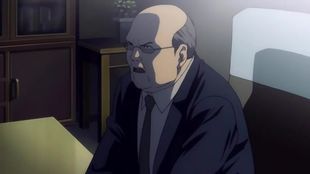
The Deputy Director of the National Police Agency, and Soichiro's immediate boss. He and his family were among L's initial suspects suspected of being Kira, but despite his aggravation at his daughter being investigated, he still supported Soichiro. However, he was forced to call off the Kira investigation after being pressured by politicians who were threatened by Kira and bribed by Yotsuba executives.
- Adaptational Jerkass: In the manga, he's displeased with his daughter being a suspect but still deals with the matter professionally. In the TV drama, he lashes out at Soichiro over it. The series also clarifies that he gave L permission to arrest Misa on suspicion of being Kira, and tells Soichiro that he will allow them to use any means necessary to make her confess.
- Adapted Out: Doesn't appear in the musical, and L doesn't suspect his daughter at all, instead focusing his attention fully on Light.
- Anti-Hero: In the TV drama (and presumably in the anime and manga as well), he authorizes Misa's arrest and torture in aid of a confession, which upsets Sochiro. Despite this, he still wants to put an end to the Kira case and is generally a Reasonable Authority Figure.
- Bald of Authority: He's bald and also the man Soichiro answers to.
- Being Good Sucks: It's not fun having to support an investigation on a superpowered serial killer you know nothing about while you're completely kept out of the loop and while your own daughter is being investigated as a prime suspect.
- Benevolent Boss: He tries to give Soichiro as much leeway as he can despite the lack of progress on the Kira case, and prioritizes his men's safety over the investigation. He also sends a squad after him when he's stuck in the Sakuya TV studio and also sends another squad to arrest Higuchi when he kills a street cop.
- Big Damn Heroes: He sends an entire patrol of cop cars to stop Higuchi, which ends up being pivotal to his arrest as the initial arrest attempt had failed.
- Big Good: He's the Deputy Director of the NPA, and the main source of support for the Kira investigation. When he's forced to call it off, the Task Force lose most of their resources.
- The Cavalry Arrives Late: He sends a riot squad to help Soichiro out of the Sakura TV Studio, though at this point all the Kira tapes had already been seized.
- Fair-Weather Friend: An understandable example. He calls off the Kira case when the Yotsuba killings start, as Higuchi had threatened the government into backing down. It's only after Higuchi is dead and one of the notebooks has been retrieved that the investigation opens again. However, nobody at the Task Force hold this against him personally as he clearly was between a rock and a hard place.
- Family Man: He has a wife and daughter, and their family life is covertly investigated by Mogi for months and concluded to be a completely normal one.
- Good Is Not Nice: He's generally rude and pragmatic, and is implied to have facilitated a young girl's kidnapping. Despite this, he supports Soichiro and his fellow police officers on the Kira case to the best of his abilities.
- Grumpy Old Man: Though not to the point of being unreasonable, he usually comes across as cranky and tired.
- Innocently Insensitive: He makes a big fuss to Soichiro about his daughter being investigated. It's only when Soichiro flat out tells him that it's his own son who is the prime Kira suspect that Kitamura backs down.
- Jerkass Has a Point:
- Upon realizing his daughter was being tailed, he harshly doubts L and his methods, which Soichiro quickly jumps to defend. However, with Soichiro himself having doubts, he can only affirm that he's trustworthy without giving away any details.
- His withdrawal from the Kira case upsets Soichiro, but when he tells him that the government had put pressure on him to call off the case, the chief can't deny that it was the most reasonable decision.
- Know When to Fold Them: He sends a police car to stop the broadcast at Sakuya TV studio after Ukita is murdered, but when the two cops there collapse as well, Kitamura wisely retreats his men and only sends a riot squad when L gives him the clear.
- Large and in Charge: A very large man and also the superintendent of the NPA.
- Locked Out of the Loop: Though he occasionally tries to pry, Soichiro refuses to share any details of the investigation with him, as per L's request.
- Non-Answer: When Soichiro asks him what would happen to the Task Force if they choose to continue associating with L, Kitamura refuses to answer.
- Papa Wolf: In the TV drama, he gets aggressive with Soichiro when he hears that his daughter is being investigated.
- Perpetual Frowner: His face seems perpetually stuck in a frown.
- Reasonable Authority Figure: Despite his own daughter being investigated as a suspect and despite clearly being impatient with the lack of results, Kitamura continues to support his men until his back is against the wall. Even when he does call off the investigation, he's clearly remorseful and apologizes to Soichiro.
- Satellite Character: Though several characters talk about him, he's only shown interacting with Soichiro. When the latter is ascended to director, Kitamura vanishes from the story.
- Screw This, I'm Outta Here: Calls off the Kira case after pressure from politicians following one of them being murdered for bribery.
- Teeth-Clenched Teamwork: Even months into the investigation, he still doesn't fully trust L, and is annoyed with the latter keeping all progress from him. His daughter briefly being a suspect likely didn't help.
- What Happened to the Mouse?: After the Time Skip, Soichiro takes his place as Deputy Director, but no mention is made of Kitamura or his fate, making it unclear if he died or resigned.
Task Force
An organization composed of Japanese police officers tasked with apprehending Kira under L's guidance. Most of them quit out of fear and lack of mutual trust with the detective, but a select few stay behind and become L's main helpers in Japan. After L's death, they continue to search for Kira, this time under Light's orders, unaware that their own leader of research is the very person they are trying to capture.
- Action Dad: In the manga and anime, only Soichiro and Aizawa are confirmed to have kids. In the musical, everyone sans Aizawa (and possibly Mogi) also sing about having kids waiting for them at home.
- Action Survivor: Despite having no powers at all and Light frequently thinking about killing them, Matsuda, Aizawa, Mogi, and Ide all survive the series. In the Live action film and musical, all of them sans Mogi survive, and in the TV Drama, all of them sans Soichiro survive.
- Adaptational Dumbass: In the manga, once Light is outed as Kira, he remains trapped in the warehouse, and dies there. In the anime, the Task Force gets distracted by Mikami killing himself and miss Light escaping while severely wounded. A small scene afterwards shows they even somehow lost him after giving chase for a brief sequence, though it doesn't help Light at all since Ryuk kills him anyway.
- Ascended Extra: Once Light joins the party, the individual Task Force members begin to get more screentime, with Aizawa, Mogi, and Matsuda having their own small arcs and dynamics. Their designs in the manga also gradually become more defined starting with the Yotsuba arc.
- Badass Normal: They never use the Death Note, but still get things done. They all help capture Higuchi and storm in on Mello's hideout.
- By-the-Book Cop: They believe that unlawful killings should be pursued even if the victims are criminals, and after Kira starts killing law enforcers, they only become more determined to bring him down. They're also generally displeased with L's harsher methods. Eventually Subverted when the director shuts down the Kira case, and most of them sans Aizawa decide to resign in order to continue chasing Kira.
- The Cavalry: An entire patrol of officers led by Ide and Aizawa shows up to aid in Higuchi's capture.
- Death by Adaptation: Mogi and Matsuda die in the live action continuity, while they both survive in the source material.
- Demoted to Extra: The anime trims down their involvement in the Kira case, especially in the Near and Mello arc. The musical also gives them only a minor role, courtesy of only adapting the first third of the series.
- Distracted by the Sexy: All of them start to visibly blush when Misa shows up in Light's room wearing a skimpy outfit and teasing him.
- Dwindling Party: They lose most of their force in the first chapters when the majority of police officers resign. Then, Ide leaves for the entirety of Part 1, Ukita is killed by Misa in Chapter 23, Aizawa leaves for an entire arc, and Soichiro is killed by Jose in Chapter 74, leaving only four of them alive by the end.
- Everyone Has Standards: They frequently show hesitation to indulge in some of L's questionable actions such as eavesdropping on Light's private life, arresting and restraining Misa, and keeping vital information from Light.
- Extreme Doormat: Despite their many differences with L, they always do as he tells them and help him spy on Light even though nobody believes he's guilty. Subverted with Aizawa, who quits early in the Yotsuba arc.
- Four-Temperament Ensemble:
- Soichiro Yagami: Melancholic. He's blunt, extremely hard-working and motivated, and The Paragon of the Task Force.
- Touta Matsuda: Sanguine. Very cheerful, optimistic, trusting, and humorous, while also being gullible enough to be the only character never doubt Light until the end.
- Shuichi Aizawa: Choleric He loses his patience quite easily, is very task-oriented, open-minded enough to start doubting Light, and determined enough to act on his suspicions.
- Kanzo Mogi: Phlegmatic He's loyal to a fault, the most even-tempered of all of them, and The Comically Serious.
- Good Is Impotent: It goes twofold. First, even they have to admit that Light did a better job putting an end to crime than the justice system (them included) ever did. Then, most of their efforts to bring Kira down ultimately amount to nothing and they completely rely on the morally dubious (and occasionally illegal) actions of L and Near to make any progress at all. Aizawa in particular has his efforts to expose Light shut down by Near, who tells him to remain vigilant and let him do the work.
- Honor Before Reason: Since they're off-duty during the Yotsuba arc, they refuse to carry firearms, even when apprehending Higuchi. This almost allows the latter to escape after shooting Wedy (the only one in the team who was armed at the time).
- Morality Pet: Though he's not above manipulating them, L starts to show a kinder side to them. He's visibly shaken when Ukita dies, admits to Aizawa that he likes him, occasionally tries to ease Soichiro's nerves due to his son being the primary suspect, and goes out of his way to plan Matsuda's rescue after he gets himself captured. Subverted with Light, who never grows to care for them and would've gotten them all killed as loose ends after disposing of Near.
- Nice, Mean, and In-Between:
- Of the three most fleshed out members, Matsuda is the "nice", Aizawa is the "mean", and Soichiro is the "In-between". Specifically, they're also this in regards to their dynamic with L and Light, as Matsuda often trusts them without hesitation unless they openly do something he considers immoral, Soichiro sticks to his beliefs and ideals but is open to their theories (though he can occasionally lose his temper with L), and Aizawa is the first to distrust their credibility.
- On a wider scale, of the three primary organizations chasing after Kira, they're the "nice", always trying their best to chase him through ethical and legal means and being generally displeased when L suggests an illegal method of collecting evidence.
- Oh, Crap!: A collective one when L dies. Absolutely everyone, including Mogi, loses their composure.
- Overshadowed by Awesome: Though they can be a bit slow, they're far from incompetent. Unfortunately, the key players in the story happen to be extremely intelligent, leaving them unable to do much outside of following the orders of L, Light, and Near. When Aizawa conducts a little investigation to expose Light and informs Near of his discovery, the latter flat-out tells him not to bother pursuing his lead since Light would find a way out anyway.
- Plot Armor: When Mello blows up his own base, all of them sans Soichiro (who was already mortally wounded) survive, but Mogi reports that the unnamed officers who were in the other floors likely died in the blast.
- Police Brutality: At their worst they can engage in unlawful and reckless behavior, though it's understandable considering they're fighting against superpowered beings whose power they can't fully comprehend. Ukita tries to shoot down the Sakuya building door when the guard refuses to let him in, Soichiro outright rams a police van into the building to avoid being spotted by the second Kira, and threatens to shoot Demegawa when he hesitates to give him the Kira tapes in his possession. Mogi also arrests Misa in a manner not dissimilar to a kidnapping (covering her mouth and eyes from behind and immobilizing her completely), and they also bind and gag Higuchi while arresting him as the third Kira.
- Save the Villain: At the end of the anime, they choose to ignore Near’s ingestion to leave Light for dead from his wounds and go after him.
- Screw This, I'm Outta Here: Most of the police officers working on the case resign early on when Light begins showing hints that he's somehow involved with the police. Ide also leaves shortly after realizing that L had been playing a Secret Test of Character on them, and Aizawa leaves the case as well after their director calls off the case.
- The Smurfette Principle: The Live action films introduce Sanami as the female sixth member of the Task Force, and the TV Drama introduces Shoko Himura as a stand-in for Naomi Misora who begins the story as part of the Japanese police as well.
- Sympathy for the Devil: Despite everything Light’s done, they refuse to let him just die of his wounds.
- Teeth-Clenched Teamwork: With L. Though Aizawa is the most vocal about his distaste for the man, all of them get annoyed with his shaky (but true) deductions, manipulations, unprofessional attitude, and obsession with proving that the son of the chief is Kira. They also don't appreciate it when he starts bringing in criminals to help with the case.
- To Be Lawful or Good: They generally struggle with this, as they're chasing a person who is unlawfully doing their job for them. They (sans Aizawa) eventually choose "good" when they choose to resign to continue chasing Kira after their director backs Soichiro into a corner. Of all of them, Matsuda is the only one to be vocal about his opinions on Kira, but Ide admits in the epilogue that he doesn't know if they did the right thing either.
- True Companions: Those who choose to stay with L end up developing a very close bond with each other. Aizawa and Ide are particularly close, the former being the only reason the latter chose to return after his initial departure.
- Unwitting Pawn: They're played by Light every step of the way in Part 1. In part 2, Aizawa, Mogi, and Ide start to suspect him but Matsuda remains completely loyal to him up until Near presents him with solid proof.
- Vitriolic Best Buds: Matsuda vs. everyone else. They frequently tease and taunt him for his moments of incompetence, but when the guy is in danger, they're literally there to catch him when he falls, with a huge mattress and a fake body at the ready.
- The Watson: Though it's Soichiro who mostly fulfils this role, most of them frequently question L on his deductions, forcing him to dumb them down a little so they can understand.

Light's father and the police chief initially in charge of the Kira investigation team operating under L. When L begins to suspect Light of being Kira, Soichiro is unwilling to believe his son would be capable of such a thing. He was originally envisioned as an "honest police officer with a strong sense of justice" so that the reader "would have to feel sorry for everything he has to go through", and according to the writer, he is the only truly "pure" character. Over the course of the series, he changes visibly by losing weight and aging poorly, particularly during his and Light's confinement.
After L's death, he is sent to retrieve the Death Note stolen by Mello by obtaining Shinigami Eyes and infiltrating Mello's hideout. He retrieves the notebook and learns Mello's real name by looking at him face to face through the Eyes, but is unable to kill him, and as he argues with Mello he is repeatedly shot by one of Mello's men that he assumed was dead, and is afterwards buried in rubble from an explosion set off by Mello. Because Light had given up ownership of his Death Note, making his lifespan visible above his head, Soichiro dies believing that Light is not Kira, thus maintaining the Shinigami proverb that humans possessed by Shinigami meet misfortune but- as observed by Ryuk- subverting the other one that maintains they die in misery.
However, in the movie he is alive and present when Light is revealed as Kira - even holding him in his arms as he dies - but keeps his identity secret from his family.
- Action Dad: He's Light's father, and the police chief in Part 1 turned director of police in Part 2. He becomes even more badass after acquiring the Shinigami eyes, and comes dangerously close to killing Mello at one point.
- Adaptational Intelligence: In the live-action series, he's the one who understands the most why his son went the way he did, after receiving proof that Light is Kira and would have murdered his own father. Soichiro gives a Kirk Summation that justice systems may be imperfect, but that is because people are imperfect. Mass murder is certainly not the answer.
- Beware the Nice Ones: Though he's normally a By-the-Book Cop, Sakuya TV and specifically Demegawa find out the hard way what happens when Soichiro gets pushed past his limit. He drives a police van into the building straight through the window, threatens a security guard into revealing the location of the directors' office, and later pulls a gun on Demegawa when he hesitates to hand out the second Kira tapes to him.
- Boyfriend-Blocking Dad: Downplayed, since Sayu was only joking around, but when he notices that Matsuda might be interested in his daughter, he makes it clear that a police officer marrying her was out of the question.
- By-the-Book Cop: While he admires L's skills as a detective, he's uncomfortable with some of his methods, which often involve willingly sacrificing lives to Kira. As an example, in the films, when L pulls off his scheme with Lind L. Tailor, Soichiro becomes angry that L sacrificed a prisoner for that reason.
- Car Fu: Ramming a TRUCK into a building.
- Da Chief: The police chief in charge of the Kira investigation and the one most put upon by L's methods.
- The Cobbler's Children Have No Shoes: He admits that he has trouble looking at the case objectively when his own son becomes the main suspect. Also, Soichiro's a good cop, and his son is, well, Kira.
- Cool Old Guy: Well, sort of. He's not even as old as fifty when the story starts and barely in his mid-fifties when he dies, but he has a heart attack quite early on in the Kira investigation while his son is a suspect and never recovers fully after that point, though he is repeatedly prevented from resigning from the Task Force either by L or his own stubbornness, depending on the context. Hence, he comes to look "old" even when speaking strictly he isn't. He's certainly got the coolness covered, though. What do you do when the Second Kira is lurking outside killing anyone who tries to get into Sakura TV to prevent the airing of a message on the news that threatens the innocent? Smash through the studio's door with your van and threaten the producer at gunpoint, of course! And he does all of it after leaving the hospital where he had been admitted for a heart attack just days prior.
- Deadly Upgrade: He traded half of his lifespan for Shinigami Eyes in order to pursue Mello and other Death Note users.
- Defiant to the End: Even after Jose unloaded a machine gun on him, a dying Soichiro adamantly refused to let go of the Death Note a second time, and continued to hold on to it until the Task Force came to the rescue.
- Died in Ignorance: Unlike L, he never got to find out Light was Kira before passing away, and due to his hesitation to use the Death Note, he also died not knowing what it was like to end someone's life.
- Dies Differently in Adaptation: Unlike in the original manga and anime, he's Driven to Suicide in the TV drama when he learns that his Light is actually Kira by writing his own name in the Death Note, and in the live-action movies, while he survives the original duology, between the events of the second film and Light Up the New World. he died offscreen, with the implication from it's subsequent miniseries that Mishima potentially had a hand in that death.
- Driven to Suicide: In the TV drama, wherein he writes his own name in the book after discovering Light is Kira.
- Earn Your Happy Ending: Downplayed since there was no "happy ending" in sight for him considering his own son was the world's greatest serial killer in history, but in-story, Ryuk says he got to die happy and in blissful ignorance of his son's identity because he refused to use the Death Note.
- A Father to His Men: He comes off as something of a father figure to the other task force members or at least Matsuda.
- Good Is Not Soft:
- He pulls a gun on both Demegawa and Light.
- Later still, he makes the trade for Shinigami Eyes and attempts to write Mello's name into the notebook, only failing to write the said name in full because Mello asks him if he's ever killed a person before, leading to a moment of hesitance which proves his undoing.
- Good Parents: In the live action film, L tells Soichiro that despite how his son turned out, he was a good father nonetheless.
- Good Smoking, Evil Smoking: in the live-action movies Soichiro lights up a cigarette while stressing out over the Kira case.
- Happily Married: To Sachiko. Not the lovey-dovey kind, but the strength of their marriage is extremely moving. Ultimately tragic when you consider what becomes of him in the end.
- Heroic Sacrifice: While he didn't know that he was going to die when he did, he knew that his days were numbered by making the eye trade. Also, he believed that he was going to die within thirteen days if he actually did manage to write Mello's full name (he failed to do it, but he was prepared to do it).
- Honor Before Reason:
- He stubbornly adheres to his sense of justice even when it's detrimental to the case. He asks L to put him in prison indefinitely because he doesn't trust himself not to lose his mind if it turns out Light truly is Kira, quits the police force to continue pursuing Kira after the director calls off the case, adamantly refuses to carry a firearm off-duty even when attempting to apprehend the third Kira (which gets him shot), argues against testing the Death Note on criminals on death row, gives the Death Note to the mafia when they kidnap his daughter even though they can just as easily use it to kill her later anyway, and hesitates to write down Mello's name in the Death Note even though he had kidnapped his daughter and caused numerous deaths. The last one gets him killed by one of Mello's men.
- He runs on this in the TV Drama as well. He willingly surrenders himself to a deranged psychopath so that he would free his hostages, and then tries to appeal to his humanity, which almost gets him killed. Then, he writes his own name in the Death Note in front of Light partly due to blaming himself for his descent and partly as a Secret Test of Character that Light fails, which does nothing but ensure his daughter is left without a guardian when Light is inevitably caught later.
- Incorruptible Pure Pureness: Soichiro is moral, upstanding, and never gives sway to any temptation. In How To Read, his strongest attribute was his integrity. When given a chance to kill Mello using the Death Note, he refuses, at the cost of his own life. Ryuk remarks that if he'd used the Death Note he'd have been doomed to unhappiness, and in a way, he was happy dying thinking his son wasn't Kira.
- It's All My Fault: In the TV drama, he blames himself for Light's descension into villainy, saying that he should've noticed him "calling for help" when he was younger. He also blames himself for giving the Death Note to the mafia in exchange for Sayu's life.
- Leeroy Jenkins: When Mello kidnaps Sayu. "Plan? There's no time for that!"
- Let Them Die Happy: He dies happily convinced that Light isn't Kira. Since there is no afterlife in the Death Note universe, this means that he never finds out. Sadly averted in the live-action movies, where Soichiro is Spared by the Adaptation and fully aware of Light's crimes, and the TV drama, where he dies after realizing Light was Kira.
- Likes Clark Kent, Hates Superman: Soichiro hates the wanted serial killer Kira, but deeply cares for his son Light, unaware that they are one and the same. Even after Light becomes the prime suspect for the murders, his father insists that Light is innocent and the real Kira must be brought to justice.
- Mama Didn't Raise No Criminal: Gender inverted. His reaction to the suggestion that Light may be Kira, though he agrees to let L investigate his family so they can be sure. He even goes to prison because of how innocent he believes his son to be!
- Married to the Job: In the TV drama, his frequent absence from home due to work, combined with the fact that he was not present during Sachiko's death, puts a strain on his relationship with Light, which is amplified by the fact that Light must act as a father figure to Sayu.
- The McCoy: In contrast to L's Spock and memoryless Light's Kirk during the Yotsuba arc. His suggestions are usually driven by emotion due to having moral grievances with L's pragmatic methods, and it's Light who comes up with ideas that are both effective and lawful.
- Morality Pet: Some of the cruellest characters have soft spots for him.
- Downplayed with his own son as Light still encouraged him to accept the Shinigami eyes with full knowledge that he would have to kill him 13 days later to keep up the farce of the fake rule he wrote, and when he died he seemed more upset that he didn't get to kill Mello rather than the fact that he had lost his father, but the creator has stated that Light's tears when his father died were genuine.
- Also Downplayed with Mello, who didn't want to get him killed after all the suffering he had caused him by kidnapping his daughter, but that didn't stop him from allowing Jose to gun him down.
- Mr. Exposition: In episode 2, he explains L's reputation as the World's Smartest Man to Matsuda, and therefore, the audience.
- Never Speak Ill of the Dead: He never tells his family in the live-action version that Light was Kira, to Maintain the Lie that Light was innocent.
- Nice Guy: Though he can lose his temper sometimes, Soichiro is one of the most moral and upstanding characters in the series.
- No Good Deed Goes Unpunished: Mello realizes during their standoff that Soichiro has never killed anyone before and thus hesitated to write his name in the Death Note when he had the chance, and laments that he had to get involved in his scheme. This doesn't stop him from staying silent while one of his men grabs a machine gun and unloads it on Soichiro's back.
- Not a Game: Da Chief is fond of this catchphrase. He scolds Matsuda for his enthusiasm a few times, expresses disgust at how Kira is "playing with people's lives as if it were just a game!" and he says this word for word in the live-action movie to L.
- Oblivious Guilt Slinging: Zig-Zagged. He's very outspoken about his distaste for Kira and his solutions, and often talks about it with his son Light, who happens to be Kira himself. However, nothing that he says manages to shake Light's core beliefs in the slightest, at least in the anime and manga. In the TV series, where Light is much more reluctant to murder people and also more involved with his family, this trope is played straight.
- Only Sane Man: During the Yotsuba arc, in a group that includes L's utter lack of social skills, Aizawa's temper, Matsuda's kookiness, the uncertainty of Light's might-be-a-serial-killer status, Mogi's silence, and Misa's flirtatious childishness, Soichiro seems to be the only one keeping everything sane.
- Outliving One's Offspring: In the live-action films and musical, Light dies before he does.
- Papa Wolf: Towards Light and Sayu, all the way. When the former is arrested on suspicion of being Kira, Sochiro requests to be imprisoned himself, claiming that he might lose his mind if his son is proven to be the infamous vigilante, and when the latter is kidnapped, Sochiro flies all the way to L.A. with the Death Note in hand to save her.
- The Paragon: He's the only truly good person in this series.
- Parental Favoritism: A minor example; while he doesn't completely dismiss the possibility that Light is Kira (and he is, though Soichiro in the manga and anime goes to his grave never finding this out), he is adamant that Sayu couldn't possibly be Kira. Granted, Sayu as he puts it logically couldn't be Kira owing to her personality; she's a Blithe Spirit and has a hard time keeping secrets. Ultimately played with, however, to Mr. Yagami's credit, he does admit to this bias and is always shown to be in great distress at the idea that his son is Kira.
- Parents as People: He has his flaws, and expresses worry about how these may have affected his two kids.
- Parting-Words Regret: In the live-action films, the last thing Light says to him is that he could have created the perfect world, shortly after Light ordered Ryuk to kill everyone in the room. All Soichiro can do is hold Light as it turns out Ryuk thought the fun was over and wrote Light's name instead, and Soichiro has no chance to reassure Light or call for emergency services.
- Pay Evil unto Evil: Though he's generally against this, he threatens to kill Demegawa if he refuses to hand him all the copies of the Kira tapes he had. Though Demegawa tells him that he was being held hostage by the second Kira, Soichiro has no sympathy for him since he had a history of leeching off the case and telling lies about Kira on TV.
- Play-Along Prisoner: He willfully has himself incarcerated during the period of time Light also volunteers to be imprisoned out of fear that he might snap and kill L out of hatred otherwise.
- Prematurely Grey-Haired: He starts greying at an alarmingly fast rate from the moment he begins to work on the Kira case. Especially obvious in the first arc, where about a third of his hair turns grey in a couple of episodes, way too fast for it to be caused by simple aging. Until about episode 10, his hair is pitch black.
- Reasonable Authority Figure: When Matsuda speaks up in a meeting, pointing out that violent crime has gone down ever since Kira started killing people, Soichiro brushes off his later attempt at an apology, pointing out that he was only giving voice to an unpleasant truth.
- Scary Shiny Glasses: When somebody suggests that Sayu and Matsuda might be getting married.
- Secret-Keeper: He never tells his wife and daughter that Light is the only suspect of being Kira. Even moreso in the The Last Name as he lives to find out Light is Kira, and instead tells his family that Light died trying to catch Kira.
- Secret Test of Character: In the TV Drama, he slowly starts writing his own name on the Death Note he took from Light to force him to admit that it's real. Light does not and instead hesitantly allows him to kill himself. Then, in the 40 seconds he has left, Soichiro tries to burn down the book, and only then does Light intervene.
- See You in Hell: While pretending to kill Light as part of a plan by L to determine whether Light or Misa is responsible.Soichiro: Light, my son. From one murderer to another, I'll see you in hell.
- Shut Up, Hannibal!: In both the live action film and TV drama, he tears into Light's excuses for killing people unlawfully, and is never convinced that anything he did was righteous at all.
- Spanner in the Works: In the manga. When the taskforce trades Light's first notebook to Mello's gang for Sayu, Light's plan to get it back is to send them his current notebook (the one he recovered after Rem died), and stage a message from Kira telling the taskforce that every mafia member will die at a certain time, and they can use Kira's notebook to make the shinigami eye trade, attack Mello right as his people die, and recover the notebook in Mello's custody— with the hope that they'll kill Mello along the way. Light assumes that Matsuda will be the one to make the eye trade (Ryuk: I have to possess that lame guy?!), and Matsuda is the first to volunteer, as well as the one most onboard with the plan as Kira describes. But Soichiro insists on being the one to make the trade for the eyes, since he was the one who relinquished the notebook to begin with, and specifically reminds everyone that he'll die according to the 13 Day Rule if he uses the notebook to kill anyone. While he does manage to get Mello's real name, he initially refuses to kill him and tries to get him to surrender, with Mello even asking him point-blank if he's ever killed someone before. This hesitation is what gives Mello time to regroup and blow up the hideout, leading to Soichiro being badly shot and killed, and Mello getting a mask on before anyone else can see his face. Had Matsuda made the deal like Light planned, given his unpredictability, it might not have gone the way Light wanted, but Matsuda probably wouldn't have had the same qualms about killing Mello.
- Spared by the Adaptation:
- He survives the events of the initial live-action movie duology. Early Japanese promotional blurbs for Light Up the New World state that he had died sometime later, but this is never addressed in the movie itself.
- The 2nd Relight Special. It's vaguely implied he's dead ("Whenever things get tough I just remember my father.") but his death is never shown or mentioned.
- He also gets to survive in the musical.
- 'Stache of Duty: He's chief of the National Police Agency. He has a mustache and it's commented on the story because it makes him stand out and blatantly obvious that he's a cop.
- Taking the Bullet: He dives in front of Wedy when Higuchi shoots her, though he's only wounded.
- Technical Pacifist: He "has never actually taken a life before" despite having risen all the way to the top of Japan's police force (Truth in Television as the NPA are the desk jockeys of Japan's police force.)
- Too Good for This Sinful Earth: In a series where most players see the plot as a game of wits rather than a fight for justice, Soichiro's integrity only makes him too emotional and mentally drained to work, which soon enough leads to him having a minor heart attack due to stress, and later gets him killed.
- Trauma Conga Line: The plot loves to put his children in danger and directly force Soichiro to witness it first-hand. First, he has to deal with his son being suspected of being a mass murderer by L, and forced to pretend to execute him to prove he's not. Then, his daughter is kidnapped by the mafia and he's forced to become their errand boy to keep her safe for a little longer. In the anime and manga, at least he's dead by the time his son dies, but the live action film doesn't even give him that satisfaction. And all this is after having suffered a heart attack due to the stress of hunting Kira.
- When He Smiles: Soichiro's pretty stoic for the most part, but when he does smile, you easily forget the intensity overshadowing the entire series.
- When You Coming Home, Dad?: The TV drama focuses on the negative impact that his obsession with work has on his children, especially since their mother is dead in this adaptation. Light especially resents him for this, while Sayu mostly expresses annoyance at his negligence but it's heavily implied it affects her more than she lets on.
- Workaholic: He admits he doesn't see his family that much because he's always working.
- Your Days Are Numbered: He trades half of his remaining lifespan in exchange for the Shinigami Eyes, but he dies shortly after the exchange and he's not killed by a Death Note, meaning that he would have died very soon anyway.

The youngest and least experienced member of the Japanese Task Force, Matsuda was Soichiro Yagami's protege before the series started and is the only member of the force to both consistently believe in Light's innocence and even show some sympathy towards Kira's cause. Unlike his teammates, he prefers not to do things 'by the book', instead taking risks — which is often heavily criticized by his colleagues.
Along with Mogi, he is the only member of the Japanese Task Force to see the Kira case through from start to finish, with no breaks: Light joined late; Ukita, Soichiro, L, Watari, Wedy and Aiber die; and Ide and Aizawa both quit briefly.
Besides Near and a few of the other task force members, Matsuda is one of the few characters that survives the events of the anime/manga. The manga epilogue shows that he continues to work as a member of the police, but he still does not wish to believe that Light was Kira, and suspects that Near was involved in Mikami's death.
- Accidental Misnaming: Or rather, "accidental correct naming". He frequently forgets to use L's alias "Ryuzaki" in public, and often corrects himself on the spot.
- Action Dad: In the musical, he initially hesitates to carry on with the Kira case on the grounds that he had just became a father, but soon commits to doing his job, and motivates the others to do so as well.
- Action Survivor: Survives the entire series despite no powers at all.
- Adaptational Badass: In the manga and anime, to stop Light from killing Near with the Death Note page hidden in his wristwatch, he shoots him in the hand while standing right next to him, then guns him down in anger. In the live action film, he shoots the watch off his wrist from several feet away, then shoots him once in the leg to immobilize him while keeping his cool. It's also worth noting that in the manga and anime, Light was hastily writing the name in clear view of everyone, while in the live action film, he was trying to do it covertly while monologuing, making Matsuda's intervention more impressive.
- Adaptational Wimp: The anime cuts some of his helpful moments during the Yotsuba investigation, and makes him more bumbling, even adding a line from L in Episode 18 where he tells him to bring him a coffee since he has nothing of use to do. The following episode even adds a flashback sequence emphasizing how insecure and frustrated Matsuda feels because of this.
- Alcohol-Induced Idiocy: Subverted. When at a party surrounded by people who are planning to kill him, he pretends to be drunk out of his mind and "falls" off the balcony while trying to do acrobatics. This was all staged to fake his death and prevent him from being actually killed by the Yotsuba.
- I Am Spartacus: In the manga, Mello demands to know the identity of the second L so that he can kill him if the trade for the notebook goes south, threatening to kill Sayu if they don't comply. Matsuda saves Light and his dad from that dilemma by hijacking the keyboard and telling Mello that he's a stand in for L.
- Ascended Extra: One of many police officers starting out and becomes more important in the second arc.
- Audience Surrogate: As early as episode 2, he was the only one in the Interpol meeting who didn't know who L was, which allowed the audience to learn of his reputation by proxy when Soichiro explained it to him. In general, he's the character most unsure about Kira's morality, and in the Manga's epilogue he suggests an alternate interpretation of the finale's events much like an audience member would. Less centrally, in several scenes he is also the one to express annoyance or confusion over things such as L's odd behavior (the cell phone scene comes to mind) and L's and Light's rather obscure back-and-forths.
- Badass in Distress: When he gets caught infiltrating Yotsuba, he handles the situation with a surprising level of competence. He comes up with a believable reason for being there, manages to Xanatos Speed Chess his way into a situation where he can get in contact with L, and successfully fakes his own death to avoid being killed.
- Bad "Bad Acting": While at Misa's party, he leaves the bathroom following a private talk with L and pretends to be drunk to create a believable reason for why he would jump off the balcony and into a mattress set up by his fellow officers. This would've been more believable if he hadn't been perfectly sober before heading to the bathroom. In fact, most Yotsuba members assume that Kira simply controlled him into killing himself, due to how over-the-top his performance was, and Higuchi is suspicious enough to write his (fake) name in the Death Note regardless just to be sure.
- Berserker Tears: He weeps openly as he shoots Light up.
- Beware the Honest Ones: Note to megalomanical serial killers, honest cops do not like it when you sneer at their idealism.
- Beware the Nice Ones: He's the one that stops Light from writing Near's name by shooting his hand, followed by shooting the rest of him, and would have killed Light had the others not intervened. And to think he was the only one that sympathized with Kira.
- Big Brother Instinct: Seems to have this towards Sayu, as when she's kidnapped, Matsuda is the one who panics the most, with even Sochiro and Light maintaining their composure to an extent.
- Big Damn Heroes: Saves Near's life by gunning Light down just as he's writing his name on a Death Note snippet. The manga even reveals that by the time Light was completely incapacitated, he was one letter away from killing him.
- Black Shirt: Subverted. Light sees him this way, because of his apparently sympathetic statements about Kira, but when Light is exposed Matsuda feels betrayed and devastated. When he shoots Light to keep him from killing Near, Light is flabbergasted. Out of everyone, he expected Matsuda to side with him. It's probably helped by the fact that Light didn't tell Mikami to spare Matsuda during the final confrontation. Major oversight there, Light. It was also probably a bad idea of Light to mock his own father, who Matsuda idolized.
- Bleed 'Em and Weep: Downplayed as his shots don't actually finish him off (and Ryuk's comment about Light dying in prison afterwards implies they weren't fatal as he could see his lifespan), but after shooting Light, he breaks down in tears as his companions restrain him.
- Book Dumb: Despite being generally treated as unintelligent, he actually comes across as a pretty decently smart guy most of the time: not the absurd hypergenius of the rest of the cast, and definitely goofy and immature personality-wise, but whenever he actually goes out and makes a plan, it tends to be a decent one, and he repeatedly acquits himself well in dangerous situations.
- Break the Cutie: He might be kinda dumb, but is more or less a nice person who tries his best even if it doesn't work. Then, the poor guy has his idealism, mentors, and self-esteem slowly demolished throughout the series. The biggest example is in the final episode, where his idolising of Light is torn apart with the final confirmation that he is Kira. He actually shoots Light in the most heart-wrenching scene in the anime.
- Broken Pedestal: In two way
- He idolized Light, and completely fell apart upon the Internal Reveal that Light is Kira.
- He also used to admire that Kira killed off criminals and as he seemed to genuinely think it made the world a better place. After Kira killed so many innocents along the way, Matsuda stopped idolizing him.
- Bromantic Foil: Seems to see himself as this to Light, teasing him about all of his romantic endeavors.
- Bunny-Ears Lawyer: Matsuda is naive, but he is a good cop when the chips are down. He's not afraid to speak the uncomfortable truths that everyone is thinking or take risks when it seems they are necessary. While infiltrating Yotsuba was dangerous and nearly got him killed, he did help them get an in for Misa to get close to the company.
- Butt-Monkey: Matsuda is bullied, pushed around, ignored and otherwise the omega male of the investigation. The other characters - Aizawa, L, Light - tend to make disparaging comments about him.
- Captain Obvious: The most egregious moment being during his interview with Sakura TV, right after Higuchi writes down the alias planted at Yoshida Productions.Matsuda: Kira is a cold-blooded murderer. I can't forgive him for what he's done.
- Character Development: Begins the series honestly believing that Kira may be right to kill all of the evil people in the world. In the finale, after barely restraining his Berserker Rage, he acknowledges that killing Light wouldn't make the world any better and attempts to put him to justice, living up to Soichiro's refusal to kill and ultimately shining a brighter light on whether or not true goodness can actually prevail.
- Chekhov's Skill: When the taskforce raids Mello's hideout, Matsuda quickly draws his sidearm and precision shoots the notebook out of someone's hand, demonstrating both quick thinking and good marksmanship. He does it again at the story's climax, when Light attempts to write Near's name on a scrap of Death Note paper hidden in his watch. Matsuda draws his gun before Light can write a fifth letter and shoots the pen right out of his hand, and then immediately repeats the feat when Light starts trying to finish by writing in his own blood. Again, Light gets four letters down (one letter short of completing Near's full name) before Matsuda puts a stop to it.
- Color-Coded for Your Convenience: His official color seems to be yellow, as his thought process is marked by a yellow tint.
- Conspiracy Theorist: In the climax, he's shown to bother Ide with his theories about Near having used the notebook to ensure Kira's capture. Though Ide dismisses his arguments, he admits by the end that he also doubts Near's integrity.
- Cowardly Lion: He's quick to break and very emotional, but he can be surprisingly bold when the chips are down.
- Crouching Moron, Hidden Badass: He's the least impressive of the main characters when it comes to brains, and spends most of the series getting things wrong or being made fun of. Though some chapters focus on his hidden badass side, namely in his bravery and ability to follow through with other's instructions, he gets the crown at the end when he saves Near from being killed by Light and shoots him down. At the end, he also comes up a surprisingly believable theory concerning Mikami's death and Near possibly having used the Death Note to cheat, showing that he can be quite the critical thinker even if nobody takes him seriously.
- A Day in the Limelight: He gets an episode/chapter to himself during the Yotsuba arc, appropriately titled "Matsuda".
- Death by Adaptation: Is killed by Yuki Shien in Death Note: Light Up the New World.
- Distressed Dude: During the Yotsuba arc when he nearly jeopardizes the investigation by getting caught spying on the Yotsuba, and has to be rescued by L, Light, and the Task Force.
- The Ditz: Matsuda is a normal guy, if a little goofy and impressionable; his contrast with the likes of L and Light is very obvious. His suggestions often turn out to be wrong, and L outright calls him an idiot to his face several times.
- Dull Eyes of Unhappiness: He briefly sports these in the anime ending, after seeing Light's true colors, and while the rest of the Task Force tried in vain to prevent Mikami from dying. They return to normal when he spots Light trying to escape.
- Dumbass Has a Point:
- When the group is investigating the Yotsuba group and trying to deduce which of them is the least likely to be Kira, Matsuda points at Ooi. Though Light and L had their sights on Namikawa, Ooi was innocent too.
- His theory in the manga epilogue chapter. He speculates that Near used the notebook to control Mikami to make sure Mikami and Light would make no changes to the plan at the Warehouse. In short, Near cheated. While we never learn for sure if he's right, and Ide is not convinced, the fact that "Near cheats" and is "more dishonest" is confirmed by the writer.
- In a way, this is what Soichiro Yagami likes about Matsuda. During the meeting, Matsuda brings up the fact that Kira's murders decreased overall crime rate in Japan, and while a lot of detectives frowned at this fact, Soichiro Yagami ensures him that he only pointed out a good point and it's not like he's saying that Kira is Justice.
- Et Tu, Brute?:
- Fits his reaction to Light revealed as Kira. He trusted Light up to the very end, and was dispirited when he was found out to not only be Kira, but also that his plan involved getting him and the rest of the Task Force killed as loose ends. Light letting out an Evil Laugh after the reveal likely didn't help Matsuda's anger, as up until then, he was on the fence regarding Kira's evil.
- The reverse is true as well. Light figured no one in the Task Force would join him, except maybe Matsuda. He is stunned when Matsuda puts five bullet holes in him. Justified by the fact that Light is such a sociopath that he didn't bother to tell Mikami to spare Matsuda. That or he just thought it was safer that everyone in the Task Force should die which would constitute as a betrayal.
- Exact Eavesdropping: When he's investigating Yotsuba. This is justified because he knew what time period the Yotsuba Kira was active. At the same time, he also comes across two members just as they're discussing their schedules.
- Faking the Dead: In order to continue the investigation against the Yotsuba Kira, he and his fellow Task Force members stage a scenario where he falls off a balcony to his "death". It works, and even though Higuchi still writes his name on the Death Note as a safety measure, Matsuda doesn't die as he was using an alias.
- Fanboy: Towards L, Light, Misa, and, from afar, Kiyomi.
- Fearless Fool: Matsuda just kind of assumes that things will work out well. His recklessness almost gets him killed by Higuchi during the Yotsuba arc.
- Foil:
- To Light. While the former is a sociopathic, Teen Genius who uses his allies as pawns while Matsuda is a Kindhearted Simpleton who values his friendships. Also, Light insults his father's memory by calling the latter's hardworking, honest nature "foolish", which enrages Matsuda at Light's disrespect.
- To L. He's a famous, brilliant detective, Matsuda's an ordinary, Idiot Hero police officer. L is anti-heroic and manipulative, Matsuda is traditionally heroic and straightforward. L doesn't believe in friendships and is a Celibate Hero while Matsuda is a strong believer of True Companions and is obviously interested in romance, from playing matchmaker in Light's love life to having an interest in Sayu.
- Forgetful Jones: Frequently forgets to use the right aliases for his peers. Played for Laughs in the TV drama when he repeatedly rehearses his own alias only to respond to Mogi addressing him by his real name a few seconds later, to the latter's chagrin.
- Good Is Not Soft: This Nice Guy will shoot you if you cross the line.
- Hesitant Sacrifice: When Mello corners Soichiro into revealing the second L's identity, Matsuda says that it's really him, putting himself at extreme risk. In later conversations, Matsuda tells the others that he really hopes that he doesn't actually die from having done this. Luckily for him, Mello doesn't kill him.
- Heterosexual Life-Partners: Believes himself to be this with Light, who plays along when it suits him. Considering his relationship with Soichiro, they've most likely known each other for quite some time.
- Horrible Judge of Character: He adores Misa and, later, Kiyomi, and supports Light completely, even when the rest of the task force begins to turn against him. The only one that he believes is innocent is Light, and that's mostly rooted in three things: the fact that they're similar, the fact that they're friends, and Soichiro Yagami being like a father to him. Like Aizawa said, it's not that it was impossible, but that they didn't want to believe it when they thought of the Chief. It was even worse with Matsuda because they were even closer friends.
- Idiot Hero: He certainly fits this, having the lowest intelligence-related scores of the investigative team. That said, he's mainly Book Dumb rather than truly stupid.
- Improbable Aiming Skills: He's shown more than once over the course of the series to be something of a crack shot.
- Informed Attribute: His conflicted thoughts on Kira. He mentions several times how he's not sure if he can call him truly "evil", but is still an active part of the investigation to catch him and throw him in jail, he's generally quite enthusiastic when they make progress, and he has nothing positive to say about him when his true identity is discovered. However, the last part is at least justified, as it meant Light is ultimately the reason Soichiro, Matsuda's idol is dead, and that his "friend" tried to have him killed. As such, his reaction may have been different if Kira wasn't Light.
- Kindhearted Simpleton: Downplayed. Matsuda isn't dumb but has been known for his reckless, naivete, and frequently called an "idiot". However, he's also a genuine Nice Guy.
- Leeroy Jenkins: During the Yotsuba arc L warns the others, "Be sure not to act impulsively out of panic or haste." Matsuda didn't get the memo. His "unpredictability" rating is 10/10.
- Let's Get Dangerous!: During the Yotsuba arc, Sayu's kidnapping, and the task force's raid on Mello's hideout, Matsuda demonstrates an ability to get down to business. He closes the series by shooting and fatally wounding Light.
- The Load: He has somewhat of a problem with this. He's not as incompetent as others make him out to be but he suffers from a severe case of Overshadowed by Awesome, and even his fellow Task Force members are more competent than him. In the anime, after L assigns everyone a vital task for the investigation, he simply tells Matsuda to bring him a coffee, which in the latter episode, is part of the reason why he decides to act solo.
- The Matchmaker: He always seemed to want Misa and Light to be together; later, when Light "investigates" Kiyomi Takada, he's enthusiastic about it.
- Mirror Character: Among the most honest characters, in that he admits that he "can think like Kira, too."
- My God, What Have I Done?: Done in understatement at the end of Relight 2, after finding Light's body.
- Nepotism: The manga explains that this is why he has a job despite being unremarkable as a police officer.
- Nice Guy: Matsuda has a solid moral code and is nothing but polite and loyal towards others, even when they show him no respect. When Mr. and Mrs. Yagami say he can't start a relationship with Sayu it's because he's a cop and not because of any moral failing.
- Phrase Catcher: "Matsuda, you idiot!" Despite normally being said for comedic relief, the final time it's uttered is in a serious context or at least a darkly ironic one. Light screams it at him after he shoots him before he can finish writing Near's name in his Death Note scrap.
- Plucky Comic Relief: Matsuda is one of the characters who eagerly engages in joking and teasing, and some of his dumber moments serve to lighten the mood in a generally grim series.
- Police Are Useless: He's not completely useless but he generally doesn't contribute much to the investigation outside of garnering info and spying on the Yotsuba, the latter of which almost got him killed. Eventually Subverted at the end when he shoots Kira down in the nick of time as he's writing down Near's name.
- Quick Draw: Shoots Light's hand in the climax as he's hastily writing down Near's name, despite being in a state of emotional distress at the time.
- Relative Button: Insulting Soichiro, as Light finds out:(To Light) "What about your dad, WHAT THE HELL DID HE DIE FOR?!"
- Revenge:
- When Near offers to write Mello's name in the notebook, he's the only one who says to go for it, since Mello indirectly killed Soichiro.
- This is the main reason he shoots Light repeatedly. When he finds out what Light was and how he viewed Soichiro, Matsuda loses it.
- Ridiculously Average Guy: While he's a bit of a space case, Matsuda is overall a completely ordinary guy who's in way over his depth in the Kira case.
- Self-Deprecation: In the I Am Spartacus above, he tells Mello that he's kind of an idiot, even if he's standing in for L.
- Shipper on Deck: Gets very excited whenever Light is dating a new girl, and is more interested in his relationship with Misa than Light himself is.
- Ship Tease: He's very friendly with Sayu and at one point jokes about marrying her when they see each other again after the Time Skip, though Soichiro is quick to shoot it down, and Sayu herself seems to think he's too old for her.
- Shut Up, Hannibal!: After shooting Light, he demands to ask what Soichiro died for. Light says he's trying to create a world in which people like his father won't die as fools, but Matsuda angrily objects to how he views his father.
- The Slacker: "All you ever do is watch TV." The thirteenth volume explains that he dislikes slow and steady work.
- Smarter Than They Look: Though he's no genius, and he can be a little slow at deductions, he's surprisingly good at improvising and he's a competent investigator and police officer, as he proves when he talks his way out of being killed by the Yotsuba (with a little help from his friends). However, his goofy moments and his occasional mistakes during high stakes situations make him come across as more foolish than he really is.
- Spanner in the Works: Light had a Near-Villain Victory until Near managed to beat him at the very last second, and then he went for the last resort button of a tiny piece of the Death Note hidden on himself. Matsuda, the quirky, bumbling and seemingly most humble of the bunch who believed in Kira's ideas, not only stops Light from doing this twice, but completely and utterly rejects working with Light and blasts him several more times. Were it not for Matsuda's unexpected Rage Breaking Point, Light could've either won or at best pulled a Taking You with Me.
- Stock Shōnen Hero: While Light is a deconstruction, Matsuda plays the trope straight. He's a youthful pretty boy under the mentorship of a veteran figure who's fairly naïve in comparison to his peers but nonetheless has a heart of gold. His skill with firearms is also reminiscent of Shonen Heroes' displaying exceptional talent at one particular ability.
- Suicidal "Gotcha!": He falls off of a building for L's plan. That, combined with his his clever use of his fake ID, saves him from Higuchi even after the latter decides to write the name in his Death Note just to be sure.
- Sympathy for the Devil: Though he loathes him for everything he has done, when Ryuk kills Light in the manga, Matsuda has some lingering sympathy for him as he spends his last agonizing moments in pure hysteria. Aizawa briefly chides him for it.
- Undying Loyalty: To the Yagami family. He's a family friend and Soichiro has him over at their house before the events of the Kira case. Soichiro is his Mentor, he crushes on Sayu, and he is enthusiastic (almost to an unhealthy degree) about everything Light does explaining his rampage when learning that Light is Kira.
- Unstoppable Rage: At the end. Considering the living hell Light Yagami put the poor guy through, some would rate this as Matsuda's finest moment.
- Vitriolic Best Buds: With Aizawa, who's always yelling at him.
- Was It Really Worth It?: After shooting Light he demands to know what all the death was for, especially Chief Yagami, his own father. Hearing Light write his father's hard work off as foolish, he gets furious enough to keep shooting. In the manga's epilogue, he is shown to wonder if the Task Force and Near should even have stopped Light since it didn't take long for all his work to be undone, only for Ide to point out that if Light was right then they'd all be dead instead.
- The Watson: He asks a lot of questions, sometimes without thinking them through, which contribute to everyone thinking he's an idiot. The one time he tries to take action he almost dies, but he still manages to get a lead from his solo investigation.
- Why Are You Looking at Me Like That?: During the Yotsuba arc when L mentions that they need someone who Kira will think he can kill easily.
- You, Get Me Coffee: In the anime, after L gives every other member of the Task Force a pivotal task, he casually asks Matsuda to get him a coffee.

Another member of the Japanese task force and eventually head of the NPA. He quits for a while when he wants to put his family first, but he eventually comes back. He's basically the smartest of the non-geniuses (Light, L, Near, Mello, etc.) and after L's death, he takes up the charge as the member of the Task Force most suspicious of Light.
- 10-Minute Retirement: Because he balked at the prospect of quitting his job the police force. L set it up as a secret test of nerve, but Aizawa has a wife and young children to support. Watari cuts in to say that L was prepared to pay the task force out of his own pocket, but Aizawa goes ahead and quits anyway on principle, despite being heavily conflicted by the need providing for his family vs. doing the right thing. He and Ide continue to watch out for opportunities to assist the task force, and both rejoin shortly before L's death.
- Action Survivor: He manages to survive the entire series despite spending most of Part II with Light wanting to kill him for suspecting him.
- Adaptational Nice Guy: In the manga, he attempts to hold Light in place for Mogi to arrest him and scolds Matsuda for showing him sympathy. In the anime, he puts a comforting hand on Light’s shoulder instead when he’s exposed and defies Near’s orders to just leave him for dead.
- Ascended Extra: Gets more and more focus as the story moves on. In the manga, he even discovers Light is Kira by himself, but is unable to expose him due to fear.
- Audience Surrogate: By virtue of not being a super genius yet also being smart enough to realize Light's Kira, he's the character who comes closest to being in the audience's position.
- Badass Longcoat: Begins wearing one in the second half.
- Big Damn Heroes: Along with Ide he gets the police organized in order to assist with the arrest of Higuchi.
- The Bus Came Back: He leaves the task force for a while during the Yotsuba Arc because he doesn't feel like he can bring himself to quit the police force in order to continue with the Kira investigation, and is then absent for several episodes. His triumphant return comes when he's the leader of the cop car blockade that helps stop Higuchi.
- Changed My Mind, Kid: Though he leaves the Task Force after Director Kitamura closes the investigation, he returns later alongside Ide and an entire patrol to arrest Higuchi, and rejoins the force completely afterwards.
- Color-Coded for Your Convenience: Official color seems to be green.
- Double Standard: Abuse, Female on Male: Downplayed—Aizawa comes into work one day with a bandaid on his forehead. When asked about it, he says he and his wife were in a fight, and the other men barely register that this means she was physical with him.
- A Father to His Men: This dynamic is seen in the way he scolds Matsuda, the loyalty he inspires with rest of the police force, and in Relight 2 he shows an almost fatherly concern for Light after Soichiro dies.
- Greek Chorus: Apart from Soichiro, he's the most independent and outspoken of the Task Force, and doesn't allow his superiors to influence his opinions. He's openly critical of L, and becomes suspicious of Light earlier than any other officer.
- Hair-Trigger Temper: And rather highly strung.
- I Have a Family: He does honestly care about catching Kira, but ultimately puts the well-being of his family first.
- Henpecked Husband: His wife apparently bruised his head during an argument, but he dismisses it once his fellow agents show concern for him.
- Important Haircut: He loses the afro and seemingly gains some muscle mass in the second arc.
- Inspector Lestrade: He does a great job at gathering information, but relies completely on L and Near to extract any leads from it. However, after some push from the latter, he starts being more active and manages to uncover Light by himself (though he's reluctant to expose him until Near does so himself).
- Jerk with a Heart of Gold: He's loud, has little patience for shenanigans, and often more than a bit grumpy, but he's very protective of the Task Force and Light (at first), and is also a devoted family man.
- Momma's Boy: In the musical, his reason for wanting to leave the Kira case is that his mother would be all alone if he died.
- My God, What Have I Done?: Done in understatement at the end of Relight 2 after finding Light's body.
- Only Sane Man: Sees himself as this, being the agent to question L's quirky methods the most. He also gets the Task Force back on track when it seems like everyone is being distracted by Misa's shenanigans.
- Overshadowed by Awesome: Invoked. In Part 2, Aizawa uncovers Light himself by carving small nail marks in a notepad Light was using to communicate with Takada, realizing that Light was switching them after their talks. However, when he reveals this info to Near, the latter simply tells him to stay put as Light will more than likely find a way to outsmart him.
- Pet the Dog: Aizawa is the most suspicious of Light throughout the second half of the series, not being very surprised at his Kira reveal. Yet he still puts a hand on Light's shoulder when he's been exposed.
- Progressively Prettier: He starts out with a big nose, elongated head, poofy hair, and prominent lips◊, giving him a somewhat Gonkish appearance. After the time skip, he cuts his hair, grows some facial hair, and gets a broader build◊, making him look more masculine. As he becomes one of the more prominent members of the task force, Aizawa's nose starts to shrink and his jawline becomes more chiseled◊. By the end of the manga, it's almost hard to believe he's the same person from the beginning◊.
- Red Herring Shirt: While both he and Matsuda are Ascended Extras, Matsuda's looks and personality allow him to immediately be recognized as a Foil to both Light and L, thus giving him a large amount of thematic significance. Aizawa, on the other hand, with his plain face and early suspicion of Light, seems like an obvious candidate to get killed off to build up suspense. He is one of the only characters to survive the entire series.
- Save the Villain: In the anime, he still chooses to go after Light rather than listen to Near’s suggestion to let him bleed to death despite everything.
- Spanner in the Works: Unlike Mogi, Aizawa ends up giving away a lot of crucial information during his meeting with Near, and although he refuses to say who the original Kira suspect was, his recounting of the events spells it out to Near that he's the son of the deputy director, and therefore, Light Yagami.
- Spotting the Thread: After the Time Skip, he starts to suspect Light of being Kira again after Near reveals the 13 day rule might be fake since this rule is what exonerated Light in the past. But what really made him suspicious was how two super genius detectives came to the conclusion Light is Kira and they can't both be wrong.
- Sympathy for the Devil: In the anime, he holds Light's shoulder in a comforting manner after he's exposed as Kira.
- Tame His Anger: To deal with Misa Amane. It didn't work.
- True Companions: With Ide, who only gets convinced to rejoin the investigation because of him, and whom Aizawa trusts to keep his suspicions of Light a secret. By the end of the series, he's this with the rest of the Task Force as well.
- Unwitting Instigator of Doom: Because Aizawa opens up his umbrella when it begins to snow on his way back to the NPA headquarters, he just misses seeing Light and Naomi Misora together.
- Unwitting Pawn: To both L and Light's plans.
- Vitriolic Best Buds: With Matsuda. Though the young cop can get on Aizawa's nerves at times, they do work well together, and Matsuda is upset when Aizawa briefly quits the investigation.
- What the Hell, Hero?: He's the one willing to call out and walk out on L's extreme methods, unlike Soichiro, who whilst objecting always stays for the sake of defeating Kira.
- You Are in Command Now: Becomes the new deputy director in the epilogue.
- You Are Grounded!: He sends Misa to her room, much to the relief of everyone in the show.


A member of the Kira Taskforce. He and Matsuda are the only two task force members who see the case through to the end with no breaks, and is one of the few survivors in the series.
- The Ace: He's an expert researcher, spy, infiltrator, manager, and cook. L of all people is occasionally impressed by him, and Light even trusts him to not rat him out when he's under the custody of Near.
- Action Survivor: Survives the series despite both Mello and Light knowing his name and being easily able to kill him.
- Adaptation Personality Change:
- The live action film merges his role with that of Ukita's, including the latter's short temper and blind bravery. He's also much more vocal about his distaste for Kira's methods, which gets him killed.
- In the TV Drama, he's a Deadpan Snarker who has a close friendship with Sochiro Yagami and who often teases Matsuda for his dim-witted moments.
- Affectionate Nickname: Misa often calls him "Mochi Mochi". While "Mochi" was his alias while working undercover, she continues to use it even after he's no longer serving as her manager.
- Beware the Quiet Ones: He's not the most verbose Task Force members, but he's one of the most competent. He kidnaps Misa on L's orders, and later shoots the mafia member Jose after he guns down Soichiro.
- The Big Guy: He's the most physically imposing member of the Task Force. When he's tasked with being Misa's bodyguard, she's very excited because he's much more intimidating than Matsuda was.
- Cloudcuckoolander's Minder:
- While serving as Misa's manager, he has to put up with her quirkiness, and is even tricked by her several times, such as when she hired a friend of hers to serve as a decoy while she went to meet with Higuchi herself. During the second arc, he also tries to stop her from stupidly attacking Takada in the middle of a crowd.
- In the TV drama, he also has this dynamic with Matsuda, often getting exhasperated with his rash decisions.
- The Comically Serious: When he's not playing the role of "Mochi", he's usually this when paired with Misa, contrasting her ditzy and childish demeanor.
- Death by Adaptation: Dies in both the live-action movies and in the musical.
- In the live action film, he's the one to try and stop the second Kira's broadcast, in which she was threatening a crowd of civilians including Sayu, and is killed by Misa with the Shinigami eyes as a result.
- In the musical, while he's tailing Light on L's orders, Light coerces Misa into revealing his name to prove that she has the Shinigami eyes and is fully on his side. She does so, and Mogi is killed soon after.
- Death Faked for You: In the manga, after the civilian raid on the SPK's building, Near has Rester restrain Mogi and then calls the Task Force claiming that Mogi had died from a heart attack, in order to make the cops that were already suspecting Light fear him more.
- Death Faked for You: In the manga; Near holds him hostage and tells the Kira Taskforce that he's died of a heart attack in order to give one of the Taskforce members an incentive to come forward... it works.
- Distressed Dude: In the manga, Mello tricks him into going to Near's hideout, and he spends the rest of the case under the SPK's protection, which Near admits is essentially the same as being their prisoner.
- Dropped a Bridge on Him: In the live-action movies, where he's killed by Misa instead of Ukita.
- Extreme Doormat: While serving as Misa's manager and later bodyguard, he caters to all her needs, and even changes his personality to better suit his job.
- Huge Guy, Tiny Girl: Whenever he's babysitting Misa.
- Idiot Ball: When told to handcuff Light after he's exposed, Light resists arrest and runs away. Mogi doesn't give chase or even react to this, and remains idle throughout the rest of the scene. As a result, though Light doesn't actually escape, he still comes close to killing Near with a hidden piece of the Death Note, and in the anime, he even manages to leave the warehouse and outrun the Task Force while wounded.
- Inspector Lestrade: Moreso than Aizawa. His job is usually to do research and acquire information for his companions to extract leads from.
- Large Ham: As Mochi the Manager, he acts very over-the-top and with NO INDOOR VOICE.
- Not So Above It All: He has a goofy moment in the anime where L gives him a strawberry, and Mogi happily takes it and carefully pockets it as if it were a valuable offering.
- Not So Stoic: He might be the least expressive member of the Task Force, but he's still human, and he reacts with shock to some of the various atrocities that happen throughout the story. Misa also occasionally makes him lose his cool.
- Odd Friendship: With Misa. Surprisingly for a guy who was tasked with stalking and later essentially kidnapping the girl, Mogi ends up warming up to her considerably while masquerading as her manager. He tries his best to act the part of her manager despite how much it strains him, and later shows worry when she goes missing. In Part II, while babysitting her again, he has a lot of patience for her antics, and plays the Straight Man role to her antics. On her part, though, while she's happy to have such a strong man protecting her, she ultimately still sees him as little more than an enemy/pawn of Light, and even kills him in the live action film and the musical.
- Oh, Crap!: After Misa tricks him with a decoy, his expression when he sees that the girl sitting next to him is clearly not Misa is priceless.
- The Quiet One: As Near finds out, Mogi is not a very verbose man. Aside from generally keeping to himself even when around his colleagues, when he's at Near's hideout, he refuses to say a word to him, making the boy briefly believe that he's mute. In the musical, he's the only member of the Task Force not to sing a part during their reprise of "Change The World".
- Real Men Can Cook: He's noted to be extremely good at cooking, and the guidebook lists it as his main hobby.
- The Reliable One: L seemed to trust him the most with tasks of infiltration. Even Light quickly dismisses the thought of killing him when he's taken by Near as he knows he'll never speak a word, which he doesn't.
- Soul-Crushing Desk Job: In the manga he's forced to go through Sakuya TV's daily mail to search for anything related to the second Kira, and though he doesn't complain, his internal monologue reveals how draining it is for him to do this every day. He's also tasked with obtaining a list of names from every single employee in Yotsuba while tracking the third Kira, and all the known illegitimate doctors while tracking Mello.
- Stepford Smiler: The usually stern and blank-faced Mogi is forced to act as the upbeat and fun-loving manager Mochi, and he clearly doesn't enjoy it.
- The Stoic: Usually calm and professional during high-stress situations. He apparently has to put a lot of effort when playing an upbeat character. According to the writer, Mogi dislikes expressing himself.
- Teeth-Clenched Teamwork: He and Commander Rester work to watch over Misa shortly before the endgame, and Mogi admits to himself that he wouldn't have willingly worked with the man had Aizawa not convinced him to.
- Unwitting Pawn: Mello tricks him into heading to Near's hideouts to be interrogated by him, planning to extract as much info from him as possible. Though Mogi remains silent throughout, he's still kept in the latter's custody for a few chapters. In the meantime, Light is using him as well to uncover Near's hideout, where he plans to get everyone there killed by Misa and an angry mob of Kira followers.

Another member of the Kira Taskforce. He leaves early on and later returns for the third major story arc. Along with a few other people he survives the events of the series.
- Action Survivor: Survives the endgame despite being at constant risk of being killed by Light.
- Adapted Out: Has been absent in all live-action adaptations to date bar the musical.
- Ascended Extra: Though in Part 1 he was only a minor aide to the police who assisted in key events but whose job was parallel to the Kira case. Part 2 promotes him to the Task Force, and he's an active participant in the case.
- Berserk Button: Though he's usually quite calm, he snaps whenever Matsuda brings up his bad luck with women.
- Big Damn Heroes: Along with Aizawa he gets the police organized in order to assist with the arrest of Higuchi. Prior to this, he personally gives Soichiro his car to escape Sakura TV when he crashes a police truck into it to stop them from broadcasting the Second Kira's tapes.
- Broken Pedestal: It's downplayed, but as much as he tries to defend Near, Matsuda's theory that he used the Death Note himself to ensure victory makes him think twice. In the epilogue, he admits that maybe Near isn't as righteous of a person, which is a statement shared by Near himself.
- The Bus Came Back: After quitting the case prior to meeting L, he returns with Aizawa to help stop Higuchi. He returns for good after L's death.
- Butt-Monkey: A common running gag for him is Matsuda making fun of his bad luck with love, and since he's tasked with surveilling Light's dates with Takada, the topic pops up a lot.
- By-the-Book Cop: He seems to be the most by-the-book member of the Task Force, and clearly wouldn't have approved of some of L's more questionable decisions like spying on Light, arresting and confining Misa for 50 days, and hiring criminals to help with the investigation. For example, he's not happy about having to invade Takada's privacy in aid of the investigation.
- Commander Contrarian: Shown early on when he resigns from the Task Force the moment L shows he was testing them all along, showing that he wouldn't have lasted long following his unusual methods. When he rejoins the force following L's death, he often questions Soichiro's orders, and in the epilogue, refuses to accept Matsuda's theory that Near used the Death Note.
- The Confidant: Since he hadn't fallen for Light's manipulations at that point due to not knowing him as much as the others, Aizawa shares his suspicions of him with Ide, who trusts and covers for him.
- Dude Where Is My Respect: Realizing that L had been putting pressure on him and his peers all to weed out those who weren't motivated enough to risk their lives to capture Kira makes him quit the case early on.
- Good Is Not Soft: He's a loyal cop, but he will not hesitate to leave if he feels disrespected. He also risks Sayu's life by informing the other police departments of her kidnapping against the kidnappers' orders, refusing to go against protocol despite the high-stakes of the situation.
- I Have a Family: In the musical, he sings about his family, and how he can't fathom the idea of dying on the job and leaving them alone. This ultimately drives him to resign at the end of the song.
- Heterosexual Life-Partners: He joins the Kira task force to work with Aizawa.
- Hidden Depths: Though a big deal is made of his ineffectual love life, he seems to be very mindful of women's feelings, and he's angry about Light cheating on Misa and manipulating Takada, even if both are supposedly done in aid of capturing Kira.
- Ineffectual Loner: A variation. Though he left the Task Force early on and continued to work on his own, he was constantly pulled back by circumstances until he eventually decided to join anyway.
- It's All About Me: A sympathetic example. When Matsuda worries that they may have made the world a worse place by putting an end to Kira, Ide admits that the only reason why he thinks they did the right thing was because he and the Task Force would've died otherwise.
- Jerk with a Heart of Gold: He's the most blunt of the Task Force, and doesn't hesitate to quit if he feels disrespected, but he's also a loyal friend to Aizawa and always helps out whenever the group is in danger.
- Not So Above It All: He's not above discussing Light's love life with Matsuda. He also stays to watch Misa's song in NHN's New Year's music festival.
- Perpetual Frowner: Generally appears to be very grumpy, and is often drawn with a frown on his face.
- Pet the Dog: Despite generally treating Matsuda with no respect, in the climax he comforts him when he expresses doubt over the morality of their actions, being the second character to not insult him for not demonizing Kira (the first one being Light, who was Kira).
- Remember the New Guy?: Though he was already an established character, the series doesn't explain when he chose to become an official member of the Task Force, and he's already integrated himself by the Time Skip. This is exploited by Light several times when dealing with Mello, using him to tail Soichiro during the Hostage for MacGuffin situation and to work outside of the headquarters, since he was the character whose name he couldn't have gotten from Director Takimura.
- Screw This, I'm Outta Here: He leaves the Taskforce prior to meeting L in person when he realizes L had been testing him and the other Task Force members all along. He comes back to help catch Higuchi and stays for the second arc.
- Sixth Ranger: While he quits the Task Force prior to meeting L, he later decides to join it once he and Aizawa help organize the police to set up a roadblock to catch Higuchi.
- The Stoic: Not as much as Mogi, but he's still mostly calm and methodical even under high-stress situations.
- Teeth-Clenched Teamwork: He never liked L, and was quick to resign the moment he realized how manipulative he could be, and visibly doesn't enjoy working under Light (and Matsuda to a lesser extent) either.
- To Be Lawful or Good: Alongside Soichiro, he's the most consistently "lawful" one. When Sayu is kidnapped and Mello warns against informing the other police departments about the case, Ide suggests doing it anyway since that's standard procedure and since they did exactly that when the director was kidnapped before, advising Soichiro against letting his personal feelings get in the way.
- True Companions: With Aizawa. He only re-joined the investigation at his behest, and later tells him that he doesn't like Light at all and only continues to work to be alongside him.
- Unlucky Everydude: He's said to have very bad luck with love, and it's brought up in most casual conversations he has with his colleagues.

Another member of the Kira Taskforce. He rushes headfirst into battle during the second Kira's stunt at Sakura TV, where he is suddenly killed outside the station. This leads L and the task force to suspect that there's another Kira who can kill with just a face.
- Action Dad: In the musical, he sings a verse apologizing to his daughter for staying in the Kira case, as he can't sit back as his partners risk their lives.
- Adapted Out: He's absent in the TV drama, with Shoko Himura taking his place as the fifth agent working on the case.
- Age Lift: Is much older in the live-action films.
- Butt-Monkey: In Chapter 15 of the manga, he's constantly hassled by phone calls while working part time in the investigation headquarters, and has to deal with several crazy people who insist that they're Kira.
- Cigarette of Anxiety: In the manga, he smokes frequently while on the highly stressful job of managing the investigation department.
- Cowboy Cop: During the Sakuya TV hijacking, he rushes into the building himself to stop the broadcast in his car, and when the security guard there refuses to open the door for him, he draws his gun on him. This quickly gets him killed.
- Dying Moment of Awesome: While he's having a heart attack, he manages to press his belt buckle to send a distress signal to the Task Force.
- Gag Ears: In the manga, he's drawn with unusually large ears.
- Leeroy Jenkins: Drawing a gun and pointing it at the security officer at Sakura TV with the Second Kira in the area. Misa didn't kill him until he pulled the gun, although since the Death Note takes 40 seconds to take effect, it's most likely she had already written his name regardless and it was just a coincidence.
- Mauve Shirt: His character is built up in the first story arc, but despite that, he dies relatively early on into the story.
- Plucky Comic Relief: In the manga. He's intentionally designed to be goofy, and has the most over-the-top reactions to everything.
- Professional Slacker: He's shown to be a competent officer, but while working in the investigation headquarters, he smokes while on the job and unplugs the service telephone because it was making too much noise.
- Sacrificial Lamb: After mostly acting as a background enforcer, he's killed in his only major scene to show how ruthless the second Kira is.
- Smoking Is Cool: Shown to be a smoker in the manga, and the guidebook lists it as his main hobby.
- Soul-Crushing Desk Job: For him, working in the special investigation headquarters for the criminal victim serial murder case is this, as he has to manage a lot of phone calls at the same time (none of which have any valuable information to give) and has to repeat the Overly Long Name of his job each time he gets a call.
- Spared by the Adaptation: In the Live Action movies, where Mogi dies instead. He also gets to live in the musical.
- We Hardly Knew Ye: His death comes reasonably early into the series, in Episode 11, to be exact.
- When You Coming Home, Dad?: In the musical, he laments that he has to leave his daughter alone at home to risk his life chasing Kira, but believes that she's old enough to understand that his decision is the right one.
Other Police Officers
Light's school pal.
- Adapted Out: Nowhere to be seen in the anime, live-action films or TV drama.
- Arbitrary Skepticism: Despite all he's seen Kira do, he remains sceptic of the existence of Shinigami and the Death Note after joining the Task Force, as he joined after Near burnt both books.
- Ascended Extra: While he only appears sporadically in the main story, he gets a supportive role in the One-shot special.
- Black Shirt: Light seems to see him as such when he and the other unnamed friend are talking about Kira with Fan Boy-like enthusiasm. They suggest that Kira is a superhero and Light is the one to correct them when they argue that because of Kira the crime rate has gone down, pointing out that since the Kira killings are seen as homicides than the crime rate has actually gone up.
- Cloudcuckoolander's Minder: How his relationship with Matsuda seems to work, usually correcting his less-than-appropriate comments.
- Deadpan Snarker: Quite snappy and laid-back, especially when faring against Matsuda.
- Everyone Has Standards: While in high-school he supported Kira killing criminals, in the One Shot, he chastises Matsuda for making an insensitive comments on C-Kira killing elderly people to "relieve their pain".
- Fanboy: Either he or the other unnamed friend was a fan of the X-Men.
- Gay Moment: He and Light share an awkward moment when Light asks when he is going to give him a New Year's card and Yamamoto replies with: "Sorry Light, I only give cards to girls."
- Heel–Face Turn: Not necessarily a "turn" since it's unknown what kind of person he was before, but he went from a Kira supporter to a member of the Task Force.
- Irony: Tells Light, "Be good, dude!"
- One-Steve Limit: It's unclear if the Yamamoto in the first volume and the Yamamoto in the ending are the same character or not.
- Pals with Jesus: In the manga Light is always shown walking home with the same two guys, Yamamoto and another unnamed friend.
- Right in Front of Me: When he and another unnamed friend are talking about Kira in front of Light.Friend#2: I did some shoplifting back in grade school and I'm freaking out about it.Yamamoto: Hah, that's peanuts!
- Satellite Character: He gives Light and later Matsuda someone to interact with.
- Smart People Wear Glasses: He wears glasses and seems to be talented enough to be allowed into the Task Force under Near.
- Vitriolic Best Buds: He and Matsuda go out for drinks often, but they clash frequently while on the job.
- What the Hell, Hero?: To Matsuda in the Japan-only bonus chapter:
- "Where Are They Now?" Epilogue: In the last chapter Yamamoto has joined the NPA and is Matsuda's drinking buddy.
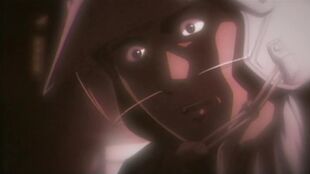
A motorcycle cop who has the misfortune of encountering Higuchi, who kills him via his Death Note.
- Adaptation Name Change: Viz's translation in the manga refers to him as Yukito Shiraba.
- Born Unlucky: He stops Higuchi for speeding minutes after he had claimed Rem's Shinigami eyes. This allows him to kill Shiroba with ease.
- By-the-Book Cop: Seemed to be a normal cop doing his job in controlling traffic, making his death at the hands of Higuchi all the more pointless.
- Sacrificial Lamb: Exists so Higuchi can test out his Shinigami eyes.
- Small Role, Big Impact: He dies minutes after his introduction, but his death leads L to realize that Higuchi had acquired the means to kill just by looking at a person's face, and also causes a patrol to be sent after Higuchi, which ends up being crucial to his arrest.
- Steven Ulysses Perhero: In the manga, his name is Ito Shiroba. Motorcycle cops in Japan are often called shirobai because of their white motorcycles (shiro=white, baiko=motorbike).
FBI
The Federal Bureau of Investigation. Twelve of them are sent to Japan to capture Kira, and twelve of them end up dead two weeks later.
- Adaptation Name Change: The TV Drama changes all their names, including Raye's.
- As Long as It Sounds Foreign: Aside of "Raye Penber", which at least sounds relatively normal, we have "Toors Denote", "Haley Belle", "Lian Zapack", "Arire Weekwood", "Ale Funderrem", "Freddi Guntair", "Knick Staek", "Bess Skelletd", "Frigde Copen", "Girela Sevenster", and "Nikola Nasberg".
- Dies Differently in Adaptation: In the musical, Light uses non-heart attack killing methods for all of them, including accidents and suicides.
- Dropped a Bridge on Him: Though a big deal is made out of the FBI being involved on capturing Kira, their director refuses to send any more men after the first platoon is killed.
- The Ghost: Most of them don't appear onscreen, and the audience only knows their names. In the Live action film, their faces can be briefly seen on Raye's computer.
- Make an Example of Them: Though Raye was unlikely to find anything suspicious on Light, he still has the entire patrol killed to show the world (and L) what happens to those who go against Kira.
- Total Party Kill: All 12 agents working on the Kira case are killed with heart attacks by Raye Penber under Light's manipulation. The anime takes it a step further by having Raye kill his boss David Lincher as well by writing his name down as well. Then, in Part 2, all confirmed FBI members of the SPK, including Steve Mason and Larry Conners, are wiped out by Jack Neylon using the Death Note.
- Small Role, Big Impact: They don't last long, but the deaths of two of them spring their angry family members (Naomi Misora and Halle Lidner) into action against Kira, and their director Steve Mason helps form the SPK from the remnants of the organization.

The Director of the FBI. He authorizes sending several agents to Japan at the beginning of the Kira case, but abandons the project after Light kills all of them. He later joins the SPK but is killed by Mello and Rod Ross via their Death Note.
- The Alleged Boss: After the Time Skip, he's still the director of the FBI but is mostly reduced to holding the phone for Near while he's busy playing.
- Back for the Dead: After his return, he serves Near for a few chapters before being killed by Mello.
- Bald of Authority: He's bald and the Director of the FBI, making him one of the highest authority figures at the time of his introduction.
- Benevolent Boss: Refuses to send any more of his men to what he reasonably assumes to be a suicide mission shortly after an entire platoon is killed.
- The Bus Came Back: He backs down from the case in chapter 8/episode 5 after the death of his men. He then returns in chapter 60/episode 27 as a member of the SPK.
- The Consigliere: Downplayed, but he does question Near's deductions, occasionally forcing him to backtrack and admit that they're only assumptions.
- Death Is Dramatic: In the anime, aside from his fall being punctuated by Near's dice castle falling apart, there's a lot of spectacle for his death despite being a minor character.
- Know When to Fold 'Em: He terminates the FBI's support for the Kira case when an entire group is killed, as L had little concise information on the eponymous killer and all pointed to him being able to kill anyone he wished.
- The Man Behind the Man: The one who sent Raye Penber and his co-workers after Kira, which ended up being pivotal to L pinning him down.
- Mauve Shirt: He's one of the more recognizable SPK member due to having appeared previously, but gets little characterization before being offed by Mello.
- Mirror Character: His role as Near's consilgliere is similar to Soichiro Yagami's with L, they're both directors in their respective fields, and are also killed because of Mello and the Mafia.
- Mr. Exposition: He presents Near to the president of the USA, and by extension the audience. He also explains how far Near got into the case during the Time Skip.
- Not So Stoic: Is a little taken aback when Light directly calls him claiming to be L.
- Properly Paranoid: He terminates his cooperation with the Task Force after Light kills his men. He's convinced to return later as a member of the SPK, and is killed as well alongside all but a few of his new agents, making his initial paranoia completely justified.
- Screw This, I'm Outta Here: Withdraws support for the Kira case following the death of eight of his men, but this doesn't save the remaining four.
- Slow-Motion Fall: His death in the anime is played in extremely slow motion, with his dying gasp reverberating through the room and several shots of his body falling.
- The Spymaster: The man behind every FBI officer on the Kira case.
- Undying Loyalty: Seems to have complete confidence in Near, as the boy springs him back to action following his withdrawal from the case, and Mason supports all his decisions until his death.
- We Hardly Knew Ye: He's killed by Mello a few chapters after he starts working with Near.

The FBI Agent who was tailing Light.
- Adaptational Badass: In the TV drama, he attacks Kiichiro Osoreda during the bus-jacking instead of staying hidden, and later holds Light at gunpoint and comes quite close to killing him.
- Adaptational Intelligence: It's subtle, but in the live action movie, he briefly reflects on his Idiot Ball moment of giving his name out to Light during the bus jacking incident after doing so, while in the manga and anime he never suspects a thing. It's played straighter in the TV drama, where he never gives his name out at all and only becomes more suspicious of Light following the event. During Light's plan to kill him, he wiretaps their conversation in order to figure out how he kills people, catches on to Light's ploy with the FBI files, and comes dangerously close to killing him, only failing due to Misa's intervention with her own Death Note.
- Adaptational Nice Guy: In the films, his scene with Misora presents him as a much more caring husband than in the manga and anime, his Stay in the Kitchen line is changed into a playful jab at her previous jobs with L, and it's implied by her response to it that her Quitting to Get Married was her own decision instead of an agreement he forced upon her.
- Adaptation Name Change: Known as "Raye Iwamatsu" in the live-action movie, though pretty much everything else about the character is the same. In the musical, the agent Kira uses to write down the names of the other agents is referred to as "Haley Belle". Made into a plot point in the live-action TV series, where his real name is Mark Dwellton, with "Raye Penber" being an alias.
- All for Nothing: He does everything Kira tells him in an attempt to save his fiancée and possibly himself, and also clinging on to the hope that Kira wouldn't be able to kill his co-workers without their faces. Not only was his fate already sealed from the start, all his co-workers and his fiancée end up dead as a result of his actions. And if Ryuk's information is accurate, he gets Barred from the Afterlife as well.
- Always Save the Girl: In all adaptations, Light coerces him into writing down the names of his co-workers by threatening Naomi's life.
- Ascended Extra: Is a tougher nut to crack in the TV drama, and as a result gets a little more screentime than in the manga and anime.
- Badass Longcoat: Wears a nice-looking trench coat when out on the job.
- But Not Too Foreign: Although American, his mother is Japanese. The writer states that this was done so he wouldn't stick out like a sore thumb.
- Christianity Is Catholic: Raye is a devout Catholic in the live-action movie.
- Crazy-Prepared: In the live-action series, Mark Dwellton carries two fake IDs, a business card with the name Thomas O' Connor and his FBI badge with the name Raye Penber. Light sees through the first one but falls for the second.
- Dead Man Walking: By the time he arrived at the underground train station, his death had already been set to 4:42 PM that day.
- Died in Your Arms Tonight: In the live action film, since Naomi had been tailing him since he went to the train station, he has a heart attack while next to her and dies in her arms.
- Dies Differently in Adaptation: In the musical, Light controls him into jumping in front of a moving train instead of killing him via heart attack.
- Et Tu, Brute?: As he dies, he realizes that Light was Kira all along.
- Fatal Flaw: His lack of knowledge on the workings of Kira's powers, and his tendency to jump to conclusions based off what little he knows about them: He assumes that it's safe to show his ID to Light because he didn't kill the bus-jacker beforehand (not knowing that Kira can control his victims before killing them), and then removes him from the suspect list because the man had died in a car accident instead of a heart attack (not knowing that Kira can determine the cause of death), which seals his fate. In the subway, he takes Light's claim that he only needs a face to kill at face value, and writes the names of his co-workers on the Death Note page (not knowing that since he knew their faces, he was killing them as he was writing down their names), sealing their fates as well.
- Forgetful Jones: Forgets about Light's voice from the bus-jacking, and doesn't realize that he's Kira until he sees it by himself shortly before dying.
- Futile Hand Reach: As he's dying from a heart attack, he desperately tries to reach out to Light, but the subway doors close on him. This ends up tipping L off that Kira was one of the people Raye was tailing when he sees the recording of his last seconds alive.
- Genre Blindness: Raye fails to see the bigger picture of Light's plans, and neglects to consider the possibility of being wrong in his assumptions. This seals his fate during his first conversation with Light, whereupon he gives out his name without much thought.
- Horrible Judge of Character: Deems Light as unsuspicious and writes him off the suspect's list after the bus-jacking incident, despite his fiancée's suspicions.
- Incredibly Obvious Tail: Ryuk is the first to mention, and bring the reader's attention, to Raye tailing Light, though Light admits he knew already that he was being tailed. Well, Raye does not blend in well in Japan with his longcoat. His surveillance stat is also 4/10.
- It's Probably Nothing: His reaction to Naomi's concerns about the busjacking.
- Jerk with a Heart of Gold: He's quite aloof and condescending towards his fiancée, but he was still willing to compromise his mission and put himself at risk to save some civilians during the busjacking. Furthermore, the only way Kira manages to make him write down the names of his coworkers is by threatening Naomi and some pedestrians.
- Killer Cop: In the TV drama, after capturing Light, he rationalizes that since Light knew his fiancée's name and face, she would be in danger as long as he lived, so he decides to shoot him instead of bringing him to L. It's only due to Misa's intervention that Raye is killed.
- The Lost Lenore: His death motivates Naomi into finding Kira herself.
- Mauve Shirt: Gets fleshed out quite a bit despite only appearing in a few episodes.
- Morton's Fork: "Follow my instructions or I kill you and your girlfriend". Guess what happens anyway.
- Nice Job Breaking It, Hero!: Light tricks him into writing the names of his co-workers in a page of the Death Note. Raye assumes that since he didn't give him their faces, that Kira would not be able to kill them, but is soon proven wrong when he and all of them end up dead.
- OOC Is Serious Business: In the first live-action film, his sudden uncharacteristic behavior, courtesy of the instructions Light wrote in the notebook, tip Naomi Misora off that something is wrong, and leads her to further suspect Light of involvement.
- Perpetual Frowner: He's usually seen with a stern expression on his face, even in a beach picture he took with Naomi.
- Playing Possum: In the TV drama, he writes his alias on the Death Note instead of his own name, and fakes having a heart attack while near an abandoned area. When Light shows up to check on him and retrieve the evidence, Mark gets up and holds him at gunpoint.
- Properly Paranoid: His TV Drama counterpart rightfully starts suspecting Light following the bus-jacking, gives him a fake ID, and tells L all about it. It doesn't save him, but he does outsmart Light during his plan to kill his fellow agents.
- Punch-Clock Hero: His aloof behaviour when off the clock implies he isn't too invested in the Kira case outside of it being his job as an FBI officer. His official stats show that his degree of willingness to act is 6/10, and he's said to dislike overtime at work.
- Retirony: Light begins his plan to kill Raye the day he had decided would be his last day trailing Light, as he clearly could not be Kira.
- Say My Name: When he collapses from a heart attack induced by the Death Note and he sees Kira's face, he could only weakly say Light Yagami's name before dropping dead.
- Spanner in the Works: Completely unintentional on his end but Light's biggest mistake in the series was his murder of Penber. Had he allowed Ray Penber to live, all suspicion of Light would have been dropped. Even if he'd just quietly watched him die, rather than getting into his line of sight and gloating, he would have been better off— it was Raye's reaction to him in his death throes that gave L the clue to focus in on him.
- Stay in the Kitchen: To Naomi, telling her that her suspicions are obsolete now, since she quit her FBI job when they got engaged. Needless to say, he should have listened to her.
- Tall, Dark, and Handsome: Fits the description perfectly, being a handsome man with black hair and a mysterious demeanor.
- Too Dumb to Live: He makes Matsuda look like a genius in comparison. First he shows his ID to the suspect he's tailing, then blows off Naomi's perfectly valid concerns about the incident. This gets him, his coworkers, and fiancé killed.
- Unwitting Instigator of Doom: He didn't know that simply writing down the names of his co-workers would kill them, but it's hard to imagine a worse scenario for him that the one that transpired after he did it.
- Vigilante Execution: In the TV Drama, after capturing Light (ironically another vigilante), he deems him too dangerous to be kept alive (as he knows the name of his fiancée), and tries to execute him on the spot.
- The World's Expert (on Getting Killed): For a trained FBI agent who is tasked with investigating the most high-profile suspects in the Kira case (the director and police chief), he's particularly sloppy at his job. He has a below average surveillance stat, enough for Light to notice him even before Ryuk outright tells him, doesn't investigate Light beyond simply following him around, later shows him his ID after some minor prompting, then writes him off as a non-suspect based off an assumption, which he then apparently neglects to mention in his report to L. Once his job is done, he seemingly loses all interest in investigating further, shrugging off Naomi's interest in the case and ignoring all of her valid warnings. Finally, after being led to an underground train station, Light bluffs to him that he has his "relative/girlfriend" hostage, and Raye doesn't notice the vague wording. Raye does everything Kira tells him to do after being threatened, resulting in the deaths of both himself and his co-workers. To make matters worse, he apparently did tell Naomi the details of the bus-jacking, except the name of the suspect he was tailing, which could've saved her when she later meets him.
- Wrong Genre Savvy: He seems to think that Kira is some kind of wizard who can kill people on a whim. The moment he sees that Light didn't kill someone who could've been a risk to him, Raye assumes he must be innocent.
- You Have Outlived Your Usefulness: After he writes the names of his co-workers, he's made to exit his bus by Light, dying three seconds later as it had been written in the Death Note.
- Zombie Infectee: Rather than acting completely Genre Blind, Raye acts like this about showing his name to a Kira suspect in the live-action movie.

Raye Penber's fiancee and former FBI Agent who worked under L in the L.A.B.B. murder case.
- Action Girl: Of the Dance Battler variety, since she's well-versed in Capoeira and trains L in it.
- Adaptational Angst Upgrade: In the live action film, Raye dies in her arms instead of her hearing about it while at home.
- Adaptational Badass: In the live action film, she confronts Light herself and tells him to his face that she suspects him, in a manner not dissimilar to L's in the source material. She's also more active and carries a gun, though by the time she uses it she was already being controlled by Light.
- Adaptational Dumbass: In the musical Light learns the name of Haley Belle (The musical's version of Raye Penber) because of his fiancée carelessly posting it on social media. Since this is the only indirect mention of Naomi in the adaptation, it's also assumed that she never had a past as an agent herself.
- Adaptational Intelligence: She quickly works out that Light is Kira in the first live-action movie, confirms her suspicions with his girlfriend before confronting Light, and then comes close to proving he's Kira before he turns the tables on her. She also realized her husband was acting out of character and chose to tail him, allowing her to see his death first-hand.
- Adaptational Villainy: In the first live-action movie, she's willing to take Light's girlfriend hostage, hold her at gunpoint, and even kill her just to prove that Light is Kira. Subverted when it's revealed Light was manipulating the entire scenario by controlling Naomi with the Death Note.
- Adapted Out: She's nowhere to be seen in the live-action drama, with Raye's fiancée being named Cathy Cambell and the FBI agent working for the Task Force being named Shoko Himura, who is a Composite Character of her, Sanami from the live action film, Halle Linder, and Mello.
- All for Nothing: All the progress she makes on the Kira case by herself ends up being rendered completely moot in the span of one conversation with Light.
- Alone with the Psycho: Twice! Once with Beyond Birthday and once with Kira. The second one does her in.
- Aloof Dark-Haired Girl: Pale skin, dark hair, stunning good looks and a cool, collected personality.
- Ambiguous Situation: The manga doesn't specify how or where she died, and L eventually gives up trying to locate her. The anime shows her walking up to a dangling rope to hang herself with, though it's unclear if this is Rule of Symbolism or if she actually hung herself.
- And I Must Scream: Part of what makes her death so horrifying. Light puts her in a situation where she knows who Kira is... and she can't do a thing about it. Instead, she is essentially forced to watch from inside her own head as she kills herself, utterly alone, deprived of free will and hope.
- Ascended Extra: Both in the prequel novel and in the live-action movies.
- Asshole Victim: Invoked. In the live action film, Light controls her into killing his girlfriend and then herself in a failed attempt at getting a confession, ruining her credence and making her come across as deranged. As a result, though a funeral is still held for her, the Task Force are noticeably more hesitant to speak about her.
- Badass Biker: Rides a motorcycle and is one of the most competent characters in the entire series.
- Betty and Veronica: Though it's gender swapped with Beyond Birthday as the Veronica and Raye Penber as the Betty.
- Boom, Headshot!: A self-inflicted one (due to Light's machinations) in the movie.
- Born Unlucky: Her "luck" rating is 1/10. Ouch.
- Capoeira: She was actually the one who taught L how to fight with it.
- Changing Yourself for Love: Raye made her leave her job as part of their wedding agreement. Though this aspect of them isn't brought up in the live action film, she does comment that he changed her for the better.
- Christianity Is Catholic: In the live action film, she and Raye recite a bible quote together upon their return. This ends up killing her when Light visits the church where she got married and easily finds her name there, since he already knew the name of her fiancée.
- Color-Coded for Your Convenience: Her official color seems to be blue.
- Crusading Widow: She is partly motivated to investigate Kira by Raye's death at his hands.
- Cynicism Catalyst: Her fiancé's death completely broke her, and she confesses to Light that she has nothing left to do with her life but track down his murderer. Light exploits this and engineers her death to exaggerate this to the point where Naomi stops thinking about anything but walking to her own death.
- Dead Man Walking: Her fate becomes sealed at 1:25 PM of New year, but she doesn't kill herself until 48 hours later, as Light wanted to give her ample time to die in a way that nobody would ever find her.
- Death by Irony: Her discovery during her solo investigation is that Kira can control people before they die and that he can kill through means other than heart attacks. She ends up being killed by Kira in that same covert way, being controlled into covertly killing herself by hanging in the anime and by self-inflicted headshot in the live action film.
- Decoy Protagonist: Just when it seems like she'll be a major character in the story after she decides to pick up where Raye left off, she's taken out by Light to further elevate his villain status.
- Dies Differently in Adaptation: In the live action movie, Light makes her shoot herself, whereas in the anime, it's implied she hanged herself.
- Driven to Suicide: Subverted. Light writes her name on the Death Note in a way that makes it look like she killed herself out of grief due to her husband's passing, though he also makes sure her body is never found so as to not arise suspicion. Also subverted in the live action film, where Light also writes that she would kill herself via headshot out of remorse after shooting Light's girlfriend.
- Dull Eyes of Unhappiness: When she's Driven to Suicide.
- Dying Alone: Light details in his description of her death that she will die alone where nobody can find her.
- The Dying Walk: When Light writes the details of her death down, she starts robotically walking away to her suicide with a perpetually despaired expression on her face.
- Fair Cop: Formerly, at least. She was an FBI agent prior to the beginning of the series and is very good looking.
- Fatal Flaw: Her Loose Lips. She was doing a perfect job at piecing the investigation together up until she met with Light. Once they start conversing, it takes Light one walk with her to learn almost everything about her: her knowledge on the Kira case (which is enough for him to commit to killing her), her engagement to Raye (which is already enough for him to kill in the live action film), her job, her backstory, her relationship with L, her date of birth, her nationality, and finally her name, though it does take him a while to pry the last one out of her.
- Faux Action Girl: She gets several manga chapters and one anime episode to set her up as a former FBI agent who now has a personal reason to catch Kira herself, with her manga illustrations portraying her as especially badass, but when she actually meets Light, it takes two conversations for him to kill her.
- Final Boss: Of the first live action film, being the victim that makes Kira sweat the most and also the last one he kills before being admitted into the Task Force.
- Final Girl: Of Another Note but not in the main story.
- Heartbroken Badass: Her future was crushed when her fiancée died, and she joins the pursuit of Kira because she doesn't know what else to do with her life. Her grief doesn't stop her from getting scaringly close to finding out the truth, though.
- Hell-Bent for Leather: Wears a leather jacket and leather pants throughout most of her screen time.
- Hero Antagonist: Naomi is the main antagonist of Volume 2 of the manga, becoming dangerously close to solving the Kira case on her own. However, she's a kind-hearted widow who doesn't deserve any of the things that happen to her, while Light is at his most sadistic when dealing with her.
- Horrible Judge of Character: Well, Light seems trustworthy enough...
- Idiot Ball: She was doing an excellent job at piecing together the Kira case, and was stated (and shown in Another Note) to be an excellent FBI agent before retiring... up until she met up with Light, where a combination of his manipulations and her judgement being clouded by his similitude to L (as well as presumably the grief she was going through at the moment) led her to ruin everything with two fatal mistakes.
- First, she shares the progress of her investigation with Light, a complete stranger whose integrity was only supported by one officer she also didn't know. This is despite initially being adamant on only sharing this information with the police department. This would've already gotten her killed had she been dealing with someone with the Shinigami eyes, as it cemented her as a threat to Kira. In both the anime/manga and the live action film, she also talks about her deceased fiancée being an FBI agent, which in the live action film allowed Light to track her name down by going to the church they were going to be married at.
- Then, after Light commits to killing her and bluffs that the task force is always closed off, that he is working with L, and that he can get her on it to reveal her information, she loosens out completely, confesses that she had given him an alias despite having no pragmatic reason to, and hands over her driving's license, in the hopes that L will recognize her when Light introduces her. This completely seals her fate.
- Ignored Expert: Naomi instantly twigs something is wrong when Raye mentions a few things. He shuts her down in the worst manner possible.
- Just a Kid: She's had... trouble with this. In the novel, it explains that she had a traumatic experience with having faced down a gang member that was no more than a child. Then there's Light the mass murdering high school student...
- Kick Chick: She knows Capoiera, and taught L some moves.
- Kill the Cutie: Kind, deeply devoted to her fiancé Raye, and not to mention pretty sweet. She ended up dying one of the most, if not the most brutal and agonizing death in the entire manga, and that's saying something.
- Loose Lips: Upon meeting with Light, she soon starts telling him about her plan to catch Kira without hardly any prompting, which would have already killed her had Light had the Shinigami eyes. Though she at least remains cautious enough to use an alias around him, when Light attempts a last ditch effort to manipulate her she tells him even that, which kills her. This also ends up being her downfall in the live action movie, where she tells Light that she was Raye's fiancée and that the name she gave him was fake, allowing him to find her real name by going to the church where she was going to marry.
- Love Makes You Dumb:
- Invoked and Subverted. She quit her job as an FBI agent to get married and her fiancée Raye dislikes the fact that she maintains her detective mentality, believing that once they have children together, her habit of thinking about solving cases that aren't her own will fade.
- Downplayed with L. She's clearly very fond of him, and lets her guard down to Light despite being rightly suspicious of him because he reminds her a little of L.
- Love Redeems: In the live action film, she believes that marrying Raye made her a better woman than when she was working with L. This seems to be the case, as she becomes a lot more ruthless following his death.
- Mauve Shirt: She ends up getting a few episodes worth of solid characterization before her abrupt death at Light's hands.
- More Deadly Than the Male: Proves to be a much bigger threat to Light than Raye Penber ever was. She is the first one to deduce that Kira can kill in ways other than a heart attack and that Raye must have come into contact with him before he died. It takes Light pulling out all the stops just to keep up with her, (whereas he easily manipulates everyone besides L in the series), and her being unlucky enough to run into Light when L was away from the station, and getting handed the Idiot Ball to ensure her early demise. The writers have admitted she was meant to last longer but proved so competent that would have been unrealistic if she hadn't caught Light within a few chapters, whereas Light and L's drawn out game of cat-and-mouse over the series culminating in L's death is completely believable. In a physical sense, she was also the one who taught L Capoeira.
- My God, What Have I Done?: In the live action movie, she's so overcome with grief after she accidentally kills Light's girlfriend that she shoots herself as well. It's Downplayed due to the revealed that she was being controlled by the Death Note, so it's unknown how much of herself was still there.
- Names to Run Away from Really Fast: At the F.B.I. she was known as "Misora Massacre" for her badassery.
- Never Found the Body: When Light wrote her name in the Death Note, he stipulated that she would kill herself in such a way that her body would never be found, so she just walks off into the distance and is never seen again. L does eventually find out she was reported missing.
- Nice Girl: A polite and soft spoken woman with a noble sense of justice. This makes her murder feel all the more cruel, and Light's talk about protecting the innocent feel all the more meaningless.
- No Accounting for Taste: Is engaged to Raye Penber, who (in no uncertain terms) tells her to Stay in the Kitchen (despite being far less competent as an investigator than she is) and makes her promise that she'll quit her FBI job as a condition of marrying him. In spite of his lack of support for her career (and the fact that a photo of the two of them suggests that he is less-than-thrilled to be with her), she genuinely loves and cares for him.
- Noodle Incident: Commits suicide in a way that prevents anyone from finding her body. Even Light shows a bit of morbid curiosity about how exactly she achieves that.
- Nothing Is Scarier: How did she kill herself? Light stipulates in the Death Note that she kills herself in such a way that her body will never be found, and through Dull Eyes of Unhappiness she simply walks away in the distance and is never seen or heard from again. Given her intelligence and resourcefulness, Light somewhat regrets that he'll never find out how she pulled it off. Brr!
- Not So Stoic: In her literal final seconds as she learns that Light is Kira, she adopts a horrified and despaired expression.
- Oh, Crap!: The sheer amount of terror on the poor girl's face after learning Light was Kira was just heartbreaking.
- Properly Paranoid: In the live action film, she's instantly suspicious of Light, and for good reason. Downplayed in the anime and manga, where she's cautious enough not to initially share her real name, but she still trusted him enough to share her entire plan to catch Kira with him.
- Psychic-Assisted Suicide: Light uses the Note to make her kill herself.
- Quitting to Get Married: Naomi has agreed to do this because her fiancé, Ray Penber, worries about her in her line of work, though it's also implied that Naomi didn't like working in the FBI despite being good at it.
- Reading Your Rights: In Another Note, she tells B he doesn't have the right to an attorney, trial, etc., because she is so distraught over him having bludgeoned a 13-year-old girl to death. (Although in actuality, the law where B was arrested guarantees those to everyone, regardless of whether they are facing charges for heinous crimes like B's, or more...mundane ones.)
- Real Women Don't Wear Dresses: According to the writer, she dislikes skirts.
- Revenge: She wants to catch Kira to avenge Raye's death.
- Riddle for the Ages: Again, exactly how did she end up killing herself in such a way that her body would never be found? Light admits some morbid curiosity about it to himself, given how intelligent and resourceful she is.
- Right in Front of Me: In Another Note when L asks her if “Ryuuzaki” was cool:Naomi: No, absolutely not. He was creepy and pathetic, and so suspicious that if I weren't on leave, I'd move to arrest him the moment I laid eyes on him. If we divided everyone in the world into those that would be better off dead and those that wouldn't, there's no doubt in my mind that he'd be the former. Such a complete freak that it amazes me he hasn't killed himself.
- Sacrificial Lion: Her purpose in the series turned out to be built up just so she could prove that Anyone Can Die.
- Saying Too Much: Gets a little too comfortable sharing her personal details with Light because he reminded her of L. This culminates in her being tricked into giving away her name.
- Senseless Sacrifice: In the live action film, she calls up L to tell him that she was going to risk her life to prove Light was Kira. However, at that point both her name and her hostage's name had been written down, so her death in the end accomplishes nothing except making the Task Force more sympathetic of Light.
- Shadow Archetype:
- She ends up being one to L. The two are brilliant detectives with a strong sense of justice who tend to be underestimated by their peers and who strive to capture Kira, and who use aliases when interacting with Light, making him consider making the Shinigami eye deal. Eventually, Light outsmarts them and kills them, rendering their entire investigation fruitless. However, Naomi falls for Light's manipulations and willingly gives up her name, while L never fully stopped suspecting him and had to be killed with a Shinigami.
- Also to Near. A second before the Death Note starts taking effect, Light tells her that he's Kira to taunt her. He makes the same mistake with Near, only Near had outsmarted him by giving his associate a fake notebook, so the taunt only served to use as a confession.
- Ship Tease: It's a big stretch, but her few moments with L in Another Note have given shippers hope.
- Shoot the Shaggy Dog: Her entire arc ends up being rendered meaningless the moment she hands Light her driver's license, and both her and the information are lost forever. To make matters worse, L ends up linking Light to Raye Penber all by himself, making her investigation all the more fruitless.
- Single Tear: She cries one when she hears the news of her husband's death.
- Small Role, Big Impact: Even in her death, she helps point L towards suspecting Light, as her previous interactions with him informed him that she wouldn't be the type to just commit suicide as soon as a loved one died.
- The Smart Girl: Idiot Ball aside, she came incredibly close to capturing Light just through her fiancé's stories, police reports, and her own deductive reasoning. She was so smart that the writers had to kill her early because it would be unrealistic for her to have not found out Light in a few chapters.
- Snow Means Death: It starts snowing just as Naomi lets down her guard enough to reveal her real name to Light, who sentences her to suicide. The snow continues as she walks to her fate.
- The Stoic: Her emotional strength rating is a full 10/10. When she hears the news of her husband's death, she sheds a single tear but doesn't change her expression.
- Thousand-Yard Stare: In the anime, she briefly gives this expression at the exact moment the Death Note takes effect on her before it changes to Dull Eyes of Unhappiness.
- Too Dumb to Live:
- On one hand, she doesn't seem to realize that a creepy kid following her around asking Have You Told Anyone Else? is a bit off, not to mention the Idiot Ball. On the other hand, it was a Contrived Coincidence that she went to the police station when Light was there and L wasn't, Light's trustworthiness is backed up by another person and he comes off as a genuine member of L's team. Regardless of what side you're on, nearly all fans agree her death was pretty cheap.
- Subverted in the live action film, wherein her role is notably expanded from the manga. She still dies, but it's more plausible and makes Naomi seem less like an idiot. Despite this, she still makes a fatal mistake in telling Light that she's Raye's fiancée, allowing him to find her name by going to the church where they were planning to get married.
- Tsundere: This is Lampshaded in Another Note.
- Vasquez Always Dies: One of the most badass female characters on the show, as well as the first to die.
- We Hardly Knew Ye: Dies too early in the manga and anime to really establish her personality, but this was fixed in the prequel novel and the movies.
- The Worf Effect: The creator stated that she figured out too much too early on so he had to get rid of her to continue the plot, so when she meets up with Light, her cautiousness fails her several times and she ends up dead as a result.
- The World's Expert (on Getting Killed): Despite having worked for L and her intelligence stat being only one below his, his cautiousness doesn't seem to have rubbed off on her, aside from initially using an alias, and is killed after one interaction with Light where she remains oblivious to his real motives up until he flat out tells her to her face a second before controlling her.
- You Remind Me of X: Naomi says to Light that he reminds her of L, Lampshading that they're Mirror Characters.
The head of the twelve FBI agents secretly working on the Kira case. He's the leader of research in the group.
- Adaptational Intelligence: Downplayed. In the manga, he takes Raye's claim that there's a glitch in the system at face value, and sends all his men the file that he would later use to kill the other agents. In the anime, Light has Raye write his name in a slot of the Death Note which already detailed that he would send said file, making him completely devoid of control.
- Death by Adaptation: There's no mention of Raye's boss having his name written down in the manga. In the anime, he is killed alongside the men in the file he sent.
- The Ghost: His face isn't seen, but it's clear Raye saw it at some point which is why writing his name down on the Death Note kills him.
- The Leader: The head of the FBI agent group sent to Japan.
- Named After Somebody Famous: Probably named after David Lynch, who played an FBI leader in a famous show he also directed.
- Named by the Adaptation: The manga doesn't specify his name, but the anime does, courtesy of it being written in the Death Note.
- Unwitting Pawn: Light has Raye trick/control him into sending him a file with the information on his men.
- Unwitting Instigator of Doom: He sends Raye Penber and all the other agents a file containing the names and faces of himself and his men, allowing a coerced Raye to write their names down and kill them. He's more blameless in the anime where Light has Raye control him with the Death Note into sending said file.
One of Raye Penber's co-workers whom Light uses as a middle-man to obtain the file containing his and his co-workers' names.
- Adaptation Name Change: He's referred to as "Henneth Belle" in the TV drama.
- And I Must Scream: His expression in the musical as he's made to kill his co-workers and then himself shows that he was conscious throughout. Light taunting him about it doesn't help.
- Ascended Extra: He takes Raye's role as the agent Light uses to kill his co-workers in the musical.
- Demoted to Extra: In the anime, Light doesn't have Raye call him, so his role is reduced to simply having his name written down.
- Dies Differently in the Adaptation: In the manga and anime, he's killed with a heart attack, while in the musical he's made to jump in front of a moving train.
- The Ghost: His face isn't shown in neither the manga or anime.
- Psychic-Assisted Suicide: In the musical, Light makes him jump into a moving train.
- The Scapegoat: In the manga, as he was the first agent to receive the file instead of Raye, L initially starts investigating him, as per Light's plan. However, this goes nowhere and L soon starts diverting his attention to Raye.
- Unwitting Pawn: In the manga, he has his boss send Raye and the other agents a file containing the names and faces of all agents, which Light uses to kill them. In the musical, Light outright controls him into writing said names.
Criminal Associates

A thief L hires to assist in infiltrating Yotsuba. Her real name is Mary Kenwood.
- Action Girl: L hires her to infiltrate the Yotsuba building and follow Higuchi, and she later holds the latter at gunpoint alongside the Task Force, despite not having a license to carry one.
- Anti-Hero: She is a professional catburglar under the employment of L.
- Badass Biker: Follows Higuchi on a motorcycle. Light uses this gimmick to conspicuously kill her in a traffic accident.
- Classy Cat-Burglar: The writer says that Wedy has the "stereotypical female spy look".
- Cool Shades: She wears sunglasses.
- Crooks Are Better Armed: Downplayed. As the Task Force members quit being officers to continue working on the case, they refuse to use guns when arresting Higuchi, leaving Wedy (who also does not have a license) as the only armed person in the group.
- Drives Like Crazy: Invoked by Light while killing her with the Death Note in the anime, causing her to make a messy turn and crash her own bike, killing herself.
- Hell-Bent for Leather: Wears leather pants and occasionally leather suits as well.
- Highly Visible Ninja: She wears bright PINK! when first infiltrating the Yotsuba building.
- Ice Queen: The How to Read Volume rates her "Bitchiness" at 10/10. Although in the US translation, it's read as "Sex Appeal". It should be noted that in Japan "bitch" is used as slang to mean "slut".
- Karma Houdini Warranty: Her undercover work with L keeps her out of prison, but Kira ensures she gets the death penalty once her employer is dead.
- Know When to Fold Them: She wisely stops tailing Higuchi after he's detained by a street cop. Later, she stays behind from the chase after she almost gets shot.
- Loveable Rogue: She's a catburglar, but still on the side of the good guys.
- Mauve Shirt: She's a mayor player in the Kira case during the Yotsuba arc, but is bumped off by Light as soon as he regains control of the situation.
- Ms. Fanservice: Aside from having a 10/10 "sex appeal" stat, she's often seen wearing tight leather outfits or bare-shouldered tops.
- Odd Friendship: With Soichiro. Though they don't fancy each other due to their contrasting professions, he takes a bullet for her during the stand-off against Higuchi, and she later leaves Aiber to chase the man down while she tends to the wounded police chief.
- Pet the Dog: She helps tend to Soichiro Yagami after he takes a bullet meant for her.
- Punch-Clock Hero: Unlike Aiber, she expresses annoyance with all the work L makes her do, such as when he tells her to bug all six of Higuchi's cars.
- She Knows Too Much: Once L and Watari are dead, Light kills her in a bike accident.
- Spy Catsuit: When infiltrating a building she wears a leather bright pink catsuit.
- Stealth Hi/Bye: She somehow infiltrates the Task Force's headquarters offscreen, as L points out when she's introduced. In the anime, she's already in the room when L first addresses her, shocking Matsuda who apparently didn't see her enter.
- Teeth-Clenched Teamwork: Soichiro does not appreciate having her on the team as she's a crook. When they're tasked with guarding Matsuda, he's angry that L allowed her to use a firearm.
- Villainous Friendship: With Aiber. When off the clock, they seem to be on good terms, and she trusts him with her gun after she's incapacitated.

A Con Man L hires to assist in infiltrating Yotsuba.
- Affably Evil: Being affable is par for the course for a Con Man, but criminal activities aside, he seems like a decent guy, has a family, and is hesitant to hurt others.
- Alas, Poor Villain: He may have been a criminal, but Light killing him (excruciatingly slowly in the manga) in front of his family for being a loose end makes his death a tragic one.
- Anti-Hero: A self-admitted con artist who's brought in to stop Kira.
- Boxed Crook: According to the manga, he works for L because he has enough on him to send him away for life.
- Con Man: He was a very skilled con artist before meeting L. Even while working with the good guys, he cons the Yotsuba out of a fortune before helping the crew turn them in.
- Con Men Hate Guns: Dislikes violence and firearms, although he's no stranger to them.
- Consummate Liar: It's part of his Con Man schtick. He manages to play the entire Yotsuba board like a fiddle by pretending to be a famous detective.
- Dies Differently in Adaptation: Although Light kills him with the Death Note in both the manga and the anime, the cause of death is different in each continuity: liver cancer in the manga, a heart attack in front of his family in the anime.
- Even Evil Has Loved Ones: A criminal but he did have a family.
- Even Evil Has Standards: He's not thrilled about guns, and struggles to shoot one even after Higuchi almost shoots Wedy.
- He Knows Too Much: Like Watari and Wedy, he's killed by Light for his connections with L.
- Karma Houdini Warranty: His work with L stops him from being prosecuted for his crimes, but Kira ensures he gets the death penalty (and a particularly excruciating one in the manga) once his employer is gone.
- Loveable Rogue: He quickly earns the contempt of the Task Force due to his criminal activities, but he proves himself to be quite likeable for a criminal. Then again, being charming is the reason he was hired in the first place.
- Mauve Shirt: His role as "Eraldo Coil" is key to defeating Yotsuba Kira, but once the ordeal is over, he's easily disposed of by Light.
- Odd Friendship: With Mogi. Despite being a criminal and a police officer respectively, they work together while infiltrating Misa into the Yotsuba, and again when setting a trap for Higuchi.
- I Owe You My Life: When L gives him an out from exposing himself to Kira, Aiber insists on carrying on with the plan since L saved his life more than once, and because it's more thrilling that way.
- Perma-Stubble: He always seems to have a five o'clock shadow.
- Pet the Dog: For maximum empathy, he is shown with his family when he is killed.
- Psychic-Assisted Suicide: In the anime, Light uses the Death Note to control him into drinking himself to death.
- The Social Expert: He's a master of reading social situations and is able to make quick friends with basically anyone.
- Thrill Seeker: Unashamedly tells L that he entered the crime world for the thrill of it.
- Villainous Friendship: With Wedy, his fellow crook. When off the clock, they seem to be on good terms, and he's worried for her when she almost gets shot.