Eleven climbers died on K-2 in a three-day stretch the summer of 2008. Amidst the tragedy were some extraordinary feats of heroism. The two most impressive ones, in my mind, were performed by a Sherpa who rescued another Sherpa, and a Pakistani cook who rescued a Pakistani climber/expedition organizer. Neither of those heroes were recognized by the American, European, and South Korean climbers, most of whom ignored the Sherpas and one of whom publicly disparaged the Pakistanis who struggled and died on the mountain. (Seriously, fuck that guy.)

This book is partly the story of those converging and ill-fated expeditions, but mostly of those two Sherpas, Chhiring Dorje Sherpa and Pasang Lama. It also gives a lot of eye-opening background on Sherpas, their ethnic and class divisions, the social and economic forces that lead so many of them to climb mountains, and the cultural forces that affect them when they do so.

(It also explains why so many Sherpas have the same name. Traditionally, they are named after the day of the week that they were born, and don't have last names so they mostly use "Sherpa" for outsiders who demand one. This is fine in a village of 100, where there will only, statistically, be 14.28 people named Pasang so you can easily distinguish Old Grandpa Pasang from Teenage Yak Herder Pasang from Pasang With The Missing Finger. Then you get to Kathmandu, where there's 350 Pasang Sherpas who are all 25 years old and are porters on mountain climbing expeditions so if you want to identify one of them you have to resort to naming what expeditions they were on and what village they come from and then you will still probably need to use a nickname as that could easily be five different people.)

Until I read this book, I had completely forgotten that the crown prince of Nepal had massacred the entire royal family in 2001. To be fair, there was a lot going on in 2001. Still, what a bizarre incident that was. It also caused a lot of political and economic chaos which, as always, drove people to move in search of safety and better living conditions.

The Sherpas almost all started climbing because the pay was good. But some of them, like Chhiring, got a taste for the risk as well. But even they seem, overall, vastly more level-headed than the paying climbers, who mostly don't come across particularly well in this book. This may be because whatever sort of person climbs Mt. Everest, you have to be fifty times more like that to climb the notoriously bloodthirsty K-2.

Between that, a very narrow window of good weather, the inevitable breaking of vows to turn around if you're not on track to summit at 2:00 PM, the one person who could translate between the multiple language groups having to be medevaced out, and some plain bad luck, it's not surprising that so many people died. It's actually surprising that so many survived.

This book is both excellent in its own right and a great antidote to all the books that don't focus on the Sherpas. Every time you read one of those, just remember that the Sherpas are doing everything the paying climbers are doing, but carrying heavy packs, with shoddy gear, without fame or glory, and often against the wishes of their families. They're like Ginger Rogers doing everything Fred Astaire does, but backwards and in high heels.


During the Pinochet dictatorship in Chile, one girl in a school never showed up for class one day, and never returned again. Years later, as adults, her former classmates still think and dream and talk about her. She and a friend exchanged letters even though they also saw each other in class every day. A boy had a crush on her, and maybe she had a crush on him too. A friend came to her house to play "Space Invaders," and her father showed them his prosthetic hand. A bodyguard began to drive her to school. Her classmates went to a protest. And then she was gone. Memories, dreams, letters, and imagery intertwine, then twist into a knot that can never be undone.

A perfect little book, incredibly sharp and precise despite being largely about dreams and uncertain memories. There's not a single wasted word; I think the translation must be excellent. I read it with gathering dread, as if I was in the sort of nightmare where nothing overtly violent is happening but but you somehow know that something will appear at any moment, something so terrifying that just seeing it will destroy you. Which is probably what it felt like to be a child during the Pinochet regime.

I was right to read the book with dread, though what happened to the missing classmate is less predictable than what I'd assumed. It's a very quick read but one which sticks in your memory and haunts you. It was recommended to me by my friend/occasional employee Ana, who is from Chile. I recommend it to you.


A journalist recovering from the death of her husband is sent to a small town to investigate the claim that A HORSE GAVE BIRTH TO A HUMAN BABY.

I strongly dislike reading about normal human pregnancy and birth, but I love stories about bizarre births. I also love folk horror. So a story about a small town where a horse gives birth to a human baby sounded like just my jam.

Sadly, I really disliked this book. In fact the more I think about it, the more I dislike it.

My main beef with it is that very little of interest happens until about the last ten pages. The parts about the horse-human birth are cool! Ten pages of cool. Would've been a good short story.

There are eleven or twelve POV characters, but only one is actually necessary (the journalist) and only one is at all interesting (the teenage boy who is raising and claims to be the father of the horse baby). The rest are townspeople whose POVs don't add anything to the story, plus "The Horses," which ought to be interesting but wasn't because half of it was explaining what humans thought about the horses. I don't care what humans think about horses! When I'm in supposed horse POV, I want to be immersed in HORSE POV!

The setting is incredibly vague. I couldn't figure out if it was even in America or England until it mentioned the opioid crisis.

Aggravated spoilers. Read more... )

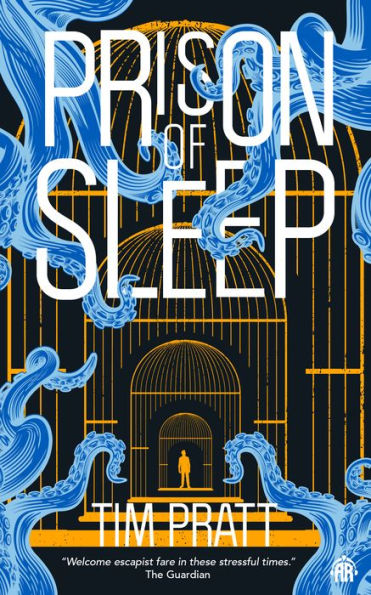
The premise is better than the book and the cover is also better than the book. I was in it for the horse baby but that's only about 10% of the book.


As per usual for Jo Walton, this is an irresistibly readable novel with great characters and a truly peculiar premise.

The Serenissima is a magical echo of Venice which is also a sort of interdimensional space port, home to people from eight (or possibly nine) planets, including Earth. Humans are called Venetians, as the Serenissima is also a gateway to Venice at different time periods. (The Serenissima is publicly known on all planets except Earth, where it's a secret known only to the Venetians who are humans living in Venice.) It's a city without sunlight, permanently cloaked in mist, beset by plagues, where magic is real and anything enough people believe in becomes reality.

All the people living there have human bodies and different heads - cat heads, dog heads, heads with garlands of living flowers, etc - so that if they visit Venice, Venetians will know them for what they are but tourists will assume they're wearing masks. They have somewhat different biology from humans and very different cultures.

Each chapter is narrated on a different character, one from each planet, each with their own concerns. It took me quite a while to figure out what the plot even was, but I didn't care at all as the Serenissima is fascinating, the different cultures are fascinating, and I was happy to just hang out there indefinitely.

It's beautifully written and very immersive, strange enough to be fun in a science fictional way but also magical-feeling, and also very human and relatable. There's political intrigue, struggles for survival, love affairs, and even a couple of plot twists. The plagues are very reminiscent of the landscape of AIDS right after the first wave of life-preserving drugs came out, too late for many but just in time for some. It's small-scale, with the main event that the plot revolves around something whose significance isn't entirely clear; of Walton's work, it reminded me most of Lifelode. In terms of other books it reminded me of, it does have slightly Piranesi-esque vibes.

I really loved it. It's easier to experience than to describe.
June is the month where every time I post about my shop, brave internet warriors call me a pedophile and a groomer. Joke's on them though: every time they comment, the algorithm boosts my post and gets my shop more publicity.

I had fun creating a display for Pride. The books rotate - I have lots that fit the categories I highlighted. Which slogan is your favorite?


Obstetrix is a gripping suspense novella about Liz, an obstetrician who gets kidnapped by a cult to provide care to their large contingent of pregnant women and girls. The cult heard about her because she was acquitted of charges for performing an abortion in a state where it's illegal except to save the mother's life, but of course the prosecution argued that the mother would have survived without it.

Kidnapping/hostage stories are always tense, and this one is additionally so because not only is Liz in danger, but so are her patients and a young teenager who's soon to be married off to a particularly sinister adult. Liz has no idea who's in the cult of their own free will and who isn't, so she can't confide in anyone. Books aren't allowed, except for a single Bible that's kept locked up. Liz's only refuge is her memories of her favorite comfort read, an 80s fantasy novel with a kidnapping plot, and her quiet determination to find a way out.

I stayed up till 4:00 AM reading this. There's not a ton of action per se, but the whole situation is so tense that I couldn't stop reading.


In a country with Wild West vibes, young girls are often sold to brothels, to become sex slaves when they come of age. They are given magical tattoos of buds when they're bought. These tattoos slowly grow and blossom into flowers that the girls are nicknamed for. They cause excruciating pain when they're covered up, preventing the girls from fleeing and blending into the populace. But this isn't the only barrier to escape. The entire wilderness area is haunted by angry ghosts that can take physical form and rip you to shreds.

On Clementine's inaugural rape night, her would-be rapist nearly suffocates her, and she brains him with a lamp. As she would be executed for that, she, her older sister Aster who's been a sex slave for years already, and three other girls manage to escape the brothel and flee in search of a rumored woman who can remove the magic tattoos. 

By far the most interesting character in the book is Violet, the brothel bully, spoiled brat, and magical opium addict who is the only one who knows where to find the woman who will be their salvation, if she actually exists. As they flee across the haunted wilderness, they're pursued by magical slavecatchers, are joined by a boy, and meet some rebels. Clementine has a romance with the boy, two of the girls have a romance together, and Violet and Aster have intense feelings which hopefully go somewhere in the sequel.

This novel has an extremely cool setting and unusual worldbuilding. I love ensemble casts and wilderness traveling. I expected to adore this, but while I did enjoy reading it, I didn't love it. I had been under the impression that the girls all had different magical powers, which is my own fault for misreading the blurb, but I was disappointed that they don't have any, except that Clementine can talk to ghosts a bit. More importantly, only Aster and Violet, plus Clementine to some degree, get any real characterization. I was interested in them enough that I'll read the sequel, but the book overall felt like it should have been fantastic but ended up merely good.

Content notes: There is a very violent, graphic rape attempt in chapter one. That's it for that but the repercussions of years of sexual abuse are felt throughout the novel.


By the author of We Used to Live Here.

Macy is a depressed young woman caring for her kleptomaniac younger sister after their father died in a car crash. She's desperately poor and more or less unemployable, due to her resting bitch face and bad employment history which includes stuff like throwing sodas on mean customers.

She answers a Craigslist ad to be the caretaker of a home with a bizarre set of rules covering when certain lights must be turned on or off, what to do if she sees a rabbit, etc. When she breaks a rule, she has to open a sealed envelope or get a creepy phone call, both of which contain further instructions. Each broken rule causes the overall situation to escalate, and supposedly causes bad consequences for her personally though the latter mostly doesn't happen. Things escalate quickly as she breaks rule after rule because, as it turns out, she's apparently incapable of doing anything right. No wonder she can't keep a job!

The entire structure of the book feels like OCD, and Macy acquires a sort of magically-inflicted OCD as well. So it's all a metaphor for mental illness/grief. But the whole thing feels mechanical - it's set up a bit like a video game and Macy, who is kind of a sad sack, feels like she's just there to be put through it. She breaks the first rule the first day, quickly followed by every other rule. Her complete and total incompetence made me lose all interest in her. It would have helped if she'd been on top of the rules for a while, rather than instantly failing - especially since the random elderly woman who preceded her seemed to have succeeded for three months. Macy couldn't manage for one hour!

Literally nothing is explained. I don't mind some ambiguity or Things Man Cannot Know, but in this case, it felt like the author was just throwing cool stuff at a wall with nothing behind it. (What happened to Caleb, the son of the previous caretaker? Why did the rules work? Were they arbitrary, or was there some weird logic to them? What caused people to get stuck in time loops? Were people getting stuck in time loops? Were the blue-eyed people ghosts or something else? Who was making the phone calls, how were they getting through, and how did they know what to say? Why was the house so important? What was up with parallel realities? What was the entity?)

I also would have liked it to be more ambiguous, at least for a while, whether any of the magical elements were real or just believed to be real. And it would have been nice if Macy was slowly sucked into belief by means of doing the rituals, rather than having a magical switch in her head flipped to suddenly make her believe.

The book was engrossing while I was reading it, but ultimately unsatisfying. It felt both flat and overly slick. I wonder if We Used to Live Here is better, or more of the same.

Content notes: The entire book is one big OCD trigger. There is threatened/implied harm to rabbits, but though one wild rabbit is found dead of unknown causes, the rabbits we meet end up fine.


This impressively weird dark fantasy/timeslip novel has three storylines. One follows Lee, a white American college student in the modern day. He too is impressively weird. He can tell when people are lying, he can hear other people's heartbeats, he sees bloodstains that no one else does, and he's addicted to over the counter sedatives like Benadryl to muffle his perceptions which are normally painfully acute. He's also very emo and obsessed with death. For a while I was convinced that he was a vampire.

When we meet Lee, he's fled to Kagoshima, Japan, where his father is living with his latest Japanese girlfriend in a historic samurai house. (Lee's mother disappeared in Cambodia under mysterious circumstances long enough ago to be legally dead; the official story is that she was taken by human traffickers.) The reason Lee fled is that he murdered his college roommate for reasons he can't recall, and also can't recall where he hid the body!

The second main storyline follows Sen, a girl Lee's age from a samurai family a hundred years ago, after the samurai were essentially outlawed. Her father took part in a failed rebellion in which everyone else was killed, and has fled with his family to the same house Lee is living in now. Her father, a traumatized abusive asshole, is plotting another rebellion, and so has very reluctantly agreed to let her study the sword as her brothers are too young. Sen is extremely devoted to the idea of dying nobly to impress her father.

The third storyline, which only gets a couple of interspersed chapters, is a retelling of the legend of Urashima Taro, a Japanese fairytale about a fisherman who rescues a turtle who is actually a princess, and visits her castle under the sea.

Sen and Lee both begin to see each other, initially believing the other is a ghost. The book really picks up once they start talking to each other. Lee thinks that since Sen is dead in his time, maybe she can help put him in touch with his dead mother. Sen is reluctantly willing to oblige once she repeatedly fails to kill the creepy foreign ghost, mostly because he's someone her own age who will talk to her. Their relationship is intensely romantic but not sexual, or possibly extremely intensely platonic. But the more Lee presses Sen to try to contact his mother, and the more involved Lee gets with the idea of saving Sen from her rapidly approaching glorious death in battle, the more weird and surreal things get.

Japanese Gothic was a working title that stuck, and the book is indeed extremely gothic. I enjoyed how unabashedly overheated, strange, and surreal it was. It feels like Baker had a great time writing it. There's a number of mysteries and I figured out some in advance, but I never, not in a million years, would have figured out how they all fit together. In fact, almost everything does fit together quite neatly by the end. That aspect and others reminded me a bit of Catriona Ward.

I really enjoyed this book. It's Baker's second novel. Her first is Bat-Eater and Other Names for Cora Zhang, which I am excited to read.

Content notes: Gore. Inventive methods of child abuse (very reminiscent of Catriona Ward). Cruelty to animals (wild hares) (ditto).


After 40 years together, Don and Rodney face the end of the world from a black hole that will swallow the Earth in exactly one month. So they embark on a road trip to keep a promise they made to their son.

Klune sells very well at my shop. He is good at doing what he does, and what he does is gay, twee, and glurgy. I did not enjoy The House on the Cerulean Sea and I did not enjoy this either. Both of them made my eyes glaze over. I started both of them, disliked them both, started skimming, still was bored and irritated, then skipped to the end to see how it all came out. Then I learned some information that made me revise my opinion of the book even lower. In the case of The House in the Cerulean Sea, it was an interview where he mentioned that his sappy, trivializing book was inspired by the Sixties Scoop. In the case of We Burned So Bright, it was his afterword.

Spoilery. Read more... )

Klune's books are very deeply meaningful for a lot of my customers, but UGH. The best thing I can say about it is that I quite like the covers.


When you pick up an old children's book because it says it's about a tiny glass mermaid coming to life, you probably don't expect most of the story to involve the main character going to another world where she has to face an evil pirate witch who wants to nonconsensually adopt her. Admittedly this all happens while they're lugging around the now full-sized mermaid so she can be the best friend of the other world's sole mermaid, but if they miss the deadline she'll turn back to glass, while the witch pirate throws spells at them, but... Did I mention that all of this takes place inside a Christmas tree?

This is a pretty fun book but like many older children's books, recounting the plot is like describing a half-remembered dream.


A very loose take on "Little Red Riding Hood," set in modern times post-apocalypse!

Cordelia, nicknamed Red because she hates her given name and always wears a red hoodie, is the sole survivor of her family. She's traveling the post-pandemic wilderness to get to her grandmother's house in the woods, armed only with an axe. She's used a prosthetic leg since losing one in a car crash when she was a child, so people underestimate her. They shouldn't.

The story alternates between her post-pandemic journey and the events leading up to it, when Red lived with her mom (a Black college professor), her dad (white, I forget his job) and her older brother Adam. Red is about 20, Adam is about 22; they're both college students. Red is extremely into horror movies and preparing for danger, so she sees the urgency of the pandemic well before most people. Unfortunately, that's not enough to save her parents and brother.

I was absolutely glued to this book, staying up past midnight to finish it, despite its many flaws. If you, like me, enjoy a small scale apocalypse story with a focus on the logistics of survival, this is a must-read. The logistics of survival bits are GREAT.

It's repetitive (HOW many times do we need to be told that Red can't run fast because she has a prosthetic leg?), everything is over-explained, Red is somehow able to use a small axe to kill multiple men armed with guns (all at once in addition to sequentially!) despite having no training, and the ending is incredibly abrupt and has more loose ends than a half-finished sweater. I cannot believe the author's chutzpah in setting up all sorts of fascinating mysteries only to have Red conclude that she's not the main character (what?) and so no longer cares that she'll never know the answer to any of them. Okay, but I care!

And yet, I enjoyed the hell out of it, right up to the non-ending. I am just a sucker for people searching for beef jerky in looted supermarkets and rescuing kids.

Spoilery details.

Read more... )

Halfway through this book, I was looking up all of Henry's other books, which are horror or thrillers, many dark fairytale retellings, so I could read them all. When I got the end, I looked up their reviews. Many mention "abrupt" endings and none of the rest are post-apocalyptic, which was by far the best part of the book, so I will probably leave my reading of her books right here.


A beautifully written, atmospheric riff on Pet Sematary, among other things, in which the women of a Korean-American family living in a small, mostly white town have the power to resurrect the dead. They only use it on small animals, primarily to resurrect their beloved pet rat Milkis every time he dies of old age, which is about every three years. (If the author hasn’t kept pet rats, I will eat my hat.) Theoretically they could resurrect humans, but family lore says it’s a very, very bad idea. Despite extreme temptation, the two teenage sisters do not try to resurrect their mom when she dies in a car crash. But when the older sister, Mirae, drowns in the river, her younger sister Soojin can’t resist…

This isn’t the kind of story that’s built around surprises – we know from the beginning that sometimes dead is better, and the whole idea of forbidden resurrection is about refusing to accept the fact of death, so that also must come into play—but rather about the journey. The book has a water-drenched, hothouse atmosphere, all claustrophobic relationships and emotions too intense to bear. It’s a bit spooky but mostly an exploration of grief and love via creepy magic. I thought it was great, but rat lovers should heed the note below. (Which is too bad because the pet rat character is great.)

Content notes: The same pet rat repeatedly dies of old age and is resurrected, a process which involves some physical mutilation of the corpse. This part didn’t bother me but the rat does also die one painful and violent death, which did. There is also a flashback story to earlier generations involving a chicken that gets repeatedly killed in a cruel way. Lots of body horror. The story is centrally about grief.


Erica Skyberg is a 35-year-old teacher in a small town in South Dakota who’s just realized that she’s a trans woman. Or rather, the knowledge that she’s a trans woman has finally become impossible to suppress. Unfortunately, she’s deep in the closet and the only other trans person she knows is Abigail, who is 17 and the only openly trans student at her high school. Erica is in the stage of identity where she can’t think about anything else; Abigail is fine with carrying the banner of being out but would really like her life to not be just about Being Trans.

Erica comes out to Abigail, who is equal parts annoyed and fascinated by the chance to take on the role of being a mentor to an adult. Their relationship is definitionally inappropriate, but not predatory or harmful. Abigail can be a lot and Erica has enormous issues with self-esteem and boundaries, but they’re both essentially kind and well-meaning people trying to just live their lives in a world that has cast them as Public Enemy # 1.

This novel is also essentially kind. It’s a very warm and often pretty funny look at two people who have one somewhat random thing in common and create a relationship based on that one thing, which becomes a relationship based on more than that, and how the repercussions of that relationship spiral outward and affect others: Erica’s ex-wife, Abigail’s boyfriend, Abigail’s boyfriend’s mother, a lonely student who wants to be friends with Abigail, the woman running against an anti-trans political candidate who is guaranteed to win, and many more.

Content note: Obviously transphobia and internalized self-hatred are central to the overall story, but it’s not the kind of book where people are constantly getting slurs screamed at them.

I will mention, since it’s a mistake that I made, that Emily St. James is not Emily St. John Mandel who wrote Station Eleven.

Recommended by Naomi Kritzer. Thanks!
I have been offline more than usual lately because the internet is off at my house and I've been unable to reach anyone who is not an AI, which went about as well and efficiently as you can imagine. The AI has decided that I need a new router and is mailing it to me with instructions for how to install it myself, because God forbid a human be involved. If that doesn't work, who knows what the next step is. I am beginning to suspect the only humans at the company are the CEOs and shareholders.

Meanwhile, I decided that I am spending way too much time doomscrolling, both intentionally and non-consensually. Not only is everything horrible right now, but the minute you get online you're personally informed of every horrible thing that happened anywhere, big or small or in between. Did some random dude murder his entire family anywhere in the world? You'll be informed of it, complete with heartbreaking photos of the dead kids. Did a child commit suicide anywhere in the world? You'll hear about that too, also complete with the awful story and heartbreaking photos! And that's not even getting into politics and the upcoming end of the world. I don't think humans are mentally equipped to live like that.

So I installed ScreenZen on my phone. It's one of many apps that will block both apps and entire websites. (Sadly it does not have the ability to block words.) I blocked everything I doomscroll on. I highly recommend this! I still get the news, as 1) I get a news digest emailed to me daily, 2) people will tell me the news in person whether I consent or not, but at least I'm not constantly marinating in global misery that I can't do anything about. Also, I now have more time to be useful in ways that are actually possible.

The result is that I have read so many more books than usual. I am completely behind on reviewing, also as usual, but with more books involved now. Perhaps I will post a poll.
Tags:


This novel has one of the most off-the-wall premises I've come across. In a near-future world much like our own, women who get pregnant also conceive a "fetal mother." When they give birth to their baby, they also deliver the fetal mother, then fall into a coma-like sleep. The fetal mother rapidly grows into an identical clone of the original mother, then EATS HER. This process is called rebirth. The new mother has the original mother's memories and personality, but is also endowed with superpowers for the first five years of her child's life: she needs almost no sleep, has super strength and fast reflexes, is filled with energy, and finds all child care and domestic tasks endlessly fascinating and enjoyable. In short, the new mother is the woman that mothers are supposed to be.

The main character, Vivi, is terrified of rebirth, and sees it as death. This view is very stigmatized, but might be more widespread than society lets on. She's reluctant to get pregnant because of it. When she finally does, something goes wrong with her rebirth. She didn't get new mother powers. Instead she slogs along, depressed and alienated, trying to care for her infant while she's still physically impaired from the pregnancy and actually needs sleep. She and her husband end up breaking up over this, and Vivi moves to Australia to live with her uncle, who runs a hobbling business.

Remember I mentioned this is near-future? The world has actually decided to do something about climate change, and so drastically regulated energy consumption. Hobbling is altering old machines to make them low emitters. The low-emissions world is less lavish: planes are rarely used, long-distance calls are brief, and only the very rich have unlimited internet. It's an interesting take on a world whose future seems much brighter than ours, but whose present is more similar to our recent past.

Vivi and her family are Indonesian-Chinese, and their cultures (including Australian) play into the book much as the near-future setting does: it's pervasive and interesting and very specific, which makes a nice grounded base for the incredibly weird rebirth stuff.

But Won't I Miss Me is a weird, fascinating, ambitious book with a weird, fascinating, ambitious premise. Great social commentary and issues of identity. I didn't quite love the ending - it felt like it needed either more setup or more payoff - but the book is still excellent and very original.


An advance copy of a new book by Lois Lowry, author of The Giver and other classics. It is unfortunately basically the bad version of The Giver. In fact what it mostly reminded me of was [personal profile] telophase's YA dystopia generator, which produces gems like Tweak: Sickness has been banned and the government controls shopping and Whimper: Cats have been banned and the government controls dancing the hustle. In the case of Building 903, books have been banned and the government controls popsicles. Yes, really.

In a future America ruled by a 200 year old dictator, books (ALL books), fiction, art, music, storytelling, playgrounds, live pets (robot pets are OK), free elections, religion, tattoos, matches and other fire-making tools, congregating in groups, iconoclastic clothing, travel, and eating meat or fish are banned. Old people, marriage, and popsicles are controlled by the government. Yes, really.

She leaned over, pushed the button that dispensed a frozen snack, and made a face when she saw it was green; she liked the orange ones better. But she peeled the covering from the green one and licked at it. I bet anything, Tessa thought, I could get Dad to invent a selector button so they wouldn't come out at random; I could choose orange. Or red: the red ones aren't bad. Then, though, the green ones would pile up, and it would be wasteful, I suppose, because no one would ever eat them.

To be fair, I'm just assuming the frozen snacks are popsicles. For all I know she's licking a piece of frozen broccoli.

Tessa's father and twin brother are supergeniuses. Tessa and her mother are just average. I did not care for this. Anyway, Tessa's brother vanishes and the book goes on and on and ON with nothing much happening. I skipped to the end.

Read more... )


One day everyone in the world woke up with these words in front of their eyes, somehow inscribed in their inner eye: YOU ARE LIVING IN A SIMULATION. Simultaneously, a number of impossible things appeared on Earth, apparently to prove it: a frozen tornado, windows between continents, etc.

It's now seven years later. Those words still appear before everyone's eyes periodically. And tours have sprung up to take people to see the Impossibles, or at least as many as can be seen on a seven-day bus trip.

This extremely high-concept premise resembles that of The Measure in some ways: a world-spanning event, clearly real and equally clearly done by a more-than-human power, with immense existential implications, and with no one having any idea why it happened or why it happened now. But this is Daryl Gregory and he's very good with bizarre high-concept premises, and this book is excellent.

The other genre of When We Were Real is "set of random people thrown together" story. A number of the characters are, at least on the surface, straight out of a 1930s train story or a 1970s airplane story: two nuns, a rabbi, a pregnant woman, an elderly woman in a wheelchair and her devoted daughter, a set of elderly tourists, a person who's secretly dying, a person with a secret identity, a fugitive from the law. The only stock character it's missing is the cute child.

The many characters are very human and likable, with even the most frustrating of them having reasons for being the way they are; the annoying pregnant influencer's reason for being an annoying influencer turns out to be both sympathetic and heartbreaking. (Yes, it's partly to provide for her upcoming baby, but the real question is "Why an influencer rather than some other job?")

Read more... )

The Impossibles themselves are excellent. My favorite was the time tunnel, where you can stay an infinite amount of subjective time (you get a home pulled out of your own history or desires, plus fresh-baked bread every morning) and emerge several hundred miles away, only a second having passed outside. But the flock of non-real sheep was pretty great too.

There's serious themes - existentialism, mortality, meaning, God, ethics, love - but delivered with a light touch. It's more plotty than I expected, given the quest/picaresque structure, and the story is very satisfying. You don't get answers to all the questions, but you do get a general outline as to what's going on and why. It's a very human and humane novel, of the moment but in a good way.

Content notes: Cancer. Plans for suicide due to terminal illness. Pregnancy and birthing issues. Violence.


This picks up when Danny's been Dreadnought for a while, and is getting a bit too into the violent aspects of the job. This aspect is quite well done - you understand what's going on with her, but it actually is a bit unsettling. Also, Valkyrja reappears, sort of; an evil techbro wreaks havoc; a TERF is threatening the world; and Danny works on her relationships.

I liked this more than the first book. Danny developed as a character and spent a lot less time being abused by transphobes. I'll grab the third book when it comes out.


The sequel isn't as good as the first book, unfortunately. I'd have been happy with more of Zax, Minna, and Vicky exploring the multiverse, but this book is much more plot-driven and Minna and Vicky only show up three-quarters of the way through. Half or more of the book is narrated by a new character whose identity I'll leave out as it's spoilery for the first book. She was fine as a character but her storyline was less interesting. Zax gets a new companion, and I did quite enjoy his adventures with her. I also enjoyed Minna and Vicky when they finally appeared.

But the plot-driven parts were less interesting, and the structure was really odd and not in a way that benefited the book. Instead of picking up where the first book left off, we get a retrospective summary of what happened some time after that point, then we get the entire backstory of the non-Zax narrator bringing her up to the point where she meets Zax in the first book, then it jumps forward and we get what's happening to her now, then we catch up with what Zax is doing now, and then, about three quarters of the way in, we finally get the story of what happened immediately after the first book left off. I think it would have worked better to tell the story more linearly. And also, to have much more Minna.

It's not a bad book and it does have some really good parts, but there are some baffling choices made.
.

Syndicate

RSS Atom

Most Popular Tags

Powered by Dreamwidth Studios

Style Credit

Expand Cut Tags

No cut tags