


 Loading...
Contents |
Biography


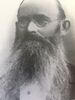
Doctor Herbert Basedow PhD was a noted Australian anthropologist, geologist, politician, explorer and medical practitioner who was one of the few people of his time involved in recording the traditional life of Aboriginal Australians and who actively lobbied government for better treatment of Aboriginal people and campaigned for an improvement in Aboriginal health.
Formative years
Herbert Basedow was born on 27th October 1881 in Kent Town, South Australia (Australia). He was the fourth and youngest son of Martin Peter Friedrich Basedow and his second wife Anna Clara Helena, née Mȕcke. [1] Martin and Anna were both born in Germany and met after immigrating to South Australia. Herbert's early education was in Adelaide. The Basedow family visited Germany between 1891 and 1894, and for part of that time Herbert attended high school in Hanover. He completed his formal education at Prince Alfred College, Kent Town, and in 1902 graduated with a Bachelor of Science (BSc) degree from the School of Mines, Adelaide, and the University of Adelaide. He majored in geology, but also studied botany and zoology.
He was elected an Associate Member of the Royal Society of South Australia in 1901 and a Fellow in 1904. He was also a member, Honorary Member and Fellow of other geographical and geological societies in Australia, Great Britain and Germany. Herbert held some short-term government appointments including as one of four prospectors on the 1903 South Australian Government North-West Prospecting Expedition. In 1905, he joined South Australian Government Geologist Henry Yorke Lyell Brown and mining inspector Lionel Gee on a geological expedition to the Northern Territory. On his return to Adelaide, he was appointed curator of the geological and mineral collections of the South Australian School of Mines. He was a keen photographer, and throughout his career used photography to record his scientific work and his travels in remote parts of Australia.
In 1907, Herbert accepted an invitation from German anthropologist Hermann Klaatsch to study in Germany. He subsequently completed postgraduate studies at several universities, including Heidelberg, Göttingen, Breslau and Zürich, and undertook some medical work. He returned to Australia with a PhD in geology and two postgraduate qualifications in medicine. The medical degree he was awarded, based on his work on the craniometric measurements of Aboriginal Australians and combined with his practical medical work in Europe, later allowed his registration as a medical practitioner in Australia.
Anthropolgy
Between 1903 and 1928, Herbert participated in around twelve major expeditions and some smaller trips. These were mainly to central and northern Australia. The majority of the expeditions were to investigate mineral prospects. Some were government funded whilst some were commissioned by mining syndicates and private companies. Three were medical relief expeditions to assess the health of Aboriginal people in South Australia - one in 1919 and two in 1920 - which Herbert led.
On his return from Europe in 1910, Herbert entered the geological department of South Australia as Assistant Government Geologist. He resigned from this position in 1911 to take up the newly created Australian Federal Government position of Chief Medical Officer and Chief Protector of Aborigines in the Northern Territory. He arrived in Darwin on 17th July 1911 and left 45 days later unhappy with his working conditions and claiming the legislation under which he was to operate was unworkable. He returned to Adelaide and set up in medical practice; combining this with consulting geological investigations for individuals and organisations.
At the time of his birth, Herbert's father held the office of Protector of Aborigines. In his early years, Herbert accompanied his father on trips into the outback where he played with Aboriginal children and acquired some native language skills. Throughout his life, Herbert maintained an interest in recording traditional Aboriginal life as well as a concern for the health and welfare of Aboriginal people. Hermann Klaatsch influenced Herbert's early ideas about Australian Aboriginal people. Both men theorised that Aboriginal people and Caucasians were racially related.
Herbert actively lobbied government for better treatment of Aboriginal people, especially through the Aborigines Protection League, and campaigned for an improvement in Aboriginal health.
Nature magazine, June 1933
An obituary published in Nature magazine said that 'since the death of Sir Walter Baldwin Spencer, Dr Basedow had been generally recognized as the first authority on the aborigines of Australia'. [2]
Marriage
On 4th June 1919 in Adelaide, Herbert married nurse Nellie Noyes, daughter of organist Arthur Charles Noyes. [3] They had no children. Nellie accompanied Herbert on medical expeditions as nurse.
Author
Herbert presented scientific papers at the Royal Society of South Australia and published them in the Society's journal while still at university. He continued to publish in the Society's journal until 1907. He went on to publish widely in anthropology, but also in geology and natural history.
- Narrative of an Expedition in North-Western Australia (1916) was illustrated with 61 of Herbert's photographs taken during the 1916 geological expedition to the western Kimberley and included a map of the expedition route which also recorded many of the Aboriginal names of the places visited; reprinted in 2009.
- The Australian Aboriginal (1925) was a major anthropological work; reprinted in 1929.
- Knights of the Boomerang: Episodes From a Life Spent Among the Native Tribes of Australia (1935) was published posthumously.
Parliament
After an earlier unsuccessful attempt, Herbert was elected at the 1927 election as an independent to the three-member seat of Barossa, serving as a member of the South Australian House of Assembly for a three-year term. He was defeated at the 1930 election but was again elected at the 1933 election, shortly before his death.
Final exploration
Aged 51 years, Herbert passed away of peripheral venous thrombosis on 4th June 1933 in Kent Town and is buried in North Road Cemetery, Nailsworth. [4]
Legacy
The National Museum of Australia holds over 1,000 Aboriginal artefacts collected by Dr Herbert Basedow. Aboriginal artefacts, and geological and natural history specimens are held by the Australian Museum, Museum Victoria and the South Australian Museum. The University of Adelaide holds some geological specimens and a small number of artefacts are held by the Berndt Museum of Anthropology at the University of Western Australia. Some 800 individual plant specimens collected by Herbert are held by some Australian herbaria. The majority of his papers are held by the Mitchell Library.
Sources
- ↑ South Australia Birth Index #271/229 1881; registered at Angaston
- ↑ Nature, 17 Jun 1933
- ↑ South Australia Marriage Index #279/673 1919
- ↑ South Australia Death Index #548/368 1933; registered at Norwood