hexad
(redirected from hexads)Also found in: Thesaurus, Medical.
hex·ad
(hĕk′săd′)n.
A group or series of six.
[Late Latin hexas, hexad-, the number six, from Greek, from hex, six; see s(w)eks in Indo-European roots.]
hex·ad′ic (hĕk-săd′ĭk) adj.
American Heritage® Dictionary of the English Language, Fifth Edition. Copyright © 2016 by Houghton Mifflin Harcourt Publishing Company. Published by Houghton Mifflin Harcourt Publishing Company. All rights reserved.
hexad
(ˈhɛksæd)n
1. (Mathematics) a group or series of six
2. (Mathematics) the number or sum of six
[C17: from Greek hexas, from hex six]
hexˈadic adj
Collins English Dictionary – Complete and Unabridged, 12th Edition 2014 © HarperCollins Publishers 1991, 1994, 1998, 2000, 2003, 2006, 2007, 2009, 2011, 2014
hex•ad
(ˈhɛk sæd)n.
a group or series of six.
hex•ad′ic, adj.
Random House Kernerman Webster's College Dictionary, © 2010 K Dictionaries Ltd. Copyright 2005, 1997, 1991 by Random House, Inc. All rights reserved.
ThesaurusAntonymsRelated WordsSynonymsLegend:
Switch to new thesaurus
| Noun | 1. | 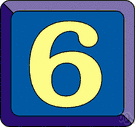 hexad - the cardinal number that is the sum of five and one hexad - the cardinal number that is the sum of five and one |
Based on WordNet 3.0, Farlex clipart collection. © 2003-2012 Princeton University, Farlex Inc.