Stone Age
(redirected from Stone-age)Also found in: Thesaurus, Encyclopedia.
Stone Age
n.
1. The earliest known period of human culture, characterized by the use of stone tools. See Usage Note at Three Age system.
2. Slang An extremely backward or primitive era or state: back in the Stone Age of television broadcasting.
American Heritage® Dictionary of the English Language, Fifth Edition. Copyright © 2016 by Houghton Mifflin Harcourt Publishing Company. Published by Houghton Mifflin Harcourt Publishing Company. All rights reserved.
Stone Age
n
(Archaeology) archaeol
a. a period in human culture identified by the use of stone implements and usually divided into the Palaeolithic, Mesolithic, and Neolithic stages
b. (as modifier): Stone-Age man.
Collins English Dictionary – Complete and Unabridged, 12th Edition 2014 © HarperCollins Publishers 1991, 1994, 1998, 2000, 2003, 2006, 2007, 2009, 2011, 2014
Stone′ Age`
n.
the early period of human history preceding the Bronze and Iron ages and characterized by the use of stone implements and weapons: subdivided into the Paleolithic, Mesolithic, and Neolithic periods.
[1860–65]
Random House Kernerman Webster's College Dictionary, © 2010 K Dictionaries Ltd. Copyright 2005, 1997, 1991 by Random House, Inc. All rights reserved.
Stone Age
The earliest known period of human culture, marked by the use of stone tools. See Mesolithic, Neolithic, Paleolithic.
The American Heritage® Student Science Dictionary, Second Edition. Copyright © 2014 by Houghton Mifflin Harcourt Publishing Company. Published by Houghton Mifflin Harcourt Publishing Company. All rights reserved.
ThesaurusAntonymsRelated WordsSynonymsLegend:
Switch to new thesaurus
| Noun | 1. | 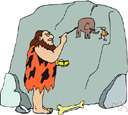 Stone Age - (archeology) the earliest known period of human culture, characterized by the use of stone implements Stone Age - (archeology) the earliest known period of human culture, characterized by the use of stone implementsarchaeology, archeology - the branch of anthropology that studies prehistoric people and their cultures Eolithic, Eolithic Age - the earliest part of the Stone Age marked by the earliest signs of human culture Palaeolithic, Paleolithic, Paleolithic Age - second part of the Stone Age beginning about 750,00 to 500,000 years BC and lasting until the end of the last ice age about 8,500 years BC Epipaleolithic, Mesolithic, Mesolithic Age - middle part of the Stone Age beginning about 15,000 years ago Neolithic, Neolithic Age, New Stone Age - latest part of the Stone Age beginning about 10,000 BC in the Middle East (but later elsewhere) prehistoric culture, prehistory - the time during the development of human culture before the appearance of the written word |
Based on WordNet 3.0, Farlex clipart collection. © 2003-2012 Princeton University, Farlex Inc.
Translations
doba kamenná
kivikausi
Kamena doba
Stone Age
n the Stone Age → l'età della pietraCollins Italian Dictionary 1st Edition © HarperCollins Publishers 1995