
Royal Road Marketing 101
#1
I've been giving out marketing advice for Royal Road for years. Here's a compilation. I'll update it if I forgot anything, if something changes, or I didn't explain something well.
This is not a "one simple trick" guide. What I'm describing here is marketing principles drawn from the larger world of traditional publishing that either fit Royal Road or have been modified to do so. None of what I'm describing here depends on tricks to get you on Rising Stars, or what the latest ad trends are, or exploiting the algorithms. This is a guide to approaching and appealing to your audience.
This is also a long one. Grab a drink and a snack.
Who is this Novel Ninja Guy and Why Should I Listen to Him?
My name is Matthew Bowman, and I've been a freelance editor in traditional publishing for fifteen years. Plus, I was born on Royal Road.
(No, really. The street I lived on for over two decades was literally named Royal Road. Clearly that makes me an expert!)
No, I'm not a marketing specialist; but you can't be involved in the industry as long as I've been without finding out a lot about how it works. Especially if you happen to be utterly, autistically obsessed with how storytelling works. (You know, just hypothetically. Clearly not me.) I love editing and helping out authors, but I don't really enjoy marketing, so I've never included it as part of my editing business. But it's a vital skill to learn even when you don't have your own stuff to promote, and I made the effort even before I published anything.
I've also been hanging around this site for a few years, giving people advice and doing a lot of observation. When I discovered the site, I knew immediately that this was going to change the face of traditional publishing. No, not that web publishing will replace trad, but that there will be an increasing amount of crossover between the two sides to the point where web pub will be a normalized part of just plain old "publishing." I don't know the exact form that will take, and I won't try to predict it to that degree; publishing changes constantly, and it's gone through no less than four major ground-level shakeups in my lifetime alone that, if I were to describe them, you'd have a hard time believing they were really shakeups if you weren't there. That's how normalized they are.
But one thing remains constant in all of that. When we sell our stories, we're selling them to humans. And humans haven't changed in tens of thousands of years; we're just as smart as our ancestors, and so the end-user side of marketing has not changed either. All that changes are the tools and the depth of knowledge available to you.
So this guide is based on my decade-and-a-half of experience in the wider industry, and four years of observation on Royal Road. And in that time, publishing has changed as I predicted, with more and more trad authors trying out web releases first, including NYT bestsellers, ever since I started talking it up in trad pub circles. My own story is, in part, an attempt to prove it to them; and since I started, there have been a lot of trad-pub authors who have decided to take Royal Road, and websites like it, seriously; and they've named me as the reason why they're trying it out.
This guide is the result of those years of talking to authors on both sides -- explaining trad pub techniques to first-time Royal Road authors, and explaining Royal Road to authors and editors who have been in publishing for years and decades, some of them since the 80s and 90s.
So You're Saying this is a Foolproof Guide?
Nope. Because just as there are things you can do that don't depend on an algorithm "because humans," there are also two weaknesses "because humans."
The first is that while there are certain things that are near-universal about human readers, there are always exceptions. This business is an art, not a science. You can appeal to your audience; you can't control them, and anyone who tries will just fail faster. These techniques and explanations will help you do your art better, but they won't turn it into science.
The second is that marketing is about telling your audience you have a good product; delivering a good product is up to you. I'm sure you've all clicked on some great ads that led to terrible stories. Marketing gets eyeballs on your product; keeping them there is another matter.
Finding Your Audience
Who is your audience? If you say "all fantasy readers," or "fans of litRPG," you're wrong.
If your story tries to be all things to all people across a wide genre you will, at best, be average. You do not want to be average.
If your marketing tries to appeal to the widest possible group, your marketing will be generic. You do not want to be generic.
One of the most effective quick pitches in publishing is the X Meets Y format. this is where you take two or more things most people know and tell people the thing you're talking about is the intersection of those concepts. It might be "If X author wrote Y franchise"; or it could be "X series starring Y characters"; or "X characters, but in Y situation."
Here are some examples I've used for promoting trad novels in the past year:
The reason why this format works is that you're talking above-average concepts and putting them together in non-generic ways, quickly and efficiently, and communicating it to people who care about those topics. You're telling them 1) who the core audience is; 2) why they're the core audience; and 3) that you the author are making a promise as to what your story is like.
Not fulfilling that promise results in massive marketing fails. We've all seen trailers for game and movie franchises in the last ten years that have flopped immediately just from the marketing. Their ads are often "It's The Beloved Franchise, but totally different!" They use the old themes and visuals to promote something completely different. The old core audience is being told they're not going to be interested; the new core audience is mostly people who have already decided that The Beloved Franchise isn't for them.
The lesson here is that you don't expand your audience by neglecting the core audience that made it good. By appealing to a new or wider audience as your primary focus, you run a very high risk of disappointment. If your target audience has to investigate your story to find out if it's for them, they're going to either avoid even trying; or they're going to try it, probably get disappointed, and leave a bad review because your story isn't what they thought it would be.
Try looking up your favorite Royal Road stories and check out their worst reviews. Read the comment sections and look for the complainers. Since these are your favorite stories, you'll see immediately that these tell you less about the story itself and more about the readers -- and that's incredibly valuable marketing data. These are things you can use to analyze the marketing for that story. Where did the author fail to show that reader what the story is about? What could have been done better to show that reader it wasn't what they wanted? What, if anything, could the author do better to find that core audience?
Actually, what the heck is this "core audience" thing?
The Core Audience
Put simply, your core is that minority of readers who like all the Xs and Ys you're combining, all at once, together.
Let's say you're writing science fictio ninspired by WWII through the lens of Horatio Hornblower combined with political intrigue. The core audience for that is the small group at the center of a Venn diagram of Space Opera, WWII History, Age of Sail history, and Aristocratic Politics.
Or maybe you're writing about actual sailing ships because it's an isekai litRPG inspired by One Piece but starring Robing Hood on the high seas, creating an island haven for the oppressed, with a dash of romance in there. Your Venn diagram for that is composed of Isekai, LitRPG, Pirate, Rebellion, Kingdom/Base Building, and Romance.
Yes, that means you want to aim small. This is how marketing works in the real world, too. And by that, I don't just mean the wider publishing world. I mean everything. This is why when ads go off the rails, they become memes.
The best way to demonstrate it is the ubiquitous car ad. Each vehicle is basically the same. I mean, come on -- it's a box on wheels that gets you from Point A to Point B, and you want it to do so 1) in a reasonable amount of time, 2) for a reasonable level of efficiency, 3) for a reasonable amount of comfort. Every car ad isn't selling you a car; they're selling you an experience. Pick this box on wheels because it's not just better, it's better for you. Pay attention to how they advertise; look for their core audience. Whether they hit or miss, they know who they're aiming for. And their audience doesn't include just those who need a car right now; they're aiming at people who have already bought their vehicles (to reassure them they made the right choice) as well as those who will be looking for one in the future.
When you encounter a "weird" car ad, you're not the core audience. See if you can identify who is; and that will help you figure out how to identify the core audience for your own book.
The Core-Adjacent Audience
But what about the wider audience? Car manufacturers can't get by on just a few sales, and neither can you. This is where that focus on the core starts working in your favor, because their enthusiasm tells the next tier of readers what kind of story you have.
The core-adjeacent are the people who like some, but not all, of the elements of your story. So with that Robin Hood on the High Seas example (and feel free to steal that; just let me know because I want to read it too), your core-adjacent readers might like "Isekai LitRPG Base Building," but might not be crazy about the pirate or romance parts. Or, perhaps, they saw your "Robin Hood meets One Piece" pitch, but they're not fans of isekai or litRPG.
The enthusiasm of your core audience, however, will let them know that these elements are done well, so they give it a try. They might wind up discovering they like those elements after all; or declare that normally they hate it, but you do it right; or they might say they could do without it but it's worth it because the stuff they love is just that good.
And that, in turn, picks up more readers from . . .
The General Audience
A "general" audience doesn't mean "all readers." After all, if there's nothing your story has that appeals to a reader, they are, by definition, not your audience.
A general reader is someone who normally likes just one element of what you write. Yours might be the first litRPG that a particular reader has liked, as one example, because they just really, really like a good pirate story.
On Royal Road, you're mostly going to be encountering the core-adjacent. This is because the authors here are self-selecting -- they are posting on Royal Road because they believe their audience is already here. Royal Road has a rep for being a litRPG hub, but it's also well-known as an SF&F adventure site, regardless of the litRPG content (if any). For almost all authors, the general audience is something that's mainly off-site.
But that doesn't mean you neglect them. Knowing how to advertise to already-active Royal Road readers is good, but you want to get more eyeballs on your story. That might mean cross-posting to other sites to take advantage of their audiences; but the more you do that, the more work it is. Royal Road is the blue whale pod in the living room when it comes to English-language SF&F web publishing; as long as your story has an audience here (which basically means SF&F adventure of any kind), this should be your main platform. And that means you're going to reach out to other audiences and draw their attention to your platform.
For example, I see authors advertising to litRPG groups all the time. That's great; that's where your core and core-adjacent audiences are. But what about those who haven't heard of it? LitRPG is becoming more and more well-known, but even if they've heard of the genre there's a lot of people out there who don't haunt litRPG spaces. In trad pub, we market based on interest, not activity; activity (like being part of a social media group) indicates interest, but no matter how big that activity you're not going to reach all your potential audience. If it's an absolutely giant group, well, not everyone is going to see your post; if it's not, then not everyone who shares that interest is in that group.
So once you've broken down the different parts of your general audience, you have to do market research to find out how to draw more in. For Robin Hood on the High Seas, you might want to go after fans of The Princess Bride; but the romance side of things probably isn't strong enough to draw in a dedicated romance-genre audience, because they tend to want the romance to be the most important part of the story. (Which is why, if you're a dedicated SF&F reader, you either aren't interested in or tried and did not like authors like Rebecca Yarros or Sarah J. Maas. It's a different core audience, even though it's shelved in the SF&F section.)
So it's worth it to identify how you can advertise to people off-site and bring them to Royal Road, to your author website, or directly to Amazon. Don't just ride the coattails of who's already on Royal Road; but use Royal Road as a test bed for your story. (We'll get into that in a bit.)
If you handle your general audience correctly, they might well become core-adjacent, just as the core-adjacent might become core. They might realize they liked the topic all along, but they'd only had bad writers; or the marketing was terrible, so they thought it wasn't for them; or they just flat-out didn't give it that ol' Green Eggs and Ham try until you came along.
Whatever it is, though, you have to let them see that your book has what they want. Which brings us to the central trinity of Royal Road marketing:
Title, Cover, and Blurb
When a new reader sees your book, they'll see one of two things first: either your title or your cover. That's true in both trad pub and on Royal Road. Then, once they see one, they'll look for the other. The title should match the cover, and the cover should match the blurb. Yes, that sounds redundant. No, it isn't actually redundant, but this isn't a guide on how to make good titles and covers, just how to leverage them.
With that in hand, both title and cover should make your potential reader want to look at your blurb. You don't need to force it. You just need something evocative and understandable in a quick glance. In web pub, you can also add in something to the title if it's not available as a site tag; for example, on my science fiction story, I added two "tags" in parentheses that my core audience would love but weren't provided by Royal Road.
Cover and title are bait; your blurb is the hook. That blurb is, generally, selling either a character in a situation, or the situation itself. There's a different basic format for either, and I'll list them both in a bit; but there's far more art than process in this. Again, if it were an exact science, then it would be science.
At the end of your blurb, your core audience should be thinking HECK YEAH and want to click through. For those who aren't immediately sold, though, you need a good What to Expect section. This is where you'll hook the core-adjacent readers who weren't already hooked by the blurb.
The WtE section is primarily a web pub technique, because trad pub can't fit it on the back of a book. It's slowly starting to trickle in via osmosis, from authors who started out in web pub and are doing well on Amazon; but for the most part it's going to stay a web pub thing for a while. At the same time, though, it's something trad marketing has done for a long time -- a quick pitch of the experience, rather than the story. Trad just hasn't had a central spot to put it; Royal Road (and other sites), however, do.
A good WtC is where you can provide further information for the undecided. It should describe what the story is, what it is not, and provide any additional trope-hooks that don't easily fit into the the blurb. This keeps your blurb strong and on-point, rather than cramming in extra things and making the whole thing awkward. But keep in mind that the WtC isn't a keyword-spam section; if your marketing can be compared to video game announcements, your blurb is the cinematic trailer, and your WtE is the gameplay trailer.
I also highly recommend using humor in your WtE, just like your blurb needs drama. A touch of humor will keep your WtE from feeling like a dry-as-crackers bullet point list. One of the simplest forms of humor to stick in there is the arson, murder, jaywalking concept. Look it up if you don't know what that is.
Try to avoid self-deprecating humor, however, unless that's a strong theme of the book itself. Remember, your book is awesome. Don't talk it or yourself down.
All of this is to get eyeballs on your first page. The blurb page isn't a necessary evil; it's the whole point of all your marketing. All your ads and links should lead here. Don't skip past it to link people to the first chapter. Ads don't sell the story; they sell people on taking a few seconds to look at the actual pitch.
Why You Hate Writing Blurbs (and Marketing)
You'd think authors would be great at writing blurbs; after all, it's just writing, right? So why are most authors terrible at blurbing the story they've personally told?
The answer is that blurbs aren't writing; they're marketing, and most authors are terrible at marketing for a reason. The few authors who are good at it often can't tell you why they're good at it; they just lucked into a good rhythm. Marketing requires you to know:
Yes, I understand the irony of an editor, an expert in a large swath of writing, to say something like that. There's no contradiction. You don't need to be an editor to edit your own stuff, and you don't need to be a marketer to market your own stuff. Listening to the experts, however, makes you better at it; and the expert is not an expert in your specific narrow case. When I edit, I focus on helping you find the mistakes you're not seeing. That means I have to ask you to tell me what you meant to say in this or that chapter. Similarly, for marketing, you want to listen to the guys who know more so you can figure out how to adapt your own specific use-case. Plus, even if you're making enough to hire a marketing professional, you should learn enough to know who's actually a professional versus who's a waste of your hard-earned money.
The cheapest way to learn how to do this is to go to the Author Media website and browse their blog posts. Each of them will link to the episode of The Novel Marketing Podcast that the blog post was made from. Author Media makes its income selling courses, and they are the only paid "Internet guru" outlet I currently recommend on this subject.
The podcast, however, is free. It should be on your weekly schedule. Go set it up now before you forget. (If there's demand, I'll make a list of past episodes and blog posts that I think are required listening/reading.)
Blurb Templates
Here are two templates for when you're struggling with a blank page. One is for ta character-focused story; the other is situation-focused.
I need to stress this first, though: NEITHER TEMPLATE IS PLUG-AND-PLAY. You still have to put in the work. They're a solution for the black page, not for the whole process. This is just where you get started.
Think of these like Mad Libs: take the template and replace the all-caps words. Except then you rewrite the whole thing. And then you do it again. And again. Repeat until you think you have something useful . . . and then, before you post it, bring it to these forums, to the Royal Road subreddit, to the various Royal Road-related servers on Discord, to a Facebook group -- whatever, just make sure you get other eyes on it before you post it. This isn't a formula or a recipe. It's an ingredients list. And sometimes there's an ingredient that doesn't wind up working, so you substitute something else.
(Credit where it is due: I got this concept from editor Dave Butler, formerly of Baen Books, now at Ark Press.)
Character Template
Situation Template
And, once again, you don't treat it as a plug-and-play formula. I know I'm harping on that, but every time I share this without that broken-record disclaimer, someone blunders in and says THAT'S TOO FORMULAIC and I have to look at my screen like 🤨 Reeeeeally. Ya don't say.
You're *supposed* to play around with it. When you don't already know what to do, do this.
Shout-Out Swaps
Swaps are absolutely a good vector to get more eyeballs on your story. However, many authors will do shout-out spam, which tends to create background noise even when your audience isn't on a binge read. For this reason, I always recommend curating your swaps.
To do that, limit your swaps to authors who are writing stories that match your core-adjacent audience. Check them out, and make a note of what you like about them and also what your audience might like about them. Do they share similar themes? Is the writing style similar? How would you make a pitch for your audience?
Your audience likes your writing, so they probably like your tastes, too. When you shout-out the other story, don't just paste in the blurb and go. Tell your audience why you liked it and why it's worth sharing. Personalize it. Talk with your fans.
Your readers are also one of your best sources of potential swaps. Ask them for recommendations, because if one commenter likes it, there are a lot more who do, and others who would but have never heard of it. Listen to how they describe those stories, because that doesn't just tell you how to market for some other author's book; it shows you what your own audience likes, and therefore how to refine your writing.
Yeah, those other authors might not put in a similar kind of effort. Sucks to be them. Your readers trust you and your recommendations, and their loyalty to your author brand will go up.
But keep in mind that if you want to try this out, probably some other authors do too. It doesn't hurt to ask if they want to take a moment to personalize things. And even if they don't, as a process of checking out the other author, you'll probably get in the habit of seeing how you can market directly to their audience. For example, if I were to swap with a military fantasy author, I'd give the other author a modified pitch that emphasizes my own military elements, plus probably mention my alien psychic warriors. A few minutes of effort pays good dividends, especially as you start building that marketing habit.
Reeling Them In
Once you've gotten eyeballs on your blurb, you want them to head into your first page. This is often where the marketing will start falling apart, because you'll see a retention drop-off on that first chapter. No matter what, you'll have a drop-off. Don't sweat it. But you do want to minimize that; not just to keep those readers, but also because minimizing it will keep disgruntled "not what I signed up for" readers from dropping half-star ratings a few chapters in.
This is an area that's slightly different from trad pub. In trad, the blurb is to get you to make a sale; but on Royal Road, or even over on KU (which functions like a hybrid of trad and web), the point is to get you to click to the first chapter. When I first started studying web pub in general and Royal Road in particular, I noticed a slight difference in the successful first chapters; it's always been important to hook your audience from the start of the first chapter, but in web pub there needs to be a feeling of correlation between the pitch and the first words of the story.
I have a whole lecture on this that takes me an hour at cons and up to two hours in the classroom. The gist is that there are six types of hooks that you can use to draw in the reader. (Incidentally, if you've ever seen this list before, hi. I'm the OP. I've been posting and talking about it for over a decade.)
At some point I'll go into detail on how to use all of these, but for now just know that a good hook is something that uses three or more of these in the space of a sentence or two. And it's not just something for the first page; these are often how you develop and showcase twists as you write.
(And yes, there's a difference between scene and location, or theme and motif; but the hooks for each of those pairs tend to overlap so I talk about them together in the actual presentation.)
Prologues
Because of the above, you (usually) want to avoid using prologues. That's a general guideline for all of publishing, but especially on Royal Road.
Since this guide is already so long, I'm going to link to a blog post I made a while back explaining the details; but here's the gist so you don't have to click through if you don't want to.
The best prologues:
If a prologue doesn’t fit all four of these guidelines, I strongly advise you to attempt to chuck it and see what else you can try. Experiment with other means and chapters to deliver the information within the main body of the story, giving information as close as you can to when the audience needs it while still feeling natural.
Of course, there is another option. You could potentially just label your prologue as Chapter One. Doing so, though, is dangerous; never assume your audience won't catch on. Your audience is smart, and you know it -- after all, they like your writing, and that's a good indication of intelligence right there! So if you do this, make sure your stealth prologue really is a good chapter on its own, and that it naturally leads into Chapter Two.
Royal Road as an Extended Open Beta
In software testing (most obviously with gaming), there are two testing periods, referred to as "alpha" and "beta." An alpha test is where the subject-matter experts (chiefly programmers) are testing raw versions of the software to make sure it's functioning properly. A beta test, on the other hand, is where a subset of the intended audience is trying it out. Both phases are often split up into two sub-sections: an alpha test might be split into "internal" and "invite-only" tests, while the beta could be split between "closed" and "open."
This terminology has long since made its way into publishing. We have alpha readers who are experts in either a given topic or in how the author writes and can point out blind spots; we also have beta readers who are part of the intended audience. Once you go through those phases, you're ready for publication. If you put an unpolished book on Amazon, it's going to sell terribly unless you already have a large following. Even then, it won't sell as well as it could, and might not sell very well at all outside of that following.
Royal Road is not a place for finished novels; it's where unfinished, unpolished novels improve. This is your extended open beta.
That doesn't mean you can't put a finished novel on Royal Road, just that it's not required. The greatest benefit of Royal Road isn't actually the ability to get a following going before moving over to Amazon; it's that you can get detailed feedback on your work for free. In fact, many readers will happily pay for the privilege of seeing your raw chapters precisely so they can help improve them.
This isn't even something web publishing came up with. This is a concept from trad pub called the ARC, the Advance Reader Copy. These were sent out to certain people who would give reviews and feedback on the novel before it went to print. Today, some publishers (most notably Baen Books) will do the same with advance reader ebooks, known as eARCs. (There's a story of an author who missed the memo on this when they started the practice twenty years ago of selling early access for a higher price. He only found out about it when a fan sent him typo corrections. He immediately got on the phone with the publisher and gave him a piece of his mind. Jim Baen waited patiently, and when his author was done, said "You've made two thousand dollars from it so far." The author soon changed his mind on the practice.)
I'm a very good editor. I'm still human. I miss things. We just got some typo corrections on Mrs. Ninja's trad pub novel, which I edited in far more detail than I have for any other author. I missed a bunch. I knew I would, because by that point I was so used to seeing those words that I just filled in the blanks, just like Mrs. Ninja -- and just like any author. If I'm doing developmental and line editing on a manuscript, I always tell the author I can't be the one to do the copy edit. I won't see all the mistakes at that point.
Royal Road readers will get a lot of those typos for you, for free. They'll also give you valuable feedback on things that they find confusing, or things they like but you thought would just be throwaway lines. So I want you to treat this as a very low-stress, low-pressure stage for your writing. This is where you can screw up in ways that will only cost you some time and embarrassment, rather than losing a lot of money finding it out the traditional way.
This is the main reason why trad authors I've talked to have started putting some things out on Royal Road, some of them publicly and others under another name. There's a lot of support for networking in trad pub, but finding a good beta community is gold. A good beta community that can also help you develop a following is like a dream come true. It's not a mass rush for Royal Road, but it's slowly increasing. And those are just the ones who've talked to me. So follow their lead and leverage the critique community on Royal Road for your benefit.
Engaging Comments for Comment Engagement
This dovetails with a semi-common request I see in various Royal Road circles: "How do I get more comments?" The first step is, of course, to have something worth talking about. If you already have an interesting story, though, you still have to put in some work. You can't always sit back and let the comments roll in.
The bad news is that to leverage that beta-read community, you need lots of comments. The good news is, though, that leveraging the beta-reading gets you lots of comments.
I personally average, at the time of writing this, 87 comments per chapter. If you cut out the comments from my two announcement "chapters" (the first mentioning my wife's car accident and my need to go on hiatus, the second announcing the return; there were a lot of sympathetic comments), then it's actually about 79 per chapter. About a quarter of them are from me, engaging with the community; so we'll round it off to an estimated average of 60 story-related reader comments.
I mention this not to brag, but to showcase that I know what I'm talking about here. And that's important, because I'm about to describe something that most Royal Road authors, or any author in general, don't want to do: be social. Like I said earlier, if we wanted to talk to people directly, we'd never be authors.
And yes, that can be tricky. Lots of people will complain about Royal Road being "toxic." It's not. If you think this community is toxic, then you either have an extraordinarily thin skin, or you don't spend much time out on the rest of the Internet. But there's also another factor: you get out what you put in, and if you don't put in anything, the Internet (including Royal Road) will default to its ground state: snark.
So engage your audience. Be proactive. Talk to them. Joke around. I get lots of comments because I respond to them, which encourages them to comment more because they know they're not being ignored. If a reader loves your writing, then they probably want to interact with you, too.
This doesn't mean oversharing, though. Modern celebrities have lost the mystique of their predecessors from the 50s and 60s primarily because they overshare. This got even worse with the Internet; sometimes you just don't benefit from letting people in too close. The most engaging celebrities today are the ones who keep a reasonable amount of privacy, are aware that not everyone shares their opinions on politics or religion but aren't wishy-washy on either (for or against), who aren't chronically online, and who are still approachable within their boundaries.
Your comment section is a perfect example of this, when used right. Share opinions related to your story. Showcase your sense of humor. Find your equilibrium and set expectations. One thing I learned teaching is that people will live down to your expectations; so set the bar where you want it to be. Your audience will respond.
Th-Th-That's All, Folks!
I hope this has been helpful. If you have any questions or want some tips, please feel free to ask and I'll help out as much as I can.
This is not a "one simple trick" guide. What I'm describing here is marketing principles drawn from the larger world of traditional publishing that either fit Royal Road or have been modified to do so. None of what I'm describing here depends on tricks to get you on Rising Stars, or what the latest ad trends are, or exploiting the algorithms. This is a guide to approaching and appealing to your audience.
This is also a long one. Grab a drink and a snack.
Who is this Novel Ninja Guy and Why Should I Listen to Him?
My name is Matthew Bowman, and I've been a freelance editor in traditional publishing for fifteen years. Plus, I was born on Royal Road.
(No, really. The street I lived on for over two decades was literally named Royal Road. Clearly that makes me an expert!)
No, I'm not a marketing specialist; but you can't be involved in the industry as long as I've been without finding out a lot about how it works. Especially if you happen to be utterly, autistically obsessed with how storytelling works. (You know, just hypothetically. Clearly not me.) I love editing and helping out authors, but I don't really enjoy marketing, so I've never included it as part of my editing business. But it's a vital skill to learn even when you don't have your own stuff to promote, and I made the effort even before I published anything.
I've also been hanging around this site for a few years, giving people advice and doing a lot of observation. When I discovered the site, I knew immediately that this was going to change the face of traditional publishing. No, not that web publishing will replace trad, but that there will be an increasing amount of crossover between the two sides to the point where web pub will be a normalized part of just plain old "publishing." I don't know the exact form that will take, and I won't try to predict it to that degree; publishing changes constantly, and it's gone through no less than four major ground-level shakeups in my lifetime alone that, if I were to describe them, you'd have a hard time believing they were really shakeups if you weren't there. That's how normalized they are.
But one thing remains constant in all of that. When we sell our stories, we're selling them to humans. And humans haven't changed in tens of thousands of years; we're just as smart as our ancestors, and so the end-user side of marketing has not changed either. All that changes are the tools and the depth of knowledge available to you.
So this guide is based on my decade-and-a-half of experience in the wider industry, and four years of observation on Royal Road. And in that time, publishing has changed as I predicted, with more and more trad authors trying out web releases first, including NYT bestsellers, ever since I started talking it up in trad pub circles. My own story is, in part, an attempt to prove it to them; and since I started, there have been a lot of trad-pub authors who have decided to take Royal Road, and websites like it, seriously; and they've named me as the reason why they're trying it out.
This guide is the result of those years of talking to authors on both sides -- explaining trad pub techniques to first-time Royal Road authors, and explaining Royal Road to authors and editors who have been in publishing for years and decades, some of them since the 80s and 90s.
So You're Saying this is a Foolproof Guide?
Nope. Because just as there are things you can do that don't depend on an algorithm "because humans," there are also two weaknesses "because humans."
The first is that while there are certain things that are near-universal about human readers, there are always exceptions. This business is an art, not a science. You can appeal to your audience; you can't control them, and anyone who tries will just fail faster. These techniques and explanations will help you do your art better, but they won't turn it into science.
The second is that marketing is about telling your audience you have a good product; delivering a good product is up to you. I'm sure you've all clicked on some great ads that led to terrible stories. Marketing gets eyeballs on your product; keeping them there is another matter.
Finding Your Audience
Who is your audience? If you say "all fantasy readers," or "fans of litRPG," you're wrong.
If your story tries to be all things to all people across a wide genre you will, at best, be average. You do not want to be average.
If your marketing tries to appeal to the widest possible group, your marketing will be generic. You do not want to be generic.
One of the most effective quick pitches in publishing is the X Meets Y format. this is where you take two or more things most people know and tell people the thing you're talking about is the intersection of those concepts. It might be "If X author wrote Y franchise"; or it could be "X series starring Y characters"; or "X characters, but in Y situation."
Here are some examples I've used for promoting trad novels in the past year:
- "Age of Sail navy concepts in space." (The Honor Harrington series by David Weber.)
- "Shadowrun noir with dragon politics." (The Heartstrikers series by Rachel Aaron.)
- "If Heinlein wrote an episode of House starring the Bionic Man." (The Moon and the Desert by Robert E. Hampson.)
The reason why this format works is that you're talking above-average concepts and putting them together in non-generic ways, quickly and efficiently, and communicating it to people who care about those topics. You're telling them 1) who the core audience is; 2) why they're the core audience; and 3) that you the author are making a promise as to what your story is like.
Not fulfilling that promise results in massive marketing fails. We've all seen trailers for game and movie franchises in the last ten years that have flopped immediately just from the marketing. Their ads are often "It's The Beloved Franchise, but totally different!" They use the old themes and visuals to promote something completely different. The old core audience is being told they're not going to be interested; the new core audience is mostly people who have already decided that The Beloved Franchise isn't for them.
The lesson here is that you don't expand your audience by neglecting the core audience that made it good. By appealing to a new or wider audience as your primary focus, you run a very high risk of disappointment. If your target audience has to investigate your story to find out if it's for them, they're going to either avoid even trying; or they're going to try it, probably get disappointed, and leave a bad review because your story isn't what they thought it would be.
Try looking up your favorite Royal Road stories and check out their worst reviews. Read the comment sections and look for the complainers. Since these are your favorite stories, you'll see immediately that these tell you less about the story itself and more about the readers -- and that's incredibly valuable marketing data. These are things you can use to analyze the marketing for that story. Where did the author fail to show that reader what the story is about? What could have been done better to show that reader it wasn't what they wanted? What, if anything, could the author do better to find that core audience?
Actually, what the heck is this "core audience" thing?
The Core Audience
Put simply, your core is that minority of readers who like all the Xs and Ys you're combining, all at once, together.
Let's say you're writing science fictio ninspired by WWII through the lens of Horatio Hornblower combined with political intrigue. The core audience for that is the small group at the center of a Venn diagram of Space Opera, WWII History, Age of Sail history, and Aristocratic Politics.
Or maybe you're writing about actual sailing ships because it's an isekai litRPG inspired by One Piece but starring Robing Hood on the high seas, creating an island haven for the oppressed, with a dash of romance in there. Your Venn diagram for that is composed of Isekai, LitRPG, Pirate, Rebellion, Kingdom/Base Building, and Romance.
Yes, that means you want to aim small. This is how marketing works in the real world, too. And by that, I don't just mean the wider publishing world. I mean everything. This is why when ads go off the rails, they become memes.
The best way to demonstrate it is the ubiquitous car ad. Each vehicle is basically the same. I mean, come on -- it's a box on wheels that gets you from Point A to Point B, and you want it to do so 1) in a reasonable amount of time, 2) for a reasonable level of efficiency, 3) for a reasonable amount of comfort. Every car ad isn't selling you a car; they're selling you an experience. Pick this box on wheels because it's not just better, it's better for you. Pay attention to how they advertise; look for their core audience. Whether they hit or miss, they know who they're aiming for. And their audience doesn't include just those who need a car right now; they're aiming at people who have already bought their vehicles (to reassure them they made the right choice) as well as those who will be looking for one in the future.
When you encounter a "weird" car ad, you're not the core audience. See if you can identify who is; and that will help you figure out how to identify the core audience for your own book.
The Core-Adjacent Audience
But what about the wider audience? Car manufacturers can't get by on just a few sales, and neither can you. This is where that focus on the core starts working in your favor, because their enthusiasm tells the next tier of readers what kind of story you have.
The core-adjeacent are the people who like some, but not all, of the elements of your story. So with that Robin Hood on the High Seas example (and feel free to steal that; just let me know because I want to read it too), your core-adjacent readers might like "Isekai LitRPG Base Building," but might not be crazy about the pirate or romance parts. Or, perhaps, they saw your "Robin Hood meets One Piece" pitch, but they're not fans of isekai or litRPG.
The enthusiasm of your core audience, however, will let them know that these elements are done well, so they give it a try. They might wind up discovering they like those elements after all; or declare that normally they hate it, but you do it right; or they might say they could do without it but it's worth it because the stuff they love is just that good.
And that, in turn, picks up more readers from . . .
The General Audience
A "general" audience doesn't mean "all readers." After all, if there's nothing your story has that appeals to a reader, they are, by definition, not your audience.
A general reader is someone who normally likes just one element of what you write. Yours might be the first litRPG that a particular reader has liked, as one example, because they just really, really like a good pirate story.
On Royal Road, you're mostly going to be encountering the core-adjacent. This is because the authors here are self-selecting -- they are posting on Royal Road because they believe their audience is already here. Royal Road has a rep for being a litRPG hub, but it's also well-known as an SF&F adventure site, regardless of the litRPG content (if any). For almost all authors, the general audience is something that's mainly off-site.
But that doesn't mean you neglect them. Knowing how to advertise to already-active Royal Road readers is good, but you want to get more eyeballs on your story. That might mean cross-posting to other sites to take advantage of their audiences; but the more you do that, the more work it is. Royal Road is the blue whale pod in the living room when it comes to English-language SF&F web publishing; as long as your story has an audience here (which basically means SF&F adventure of any kind), this should be your main platform. And that means you're going to reach out to other audiences and draw their attention to your platform.
For example, I see authors advertising to litRPG groups all the time. That's great; that's where your core and core-adjacent audiences are. But what about those who haven't heard of it? LitRPG is becoming more and more well-known, but even if they've heard of the genre there's a lot of people out there who don't haunt litRPG spaces. In trad pub, we market based on interest, not activity; activity (like being part of a social media group) indicates interest, but no matter how big that activity you're not going to reach all your potential audience. If it's an absolutely giant group, well, not everyone is going to see your post; if it's not, then not everyone who shares that interest is in that group.
So once you've broken down the different parts of your general audience, you have to do market research to find out how to draw more in. For Robin Hood on the High Seas, you might want to go after fans of The Princess Bride; but the romance side of things probably isn't strong enough to draw in a dedicated romance-genre audience, because they tend to want the romance to be the most important part of the story. (Which is why, if you're a dedicated SF&F reader, you either aren't interested in or tried and did not like authors like Rebecca Yarros or Sarah J. Maas. It's a different core audience, even though it's shelved in the SF&F section.)
So it's worth it to identify how you can advertise to people off-site and bring them to Royal Road, to your author website, or directly to Amazon. Don't just ride the coattails of who's already on Royal Road; but use Royal Road as a test bed for your story. (We'll get into that in a bit.)
If you handle your general audience correctly, they might well become core-adjacent, just as the core-adjacent might become core. They might realize they liked the topic all along, but they'd only had bad writers; or the marketing was terrible, so they thought it wasn't for them; or they just flat-out didn't give it that ol' Green Eggs and Ham try until you came along.
Whatever it is, though, you have to let them see that your book has what they want. Which brings us to the central trinity of Royal Road marketing:
Title, Cover, and Blurb
When a new reader sees your book, they'll see one of two things first: either your title or your cover. That's true in both trad pub and on Royal Road. Then, once they see one, they'll look for the other. The title should match the cover, and the cover should match the blurb. Yes, that sounds redundant. No, it isn't actually redundant, but this isn't a guide on how to make good titles and covers, just how to leverage them.
With that in hand, both title and cover should make your potential reader want to look at your blurb. You don't need to force it. You just need something evocative and understandable in a quick glance. In web pub, you can also add in something to the title if it's not available as a site tag; for example, on my science fiction story, I added two "tags" in parentheses that my core audience would love but weren't provided by Royal Road.
Cover and title are bait; your blurb is the hook. That blurb is, generally, selling either a character in a situation, or the situation itself. There's a different basic format for either, and I'll list them both in a bit; but there's far more art than process in this. Again, if it were an exact science, then it would be science.
At the end of your blurb, your core audience should be thinking HECK YEAH and want to click through. For those who aren't immediately sold, though, you need a good What to Expect section. This is where you'll hook the core-adjacent readers who weren't already hooked by the blurb.
The WtE section is primarily a web pub technique, because trad pub can't fit it on the back of a book. It's slowly starting to trickle in via osmosis, from authors who started out in web pub and are doing well on Amazon; but for the most part it's going to stay a web pub thing for a while. At the same time, though, it's something trad marketing has done for a long time -- a quick pitch of the experience, rather than the story. Trad just hasn't had a central spot to put it; Royal Road (and other sites), however, do.
A good WtC is where you can provide further information for the undecided. It should describe what the story is, what it is not, and provide any additional trope-hooks that don't easily fit into the the blurb. This keeps your blurb strong and on-point, rather than cramming in extra things and making the whole thing awkward. But keep in mind that the WtC isn't a keyword-spam section; if your marketing can be compared to video game announcements, your blurb is the cinematic trailer, and your WtE is the gameplay trailer.
I also highly recommend using humor in your WtE, just like your blurb needs drama. A touch of humor will keep your WtE from feeling like a dry-as-crackers bullet point list. One of the simplest forms of humor to stick in there is the arson, murder, jaywalking concept. Look it up if you don't know what that is.
Try to avoid self-deprecating humor, however, unless that's a strong theme of the book itself. Remember, your book is awesome. Don't talk it or yourself down.
All of this is to get eyeballs on your first page. The blurb page isn't a necessary evil; it's the whole point of all your marketing. All your ads and links should lead here. Don't skip past it to link people to the first chapter. Ads don't sell the story; they sell people on taking a few seconds to look at the actual pitch.
Why You Hate Writing Blurbs (and Marketing)
You'd think authors would be great at writing blurbs; after all, it's just writing, right? So why are most authors terrible at blurbing the story they've personally told?
The answer is that blurbs aren't writing; they're marketing, and most authors are terrible at marketing for a reason. The few authors who are good at it often can't tell you why they're good at it; they just lucked into a good rhythm. Marketing requires you to know:
- How to identify your core audience
- How to appeal to your core-adjacent audience
- How to leverage that for your general audience
- How to avoid appealing to people who are not in your audience
- How to make all of the above sound fun
Yes, I understand the irony of an editor, an expert in a large swath of writing, to say something like that. There's no contradiction. You don't need to be an editor to edit your own stuff, and you don't need to be a marketer to market your own stuff. Listening to the experts, however, makes you better at it; and the expert is not an expert in your specific narrow case. When I edit, I focus on helping you find the mistakes you're not seeing. That means I have to ask you to tell me what you meant to say in this or that chapter. Similarly, for marketing, you want to listen to the guys who know more so you can figure out how to adapt your own specific use-case. Plus, even if you're making enough to hire a marketing professional, you should learn enough to know who's actually a professional versus who's a waste of your hard-earned money.
The cheapest way to learn how to do this is to go to the Author Media website and browse their blog posts. Each of them will link to the episode of The Novel Marketing Podcast that the blog post was made from. Author Media makes its income selling courses, and they are the only paid "Internet guru" outlet I currently recommend on this subject.
The podcast, however, is free. It should be on your weekly schedule. Go set it up now before you forget. (If there's demand, I'll make a list of past episodes and blog posts that I think are required listening/reading.)
Blurb Templates
Here are two templates for when you're struggling with a blank page. One is for ta character-focused story; the other is situation-focused.
I need to stress this first, though: NEITHER TEMPLATE IS PLUG-AND-PLAY. You still have to put in the work. They're a solution for the black page, not for the whole process. This is just where you get started.
Think of these like Mad Libs: take the template and replace the all-caps words. Except then you rewrite the whole thing. And then you do it again. And again. Repeat until you think you have something useful . . . and then, before you post it, bring it to these forums, to the Royal Road subreddit, to the various Royal Road-related servers on Discord, to a Facebook group -- whatever, just make sure you get other eyes on it before you post it. This isn't a formula or a recipe. It's an ingredients list. And sometimes there's an ingredient that doesn't wind up working, so you substitute something else.
(Credit where it is due: I got this concept from editor Dave Butler, formerly of Baen Books, now at Ark Press.)
Character Template
- PERSON, who is a VERY BRIEF DESCRIPTION, is/has been in SITUATION.
- More than anything else in the world, PERSON wants to DO THE THING, but cannot because OBSTACLE.
- PERSON sets out to PLAN A; if this fails, TERRIBLE CONSEQUENCES.
Situation Template
- The NOUN has occurred, creating the PROBLEM.
- The PROBLEM is overwhelming, and defeat is inevitable.
- Except there is a PLOT POINT involving one or more CHARACTERS.
- These CHARACTERS will fight despite having no way of winning.
- Yet, perhaps, just perhaps, they do.
And, once again, you don't treat it as a plug-and-play formula. I know I'm harping on that, but every time I share this without that broken-record disclaimer, someone blunders in and says THAT'S TOO FORMULAIC and I have to look at my screen like 🤨 Reeeeeally. Ya don't say.
You're *supposed* to play around with it. When you don't already know what to do, do this.
Shout-Out Swaps
Swaps are absolutely a good vector to get more eyeballs on your story. However, many authors will do shout-out spam, which tends to create background noise even when your audience isn't on a binge read. For this reason, I always recommend curating your swaps.
To do that, limit your swaps to authors who are writing stories that match your core-adjacent audience. Check them out, and make a note of what you like about them and also what your audience might like about them. Do they share similar themes? Is the writing style similar? How would you make a pitch for your audience?
Your audience likes your writing, so they probably like your tastes, too. When you shout-out the other story, don't just paste in the blurb and go. Tell your audience why you liked it and why it's worth sharing. Personalize it. Talk with your fans.
Your readers are also one of your best sources of potential swaps. Ask them for recommendations, because if one commenter likes it, there are a lot more who do, and others who would but have never heard of it. Listen to how they describe those stories, because that doesn't just tell you how to market for some other author's book; it shows you what your own audience likes, and therefore how to refine your writing.
Yeah, those other authors might not put in a similar kind of effort. Sucks to be them. Your readers trust you and your recommendations, and their loyalty to your author brand will go up.
But keep in mind that if you want to try this out, probably some other authors do too. It doesn't hurt to ask if they want to take a moment to personalize things. And even if they don't, as a process of checking out the other author, you'll probably get in the habit of seeing how you can market directly to their audience. For example, if I were to swap with a military fantasy author, I'd give the other author a modified pitch that emphasizes my own military elements, plus probably mention my alien psychic warriors. A few minutes of effort pays good dividends, especially as you start building that marketing habit.
Reeling Them In
Once you've gotten eyeballs on your blurb, you want them to head into your first page. This is often where the marketing will start falling apart, because you'll see a retention drop-off on that first chapter. No matter what, you'll have a drop-off. Don't sweat it. But you do want to minimize that; not just to keep those readers, but also because minimizing it will keep disgruntled "not what I signed up for" readers from dropping half-star ratings a few chapters in.
This is an area that's slightly different from trad pub. In trad, the blurb is to get you to make a sale; but on Royal Road, or even over on KU (which functions like a hybrid of trad and web), the point is to get you to click to the first chapter. When I first started studying web pub in general and Royal Road in particular, I noticed a slight difference in the successful first chapters; it's always been important to hook your audience from the start of the first chapter, but in web pub there needs to be a feeling of correlation between the pitch and the first words of the story.
I have a whole lecture on this that takes me an hour at cons and up to two hours in the classroom. The gist is that there are six types of hooks that you can use to draw in the reader. (Incidentally, if you've ever seen this list before, hi. I'm the OP. I've been posting and talking about it for over a decade.)
- Introduce a character.
- Describe a scene or location.
- Introduce a theme or motif.
- Inspire curiosity and wonder.
- Imply a question to the audience.
- Make a promise to the audience.
At some point I'll go into detail on how to use all of these, but for now just know that a good hook is something that uses three or more of these in the space of a sentence or two. And it's not just something for the first page; these are often how you develop and showcase twists as you write.
(And yes, there's a difference between scene and location, or theme and motif; but the hooks for each of those pairs tend to overlap so I talk about them together in the actual presentation.)
Prologues
Because of the above, you (usually) want to avoid using prologues. That's a general guideline for all of publishing, but especially on Royal Road.
Since this guide is already so long, I'm going to link to a blog post I made a while back explaining the details; but here's the gist so you don't have to click through if you don't want to.
The best prologues:
- Give information that cannot be more easily given in the normal narrative before it can benefit that same narrative.
- Give information that is useful for the story, but not vital. This encourages your reader to read it, but doesn’t penalize skipping past it.
- Are significantly and noticeably shorter than what the reader expects a chapter to be. If they start flipping past it and notice it’s short, many will reconsider because it’s not asking much commitment from them.
- Give an immediate opportunity for a hook that leads into the first chapter.
If a prologue doesn’t fit all four of these guidelines, I strongly advise you to attempt to chuck it and see what else you can try. Experiment with other means and chapters to deliver the information within the main body of the story, giving information as close as you can to when the audience needs it while still feeling natural.
Of course, there is another option. You could potentially just label your prologue as Chapter One. Doing so, though, is dangerous; never assume your audience won't catch on. Your audience is smart, and you know it -- after all, they like your writing, and that's a good indication of intelligence right there! So if you do this, make sure your stealth prologue really is a good chapter on its own, and that it naturally leads into Chapter Two.
Royal Road as an Extended Open Beta
In software testing (most obviously with gaming), there are two testing periods, referred to as "alpha" and "beta." An alpha test is where the subject-matter experts (chiefly programmers) are testing raw versions of the software to make sure it's functioning properly. A beta test, on the other hand, is where a subset of the intended audience is trying it out. Both phases are often split up into two sub-sections: an alpha test might be split into "internal" and "invite-only" tests, while the beta could be split between "closed" and "open."
This terminology has long since made its way into publishing. We have alpha readers who are experts in either a given topic or in how the author writes and can point out blind spots; we also have beta readers who are part of the intended audience. Once you go through those phases, you're ready for publication. If you put an unpolished book on Amazon, it's going to sell terribly unless you already have a large following. Even then, it won't sell as well as it could, and might not sell very well at all outside of that following.
Royal Road is not a place for finished novels; it's where unfinished, unpolished novels improve. This is your extended open beta.
That doesn't mean you can't put a finished novel on Royal Road, just that it's not required. The greatest benefit of Royal Road isn't actually the ability to get a following going before moving over to Amazon; it's that you can get detailed feedback on your work for free. In fact, many readers will happily pay for the privilege of seeing your raw chapters precisely so they can help improve them.
This isn't even something web publishing came up with. This is a concept from trad pub called the ARC, the Advance Reader Copy. These were sent out to certain people who would give reviews and feedback on the novel before it went to print. Today, some publishers (most notably Baen Books) will do the same with advance reader ebooks, known as eARCs. (There's a story of an author who missed the memo on this when they started the practice twenty years ago of selling early access for a higher price. He only found out about it when a fan sent him typo corrections. He immediately got on the phone with the publisher and gave him a piece of his mind. Jim Baen waited patiently, and when his author was done, said "You've made two thousand dollars from it so far." The author soon changed his mind on the practice.)
I'm a very good editor. I'm still human. I miss things. We just got some typo corrections on Mrs. Ninja's trad pub novel, which I edited in far more detail than I have for any other author. I missed a bunch. I knew I would, because by that point I was so used to seeing those words that I just filled in the blanks, just like Mrs. Ninja -- and just like any author. If I'm doing developmental and line editing on a manuscript, I always tell the author I can't be the one to do the copy edit. I won't see all the mistakes at that point.
Royal Road readers will get a lot of those typos for you, for free. They'll also give you valuable feedback on things that they find confusing, or things they like but you thought would just be throwaway lines. So I want you to treat this as a very low-stress, low-pressure stage for your writing. This is where you can screw up in ways that will only cost you some time and embarrassment, rather than losing a lot of money finding it out the traditional way.
This is the main reason why trad authors I've talked to have started putting some things out on Royal Road, some of them publicly and others under another name. There's a lot of support for networking in trad pub, but finding a good beta community is gold. A good beta community that can also help you develop a following is like a dream come true. It's not a mass rush for Royal Road, but it's slowly increasing. And those are just the ones who've talked to me. So follow their lead and leverage the critique community on Royal Road for your benefit.
Engaging Comments for Comment Engagement
This dovetails with a semi-common request I see in various Royal Road circles: "How do I get more comments?" The first step is, of course, to have something worth talking about. If you already have an interesting story, though, you still have to put in some work. You can't always sit back and let the comments roll in.
The bad news is that to leverage that beta-read community, you need lots of comments. The good news is, though, that leveraging the beta-reading gets you lots of comments.
I personally average, at the time of writing this, 87 comments per chapter. If you cut out the comments from my two announcement "chapters" (the first mentioning my wife's car accident and my need to go on hiatus, the second announcing the return; there were a lot of sympathetic comments), then it's actually about 79 per chapter. About a quarter of them are from me, engaging with the community; so we'll round it off to an estimated average of 60 story-related reader comments.
I mention this not to brag, but to showcase that I know what I'm talking about here. And that's important, because I'm about to describe something that most Royal Road authors, or any author in general, don't want to do: be social. Like I said earlier, if we wanted to talk to people directly, we'd never be authors.
And yes, that can be tricky. Lots of people will complain about Royal Road being "toxic." It's not. If you think this community is toxic, then you either have an extraordinarily thin skin, or you don't spend much time out on the rest of the Internet. But there's also another factor: you get out what you put in, and if you don't put in anything, the Internet (including Royal Road) will default to its ground state: snark.
So engage your audience. Be proactive. Talk to them. Joke around. I get lots of comments because I respond to them, which encourages them to comment more because they know they're not being ignored. If a reader loves your writing, then they probably want to interact with you, too.
This doesn't mean oversharing, though. Modern celebrities have lost the mystique of their predecessors from the 50s and 60s primarily because they overshare. This got even worse with the Internet; sometimes you just don't benefit from letting people in too close. The most engaging celebrities today are the ones who keep a reasonable amount of privacy, are aware that not everyone shares their opinions on politics or religion but aren't wishy-washy on either (for or against), who aren't chronically online, and who are still approachable within their boundaries.
Your comment section is a perfect example of this, when used right. Share opinions related to your story. Showcase your sense of humor. Find your equilibrium and set expectations. One thing I learned teaching is that people will live down to your expectations; so set the bar where you want it to be. Your audience will respond.
Th-Th-That's All, Folks!
I hope this has been helpful. If you have any questions or want some tips, please feel free to ask and I'll help out as much as I can.
Professional SF&F editor since 2010 -- now with more webnovel! See Ask the Editor for advice on writing, editing, publishing, and critiques.
Re: Royal Road Marketing 101
#2
I would rate this guide as a 5/5 :) . It is a very solid guide and a good read, but not something that I would consider for a reread. It has some solid concepts but misses out on some key things to make it comprehensive. Post rate, Patreon, chapter length, ads, cover art, ai use, and aiming to publish. There is nothing wrong with it, just missing some parts I would consider crucial to be considered a more comprehensive guide. The blurb part is very good and often missed. Avoiding prologues is also good advice. It focuses quite a bit on core audience, which I understand but am not completely sold about. You shouldn't try to please everyone but thinking about this is the wrong way to go about writing a story, or one that will struggle. Better to focus on writing something engaging, that you would like to reread yourself, and write more. Content is king after all.
- Report this post
- Rep (4)
- Edited by MisterVii at
Re: Royal Road Marketing 101
#3
I for one approve of this guide, for what it does discuss. Audience groups are one of those things that authors don't often think about when it comes to branding, and it's good to keep it in mind -- not for the sake of trying to cater to audiences, but to know which audiences your story will likely attract, and how to best get those people to take interest in your story.
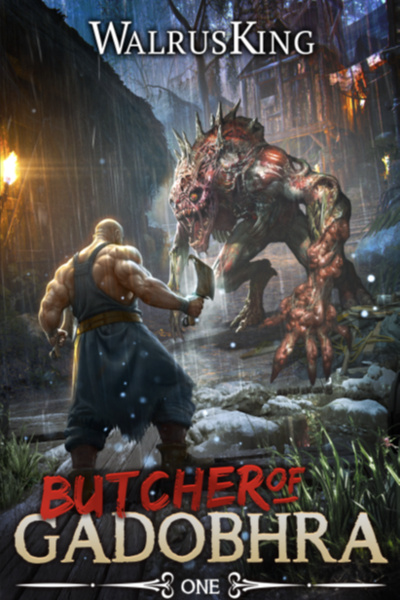
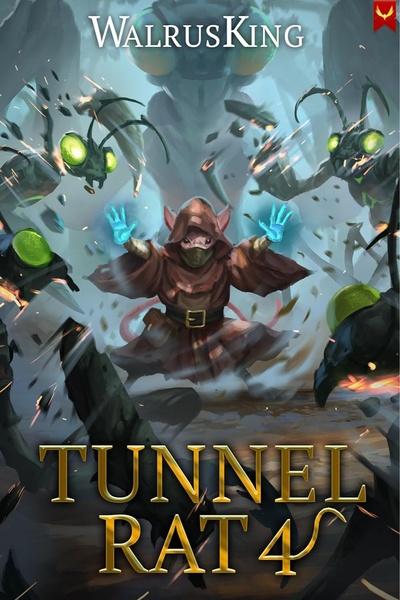
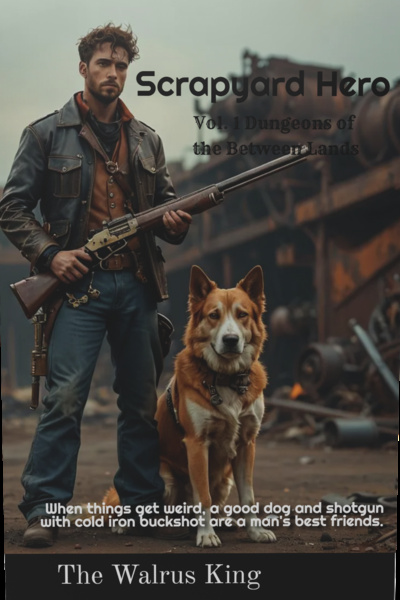
 with human-fearing natives} |  {A kitsune commits identity theft, and it goes horribly right} |  {An ally's treason will destroy the druid order} | 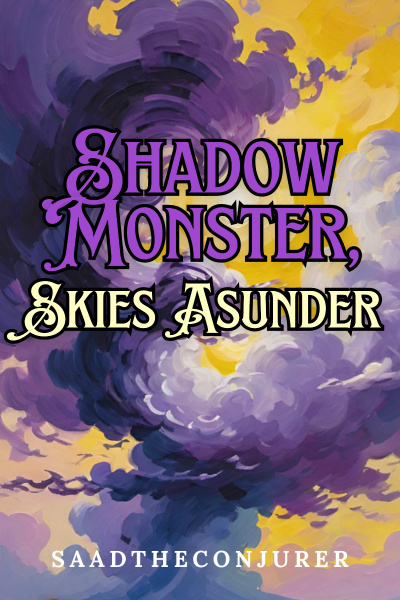 that wasn't meant to be} |
Re: Royal Road Marketing 101
#6MisterVii Wrote: I would rate this guide as a 4/5.
I didn't know we were announcing ratings for guides now.

Quote:It is a very solid guide and a good read, but not something that I would consider for a reread.
Okay.
Quote:It has some solid concepts but misses out on some key things to make it comprehensive. Post rate, Patreon, chapter length, ads, cover art, ai use, and aiming to publish.
Which are beyond the scope of this particular guide, but you can feel free to write your own.
Quote:There is nothing wrong with it
Which is why you're describing what you find wrong with it. I see.
Quote:You shouldn't try to please everyone but thinking about this is the wrong way to go about writing a story, or one that will struggle. Better to focus on writing something engaging, that you would like to reread yourself, and write more. Content is king after all.
Well, you said you weren't going to reread it, but if you ever change your mind, you'll have to point out where I ever said not to write something engaging.

Professional SF&F editor since 2010 -- now with more webnovel! See Ask the Editor for advice on writing, editing, publishing, and critiques.
Re: Royal Road Marketing 101
#7
I have had ratings on my mind recently, which is why I gave it a rating. Since that is half the drama here on RR anyways. Since I have read many of these guides throughout the years. The guide has some good parts and is useful for people starting out, like your blurb suggestion which was very good, but it misses some very important topics that relate to RR. I get saying they are beyond the scope, but the guide is called Marketing 101. I consider ads, detailed dive into cover art, and rate of posting all related to the core of marketing a story. The guide isn't wrong, just incomplete from a marketing perspective. Everything presented is correct.
As for not writing something engaging, you never said that. But the way it is presented in a marketing guide, makes it come across to focus on adjusting one's writing to focus on marketing potential. Again nothing wrong, but I think the focus is misplaced. One should write out a large chunk of their story and then go back to the first chapter and edit it, or do an editing pass. Reading your guide makes it appear that one should focus on this first, rather than having a lot of content. I guess it is a difference of perspectives. I believe in large amounts of content as the priority and key for a new author, having 100+ chapters already written.
As for not writing something engaging, you never said that. But the way it is presented in a marketing guide, makes it come across to focus on adjusting one's writing to focus on marketing potential. Again nothing wrong, but I think the focus is misplaced. One should write out a large chunk of their story and then go back to the first chapter and edit it, or do an editing pass. Reading your guide makes it appear that one should focus on this first, rather than having a lot of content. I guess it is a difference of perspectives. I believe in large amounts of content as the priority and key for a new author, having 100+ chapters already written.
Re: Royal Road Marketing 101
#8MisterVii Wrote: I have had ratings on my mind recently, which is why I gave it a rating. Since that is half the drama here on RR anyways. Since I have read many of these guides throughout the years. The guide has some good parts and is useful for people starting out, like your blurb suggestion which was very good, but it misses some very important topics that relate to RR. I get saying they are beyond the scope, but the guide is called Marketing 101. I consider ads, detailed dive into cover art, and rate of posting all related to the core of marketing a story. The guide isn't wrong, just incomplete from a marketing perspective. Everything presented is correct.I'm quite fine with suggestions on what should be included, but you sound like you already know everything, including about the inside of my own head, so I'm sure you can write your own.
As for not writing something engaging, you never said that. But the way it is presented in a marketing guide, makes it come across to focus on adjusting one's writing to focus on marketing potential. Again nothing wrong, but I think the focus is misplaced. One should write out a large chunk of their story and then go back to the first chapter and edit it, or do an editing pass. Reading your guide makes it appear that one should focus on this first, rather than having a lot of content. I guess it is a difference of perspectives. I believe in large amounts of content as the priority and key for a new author, having 100+ chapters already written.
If anyone else has any questions on what I can add, I would be happy to do what I can.
Professional SF&F editor since 2010 -- now with more webnovel! See Ask the Editor for advice on writing, editing, publishing, and critiques.
Re: Royal Road Marketing 101
#9
Ninjas don't hide. We market ourself. :D
This is a long read. I'll finish another time when have time.
This is a long read. I'll finish another time when have time.

Re: Royal Road Marketing 101
#11THE TOURISM BOARD IS ABOVE ALL Wrote:This is one of the differences between trad and web: trad tends to do per-author marketing, while web novels are almost always marketed by the individual story. This is why trad authors still, even today, often use pen names for different genres. Even when they're very open about the different names all being them (which used to not be common), that immediately tells the reader what kind of story this is.NovelNinja Wrote: Who is your audience? If you say "all fantasy readers," or "fans of litRPG," you're wrong.What about if you're writing books/series across multiple genres? Does that mean a specific audience for each book/series depending on genre type?
Yes Royal Road is LitRPG/GameLit dominated but not all of them are and a few authors write different genres. Still mostly sci-fi/fantasy though.
Thanks for an insightful and super useful thread!
But frankly, since we're no longer exclusively shopping in bookstores, that doesn't matter anymore. Online retail and websites make it very easy to show what the series is supposed to be, in what order. No more confusion as to where to start. So per-story marketing is picking up in the indie market, especially for authors starting out in this neck of the woods.
So just concentrate on per-story marketing. After all, if you're writing one series that's hard sci-fi and another that's a comedy litRPG, those two audiences aren't going to overlap much. Your core audience for both isn't going to be "fans of hard comedy sci-fi litRPG." It's two separate stories with two separate audiences.
(And by the way, if you are going into a brick-and-mortar bookstore and you've ever wondered why books in series are out of order and books from multiple series by the same author are all mixed together, it's probably not because they don't care. Because of how often employees are retrieving books for customers, books by one author are often shelved alphabetically by title. They might group obvious series together if the series is shown on the spine, but the point is to find the title fast and efficiently.)
Professional SF&F editor since 2010 -- now with more webnovel! See Ask the Editor for advice on writing, editing, publishing, and critiques.
Re: Royal Road Marketing 101
#12THE TOURISM BOARD IS ABOVE ALL Wrote: So if it was the Dragonlance or Discworld shared universe then each of those has a specific genre. Fantasy and a specific audience.
I think you're confusing "per-story" with "per-book." A single series can contain different kinds of stories, but for the most part you can think of one series as one story. Since this is a guide specifically oriented to Royal Road marketing, you can easily substitute "fiction" for "story" here.
Quote:I listened to the Novel Marketing podcast on Literary Universe Marketing but how would you expose the audience to the background/details of the larger umbrella universe?The magnet, for those who are reading and don't know what that is, is a kind of 'bait' for your email list. A reader magnet is the thing that attracts someone to your email list, and so it should be something they already want to experience. An email newsletter is a marketing technique that isn't much use on Royal Road itself, but can be very useful when you start hitting the larger market (even if it's only KU). Because of that, it's useful to start growing it before you go trad or indie, but I didn't mention it in the guide because it's more of a post-Royal Road item.
A breakdown of the universe/common links/factors given as an email magnet? A documents? Character profiles?
A worldbuilding document isn't going to be something new readers are going to be particularly interested in. Reader magnets are usually short stories that can introduce them to your style and setting, and possibly characters.
But you're on the right track; if you already have an email newsletter, then you can send out emails that give updates on your progress as well as giving little tidbits of information about your world. These can later be put up as articles on your website.
Quote:Gah, this is complex...Marketing can be complex, yes, but you're actually making it more complex than it needs to be by trying to find the secret formula. There is none. There are good techniques and bad techniques, but marketing is at least as much of an art as it is a science. You have to tailor things to each author, each story, and each audience. Not every author will be good at all marketing techniques. You focus on your strengths.
Quote:Don't mean to hijack your thread...Can't hijack something that invites you to do just that.
Professional SF&F editor since 2010 -- now with more webnovel! See Ask the Editor for advice on writing, editing, publishing, and critiques.
Re: Royal Road Marketing 101
#13
Wow, I never expected reading a, let me make sure I got this right, A Guide from someone who is in the Business, given away for free, Obviously there has been a lot of time and consideration put in writing this out. I did not expect it to turn into a bunch of Hens Clucking at each other. Don't ever change Royal Road Comment Section.
Fall To Darkness | 
Shattered Prayers |
Book One of the Age of Annihilation.
Every monster begins as a man.
Every prophecy begins with a sin.
Marcus Obsidian was a good man once—husband, father, and mayor of a quiet town. But when his family is taken and the betrayal comes from someone he trusted more than a brother, Marcus makes a choice. A desperate, bloody choice. One that tears open the veil between this world and something far more sinister.
Tyler Langston is no longer just a man. He is the harbinger of an ancient evil—one that feeds on suffering and grows in silence. With Marcus's fall, the first seed is sown. And with it, the Age of Annihilation begins.
Far from Dren, the Church of the Creator begins to stir. Commander Rhaine, iron-bound by faith. Brother Orion, a priest whose doubts may destroy him. Alex, an exiled knight haunted by his past. Together, they are all that stands between the world and the spreading destruction that is coming.
But each will be tested.
Each will be tempted.
And some will fall.
Because Annihilation does not come like a storm.
It comes like a whisper
Re: Royal Road Marketing 101
#14SHarnden Wrote: Wow, I never expected reading a, let me make sure I got this right, A Guide from someone who is in the Business, given away for free, Obviously there has been a lot of time and consideration put in writing this out. I did not expect it to turn into a bunch of Hens Clucking at each other. Don't ever change Royal Road Comment Section.Oh, it was just one.
And this is all stuff anyone could figure out. I just decided to put it all in one place for once.
Professional SF&F editor since 2010 -- now with more webnovel! See Ask the Editor for advice on writing, editing, publishing, and critiques.
Re: Royal Road Marketing 101
#15
I’ve heard from many people that the reader base on Royal Road expects consistency and a certain number of chapters (word count). However, some novels in the Rising Stars category gain thousands of followers even though they only have 10–20 chapters. What could be the reason for this? I’d appreciate it if you shared your thoughts.
Re: Royal Road Marketing 101
#16Galatine Wrote: I’ve heard from many people that the reader base on Royal Road expects consistency and a certain number of chapters (word count). However, some novels in the Rising Stars category gain thousands of followers even though they only have 10–20 chapters. What could be the reason for this? I’d appreciate it if you shared your thoughts.- Previous history (successful novels)
- Previous fanbase (easy conversion) (more or less interconnected depending on perspective)
- Connections (big shout-outs, discord @s, etc)
- Just a really good story that spreads via word of mouth
- Luck
Would say those are the most common options. Maybe some minor nuances here an there, but not often. It's not that complex of a thing considering RS is the most algorithmic series in a given time of the entire site, you have to click several buttons along the way. (for main-RS at least)
It isn't some big secret otherwise. People still expect consistency and many chapters and outside of popping off because of luck, they're still more or less getting that guarantee. (in most cases- some pop off because they're good but then get deleted cos the creator wasn't ready for the pressure.)
Re: Royal Road Marketing 101
#17Evercrest Wrote:This is correct, but there are also ad campaigns (usually timed to go live once the story already hits a significant RS genre list). Also, the whole "number of chapters" thing is pretty much bunk; people will click when they feel like clicking. But there's a 29k minimum to get on any RS list, so there's some correlation there -- RS means visibility, so you get a correlation between number of chapters and gaining more readers.Galatine Wrote: I’ve heard from many people that the reader base on Royal Road expects consistency and a certain number of chapters (word count). However, some novels in the Rising Stars category gain thousands of followers even though they only have 10–20 chapters. What could be the reason for this? I’d appreciate it if you shared your thoughts.- Previous history (successful novels)
- Previous fanbase (easy conversion) (more or less interconnected depending on perspective)
- Connections (big shout-outs, discord @s, etc)
- Just a really good story that spreads via word of mouth
- Luck
Would say those are the most common options. Maybe some minor nuances here an there, but not often. It's not that complex of a thing considering RS is the most algorithmic series in a given time of the entire site, you have to click several buttons along the way. (for main-RS at least)
It isn't some big secret otherwise. People still expect consistency and many chapters and outside of popping off because of luck, they're still more or less getting that guarantee. (in most cases- some pop off because they're good but then get deleted cos the creator wasn't ready for the pressure.)
Luck is nothing more than getting your story spotted by your core audience. You can stack the deck in your favor, but getting discovered by your core audience can be a bit of a roll of the dice. Are they going to be on the page of a related kind of story to see the Also Read suggestion? Will they see your ad? Will they search for you or notice you on an RS list? Marketing at that point is making sure you're visible to the kind of audience you want to attract. For example, my core audience is heavily into HFY, and I made sure that searching "HFY" (or "hfy," "Hfy," and "HFy" -- all technically different search terms on Royal Road) will lead to my story. I get fairly consistent traffic that way.
After that, getting a good following requires hooking them yourself. You draw them in with your story concept and then land them with a story they enjoy. That last bit isn't marketing, but marketing can inform how your story should go by identifying underserved markets. For example, if you already know the kind of story you want to write, you can refine it based on the kind of core audience you want to cater to. If a reader stumbles across a story with a great concept but only a chapter or two, that reader is probably going to follow right away rather than wait to see if the story gets to a certain number of pages first.
Some of the conventional wisdom is, as I said, correlation rather than causation. But where there's correlation there's usually a reason; the advice might help, even if the explanation is wrong. Like the whole "number of chapters per week" thing really tends to work out to an expected minimum wordcount per week; five 2k chapters and two 5k chapters are the same amount of story, and that length and pacing tends to benefit different kinds of stories.
Professional SF&F editor since 2010 -- now with more webnovel! See Ask the Editor for advice on writing, editing, publishing, and critiques.
Re: Royal Road Marketing 101
#18
Thank you for your thoughts on how marketing works on RR. It's very different than you would do trying to get followers on a social media page, I got a lot of great insights.
Re: Royal Road Marketing 101
#20
I ran into the same issue and found that using an sms api made things way easier to sort out notifications and confirmations without adding extra manual steps. It took a bit of testing to get the formatting right, but once it clicked, everything flowed smoother. If you're already handling user data, plugging this in won't be a big jump and can save a bunch of time.
- Report this post
- Rep (0)
- Edited by WenSamya at