
Humans have bred cats for their hunting skills, companionship and striking looks for thousands of years, resulting in roughly 100 recognized breeds around the world—and even more unofficial mixes. With so many unique breeds to choose from, there’s a cat for just about everyone.
While each cat is unique, there are some traits pet parents prefer. Of the 1,000 pet parents we surveyed, temperament/personality and appearance were equally important (32%). When digging deeper into personality, we found that cuddliness was the most desired trait (71%), with friendliness and sociability (60%) and playfulness (59%) trailing behind.
Unsurprisingly, the movement among our cat breed ranks this year reflected these desired traits, with the American Shorthair moving up to first place and the Norwegian Forest Cat entering the top 15 for the first time.
For the full list of America’s most popular cat breeds, we dug into millions of pets in Rover’s database and uncovered the top cat breeds of 2025.
1. American Shorthair (↑+1)
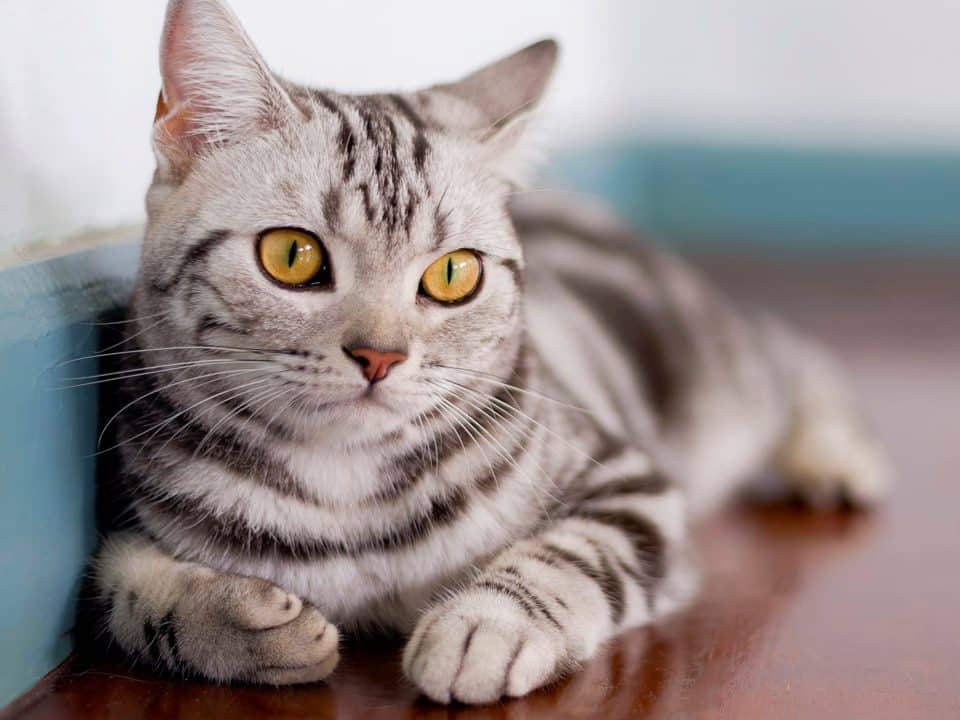
Jumping up from second place to the top, the American Shorthair now holds the title of most popular cat breed in America. These cats carry the top trait 71% of pet parents want in a cat: cuddliness. American Shorthairs love nothing more than curling up on the couch with you.
They typically adapt well to humans and animals alike, and are generally well-rounded in temperament. You’ll find them at the top of our list for chill, least active cat breeds.
All cat personalities are different, but an American Shorthair is likely to be sociable while still independent. These cats are selectively bred for specific traits that must meet the breed standard, unlike the Domestic Shorthair, which is a mix of unknown breeds.
2. Domestic Shorthair (↓-1)
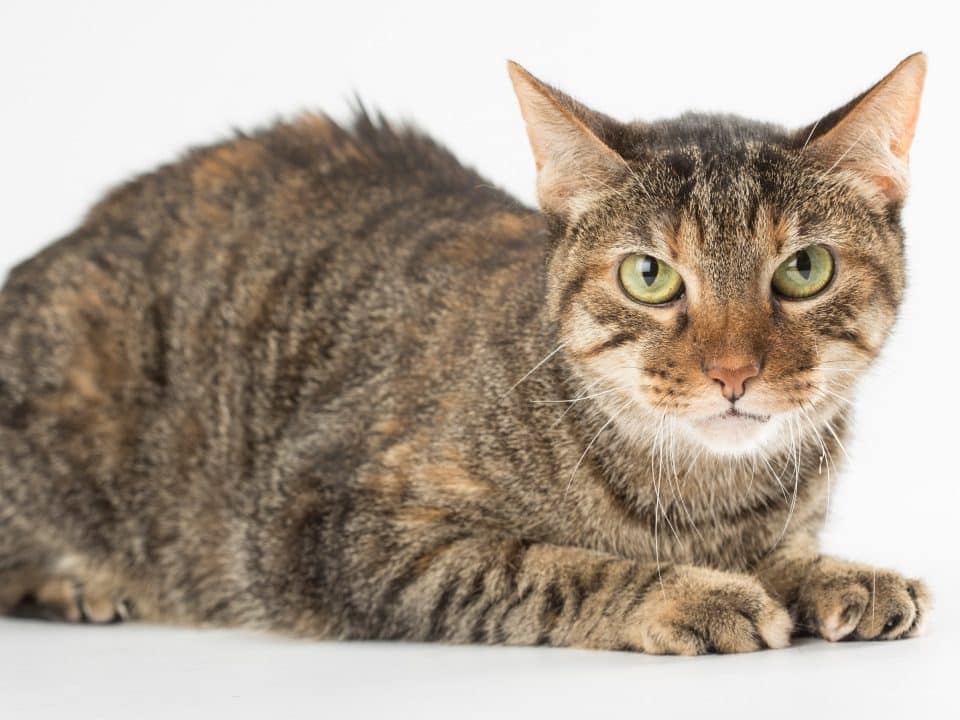
Down to second place this year, the Domestic Shorthair is often considered the “mutt” of cat breeds due to its mixed and unknown heritage. Because of this, Domestic Shorthairs can present a variety of physical attributes, but they are generally medium-sized with round faces, sleek and soft short coats, and can be any mix of colors.
It’s believed that, after being domesticated in Egypt around 2000 BC, cats like the Domestic Shorthair made their way around the globe, including to North America. These cats were favored as mousers and considered hard-working. Domestic Shorthair cats live an average of 12—14 years but have been known to live much longer.
3. Domestic Longhair (-)
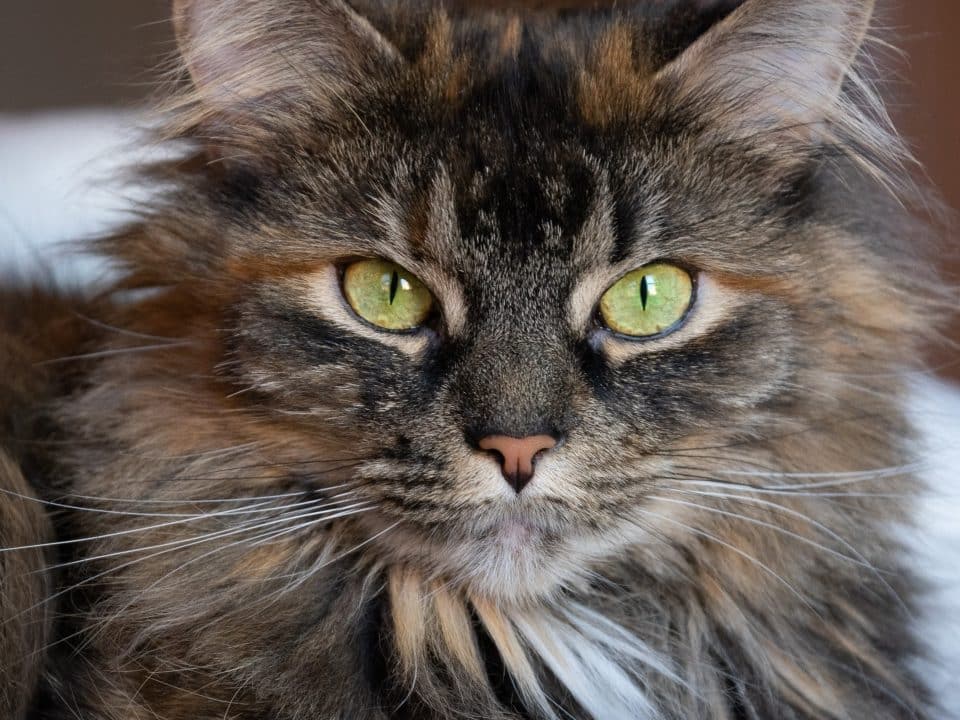
Like Domestic Shorthair cats, Domestic Longhair cats have long hair and are of unknown ancestry. They’re especially common for this reason—most cats aren’t purebreds! Also, like their short-haired friends, they were brought to North America from Europe via ships.
These cats come in a full spectrum of colors, from orange to white and black to gray. Their coat is typically a few inches long, and they have distinct tufts around their ears and on the bottoms of their paws. Domestic Longhair cats benefit from regular grooming to help maintain their lovely coats.
Their exact history is a mystery, but some speculate the recessive gene for long hair was pruned specifically by people with cats in colder climates like Russia, Iran, and Turkey. Domestic Longhair cats have a reputation for being great hunters, making them particularly attractive to humans looking to control rodents. If you aren’t keen on getting dead animals as gifts, you may want to consider a different cat breed.
4. Siamese (-)
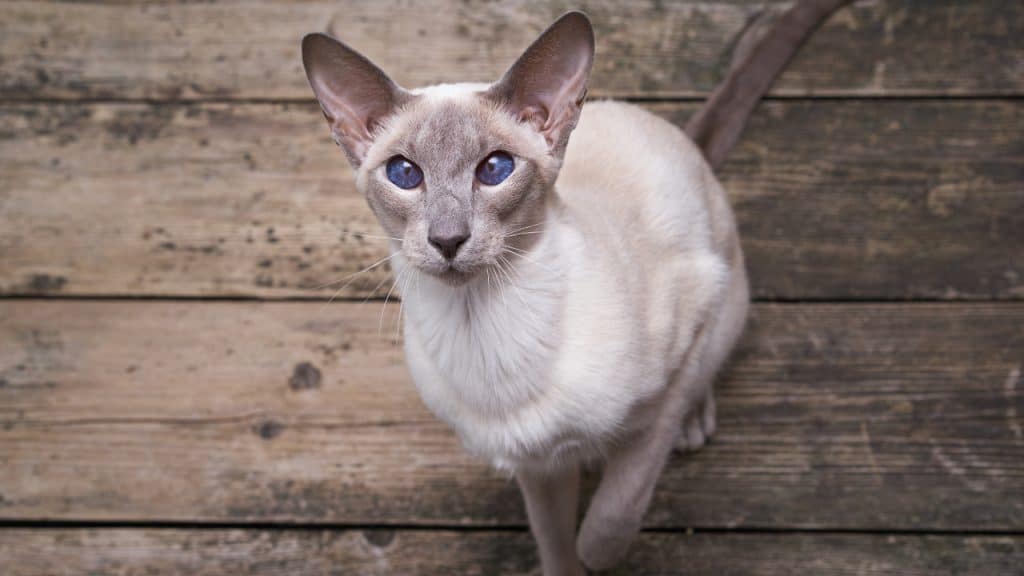
Although they’re bred to come in different colors and patterns, Siamese cats are most often cream-colored with gray-brown paws and icy blue eyes. Everything about Siamese cats is a bit pointier than other breeds, from the large, triangular ears to their delicate paws. They’ll often have the same grey-brown coloring on their ears and face. Siamese cats are now bred to come in different colors and patterns.
Their personalities are often busy and talkative, making them excellent companions for equally active people. In fact, pet parents reported that Siamese cats are one of the top cat breeds to be perceived as human-like.
They prefer not to be left alone for long periods and may need more playtime than your average cat. Siamese cats are also known for being a highly intelligent cat breed.
5. Maine Coon (-)
Maine Coons have relatively large bodies and lush, heavy coats. They’re muscular, sturdy, and simultaneously regal in stature. Their large eyes, substantial paws, and high cheekbones distinguish them from other cat breeds. It’s these features that have gotten Maine Coons ranked by pet parents as the most photogenic for social media.
When it comes to personality, these cats toe the line of wanting to be near their humans and needing their own space. They have a reputation for being undeniably attentive and may follow family members around. However, like many cats, they can be cautious around new people.
Unlike most other cat breeds, Maine Coons have a dense, water-resistant coat and may enjoy a water fountain or even playing in water! With such a magnificent coat, Maine Coons can use a little help in the grooming department.
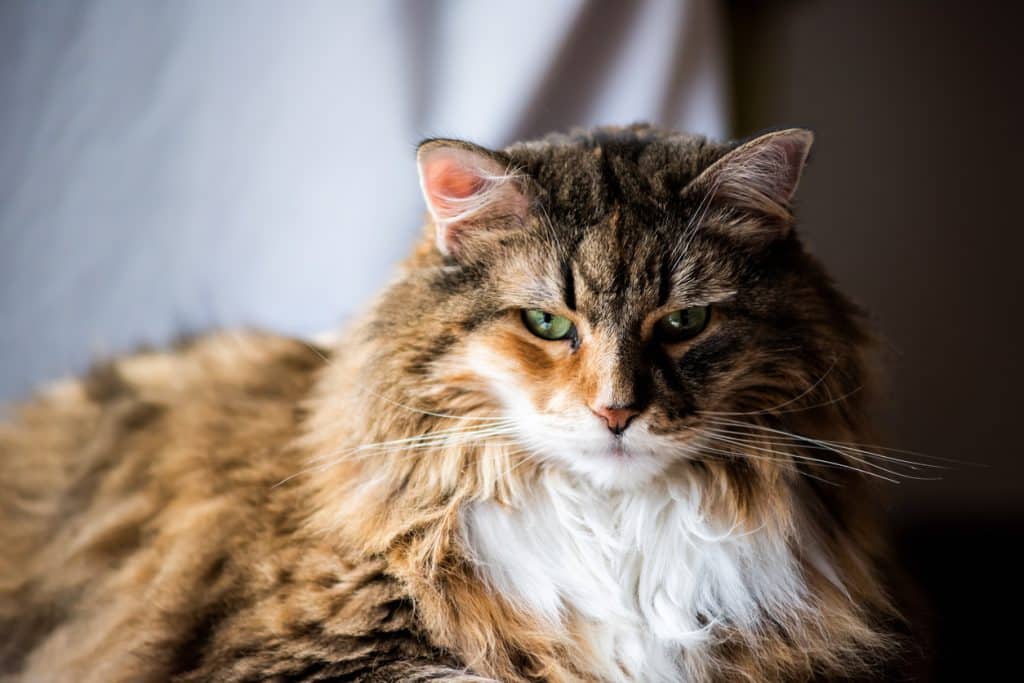
6. Ragdoll (-)
Large and fluffy, Ragdoll cats are a pointed breed. Cats of pointed breeds have lighter-colored bodies with darker faces, legs, tails, and ears. While their coloring can vary slightly, their blue eyes are distinctive.
One of the more affectionate breeds, Ragdolls will often follow their humans around, greet them at the door, and hope for a spot in bed. Rolling around is a common behavior with this trusting breed. They’re also known for being easygoing and not excessively active.
Ragdolls were largely free-roaming cats until in the 1960s, when Ann Baker, a breeder in California, developed what we know today as Ragdolls. If physical touch is your love language, then Ragdolls should be on your consideration list. For cats who love kisses, this breed is more likely to return the favor.
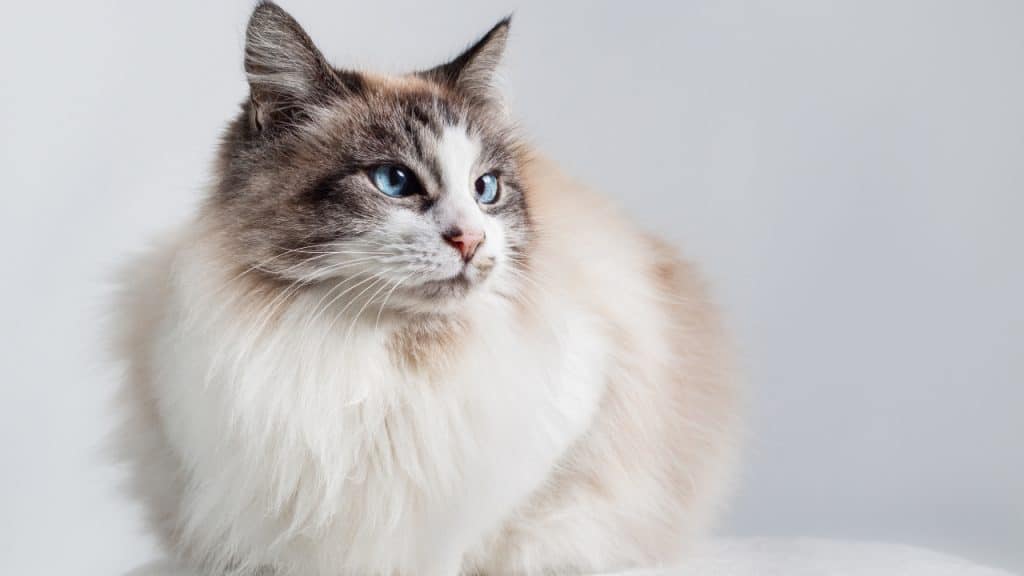
7. Russian Blue (-)
Russian Blue cats have short, soft coats in variations of dark gray and silver. They might show faint stripes but are otherwise patternless. Russian Blues have double coats, adding a plush look to their otherwise delicate frames. They often have yellow-green eyes and a distinct “smile” on their faces.
Additionally, Russian Blues are described as mostly quiet and will find a cozy place to sleep, but are social with their family. They may be the type to hide away during large gatherings of people.
Cat origin stories are heavily rumored, but some believe the Russian Blue descended from cats kept by Russian Czars. Eventually, these cats were imported to North America in the early 1900s, slowly gaining popularity over time to become the seventh most popular cat breed in America today.
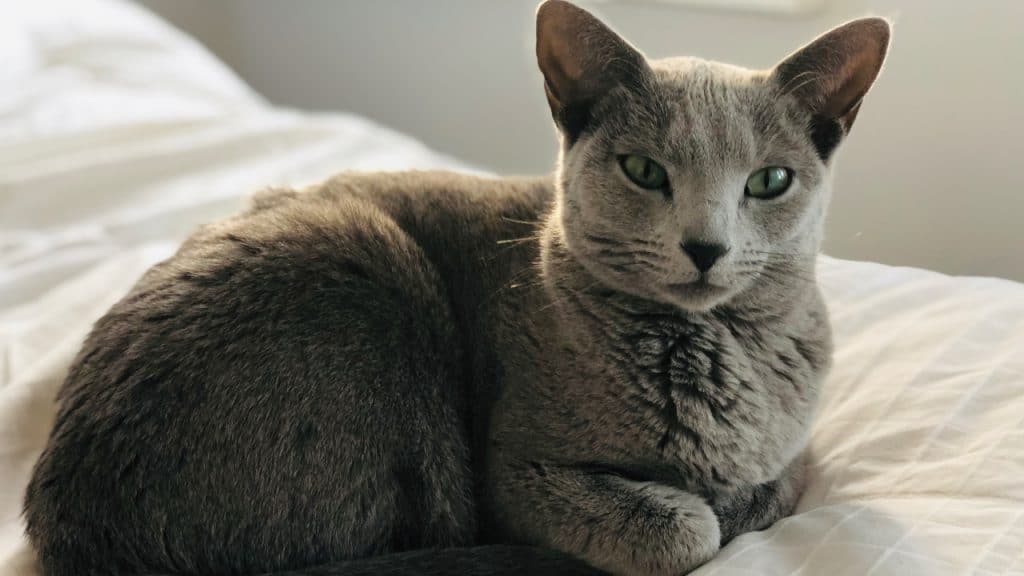
8. Bombay (-)
Bombay cats are strikingly panther-like in appearance. They were initially bred in the 1950s by crossing a domestic shorthair with a Burmese cat. American breeders wanted a cat that would take on the body type of a Burmese but with a black coat and copper eyes. Eventually, the Cat Fanciers’ Association recognized the new breed in the 1970s, and while it’s not the most common breed, it continues to have a loyal following.
Many Bombays appreciate frequent affection and playtime, making them great companions for highly engaged pet parents. Additionally, they have a reputation for being smart and easy to train. If you’re interested in training a cat to come to you or wear a cat harness so they can walk on a leash, a Bombay cat may be your vibe.
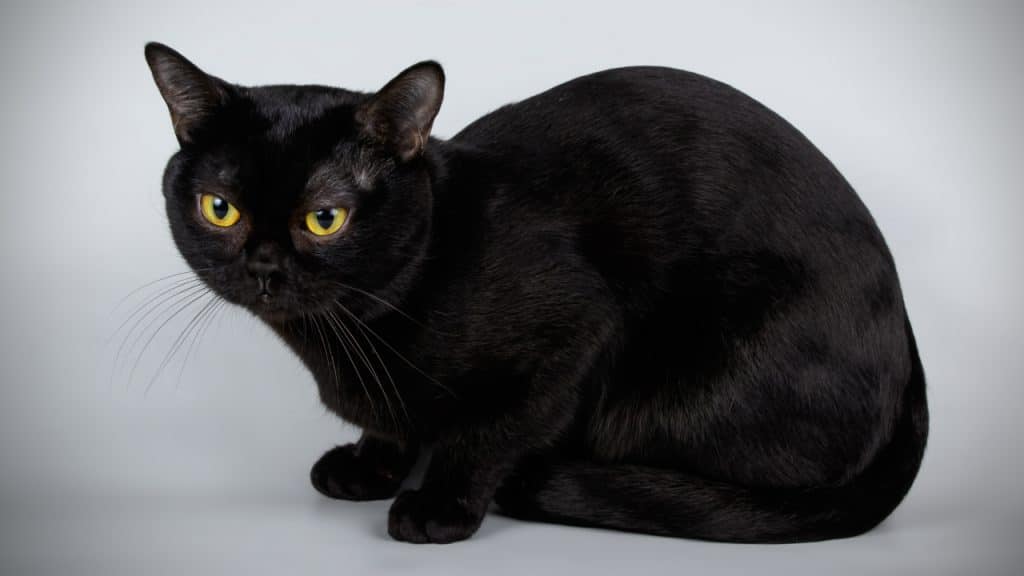
9. Bengal (-)
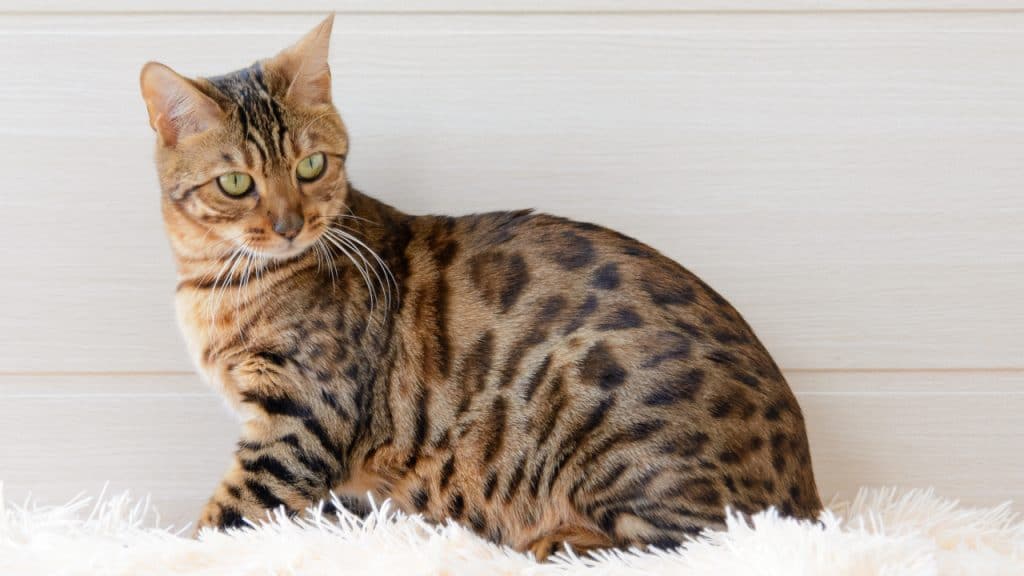
A Bengal’s marbled coat is their most distinctive feature, but it’s also impossibly soft and possesses a muscular physique. Bengals remain popular, likely because that they’re generally active and playful in a kitten-like way, even at an older age. They need pet parents who are willing to keep them busy and entertained.
Interestingly, Bengals are considered to be a hybrid species, having been bred with non-domesticated animals. The Bengal cat breed can be traced back to Jean S. Mill, who bred a domestic cat with an Asian Leopard Cat to produce a cat with a mild, affectionate temperament and the show-stopping look of a leopard.
10. Persian (-)
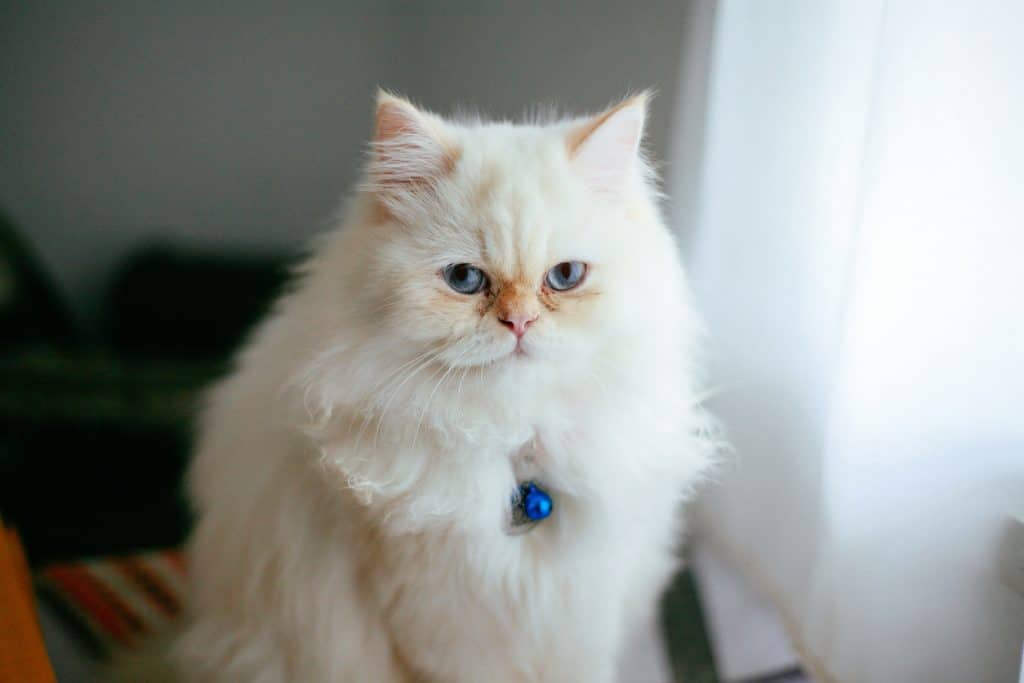
This historic breed has roots in ancient Persia and is known as the “aristocrat” of the feline world. Regal, long-haired, and striking in appearance, the Persian is a medium-large cat that’s also known for their distinctive flat-faced features.
Because Persians were refined through selective breeding, they come in a wide variety of coat colors and patterns. Their long, flowing fur requires consistent grooming, but this quality is what gives them their signature elegance and appeal.
Persians are also famously calm, sweet-tempered companions who thrive in peaceful environments. You’ll never lack quiet comfort with a Persian nearby. With a bit of daily care and plenty of love, these gentle companions make for a soothing, graceful presence in any home.
11. Siberian (-)
An ancient breed from Russia, the Siberian is a powerful, fluffy, medium-large cat that’s also known as the Siberian Forest Cat or Moscow Longhair. Having evolved to survive the harsh winters in Siberian forests, these cats are tough and have thick, triple-layered coats.
Since Siberians are a natural breed and were not intentionally bred by humans, they come in many colors and coat patterns. This genetic diversity is also why they’re so robust and generally enjoy good health.
But don’t take their exterior strength as stoicism—they’re often described as dog-like cats, both in their loyalty and affectionate, and adventurous traits. You’ll never be bored or lonely with a Siberian in your home, as they are curious, intelligent problem-solvers who’d love to follow you from room to room to see what you’re up to. Lots of enrichment and interactive play will keep this forest cat happy and healthy for the long run.

12. British Shorthair (-)
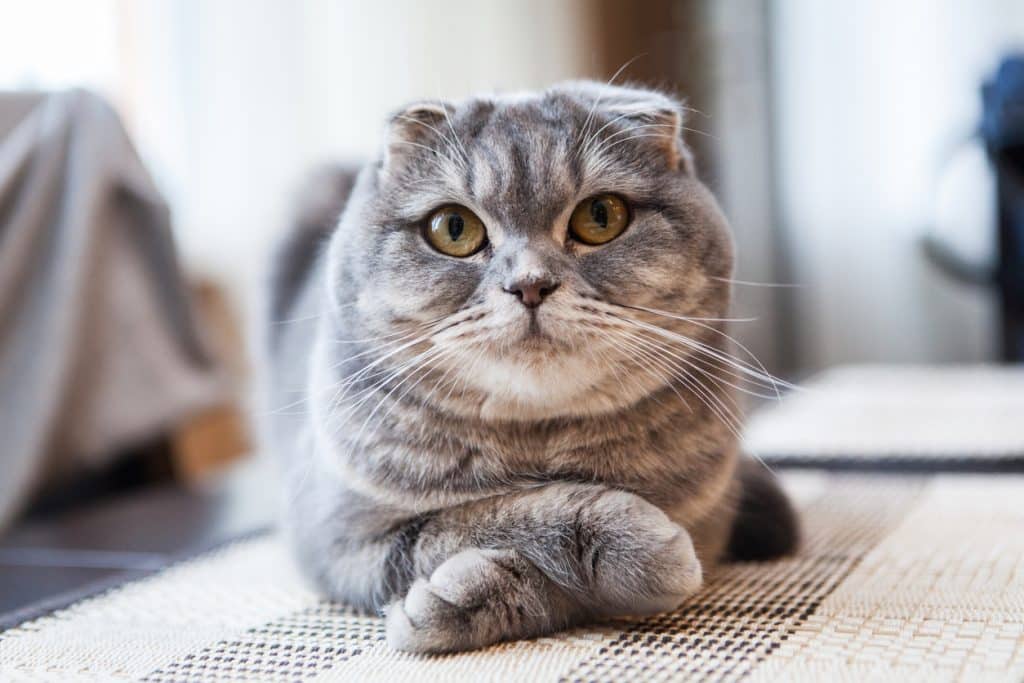
An old and cherished breed from the United Kingdom, the British Shorthair is a sturdy, medium-large cat known for its plush, dense coat and famously round face. Originally raised as working cats to control rodents, British Shorthairs have grown into one of Britain’s most beloved companions.
Since British Shorthairs are a naturally developed breed, they come in many coat colors and patterns, though the iconic “British Blue,” with its smoky-gray coat and copper eyes, is the most recognized. Their thick, velvety fur and solid build give them an unmistakable teddy bear look.
And they have the personality to match their looks too. Known for their calm, even-tempered personalities and quiet devotion, British Shorthairs enjoy spending time with their people but can also be content to relax on their own.
13. Sphynx (↑+1)
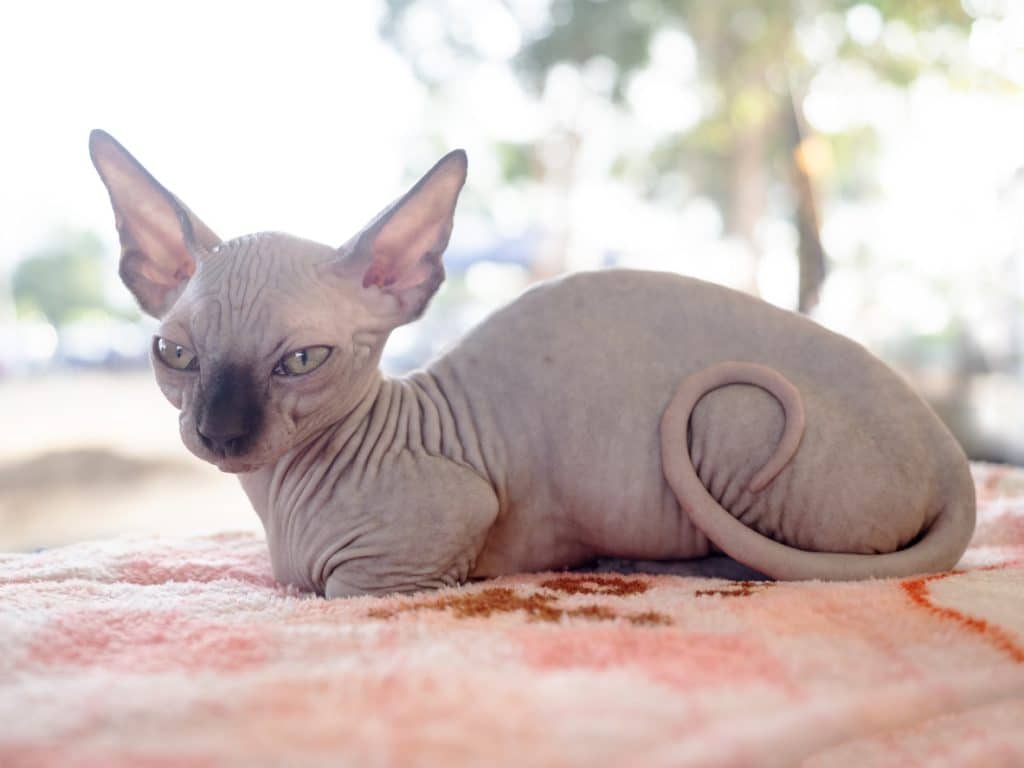
The Sphynx is one of the most distinctive cats on our list, both in terms of origin and appearance. This breed was born in 1966 from a spontaneous mutation in Canada, when a domestic cat gave birth to a hairless kitten. Over the last 60 years, the Sphynx has become more mainstream. Possibly due to claims of being hypoallergenic, the Sphynx has jumped up one position this year.
Although they appear hairless, Sphynx cats are classified as shorthair. Their delicate skin is covered with a layer of peach fuzz, and they are known to have a smooth, almost suede-like feel. Their oversized ears and lemon-shaped eyes add to their unique appearance.
This breed has grown in popularity over the years, possibly due to their personality on top of their unique appearance. Sphynx cats are smart, outgoing, affectionate, and vocal. They are happiest with company, so don’t be surprised if your Sphynx stays glued to your side.
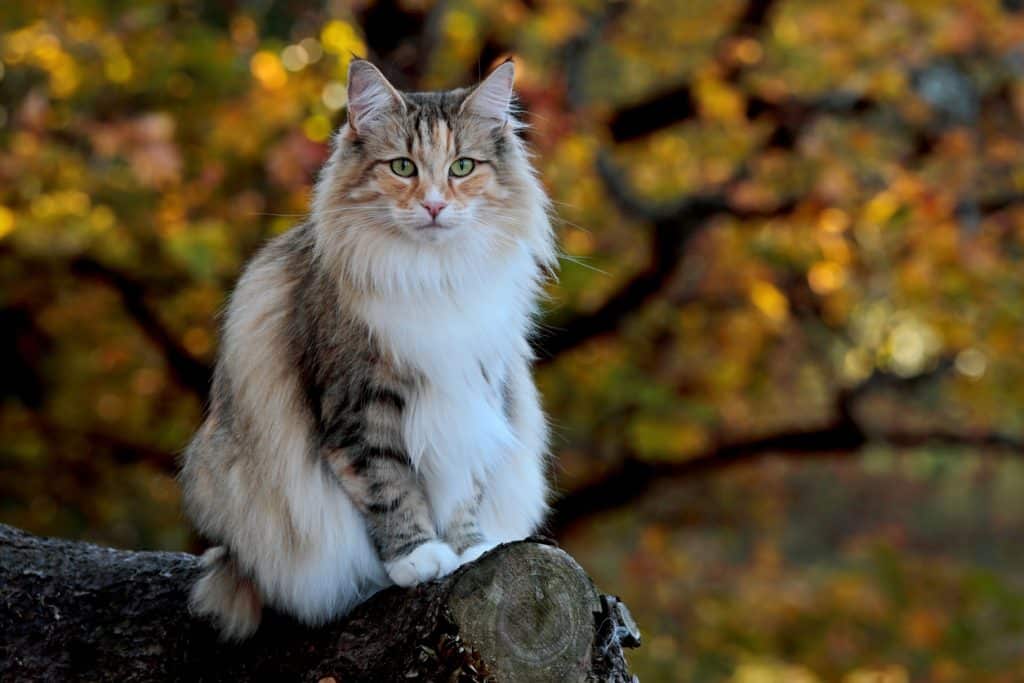
14. Norwegian Forest (↑+2)
This official cat of Norway is believed to have originated more than 4,000 years ago. Vikings brought them aboard ships as mousers, and Norse mythology says they are a favorite of the goddess Freya. They came to the US in the late ’70s and have become a popular breed in the years since.
The Norwegian Forest Cat, or Wegie, has a striking, majestic appearance. They have a luxuriously thick and silky double coat made to withstand frigid Norwegian winters. Their bright, almond-shaped eyes are almost otherworldly. They are a larger breed and can grow to be more than 20 pounds.
Wegies are affectionate but not overly clingy. They are playful and vocal, known for communicating in chirps when excited. Wegies also love high places, so be sure to have a tall cat tree to help keep them entertained.
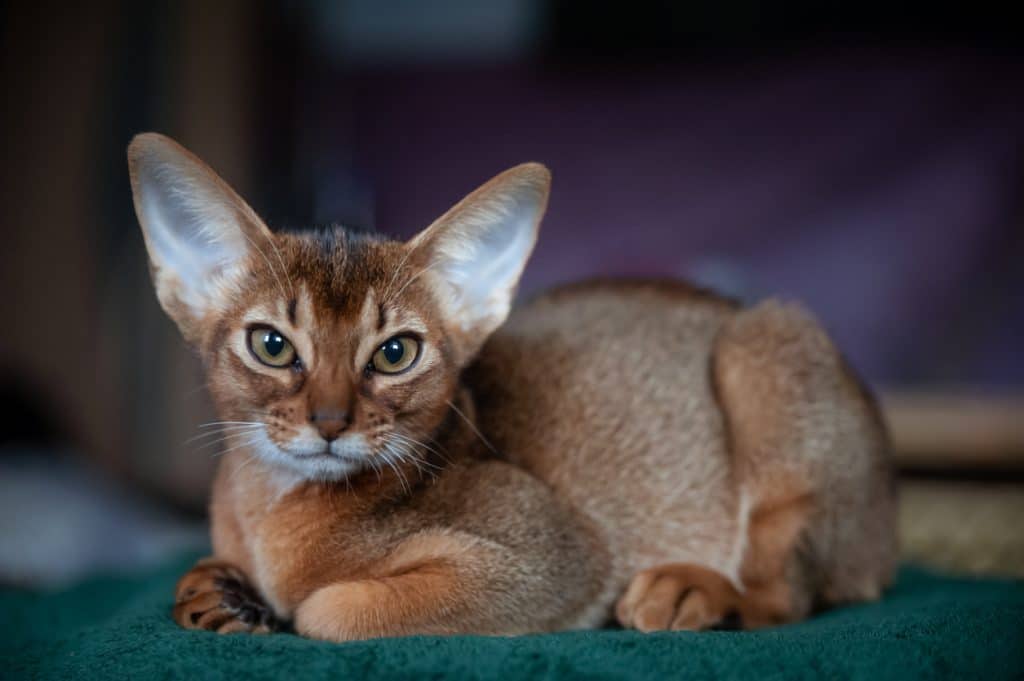
15. Abyssinian (↓-1)
Abyssinian cats are one of the oldest cat breeds in the world. They likely originated in Southeast Asia and arrived in the US in the early 1900s. Today, “Abys” are one of the most popular breeds in the U.S., known for being active, curious explorers.
Abys have short, fine coats with distinctive ticking (multiple bands of color) on each hair. They are most often cinnamon-colored, though some are blue or fawn. Their eyes are bright and almond-shaped, and their ears are large and cupped. They often look like they are standing on tiptoe, which adds to their curious vibe.
Abys are highly intelligent cats who will spend hours exploring every inch of their environment. They love to play and perch from high places in order to better observe their surroundings. Some even enjoy being put in a harness for outdoor walks and exploration. It’s no wonder these affectionate and social cats have stayed popular.
Trending Cat Breeds
Surprises happen! This year, the Norwegian Forest Cat jumped into the top 15 most popular cat breeds, even though they were trending under the American Wirehair last year.
Below are the cat breeds trending on Rover’s platform for 2025:
- Cornish Rex
- American Wirehair
- Chartreux
- Snowshoe
- Nebelung
Rarest Cat Breeds
With a minimum of 10 cats added to the Rover platform last year, these are the rarest cat breeds of 2025:
- Ural Rex
- Sokoke
- Mekong Bobtail
- Deutsch Langhaar
- Mandalay