



Sort by:
-
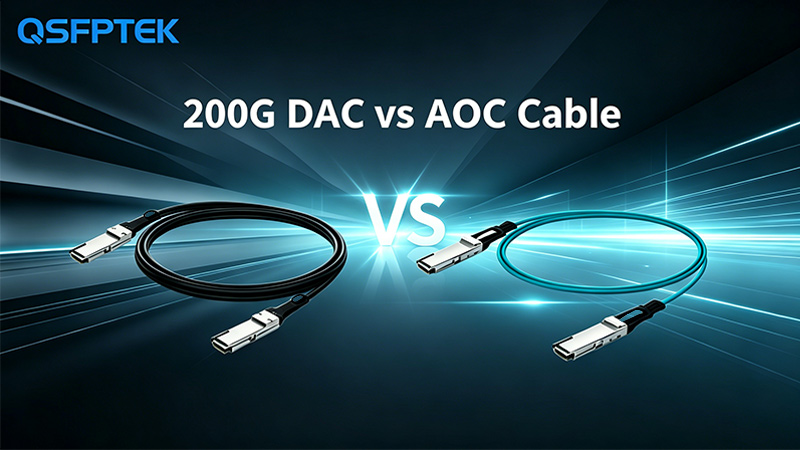 200G DAC vs AOC Cable: A Practical Selection Guide for Data Centers
Learn the differences between 200G DAC and 200G AOC cables, including QSFP56 and QSFP-DD form factors, transmission distance, power consumption, cable management, and deployment scenarios for modern AI data centers.
200G DAC vs AOC Cable: A Practical Selection Guide for Data Centers
200G DAC vs AOC Cable: A Practical Selection Guide for Data CentersLearn the differences between 200G DAC and 200G AOC cables, including QSFP56 and QSFP-DD form factors, transmission distance, power consumption, cable management, and deployment scenarios for modern AI data centers. -
 XPO Transceiver Overview: What is the Difference Between CPO?
This article will introduce what XPO (eXtra-dense Pluggable Optics) is, how this module works, and its main differences and applications compared to CPO.
XPO Transceiver Overview: What is the Difference Between CPO?
XPO Transceiver Overview: What is the Difference Between CPO?This article will introduce what XPO (eXtra-dense Pluggable Optics) is, how this module works, and its main differences and applications compared to CPO. -
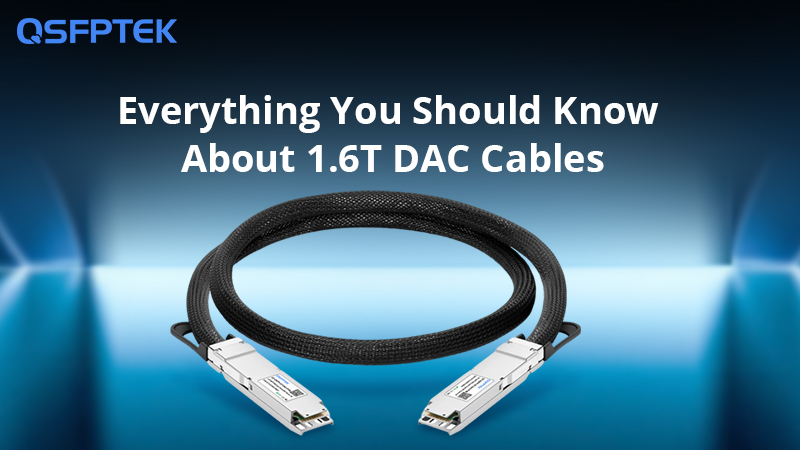 Everything You Should Know About 1.6T DAC Cables
This article explains what a 1.6T DAC is and its significance for the communications industry, helping you to quickly understand it.
Everything You Should Know About 1.6T DAC Cables
Everything You Should Know About 1.6T DAC CablesThis article explains what a 1.6T DAC is and its significance for the communications industry, helping you to quickly understand it. -
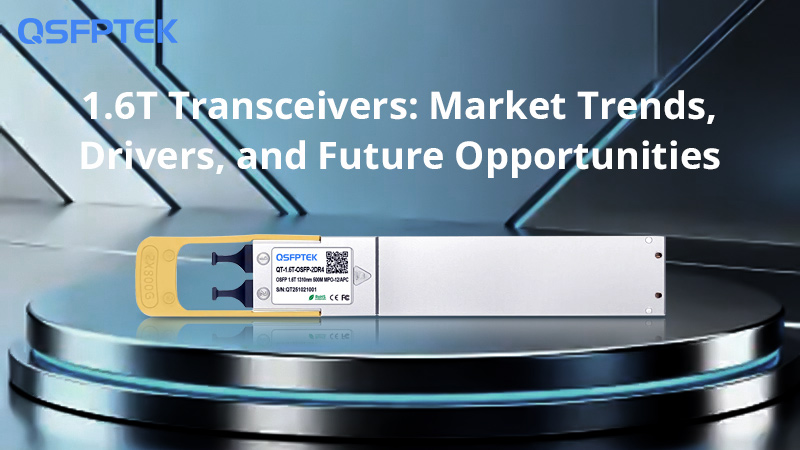 1.6T Transceivers: Market Trends, Drivers, and Future Opportunities
As AI and machine learning models keep growing, the need for high-speed connections in data centers is going up. The network bandwidth also needs to be increased. This makes it easier to use faster connection solutions, like 1.6T.
1.6T Transceivers: Market Trends, Drivers, and Future Opportunities
1.6T Transceivers: Market Trends, Drivers, and Future OpportunitiesAs AI and machine learning models keep growing, the need for high-speed connections in data centers is going up. The network bandwidth also needs to be increased. This makes it easier to use faster connection solutions, like 1.6T. -
 From AI Clusters to 800G Transceivers: Designing High-Performance Networks for the AI Era
Explore how AI clusters are reshaping network architecture, from XPU-centric design to multi-plane scalability, and learn how 800G modules enable high-performance, low-latency interconnects for modern AI data centers.
From AI Clusters to 800G Transceivers: Designing High-Performance Networks for the AI Era
From AI Clusters to 800G Transceivers: Designing High-Performance Networks for the AI EraExplore how AI clusters are reshaping network architecture, from XPU-centric design to multi-plane scalability, and learn how 800G modules enable high-performance, low-latency interconnects for modern AI data centers. -
 AI Computing Architecture Evolution: Scale-Up vs. Scale-Out and the Choice of Optical Modules
In the design of AI computing clusters, Scale-Up and Scale-Out have different goals from the outset, and their evaluation criteria are not aligned along the same dimension. This article will show what Scale-Up and Scale-Out is, and how to choose the optical module.
AI Computing Architecture Evolution: Scale-Up vs. Scale-Out and the Choice of Optical Modules
AI Computing Architecture Evolution: Scale-Up vs. Scale-Out and the Choice of Optical ModulesIn the design of AI computing clusters, Scale-Up and Scale-Out have different goals from the outset, and their evaluation criteria are not aligned along the same dimension. This article will show what Scale-Up and Scale-Out is, and how to choose the optical module. -
 Towards the Rubin Architecture: The Leap of AI Data Center Networks from 800G to 1.6T
This article explains that the 1.6T module provides a significant boost to the Rubin architecture, and that upgrading the network to 1.6T can maximize its performance.
Towards the Rubin Architecture: The Leap of AI Data Center Networks from 800G to 1.6T
Towards the Rubin Architecture: The Leap of AI Data Center Networks from 800G to 1.6TThis article explains that the 1.6T module provides a significant boost to the Rubin architecture, and that upgrading the network to 1.6T can maximize its performance. -
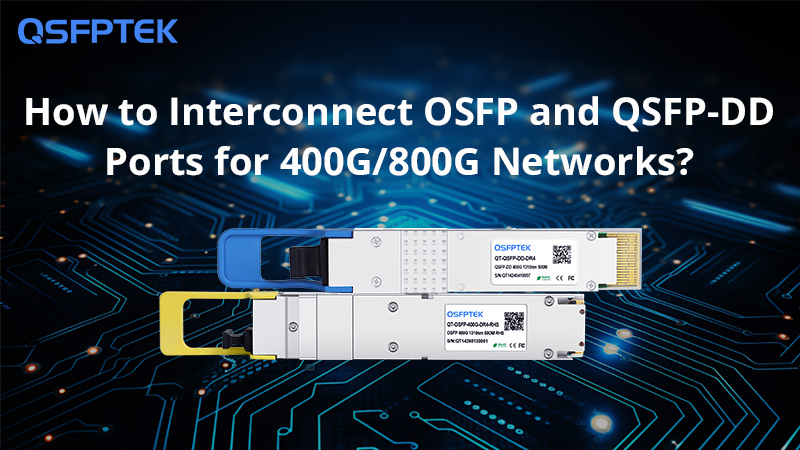 How to Interconnect OSFP and QSFP-DD Ports for 400G/800G Networks?
This article explores how to interconnect OSFP and QSFP-DD ports in 400G/800G networks, covering key principles, form factor differences, and practical solutions for stable, high-speed data center connectivity.
How to Interconnect OSFP and QSFP-DD Ports for 400G/800G Networks?
How to Interconnect OSFP and QSFP-DD Ports for 400G/800G Networks?This article explores how to interconnect OSFP and QSFP-DD ports in 400G/800G networks, covering key principles, form factor differences, and practical solutions for stable, high-speed data center connectivity. -
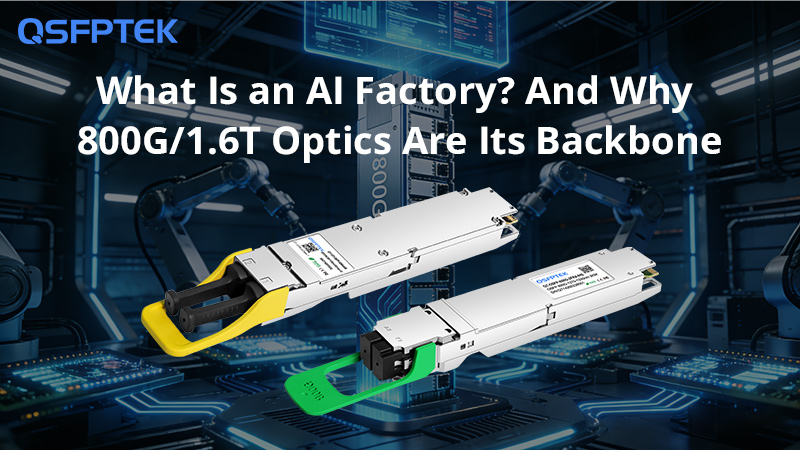 What Is an AI Factory? And Why 800G/1.6T Optics Are Its Backbone
The concept of an "AI factory" is no longer just a buzzword; it's increasingly becoming a reality. Data is fed into large models for processing and continuously generates output. In this process, how do high-speed modules become the backbone, and what role do they play?
What Is an AI Factory? And Why 800G/1.6T Optics Are Its Backbone
What Is an AI Factory? And Why 800G/1.6T Optics Are Its BackboneThe concept of an "AI factory" is no longer just a buzzword; it's increasingly becoming a reality. Data is fed into large models for processing and continuously generates output. In this process, how do high-speed modules become the backbone, and what role do they play? -
 800G Transceivers and Cables Typical Applications in AI Data Center
This article briefly describes the practical applications of various 800G products, such as AOCs, DACs, and optical modules, in AI data center network architectures.
800G Transceivers and Cables Typical Applications in AI Data Center
800G Transceivers and Cables Typical Applications in AI Data CenterThis article briefly describes the practical applications of various 800G products, such as AOCs, DACs, and optical modules, in AI data center network architectures.
first
flipPage
last


