


Computed electronic density of the bacteriophage P68

A quantum-mechanical framework for million-atom scale biological systems

  • Luc Wieners
  • Martin E. Garcia
Article

Announcements

  • Molecular-level illustration of a carbon nanotube on a dark background

    We are currently welcoming submissions to a number of open Collections, including:

    * Synthetic approaches to carbon nanomaterials

    * Self-healing chemical systems

    * Soft materials for drug delivery

    * Carbon capture and conversion

  • Multicoloured image of head silhouettes

    Interested in joining our editorial board and helping to shape our journal and the manuscripts that we publish in your areas of research? Please fill in our application form (link above) to indicate your interest. We are particularly interested in hearing from women and those with other underrepresented identities.

  • Mirtha Lourenço's headshot

    In May, we thank Mirtha Lourenço for her invaluable contributions to peer review. Her research focuses on advanced porous materials for environmental applications, particularly CO₂ capture and conversion and wastewater treatment via adsorption and photocatalytic degradation of pollutants.

Advertisement

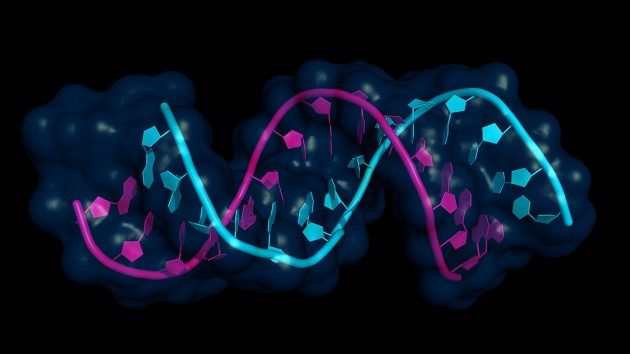
  • JNII40 is a bis(pyridine-2-carboxamidine) ligand with potent antiparasitic activity that preferentially targets AT-rich DNA. Here, the authors use NMR spectroscopy to elucidate the high-resolution structure of JNII40 bound to AT-rich DNA, revealing direct interactions between amidine protons and DNA phosphate oxygens that explain its affinity and selectivity.

    • Jorge Jonathan Nué-Martinez
    • Cristina Ugedo
    • Miguel Garavís
    ArticleOpen Access
  • While autoinhibited architectures of talin are known from cryo-electron microscopy, its behaviour in solution has remained underexplored. Here, the authors use size-exclusion chromatography coupled with in-line small-angle X-ray scattering, Monte Carlo modeling and AlphaFold predictions to determine the conformational landscape of full-length talin in solution, showing that this cytoplasmic adapter protein does not adopt a single compact structure but instead populates a broad, flexible conformational ensemble characterized by R3 subdomain repositioning and partial F3-R9 subdomain disengagement.

    • Bright Shi
    • Gilbert Reyes
    • Zimei Bu
    ArticleOpen Access
  • Artificial intelligence is transforming drug discovery by enabling the generation of novel molecules with tailored properties, however, most generative efforts focus on physicochemical features or target binding, leaving phenotypic discovery largely unexplored. Here, the authors introduce an integrated framework combining high-throughput cytotoxicity screening with bioactivity signature-based machine learning predictors and reinforcement learning-driven generative models to create small molecules with selective cytotoxic activity in pancreatic cancer cells.

    • Gema Rojas-Granado
    • Marta Sánchez-Soto
    • Patrick Aloy
    ArticleOpen Access
  • Most quantitative RNA detection methods depend on enzymatic reverse transcription to convert RNA into DNA, but this process is subject to inherent biological limitations, and while chemical methods are promising to date none have been competitive alternatives. Here, the authors introduce a non-enzymatic chemical ligation strategy in which DNA oligonucleotides hybridised to a complementary RNA template form an artificial squaramide backbone, enabling highly sensitive RNA detection at sub-attomole levels comparable to enzymatic systems.

    • Lapatrada Taemaitree
    • Friedrich Burba
    • Afaf H. El-Sagheer
    ArticleOpen Access
  • The sterile alpha and TIR motif containing 1 (SARM1) is a crucial enzyme in axonal degeneration, making it a potential target for treating nervous system diseases. Here, the authors identify and optimize base-exchange inhibitors (BEXi) targeting SARM1, revealing their limitations and highlighting the complexity of SARM1 as a therapeutic target.

    • Thomas Lundbäck
    • Vijay Chandrasekar
    • Rebecca Jarvis
    ArticleOpen Access
    • Selective protein functionalization remains difficult to achieve through conventional molecular biology approaches. Here, the authors summarize recent advances in chemical approaches to protein engineering and highlight their emerging applications in catalysis, functional studies, and therapeutic development.

      • Raj V. Nithun
      • Manjeet Singh
      • Muhammad Jbara
      Review ArticleOpen Access
    • Redox reactions played an important role in shaping the conditions that enabled the emergence of life on the early Earth, but how these relate to specific environmental conditions and whether they led to heterotroph or autotroph organisms remains a matter of debate. In this Review, the authors summarize and discuss evidence reconciling dominant theories — from the redox nature of the Hadean atmosphere and the presence of conditions that could have supported both heterotrophs and chemoautotrophs, to the transport of organic compounds that could have led to the emergence of life in multiple local environments.

      • Nurbubu T. Moldogazieva
      • Alexander A. Terentiev
      • Dmitry V. Astakhov
      Review ArticleOpen Access
    • There has been growing interest in the application of machine learning (ML) to the design of heterogeneous catalysts, including nanoparticle catalysts (NC) and single-atom catalysts (SACs). In this Review, the authors summarize recent advances in the ML-guided design of NCs and SACs for energy applications, focusing on the selection of features and descriptors for ML models from atom-scale structural information and identifying challenges and opportunities for the development of next-generation SACs through reliable datasets and advanced ML models.

      • Zhongbao Hu
      • Zhoukun Wang
      • Jian-Feng Li
      Review ArticleOpen Access
    • The A₂Ir₂O₇ iridium pyrochlores series exibit an interplay between a 5d Ir sublattice and, in many members, a magnetic 4f A-site sublattice, which gives rise to a hierarchy of coupled structural, magnetic, and transport phenomena that may support magnetic monopole-like excitations that can enable novel magnetoelectric responses. In this Review, the authors discuss a unified framework linking lattice geometry, f-d exchange, and spin–orbit-driven anisotropies, summarising key experimental advances and outlining future research directions aimed at detecting and controlling magnetic monopole-like excitations through magnetic fields, electric fields, and lattice perturbations.

      • Milan Klicpera
      Review ArticleOpen Access
    • The origin of pseudocapacitance remains a topic of ongoing debate. In this Perspective, the authors offer a new understanding, proposing that metallic conduction, negligible energy barriers for ionic charge transport, and a unique interaction between the electrode and ionic charges are all indispensable contributors to the pseudocapacitive response.

      • Wenxin Yan
      • Taowen Dong
      • Weitao Zheng
      PerspectiveOpen Access
  • Chemistry programmes worldwide are experiencing declining student enrolment, reflecting shifting career perceptions and competition from emerging fields. This Comment outlines how the discipline is evolving into an integrative field that combines molecular science with data science, automation, and systems thinking, thereby necessitating an evolution of both research practices and educational structures.

    • Dirk G. Kurth
    CommentOpen Access
  • Professor Nicola Gaston is the Director of the MacDiarmid Institute for Advanced Materials and Nanotechnology, a New Zealand Centre of Research Excellence, and a Professor in Physics at the University of Auckland, where her research group conducts quantum-mechanical simulations of the electronic and thermodynamic behaviour of nanoscale materials.

    Q&AOpen Access
  • Mechanoradicals are known to be sources of damage during polymer processing, and it remains challenging to stabilize, repair or utilize them. Recently, mechanoradicals formed during chain scission were intercepted directly by bis(butyl trithiocarbonate) in the solid state, redirecting the degradation pathways to repolymerization (repair) and complete depolymerization (recovery).

    • Huijuan Guo
    Research HighlightOpen Access
  • We are pleased to present our Editors’ Highlights Collection, featuring some of our favourite content published in Communications Chemistry in 2025. Here, we highlight why each paper was selected by our Editors and Editorial Board Members.

    EditorialOpen Access
  • Mental health should be a priority for all and especially for underrepresented groups, including the women in chemistry. Here, the authors discuss and propose supportive mechanisms within academia for the mental health of undergraduate women in chemistry.

    • Isobel Grint
    • Loukia Taxitari
    • Rafaela Vasiliadou
    CommentOpen Access
  • Dr Laura Cattaneo is a group leader at the Max Planck Institute for Nuclear Physics in Heidelberg, Germany. She has an interdisciplinary research background in chemical physics, connecting materials science, liquid crystals, and ultrafast processes in matter.

    Q&AOpen Access
miRNA-mRNA interaction

Nucleic acid chemistry

This Collection aims to offer insight and inspiration for nucleic acid chemistry, focusing on the structure, function, generation, modification, characterization, as well as application of nucleic acids.
Collection

Advertisement

Nature Careers

Science jobs

Advertisement