
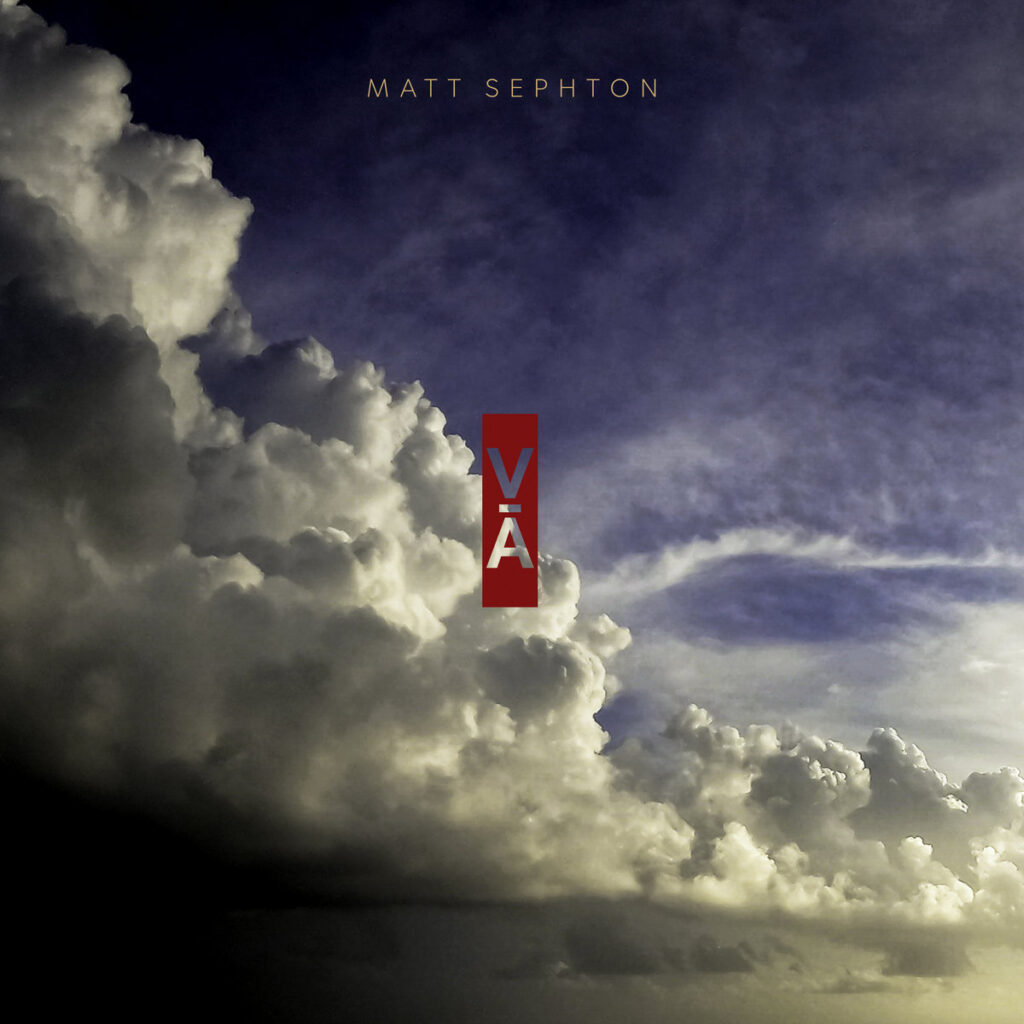
Matt Sephton has a wealth of experience as a DJ, and has been filling dancefloors and crushing festivals as Matt Rapid since 2003. In winter of 2025, Sephton and his wife – ceramic artist Caitlin Moloney – took up an artist residency at the Tiapapata Art Centre near Apia, on the island of Upolu, Samoa. Whilst there, Sephton took recordings with microphones and hydrophones, collected “found sounds”, and collaborated with “the land and people” in a “time of sonic and cultural exploration.” Using those carefully curated elements to craft with, and leaning heavily on the bass in the electronic production, Sephton has created and released his debut album Vā, the name inspired by “the Samoan concept of relational space: the space between people, between land and ocean, between sound and silence, between movement and stillness.”
The first track from an ongoing series of “place-based” music from Sephton is Floating. The beginning is subdued and spare: a tranquil sense of scene, water gurgling over rocks, insects chittering, distant birdsong. After the first minute, however, the soundscape changes character entirely, artfully placed double bass notes, fat stabs of low synth, and sprinklings of percussion. This is the kind of track that should be the soundtrack to dawn breaking at an outdoor festival, peaceful but with a huge depth to its mood. The track diminishes again to familiar noises of nature, and deep notes combined with percussive whickering. Siva is quite a departure from Floating. The percussion that builds up over the first quarter becomes more intricate with each new layer, and it’s joined by guest vocals from local rapper Moonshine OSKK, repeating the song title in a breathy tone; what sounds like the cry of a bird of prey, and a selection of other, less readily identifiable sounds. Siva takes the listener on a journey that comes to an abrupt ending, like a swift river suddenly terminating in a huge still pool amongst canyon walls, a bird cry fading into the distance.
The Sky has a similarity to Siva in the style and feel of its percussion, but that’s really where the similarity ends. This is an intriguing track, this is a sky of capricious mood changes, of bold expression and soft retreats. Musically driven by piano, strings, and percussion, interspersed with statements from a French-accented voice. The roiling, slate-grey thunderheads that gather and threaten in the track’s middle section end up being a storm in a teacup, as they clear away to a dulcet blue before the track quietly concludes. A fun and bouncy percussion groove sets the scene for Turtle, featuring guest vocals from Tau’ili’ili Alpha Maiava, who also provides the Fagufagu on later track Horizon. Turtle burbles happily along, as Maiava relates a story before breaking into song. The many percussion layers gradually peel back until there’s nothing left. Tiavea is in a similar vein to Floating, to begin with. Then a definitive pulse slides into place, faint murmurings of voices in song drifting through the background. Tiavea is a track that seems to reference and blend many aspects of Samoa, the feel of an idyllic Pacific island, wind blowing softly through palm fronds, sun warming sand and skin, a more languorous and stress-free approach to life.
Horizon wouldn’t sound out of place on an Afro Celt Sound System album, this is another one that would be perfect for a day-breaking slot at the aforementioned imaginary outdoor festival, this is a piece that inspires energy and movement, alongside moments of space and reflection. The sweet ambience of birdsong combines with the sounds of someone moving through an outdoor area, on Lava. This gives way to portentous drums over a background that is dark and brooding. The liquid sounds that permeate add weight to the imagery of lava flow, there are moments of interruption, as if the lava may have encountered an obstacle that it then moves around and continues its inexorable advance. This is offset by the light-hearted ending of friendly chatter and a refrain of the chords to Somewhere Over The Rainbow on ukulele, fading into silence. Ghanaian papermaker Awal Muhammed provides guest vocals on Paper, accompanied by sounds of handmade paper being handled and manipulated. The music is airy and washy, a perfect accompaniment to the gentle relaying of methods to make paper by hand, sharing the joy found in the process. The song begins to expand around the halfway point, the music starting to suggest urgency, before kicking off a fast-paced EDM beat that weaves strands of the track’s earlier stages in and around itself. Clay came to be due to Sephton and Moloney working together so closely, Sephton had captured the underwater sound of clay collapsing and dissolving, which held a special poignancy for Moloney. It is easy to imagine this soundscape as a potter at work, the constant drone perhaps representative of a constantly spinning wheel, splashes of inspiration and creativity arc back and forth.
Moana creates the sense of swimming through sunlit coral reefs in crystal blue water, surrounded by myriad schools of brightly coloured fish, a track that moves in its own current and bears the listener deftly along to a calm and languid ending. On album closer Umu, sounds of community and shared activity are backed with subtle blooms of keys that slowly, slowly begin to build into a more defined structure. This is a reflective track, one that carries within it a sense of farewell… but not goodbye. As it fades to end the album, the listener is left with the ubiquitous birdsong, a dog barks, the sea rolls in the background, and the sun sets on Samoa.
Matt Sephton recommends that Vā is an album designed to be heard as a whole, which makes a lot of sense given the interconnectedness of the songs, the common thread of birdsong, the blends of themes. He refers to himself as a producer and “sound artist”, and it would be difficult to conceive of a more apt title. Here, he has painted a lush and vibrant rendering of the Samoa he experienced, the colours vivid, the shading worked with masterful control, exquisite brush-strokes bringing to life a land and people rich in story and culture. Vā is an album to be experienced, not merely listened to. Magnificent.
Related Acts:
About the author Peter K Malthus

Passionate music lover from the south, based in Otautahi Christchurch. Writes, sings, and plays guitar in Finger Of Contempt, and Quordlepleen. Plays bass and sings in PistolGrip, and plays bass in Mudbelly. In my spare time, I am mildly obsessed with plants and gardening. I love spending time with my kids. I love board games, and flying kites, and riding bikes, and food. I really like good coffee, a lot. I’m rarely satisfied with my pedalboard.
More by Peter K Malthus
EP Review: The Lighthouse
Album Review: Ratbag Apartment

EP Review: Bodega
Album Review: NON
EP Review: Idle State

Album Review: The Rabbit’s Advice
EP Review: Orbiting Bodies
Album Review: Hard Road

EP Review: Pocket Dimensions
Album Review: Beanpole

Album Review: Gutterlove

Album Review: Hot Variety