Log InRegister
Quick Links : The Mindat ManualThe Rock H. Currier Digital LibraryMindat Newsletter [Free Download]
Home PageAbout MindatThe Mindat ManualHistory of MindatCopyright StatusWho We AreContact UsAdvertise on Mindat
Donate to MindatCorporate SponsorshipSponsor a PageSponsored PagesMindat AdvertisersAdvertise on Mindat
Learning CenterWhat is a mineral?The most common minerals on earthInformation for EducatorsMindat ArticlesThe ElementsThe Rock H. Currier Digital LibraryGeologic Time
Minerals by PropertiesMinerals by ChemistryMineral Visual ExplorerAdvanced Locality SearchRandom MineralRandom LocalitySearch by minIDLocalities Near MeSearch ArticlesSearch GlossaryMore Search Options
The Mindat ManualAdd a New PhotoRate PhotosLocality Edit ReportCoordinate Completion ReportAdd Glossary Item
Mining CompaniesStatisticsUsersMineral MuseumsClubs & OrganizationsMineral Shows & EventsThe Mindat DirectoryDevice SettingsThe Mineral QuizTime Machine
Photo SearchPhoto GalleriesSearch by ColorPhoto Colour ExplorerNew Photos TodayNew Photos YesterdayMembers' Photo GalleriesPast Photo of the Day GalleryPhotography

Other Names

Other Names in our Database

Mindat.org contains a large database of alternative names that aren't official IMA-approved mineral species. The most important categories are listed below:

Rock Names

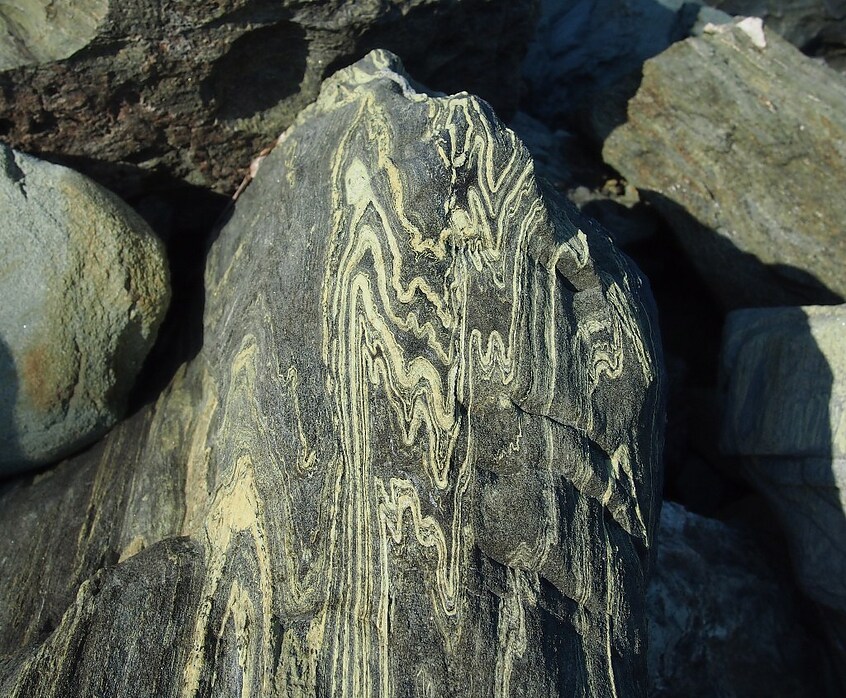
A rock is a naturally-occurring solid aggregate of one or more minerals, mineraloids or, in some cases, organic material. Sediments are the unconsolidated equivalent of these.

Granite, basalt and limestone are simple examples of rock names, but the full list can be found here.

Varieties

Some names have been given informally to a specific form or colour of a mineral. Many of these names pre-date the introduction of rigorous scientific naming for minerals, some are trade-names and some are names that were given to a specific form of a mineral from a particular area. Other names are important in petrology for specifying a particular chemical signature for the mineral.

None of these names have any true mineralogical validity but many remain in regular use.

Examples:

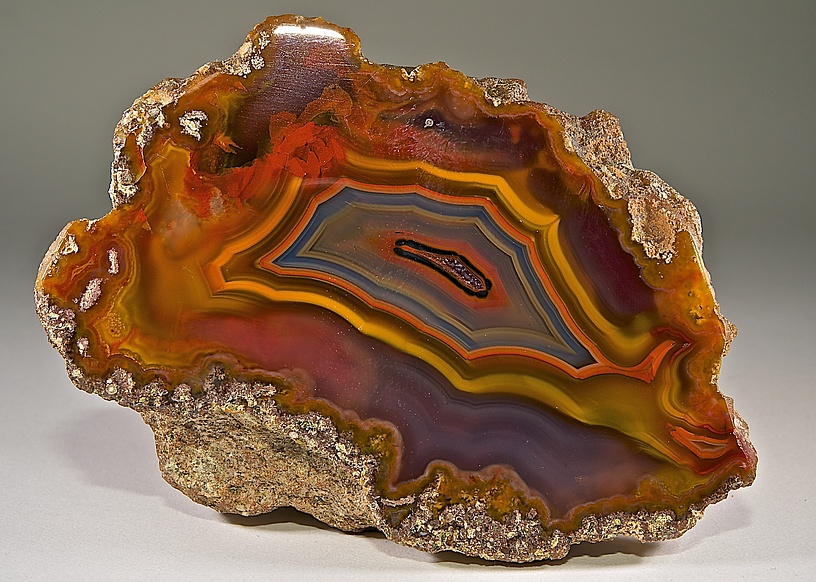
Amethyst - a purple variety of quartzEmerald - a green variety of berylAgate - a banded variety of chalcedony, which itself is a cryptocrystalline variety of quartz sometimes containing moganite.

Mixtures

Sometimes something was given a name in the past in the belief that it was a genuine mineral species but has subsequently been proven to be a mixture of two or more minerals.

A good example is andrewsite, which was thought for a long time to be a valid mineral but was proven to be a mixture of various iron and copper minerals.

Synonyms

The largest category of other names are the synonyms - names that mean the same as another mineral, rock or variety, etc. within our database.

Some of these are spelling variants, such as barite for baryte, sulfur for sulphur.

Some are historical names that have in general become obsolete, such as fluorspar for fluorite, chalybite for siderite.

Some are foreign language versions, such as pirita, rikkikiisu, פיריט and Пирит which are the Spanish, Finnish, Hebrew and Russian names for pyrite, respectively.

Other Names

Some names don't fit into any of these categories. There are names for minerals that have not yet been formally approved, there are names for synthetic materials that are either marketed alongside natural minerals (for example, Silicon Carbide (artificial)) or may be found in natural deposits, and even for minerals that we know exist on other planets but haven't yet been approved as mineral species on Earth (for example, nitrogen ice).

Searching

To search through our list of all mineral, varieties, synonyms, etc. by name you can use this search box (or the one at the bottom of every page):

 
Mindat.org® is an outreach project of the Hudson Institute of Mineralogy, a 501(c)(3) not-for-profit organization. Mindat® and mindat.org® are registered trademarks of the Hudson Institute of Mineralogy.
Copyright © mindat.org and the Hudson Institute of Mineralogy 1993-2026, except where stated. Most political location boundaries are © OpenStreetMap contributors. Mindat.org relies on the contributions of thousands of members and supporters. Founded in 2000 by Jolyon Ralph and Ida Chau.
To cite: Ralph, J., Von Bargen, D., Martynov, P., Zhang, J., Que, X., Prabhu, A., Morrison, S. M., Li, W., Chen, W., & Ma, X. (2025). Mindat.org: The open access mineralogy database to accelerate data-intensive geoscience research. American Mineralogist, 110(6), 833–844. doi:10.2138/am-2024-9486.
Privacy Policy - Terms & Conditions - Contact Us / DMCA issues - Report a bug/vulnerability Current server date and time: May 19, 2026 01:20:45
Go to top of page