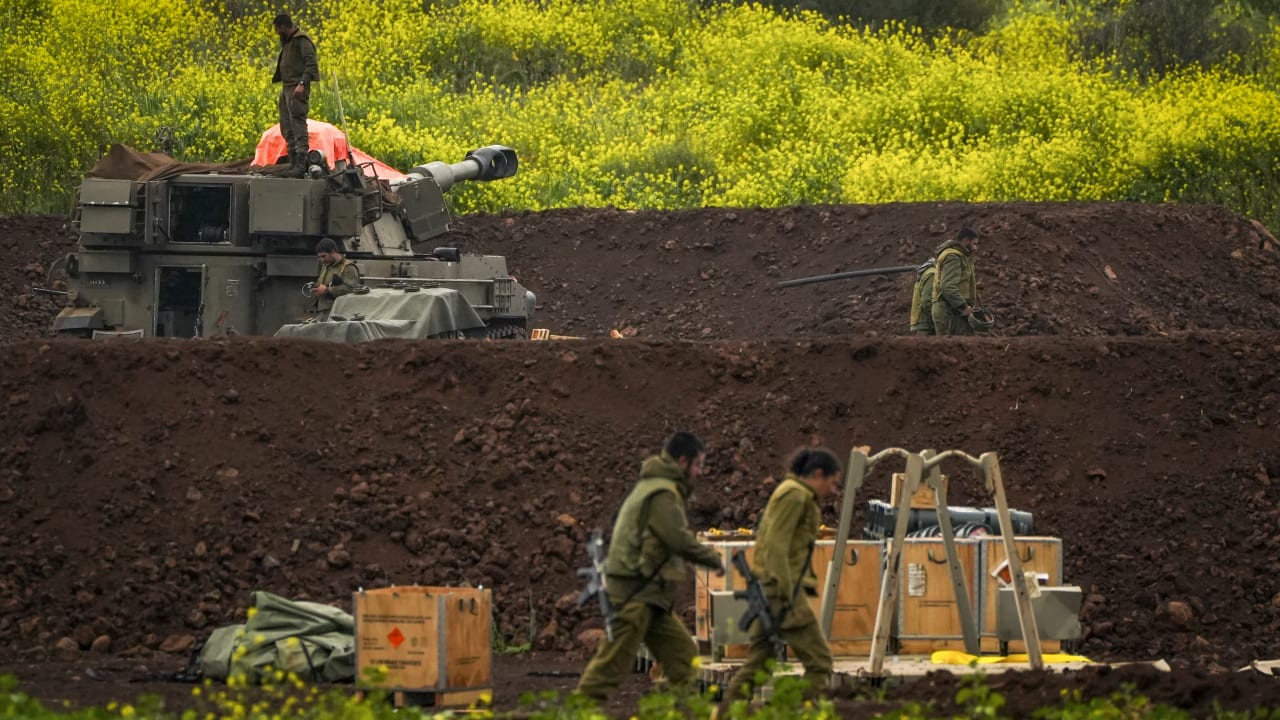
As the IDF’s drastic combat fighter shortage continues, and the government has avoided pressuring the haredi sector to join the military in larger numbers, an ongoing increase in female fighters has been one of the few bright spots.
The Jerusalem Post recently interviewed multiple IDF officers and soldiers from a training course for a mixed female and male hi-tech artillery and firepower unit – part of that effort to maintain the military’s strength and ranks.
This special hi-tech “Eitam” unit has been crucial to protecting IDF soldiers invading southern Lebanon and to guiding artillery, drones, and elements of the Israeli Air Force (IAF) in quickly counter-attacking Hezbollah cells that have been launching aerial threats.
Eitam also helped identify, locate, and coordinate defense measures against Iranian aerial threats. Some of the interviewees played important roles during the 12 Day War in June 2025.
Interviewed by Zoom, amid their military drill, the officers and soldiers were helmeted and wielded guns and other fighting equipment.
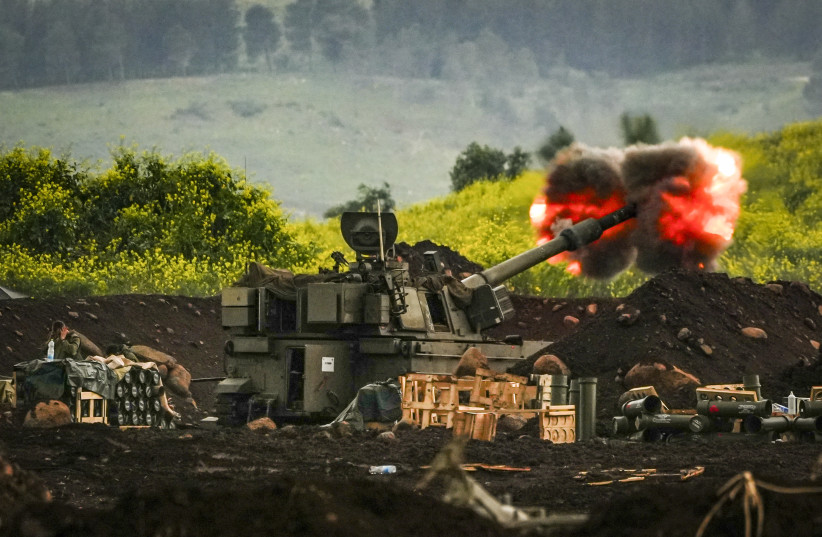
Lt. ‘S’
Lt. “S” is a female combat logistical support officer and a former combat fighter. Her unit, 611, “combines men and women. We are equal. The battalion is dedicated to artillery and other firepower. We act on all of the fronts from the North to Eilat,” she said.
“We can attack with drones – and also identify and locate drones and aerial threats on defense.”
S is on a five-year special track, having served first as a non-commissioned and then as a commissioned officer; she therefore has more experience than many others in her position.
“I provide support to encourage and boost the female combat fighters. I handle medical issues, weapons, food, equipment, and technological issues to ensure that my company can function non-stop over an indefinite and extended period,” she explained.
She works “with the soldiers 24 hours [a day] and seven days a week. I am helping them learn their roles, including serving with them in the field – this is not merely supporting them from headquarters at a distance.”
During Operation Rising Lion, she said, “There was a threat to the state. I worked with the soldiers on all of the fronts, especially on defense from aerial threats.”
Further, S noted that “there has been a lot of pressure lately. We have been super busy with lots of nearby threats, but despite stressful moments, which were physically challenging, the soldiers performed well and stood shoulder to shoulder. My job was to help them stay stable and to provide a professional and cool and collected voice for them.”
She cautioned, however, that “there is pressure all of the time. Israel is always under threat, and our fighters do not know where or when they will ‘meet’ the threat, so we prepare them for all scenarios from aleph to taf (A to Z).”
Continuing, she described “the female fighters” as “an inseparable part of the larger artillery and firepower forces.”
“It’s not just a gimmicky headline,” she noted. “They are an operational force to help the State of Israel, no matter the religious status, race, or gender of a soldier – we have a mission, and we do it not only 100% of the time, but 200%.”
S added that “you need to have a lot of confidence, dedication, and motivation, because no one forces women to become combat fighters. To succeed practically speaking, in the end, you have to perform some functions at a higher level than male soldiers.”
Moreover, she said, “I was very determined to serve as a female combat fighter and not to be pushed out. I always did my best so it should not matter whether I am a man or a woman.”
“I saw that the country needed more combat fighters. So if I was going to be physically able to be one, I had the will to do it, so I did it. There are never enough combat fighters – male or female,” she warned.
Combat fighters “help hold the country up in a very substantial way. I am not saying others do not, but joining as a combat fighter cannot be taken for granted. I really admire all female combat fighters – along with all of the combat fighters. I want to help raise their spirits,” she said.
S explained that, even before she was drafted, she had “a need to contribute a lot and wanted to have the feeling of serving, that I am helping defend my home and my country. What really stays with me is if I know people can sleep at night because of me.”
Complete equality
Asked whether female soldiers are able to keep up with their male counterparts, S answered:
“Between men and women in the unit, there is complete equality. Women have the same roles as men. There is no difference. They are right next to each other and providing support [for each other]. Sometimes the women even raise the morale of the men, since some women have a deeper and stronger ability to stay focused, though also sometimes the men raise the spirits of the women.”
In answer to the question: “Could women serve in the IDF’s most elite special forces?” S replied: “Women can do anything. There is nothing to stop them. If they are needed in Sayeret Matkal, if they meet the very high standards, and if they are motivated, then nothing can stop the power of a strong-willed woman,” S answered.
Cadet ‘D’
One of three cadets in the artillery combat course, “D,” told the Post that, “During the exercise, we learned a lot. I am on a path to being an officer. I work on training new recruits, providing support, especially regarding broader technology, and also sometimes relating to weapons.”
She added, “I have already served for over 18 months, and have at least around two more years of service. I expect to be involved in helping with more operations in the field.”
D recounted, “From the time I was 16 years old, I knew I wanted to be a female combat fighter. My family was very concerned about this, especially because of the war since October 7.
“But I still decided to join the artillery combat command and have been very happy.”
Regarding the ongoing developing status of women in the IDF, she said that the situation is currently “much better than it was. As more time passes, more women will get to participate in combat units. There is more of a guarantee that their motivation will continue, all of which is very positive. We can see women having more and more influence in combat roles and throughout the IDF.”
Cadet ‘Y’
“Y,” a male cadet on the artillery combat course in the mixed unit, was also part of the drill.
He told the Post that “the military drill is going well. We dealt with a few different kinds of topography. We addressed various scenarios at the highest levels of difficulty so that there would be no scenario in which we would be caught by surprise.”
For example, “Lebanon has special challenges, and our responses need to be creative and to learn about each challenge, to really experience them.”
Y has been serving for around two years, and has another one-plus years at least to serve.
About what he has learned from serving with women, he said, “I, and all of us, need to think much more about the other’s perspective. We don’t always have the same needs. Just like we need to respect religious needs such as kosher food, Shabbat, and Jewish holidays, there must also be respect for the needs of both women and men. We have to think about how to deal with this.”
He noted, “With keeping kosher, it involves thinking about how people use a common-use toaster on the base, and with women, it can have to do with the layout of rooms and private spaces.”
The bottom line, he said, is that “our enemy is the same and our mission is the same.”
Cadet ‘G’
“G,” another female artillery combat course cadet, has been in the IDF for over 18 months.
According to G, “the military drill has been very intensive with the scenarios we are handling being very serious. It’s much more intensive than a regular day.”
She explained, “I was in operational units, and yet the training scenarios were sometimes even harder than the real world. Also, now that I am training soldiers, I have much more responsibility.”
Regarding women in combat, G noted, “Women can always do more. It is not just a responsibility for the IDF. It’s a down payment on being socially responsible. There are not enough combat fighters, and there can be more female fighters. I came from a pre-IDF service military academy, so I encourage female fighters to continue serving.”
G did not always think this way.
“My attitude before was that I thought maybe women would not be able to contribute enough, but then I saw that they could,” she said confidently.
The group interview ended mid-military drill as the interviewees were about to be “attacked” by drones as part of the combat scenario.
But as the IDF continues to cope with being ignored by the haredi (ultra-Orthodox) sector and with the vast losses of killed and wounded soldiers over the past three years of war, female combat fighters, such as those in the mixed artillery unit who spoke to the Post, are among the bright spots in recruitment growth.