Parulidae
The Key to Scientific Names
Legend Overview
Parulidae New World Warblers
Version: 1.1 — Published April 23, 2020
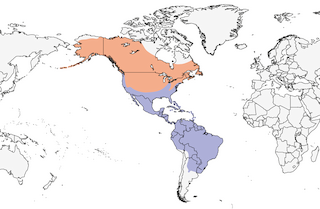
- Year-round
- Breeding
- Non-breeding
Full content is available exclusively to Birds of the World subscribers. Sign in Learn more
Introduction
These warblers of the New World have similar ecologies to Old World birds of the same name. Nowhere else, however, do warblers sport the diversity and stunning beauty of the parulids. Though a good many are tropical residents, almost half are long-distance migrants that breed in North America and spend the winter in the tropics. Recent phylogenetic analyses show that parulids originated from northern migrants rather than from the tropics. The northern migrants are more brightly colored in summer than in the fall, and birdwatchers can struggle to separate the many somberly clad species during fall migratory stopovers. Studies of warblers from the northeastern United States have taught us much about community ecology and about the physiological and ecological implications of small-landbird migration.
General Habitat
Diet and Foraging
Breeding
Conservation Status
Systematics History
Conservation Status
| Least Concern |
69.8%
|
|---|---|
| Near Threatened |
8.6%
|
| Vulnerable |
3.4%
|
| Endangered |
4.3%
|
| Critically Endangered |
1.7%
|
| Extinct in the Wild |
0%
|
| Extinct |
0%
|
| Not Evaluated |
0%
|
| Data Deficient |
0%
|
| Unknown |
12.1%
|
Data provided by IUCN (2025) Red List. More information