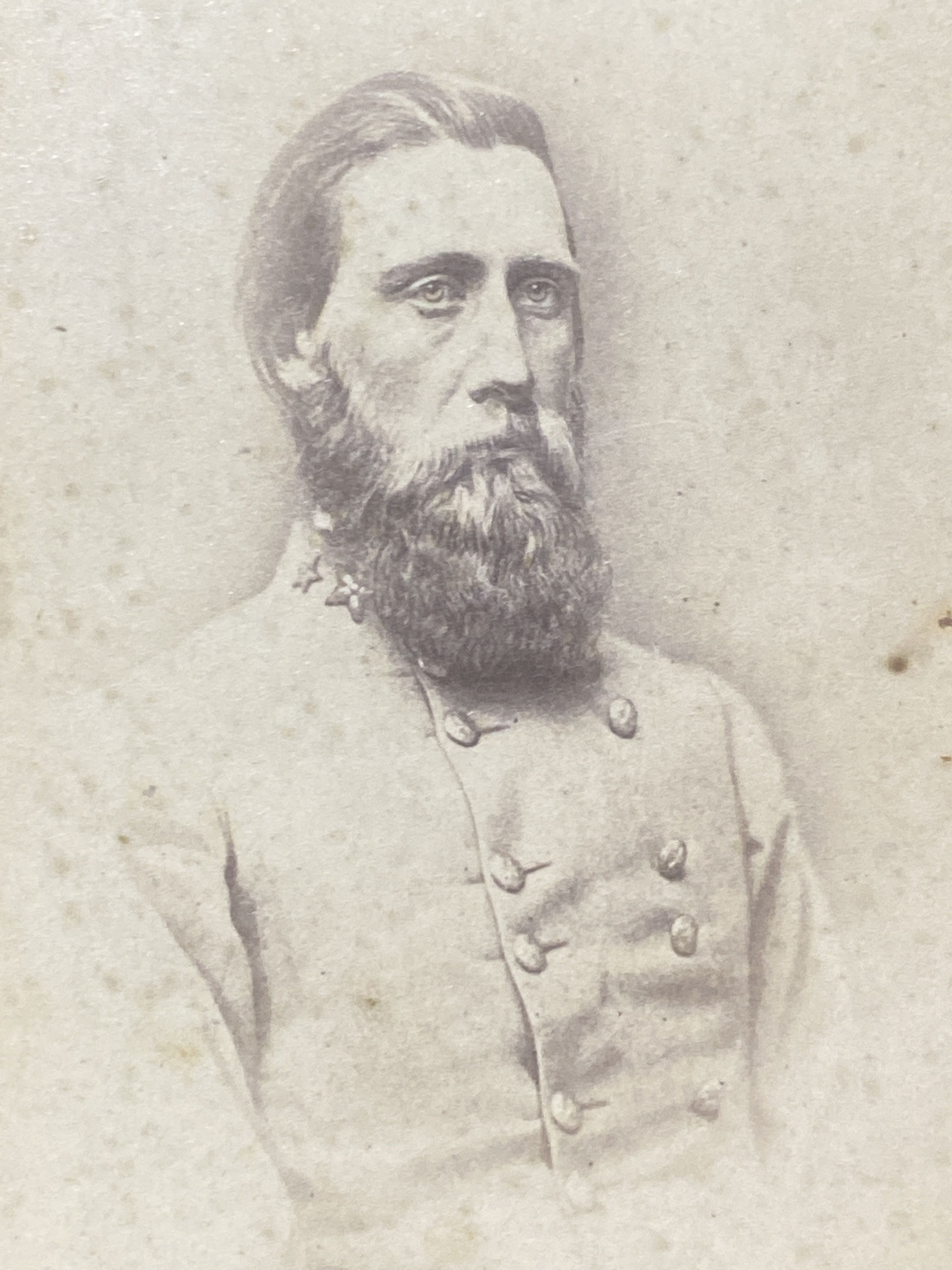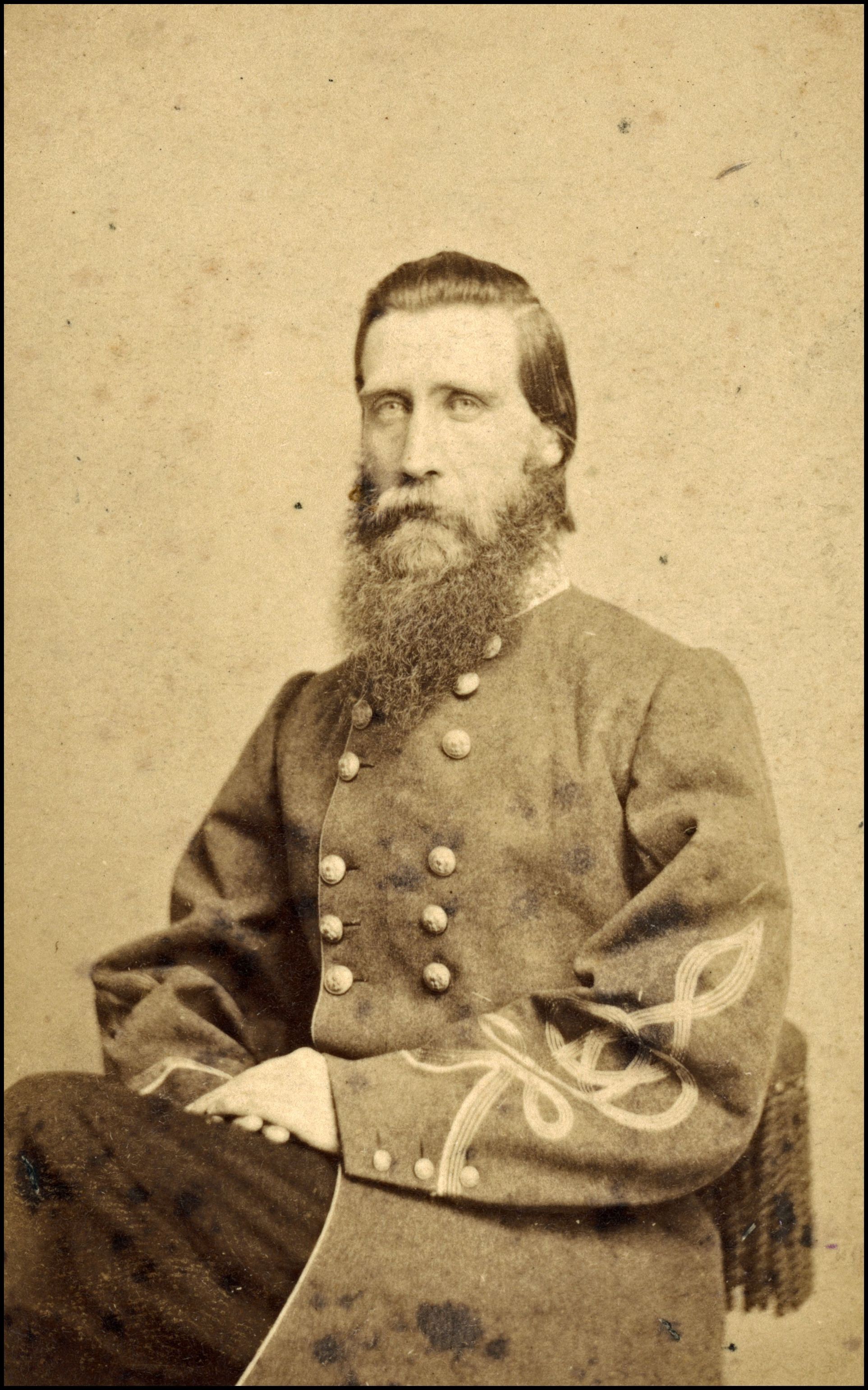
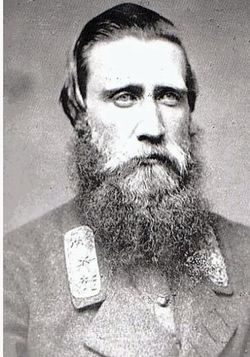
Civil War Confederate Lieutenant General. He was born John Bell Hood on June 29, 1831, the son of a rural doctor in Owingsville, Kentucky. He was raised in the bluegrass region of central Kentucky near the town of Mt. Sterling. Against the wishes of his father, who had urged him to pursue a medical career, John Bell obtained an appointment to the United States Military Academy at West point in 1849 and graduated 44th out of 52 in the class of 1853. After receiving his commission as a brevet second lieutenant in the United States Army, Hood served in the cavalry in California and Texas. After the outbreak of the Civil War, Hood resigned his commission and enlisted in the Confederate Army, receiving a commission as a lieutenant. Hood rose rapidly, and on March 7, 1862 he was promoted to Brigadier General in command of the renowned Texas Brigade. The Texas Brigade's heroics saved the Confederate left flank at Antietam in September 1862, after which Hood would be promoted to Major General. Hood was severely wounded at Gettysburg, losing use of his left arm. After recovering, Hood was assigned to the Army of Tennessee. On September 18, 1863, he rejoined his division for the Battle of Chickamauga. Hood's forces broke through the Federal battle line, which led to the rout of the Yankees. During the battle Hood received wounds that resulted in the amputation of his right leg. In September, 1863 Hood was recommended for promotion to lieutenant general for his decisive role in the Confederate victory at Chickamauga. Hood developed a close personal relationship with fellow Kentuckian President Jefferson Davis while recovering from his Chickamauga wound in Richmond during the winter of 1863-1864. Hood was offered a position as a corps commander under Johnston. On February 4, 1864, Hood arrived in Dalton, Georgia, and assumed a corps command in the Army of Tennessee under Johnston. After a series of defensive battles in which Sherman prevailed, Union forces continued to march toward Atlanta, and the Confederate government and high command grew more frustrated and alarmed. President Davis ultimately determined that Hood should replace Johnston as commander of the Army of Tennessee. Hood wasted no time in launching the first of four major offensives designed to break Sherman's siege of Atlanta. However, the disjointed attacks by separate Confederate corps' were ineffective and resulted in a decisive Union victory. Hoping to save his army, Hood evacuated Atlanta on September 2, 1864. Hood would continue to harass Sherman's supply and communications lines, but could do nothing to stop the infamous "march to the sea." Hood then launched his ill-fated invasion of Tennessee, suffering decisive defeats at Franklin on Nov. 30 and at Nashville on Dec. 16. Retreating with the shattered remnants of the Army of Tennessee into northern Mississippi, Hood resigned his command on January 23, 1865. During the waning days of the Confederacy, Hood was ordered by Jefferson Davis to travel to Texas and attempt to raise an army. However, after learning of Lee's surrender and the capture of Davis, Hood surrendered to Federal authorities in Natchez, Mississippi, on May 31, 1865. After the war Hood prospered for a time in the cotton brokerage and insurance businesses in New Orleans. He married a local woman and fathered eleven children over the next 10 years, including three sets of twins. Hood's modest fortune was wiped out during the winter of 1878-1879 by a yellow fever epidemic that closed the New Orleans Cotton Exchange and bankrupted the local insurance industry. Later that year, on August 30, 1879, John Bell Hood died of yellow fever within days of his wife and oldest child. His ten orphaned children, all under the age of ten, were left destitute. They would ultimately be adopted by seven different families in Louisiana, New York, Mississippi, Georgia and Kentucky.
Civil War Confederate Lieutenant General. He was born John Bell Hood on June 29, 1831, the son of a rural doctor in Owingsville, Kentucky. He was raised in the bluegrass region of central Kentucky near the town of Mt. Sterling. Against the wishes of his father, who had urged him to pursue a medical career, John Bell obtained an appointment to the United States Military Academy at West point in 1849 and graduated 44th out of 52 in the class of 1853. After receiving his commission as a brevet second lieutenant in the United States Army, Hood served in the cavalry in California and Texas. After the outbreak of the Civil War, Hood resigned his commission and enlisted in the Confederate Army, receiving a commission as a lieutenant. Hood rose rapidly, and on March 7, 1862 he was promoted to Brigadier General in command of the renowned Texas Brigade. The Texas Brigade's heroics saved the Confederate left flank at Antietam in September 1862, after which Hood would be promoted to Major General. Hood was severely wounded at Gettysburg, losing use of his left arm. After recovering, Hood was assigned to the Army of Tennessee. On September 18, 1863, he rejoined his division for the Battle of Chickamauga. Hood's forces broke through the Federal battle line, which led to the rout of the Yankees. During the battle Hood received wounds that resulted in the amputation of his right leg. In September, 1863 Hood was recommended for promotion to lieutenant general for his decisive role in the Confederate victory at Chickamauga. Hood developed a close personal relationship with fellow Kentuckian President Jefferson Davis while recovering from his Chickamauga wound in Richmond during the winter of 1863-1864. Hood was offered a position as a corps commander under Johnston. On February 4, 1864, Hood arrived in Dalton, Georgia, and assumed a corps command in the Army of Tennessee under Johnston. After a series of defensive battles in which Sherman prevailed, Union forces continued to march toward Atlanta, and the Confederate government and high command grew more frustrated and alarmed. President Davis ultimately determined that Hood should replace Johnston as commander of the Army of Tennessee. Hood wasted no time in launching the first of four major offensives designed to break Sherman's siege of Atlanta. However, the disjointed attacks by separate Confederate corps' were ineffective and resulted in a decisive Union victory. Hoping to save his army, Hood evacuated Atlanta on September 2, 1864. Hood would continue to harass Sherman's supply and communications lines, but could do nothing to stop the infamous "march to the sea." Hood then launched his ill-fated invasion of Tennessee, suffering decisive defeats at Franklin on Nov. 30 and at Nashville on Dec. 16. Retreating with the shattered remnants of the Army of Tennessee into northern Mississippi, Hood resigned his command on January 23, 1865. During the waning days of the Confederacy, Hood was ordered by Jefferson Davis to travel to Texas and attempt to raise an army. However, after learning of Lee's surrender and the capture of Davis, Hood surrendered to Federal authorities in Natchez, Mississippi, on May 31, 1865. After the war Hood prospered for a time in the cotton brokerage and insurance businesses in New Orleans. He married a local woman and fathered eleven children over the next 10 years, including three sets of twins. Hood's modest fortune was wiped out during the winter of 1878-1879 by a yellow fever epidemic that closed the New Orleans Cotton Exchange and bankrupted the local insurance industry. Later that year, on August 30, 1879, John Bell Hood died of yellow fever within days of his wife and oldest child. His ten orphaned children, all under the age of ten, were left destitute. They would ultimately be adopted by seven different families in Louisiana, New York, Mississippi, Georgia and Kentucky.
Bio by: Edward Parsons
Inscription
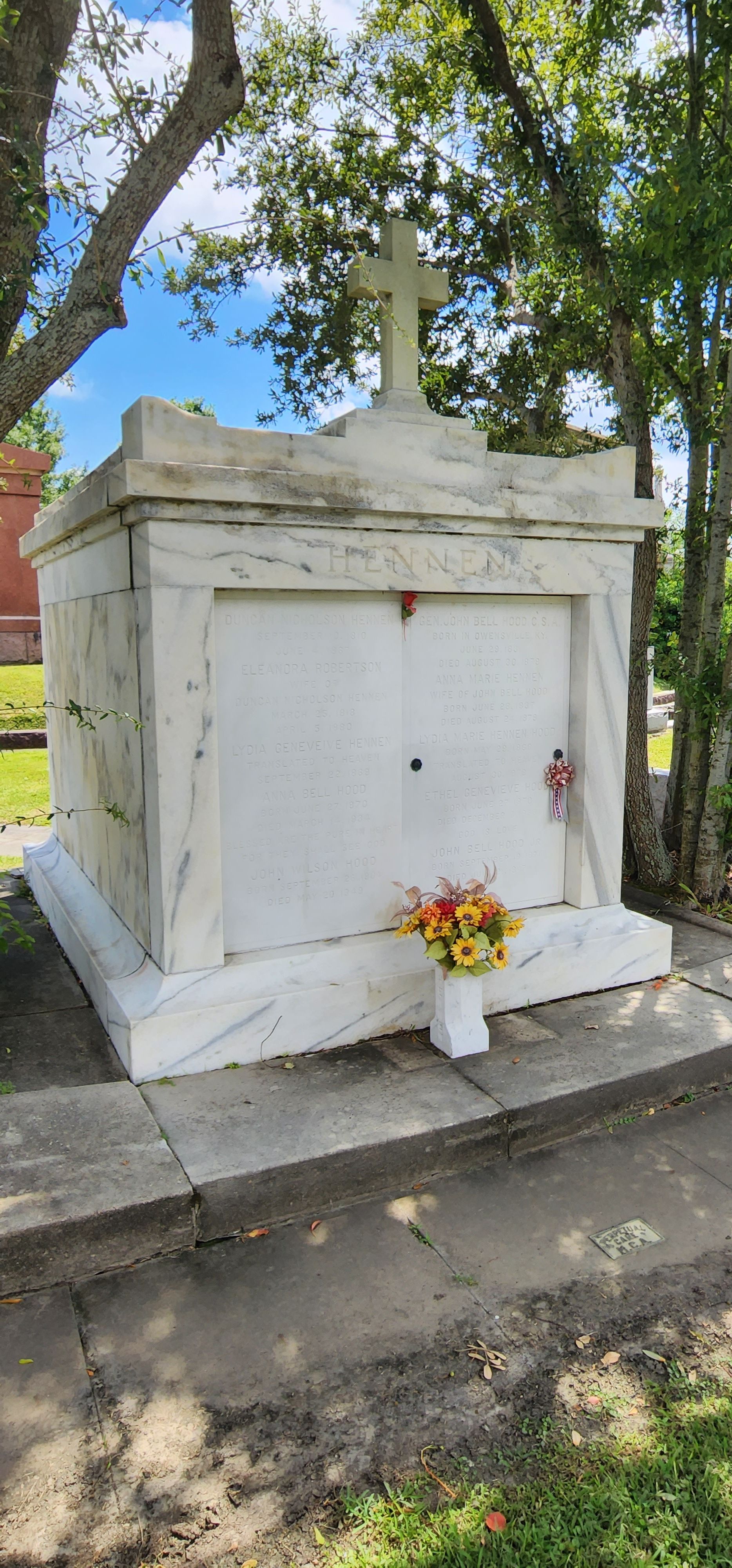
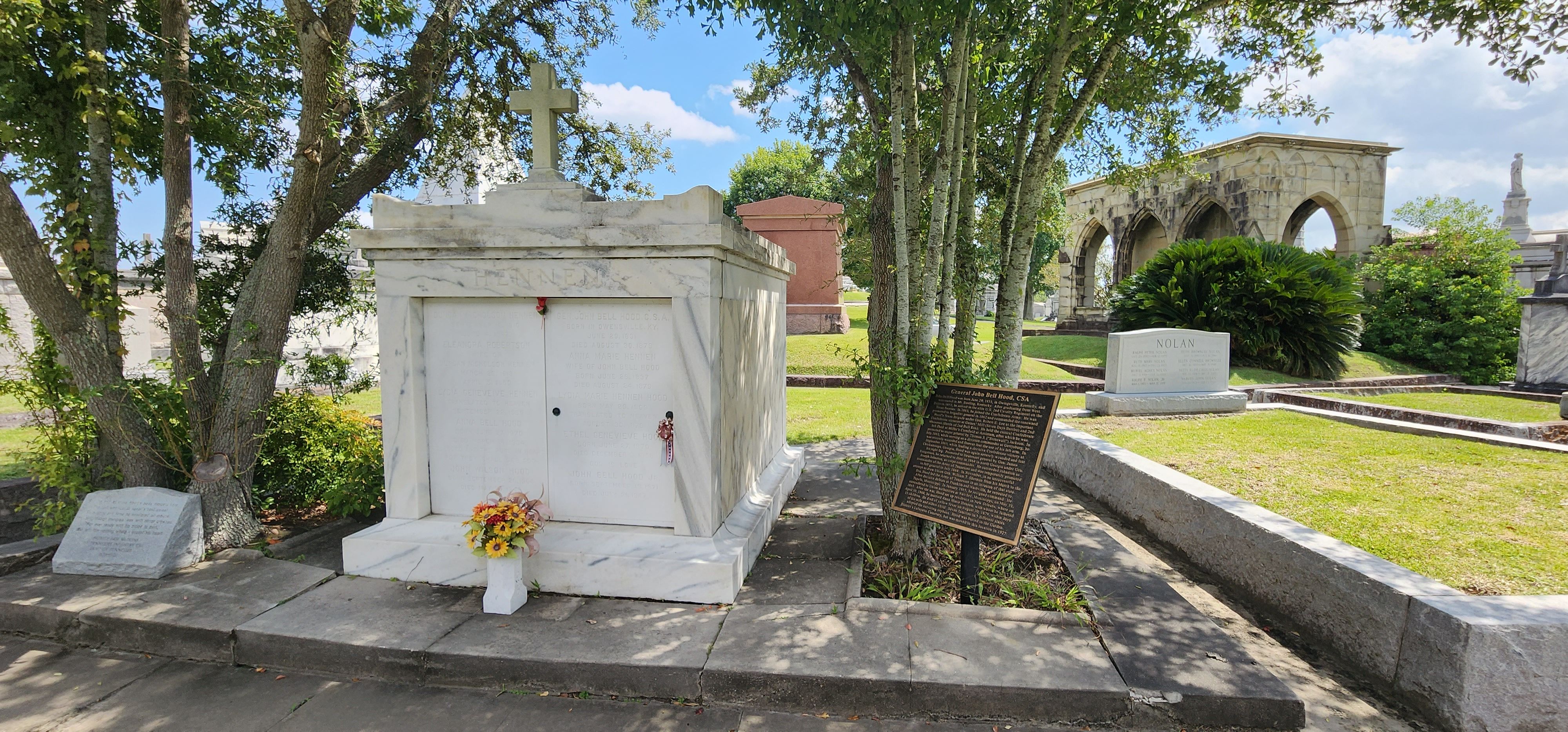
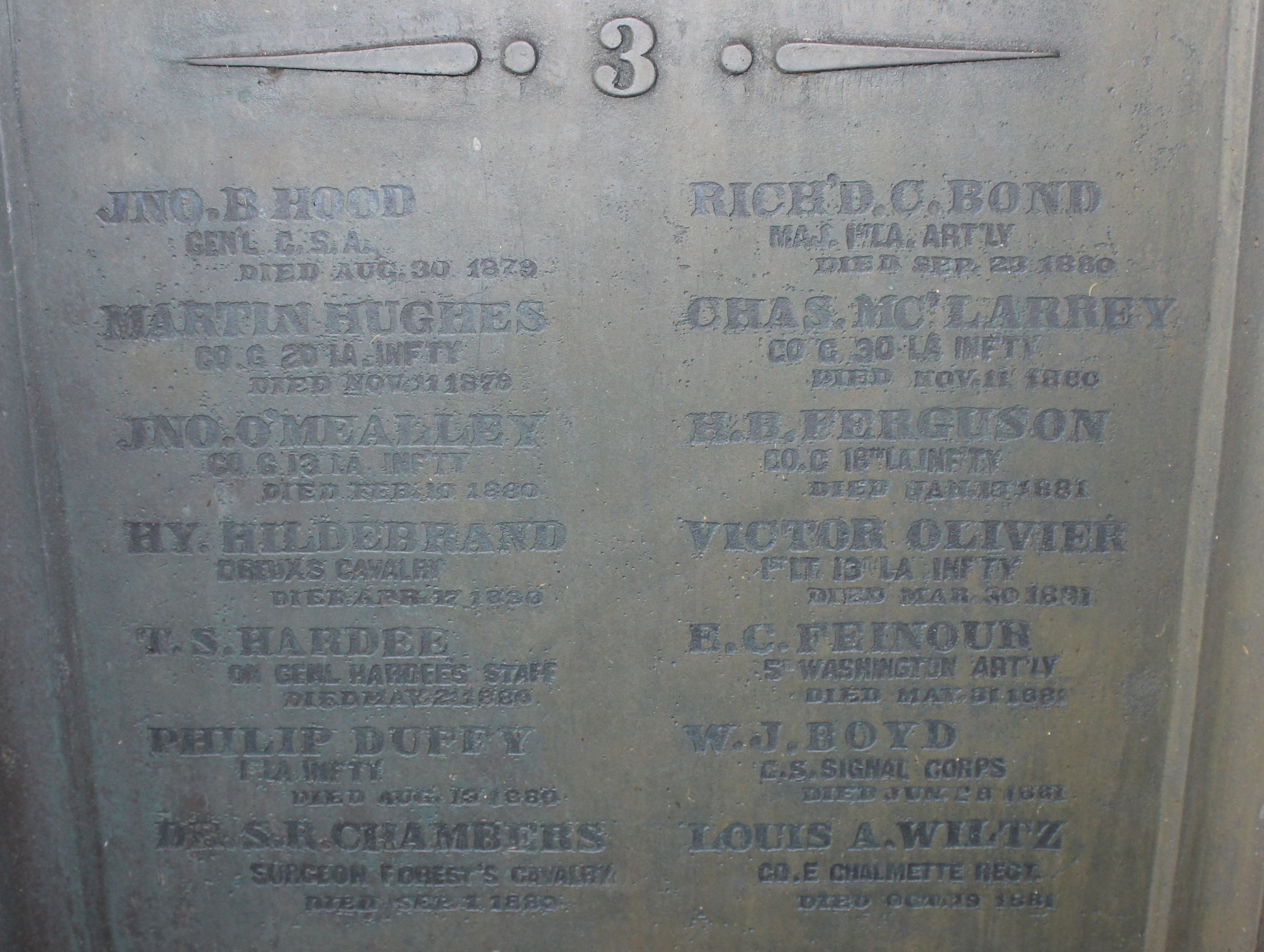
Gen. John Bell Hood, C.S.A.
Born in Owensville, KY
June 29, 1831
Died August 30, 1879
Anna Marie Hennen
Wife of John Bell Hood
Family Members


-

Lydia Marie Hennen Hood
1869–1879
-

Anna Bell Hood
1870–1934
-

Ethel Genevieve Hood
1870–1956
-

John Bell Hood Jr
1871–1947
-

COL Duncan Norbert Hood
1873 – unknown
-

Marion Marie Hood Adams
1873–1891
-

Lillian Marie Hood Post
1873–1956
-

Odile Musson Hood Holland
1876–1919
-

Ida Richardson Hood
1876–1961
-

Oswald Hood Harney
1878–1929
-

Anna Gertrude Hood
1879–1880