“You can hide a lot in a sonnet.”
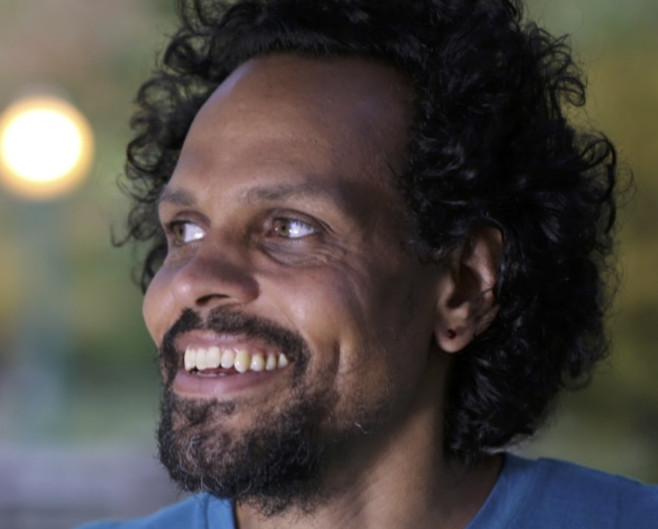
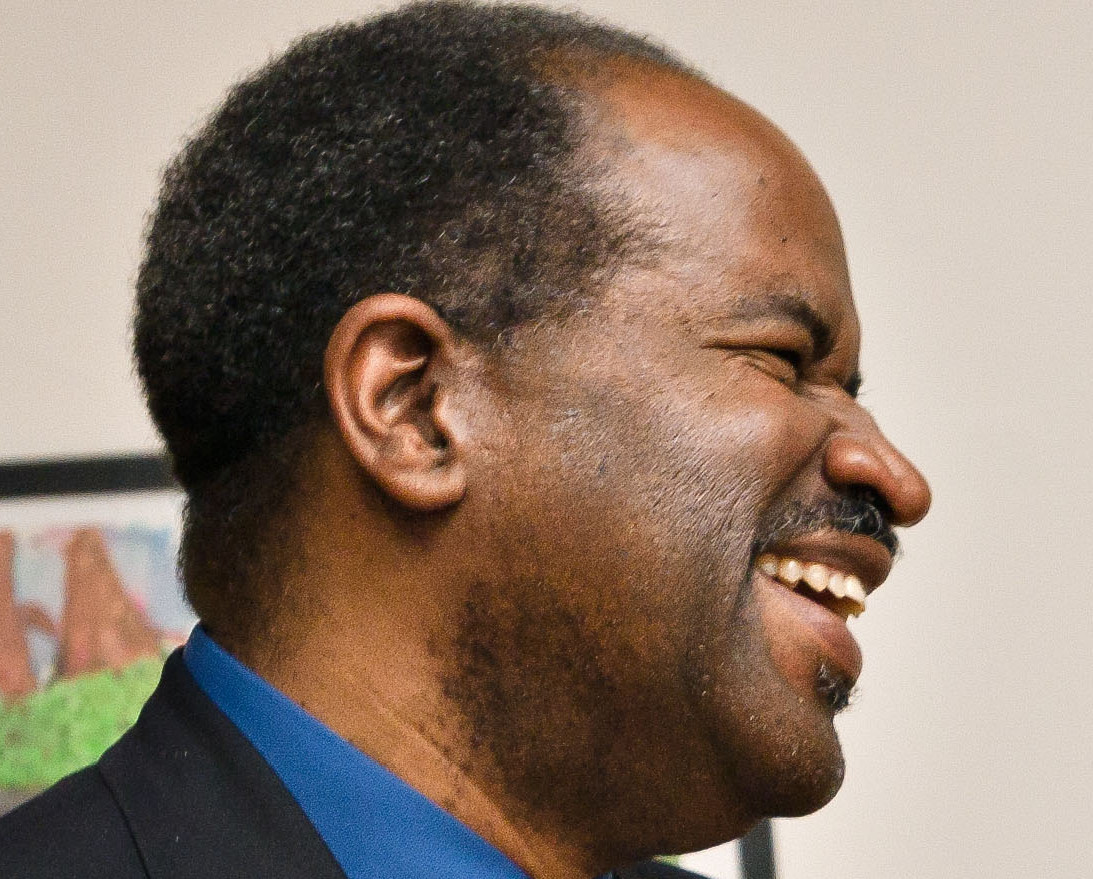
OLIVER DE LA PAZ
Interviewed By: Anthony Borruso
You teach at College of the Holy Cross in Worcester, Massachusetts, and have also served as the city’s poet laureate. Prior to that, you seem to have spent a lot of time on the West Coast in places like Ontario, Oregon, where you were raised, and Tempe, Arizona, where you received your MFA. How do you like life in the northeast?
I love the Northeast. You forgot to mention that I taught in Pennsylvania as well as in Upstate New York for a spell, so I’m fairly familiar with this part of the U.S.. My kids are happy, and I see this as a place where I can settle down. I moved my parents with me, so there’s not much reason to go back West.
I do, however, find myself looking back at my life in the West. I think I’m still trying to reconstruct it so that I can best understand who I was as a young man. It’s an impossible task, though—fully completing that picture of the past. I imagine, though, that it’ll be something I will return to the rest of my life while also incorporating this new landscape.
In an interview with the International Examiner, you talk about how your talent for poetic expression grew out of your “attempts to explain [yourself] and [your] family to others.” You say, “I’d often have to “translate” to others on behalf of my father or mother or grandparents. Sometimes I’d have to construct metaphoric ways to explain my parents’ desires to others in a very white and agrarian landscape.” That idea of translating someone else’s desires feels especially relevant in your latest collection, The Diaspora Sonnets. As a form that traditionally houses desire and acute longings, the sonnet becomes a way to animate the wants of your loved ones while admitting the difficulty of fully embodying their yearnings with poems that equate language with distance and geographical displacement, in which you describe a fountain pen’s ink “run[ning] across / your [father's] Adam’s apple to form an island there.” Can you talk about the role that desire plays in these poems and how desire might change in the act of translation?
We moved to an agricultural town in Eastern Oregon after having spent some time in Connecticut and Virginia. It’s a town called Ontario, Oregon, and it’s right on the Oregon and Idaho border. I hated the place when I grew up, but when I think back on it, I remember its strange beauty. If you drove along Interstate 84 right at the edge of springtime, wildflowers would grow dazzling and wild. Other times, along that stretch of highway, the plains from the movement of the car would look like an ocean. The big industry of the area was an Ore-Ida factory where Idaho potatoes and Oregon onions were processed. It’s a town nestled right along the Snake River but also sandwiched between the Mountain Home Air Force Base and the Umatilla Army Depot, where a bunch of military ordinances were stored. Consequently, my mother was the pediatrician for the children of several ex-military folk who lived within the vicinity. These ex-military people had a particular context of what Asian people are, which is, of course, in the light of the Vietnam War. So we’re talking 1975, right? This is when my family moves to the area. My mom had to re-educate folks about who we were, what this type of Asian is. They had known about the Japanese American farmers, many of whom owned land and had lived in the area since returning from internment camps. They all knew that the Philippines was the site of some major military bases for incursions into Southeast Asia. We were the only Filipino family around in Ontario. There were a couple in Boise here and there, but this was right before there was a large influx of Asian immigrants from Southeast Asia and the Philippines into the United States due to the Immigration and Nationality Act, which had abolished immigration quotas.
Mm-hmm.
That is the explanation of us in this place. That this is who we are, this is how we ended up here. My mom was a doctor and wanted to get her visa, and part of the deal of being able to do that was to practice medicine in a place that was underserved.
Yeah.
So we ended up being the people who would serve these folks, who still had many scars from the wars.
And in addition to that, I was trying to figure out, “Well, who the heck am I in this context?” You know, like I’m being raised here. Most of my friends are white or the descendants of Japanese American farmers and Central American farmworkers. What is this place? Who am I in this place? So it’s the perfect setting, Anthony, for a writer to just figure stuff out.
Yeah, definitely. This kind of fluid space where you’re still feeling things out.
The title of your newest book is The Diaspora Sonnets, and to me, it feels like there’s an inherent tension in just the title itself. On one hand, your poems are rooted in a traditional Western form, the sonnet, which goes all the way back to Petrarch and has recognizable features that you see in some of your poems, like a volta or an ending couplet in the case of the Shakespearean sonnet. On the other hand, “diaspora” suggests all of the losses and destabilizations that occur when one is forced to leave their home country. In “Chain Migration II: On Negations and Substitutions,” this loss is embodied in swapped out ingredients, how tamarind is replaced with lemon, and when there isn’t soy sauce, “Worcestershire / salts the tongue in equivalence.” What was it about the sonnet that made it an appropriate container for your ruminations on belonging and making do with what’s there?
So, the sonnet for me is a living form. It’s a form that is malleable, even though some people are much more stringent about the form and the structure. I can certainly write a perfectly metered and structured Shakespearean or Petrarchan sonnet if I wanted to. But I think that’s not the exercise. What The Diaspora Sonnets entail is a conversation. Part of the conversation is, what is this tradition to an immigrant? And how does that immigrant translate that tradition into something that is usable to their own story or to their own narrative? So you might see in a lot of the diaspora sonnets that there isn’t a volta. It’s important for me to have put out there that there is no turn, there’s not necessarily a transition. The whole book functions as a sonnet in a way, with a turn that appears in the third section as opposed to the turn in any individual poem. And what ends up happening is that the sonnets, as I’ve structured them in this book, are more like episodic moments of a long poem.
Mm-hmm.
You brought up “Chain Migration…”, though, and that is structured after a ballad. It has the quatrain structure and the rhyme structure. And I was very intentional about that. I wanted to foreground each section with these nods to this particular epic tradition, or the balladic form, as a way to say, “Hey, you know, I’m doing another thing with a type of storytelling with this form.”
Yeah. And it’s interesting you mentioned that episodic nature. Your titles add to that in a way because you begin most of them with “Diaspora Sonnet,” and then that’s followed up with a brief descriptor, like “Diaspora Sonnet Measuring Time with Harvest Produce and Nothing Else” or “Diaspora Sonnet in the Heat of the Afternoon with Good Gossip and Nothing Special.” By tacking on “...and Nothing Else” at the end of many of them, you really play up the discrete nature of the sonnet sequence and the intense focus you are giving each subject. How did you decide on the amount of context you wanted to give for the poems in this series?
Yeah, so we talked a little bit about the emptiness of Ontario, Oregon, and that particular landscape. I want to say, contrary to a lot of the narratives of Asian American immigrant stories where there’s some kind of interpersonal conflict, our family’s conflict was the fact that there was no community, and therefore, we were bored.
Yeah, yeah.
Like, there’s just nothing to do. There was a nothingness. There was an emptiness. There was nothing to sort of hold a mirror to us and identify us as Filipinos in this context.
Yeah, that makes me think of “Diaspora Sonnet at a Public Pool in Fruitland, Idaho with No Quarters,” where you’re standing outside of the pool looking through the chain-link fence at all the people in there, depicted as an outsider in a literal sense.
Yeah, it was nothing important, nothing special, nothing happening. The nothing or the lack of anything was a vibe that I wanted to impress on the reader. I’d like to say that there was some dramatic event or some real moment of high crisis, but the crisis was that we were a family that had no community.
There were, of course, moments of racism that I certainly could write about, but much of the conflict, I would say, was internal. And that again also seems like a good place for the sonnet to come in, where there isn’t a volta or a turn in an argument, but an internal argument that’s happening.
Very true. In some of the poems, it felt like you were arguing on behalf of your presence or kind of making and unmaking within that nothingness.
That was especially heightened in the poem called “Diaspora Sonnet Imagining My Father’s Uncertainty and Nothing Else.” It’s such a beautiful sonnet that meditates on identity, fatherhood, and dissolution. Like many of the poems in this collection, and similar to Shakespeare’s sonnets, it uses dense wordplay and syntactical reversals to embody its themes. It begins, “On condition of anonymity / we are conditioned by antonyms,” which has this interesting ambivalence already, that transformation of “anonymity” into “antonym,” suggesting that any meaning made by this poem can be unmade through an oppositional language. The reorientation of the word “condition” to “conditioned” in those lines further amplifies that idea. I was also really impressed with the lineation of this poem, how a line like “mislaid all the best of you into / us” uses enjambment to turn a singular experience into a collective generational hurt. Can you talk about some of the ways this poem makes and unmakes itself?
Oh, wow, that was a great reading. Yeah, no, I wanted to have that particular poem feel like deliberation.
Yeah.
Right? That somebody was thinking or arguing with oneself. And I think that this goes back to one specific thing that I do throughout the collection, which is use couplets. Couplets are sort of an argumentative structure. To have a couplet is to have a nakedness. It’s a bare-all, tell-all kind of structure. And in the case of that particular poem, I wanted to make use of the couplet and the big chasm between these couplets, or the stanzas, as a point of deliberation, so that there’s a bit of room to think or ponder about its subjects.
I see. And I guess it’s space in which you can undermine what you’ve just built. This poem lays its argument out in the very first line, and then is constantly just doing and undoing, correcting, or rethinking. And like you say, it doesn’t have that traditional volta that the sonnet usually hinges on, and so the couplet form does feel like an appropriate design for that.
I compose in couplets mainly because it’s easier for me to tease out sonic play, as well as my images. It messes with your sentences and your syntax, which I also like. You have to be true to the sentence that you’re writing, because you’re going to corrupt it with the couplet structure. Plus, what happens with the syntax in the couplet structure has a making and unmaking schema to it, which I think is very much like Penelope knitting her tapestry and then undoing it at night.
There are so many folks who have been writing celebrated sonnet collections in the last decade or so, and going back a little further. It’s been a kind of renaissance for the form. Diane Seuss, who has a blurb on the back of your book, is a personal favorite sonneteer of mine. Could you talk about some contemporary folks who are writing in the form and giving you new ways to think about it?
Sure. So one of my first poetry teachers was Wanda Coleman. She was the Fletcher Jones Chair at Loyola Marymount in the early to mid-90s, and she had been composing these American Sonnets.
Yeah, yeah.
And they were wild. It was the first time that I had encountered that kind of writing, which was very jazzy, very improvisational, and did not look like a sonnet that I had seen in my surveys of British Lit at all. I learned a lot from her about the idea of a sonnet and how to… not corrupt… but how to play with it. I think that she was making something alive, making something very definitively American. And that was really important, that her project was to make this an American form. So I learned a lot from her.
I had a class with Alberto Rios.
I love his work!
Yeah, he taught a prosody class at Arizona State, and he was very stringent about forms and formal structures. I learned how to write a perfect sonnet from him. A lot of these folks, I am sort of acquiring the tools in my toolbox from.
And Terrance Haye’s book, American Sonnets for My Past and Future Assassin. That came out while I was in the midst of writing this particular series. I also have read Gerald Stern’s American Sonnets, which are basically 15 lines, as opposed to 14 lines, which is very, very Gerald Stern. So, you know, there is a tradition of American poets inhabiting this form in a way that asks the question, “What does it mean to be American?”
And Diane Seuss’s book, man, her sonnets are wild. One sonnet basically taking two pages up!
Yeah, that fold-out one is great!
So you might ask, “Okay, is that a sonnet?” Well… If you look at the typographical line, it’s still 14 lines.
Yeah, for sure.
Another thing I picked up on in your book was a lot of references to coins and change that showed up throughout. Its very first sentence describes how your father “changed his cash to coins / and stuffed them in machines / to buy us food.” In “Diaspora Sonnet at a Public Pool…,” it is a lack of change that keeps the speaker looking in from the outside of “tall chain-link fencing” at the more privileged kids who are floating in the pool with “No tide to pull them down.” Change, in this poem, is the difference between fraternization and isolation; in other poems, it reminds us how precarious the life of a new immigrant is, as their ability to eat or wash their clothes might depend on having a few quarters. With the common use of credit cards and e-payments, we don’t think about coins so much anymore. Can you talk a bit about why they jingle so loudly in this collection?
My earliest memories were of vending machines and getting change from my parents, and understanding I had a kind of access, right?
Totally, that’s one of the most exciting things when you’re six years old.
Yeah, like, if you have the correct change or if you have enough quarters to buy the Moon Pie. You have enough quarters to buy the Boston baked beans in the machine, and that can buy you a lot of things, including friendship sometimes. These are the things that you want to share with people.
Yup.
I think that the obsession with change is, one, yes, quite literally money. We’re talking about money and access, and two, we’re also talking about transformation and about how you change from paper into these hardened silver coins. The poem about my mother and the laundromat, and her worrying about having the correct change. It’s certainly a motif that is filling the book.
The laundromat poem is a really good one. And it’s interesting seeing your mother, who is a medical doctor, having to focus on these very domestic concerns that you see her with throughout the collection, too.
I guess, too, I wanted to think about the way you write about family in this collection. And this is kind of an extension of your prior collection, The Boy in the Labyrinth, which was very much about your two sons at that time. I think a lot of folks find it difficult to write honestly and powerfully about their families, to take stories from their parents and make a kind of mythology out of them, or to tell their own story when so much of it relates to other people. They feel pressured to avoid revealing anything too personal or to misrepresent someone or something. When you were writing these collections, were there any prompts or elements of your poetic process that made these fears less daunting? Do you have any advice for folks who might be trying to tell their own story of immigration or faithfully capture a childhood memory?
Yeah, I think that the thing that made it easier to write the poems was the fact that they were sonnets, to be frank. You can hide a lot in a sonnet.
Haha, that’s true.
The form, as a shape and a structure, imposes limits on you. And the limits are often useful. I can only talk about this one thing. And I can only talk about this one thing in 14 lines, no more, no less.
“And nothing else,” right?
And nothing else, that’s exactly right. Nice. I see what you did there. But I mean, I think that's exactly it. And so, particularly with the sonnet, I can make choices. I can talk about this thing, and then I can choose not to talk about this other thing. That can be off-camera. Formally, this helped me move forward in telling my narrative in a stylized way. The point is, Anthony, this is artifice. 100% artifice. It is a construction. And I think that this latest book is so constructed. Each section opens with a ballad. Each section closes with a pantoum. It’s very constructed, very curated.
And, honestly, that’s why I write in forms so often. I look at the prose poem as a form that I cut my teeth in, and more precisely, when we talk about the prose poem, the parable. I feel most at home writing in form because it allows me to go places where I would otherwise feel restrained.
Yeah.
The form allows me, or it grants permission to do these particular things, mostly because I have bumpers in the lane that can buffet me around the structure of the poem and tell things that I need to tell, and then sometimes I can leave things out because the form dictates that I need to leave them out.
I remember seeing you mentioned in an interview somewhere that when you’re working on a collection, you often try to find the form first and then obsessively write and rewrite in it and see what directions it goes in. Could you talk about that process and how you think that’s helpful?
Yeah, so I’m a writer of big canvases. When I was starting to write, there was this feeling about people who are “project writers.” I sort of own up to the fact that I’m a project writer. I like writing in big projects or big motifs, mostly as a way to inquire. I ask questions in these longer pieces or these forms, and the questions need some kind of tether; otherwise, they can sort of spiral out of topic. The form certainly helps me stay within a particular structure. So you know, if we think of this new collection, The Diaspora Sonnets, it’s all sonnets, and some ballads, and some pantoums. The prior collection, which is The Boy in the Labyrinth, was structured after a Greek tragedy, and then the book before that was basically a glossary.
I think in terms of form and structure when I compose. I often think of pieces associatively as opposed to individual poems. How will they work next to each other? And so that’s kind of my writing structure or style.
I saw a video of you reading from The Boy in the Labyrinth with the Kenyon Reading Series in 2020. Labyrinth is a book that is primarily focused on being a parent to neurodivergent children. In this reading, you talked a lot about language barriers and just the struggle of completely understanding the beast you were dealing with, and what exactly it meant for someone to be on the autism spectrum. It was interesting that, in retrospect, you said you felt it was a problematic perspective that you took on because you wrote so often from your son’s viewpoint, being neurotypical yourself. It’s not often you see authors providing a critique of their own writing and subject position during a reading, and so I thought it was laudable and proactive in how you were reconsidering your work. I just wondered if you could talk about the importance of that for writers. Do you think we should constantly be reevaluating our work?
I make art, and I’m an art maker. I like writing, and this is certainly something that I do, but I also have a family, and sometimes I honestly have to weigh the repercussions of writing about my sons who are coming into their own. They have their own identities. There’s stuff out there that is going to follow them later on, and I have to be aware of that. That’s something that I fully realized after I wrote that book. And so, in the structure of the book, I had two essays, one is a lyric essay that opens up by asking, “Who am I to have this conversation?” and then an essay at the back that talks about, “well, this is an individual who has their own agency, and they can do their own thing,” and that ends up being the conversation of the book.
I’m pretty open about telling my family that I’m writing about them. We have those conversations, and they can veto stuff. And I listen to them. They’re like, “I don’t like that.” I’m like, “Okay.”
Do they read your writing a lot? Are your kids and family interested in the poetry you’re putting out?
They’re not interested in it at all!
Haha, so they’re just like most other non-poets out there!
(Laughs) They know that I’m a writer, and they know that that’s what I do, and that I write about them sometimes. They’re also on the internet. They’re aware of what’s out there.
Yeah, true.
Another thing you mentioned in that Kenyon reading is that you were reading some neurodivergent writers at the time who were really resonating with you. I believe Zach Moore was one of them. Melanie Yeargeau was another one. How have writers such as these changed your thinking about autism. Do you find that they model different ways of seeing the world within a text?
Yeah, well, I think it was mostly understanding that it’s a spectrum, right? There’s a spectrum of experiences and a wide array of people’s ability to talk about them. Being aware of that writing out there has certainly bolstered me, and it’s made me really excited about learning what’s possible. I would say, too, that it’s influenced what I’m paying attention to. It influences how I think about things like obsession and the way certain writers use motifs or constructions. I’m becoming much more aware of writers’ structural impulses and where those things come from.
Yeah, I can see that. I feel like, too, one thing I liked a lot about Labyrinth is the posture it takes towards the medical establishment. You have these questionnaires that you’re responding to in some of your poems that seem to highlight how, when someone is being diagnosed, it’s so cold and pragmatic, and you push back against that in such a forceful way, displaying your son’s rich psychic interior in contrast to the narrow concerns of these evaluations.
Yeah, the point of Labyrinth is a quarrel with language, ultimately. I’m quarreling with language, I’m quarreling with language traditions, both the medical tradition as well as the mythological tradition and myth-making tradition. I’m quarreling with the language of school. It’s a book about fighting with language and trying to figure out what language means to a neurodiverse person, and how we can make meaning when the chips are stacked against us.
Interview Posted: May 12, 2026



MORE FROM DIVEDAPPER. (Drag left)