

-
What’s it about?
A scholarly exploration of Biblical polytheism and Judaism's struggle against idolatry, examining historical, rabbinical, and modern academic perspectives on ancient pagan cults.
Book details
- Print length398 pages
- LanguageEnglish
- PublisherMosaica Press
- Publication dateMay 26, 2021
- ISBN-101946351466
- ISBN-13978-1946351463
This unique work delves into the Bible's view of the history of idolatry, as well as the hermeneutical, philological, Kabbalistic, and Halachic approaches to this topic taken by various Rabbinic figures through the ages. The second part of this book consists of an encyclopedia that lists and elaborates upon ever foreign deity mentioned in the Bible. The author also compares and contrasts traditional Jewish views to those of modern-day academia (addressing archeology and philology of the Levant), offering proofs and difficulties to both approaches.
As the old saying goes, "Two Jews, three opinions." In almost every chapter, more than one way of looking at the matter at hand is presented. In some cases, the differing opinions can be harmonized, but ultimately many matters remain subject to dispute. Hopefully, the mere knowledge of these sources will whet the reader's intellectual curiosity to learn more.
Written by a brilliant young scholar, God versus Gods: Judaism in the Age of Idolatry is ground-breaking, intriguing, and remarkable.
Review
-Rabbi Yitzchok Adlerstein, Director of Interfaith Affairs, Simon Wiesenthal Center
Much of the Bible is an attack on various pagan rituals that were practiced by the Israelites and their neighbors... But the exact meaning and nature of what is being condemned and why are shrouded in mystery - with the result that large parts of our own sacred texts are simply not understood. Rabbi Klein is providing a very useful service in filling this lacuna.
-Rabbi Dr. Yitzchak Breitowitz, Rav, Kehillat Ohr Somayach, Jerusalem, Israel
Rabbi Reuven Chaim Klein has once again presented us with an important work that will elucidate one one of the most oft-discussed topics in the Torah--avodah zarah. Much of the message that the Torah is trying to teach us about avodah zarah is lost to us, because we have very little understanding of the details of those practices... Certainly the explanations thereof are vital. Rabbi Klein has worked hard organizing and collecting information and making it accessible to a Torah student... -Rabbi Aharon Shraga Lopiansky, Rosh Yeshiva, Yeshiva of Greater Washington
Rabbi Reuven Chaim Klein once again combines traditional rabbinic scholarship with historical and archeological information to give us a complete and comprehensive treatment of a vast topic...Engaging and informative, this unique book is highly recommended for those who want to gain a deeper understanding of the main obstacle to the Jewish People's relationship with G-d in the time of the Bible. -Rabbi Dr. Zvi Ron, Editor, Jewish Bible Quarterly
About the Author
Rabbi Klein is a native of Valley Village, CA and graduated Emek Hebrew Academy and Yeshiva Gedolah of Los Angeles, before going to study at the famed Mir Yeshiva in Jerusalem and in Beth Medrash Govoha of America in Lakewood, NJ. He received rabbinic ordination from leading authorities Rabbi Moshe Sternbuch, Rabbi Zalman Nechemiah Goldberg, Rabbi Yosef Yitzchak Lerner, and Dayan Chanoch Sanhedrai. He is also a member of the RCA, an alumnus of Ohr LaGolah, and was awarded a summer fellowship at the Tikvah Institute for Yeshiva Men in 2015.
He is a long-time member of the Kollel of Yeshivas Mir in Jerusalem and lives with his wife and children in Beitar Illit, Israel. Questions and comments can be directed to rabbircklein@gmail.com
The author is available for research, writing, and translation projects, as well as speaking engagements.
About the author
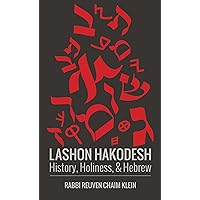
Follow authors to get new release updates, plus improved recommendations.Rabbi Reuven Chaim Klein is a widely-published scholar, educator, and author with deep expertise in Jewish thought, Hebrew linguistics, and Torah literature. He is the author of Lashon HaKodesh: History, Holiness & Hebrew (2014), an acclaimed work exploring the spiritual and historical dimensions of the Hebrew language and other Jewish Languages, and God versus Gods: Judaism in the Age of Idolatry (2018), a compelling study of the fight between Jewish monotheism and ancient pagan cultures in Biblical times. His writings have appeared in journals such as Hakirah, Jewish Bible Quarterly, and Journal of Halacha and Contemporary Society.
He currently writes the monthly “Names & Numen” column in The Jewish Press, focusing on Jewish names and onomastics, and lectures widely on Torah, language, and halacha. He also serves as a professor at Genesis University and is a contributor to major research initiatives, including Mishnayos Shearim (Oz V’Hadar).
A native of Valley Village, California, he studied at Yeshiva Gedolah of Los Angeles, then advanced to Mir Yeshiva in Jerusalem and Beth Medrash Govoha in Lakewood, NJ. He received rabbinic ordination from leading halachic authorities including Rabbi Moshe Sternbuch, Rabbi Zalman Nechemia Goldberg, and Rabbi Yosef Yitzchak Lerner. In addition to his traditional rabbinic education, he earned a Master of Arts in Jewish Education from Middlesex University (UK) in collaboration with the London School of Jewish Studies. Rabbi Klein currently lives in Beitar Illit, Israel, with his wife and children, and continues to work on books and projects that make classic Jewish sources accessible to a wide audience.
Customers who bought this item also bought
Product information
| Publisher | Mosaica Press |
| Publication date | May 26, 2021 |
| Edition | First Edition |
| Language | English |
| Print length | 398 pages |
| ISBN-10 | 1946351466 |
| ISBN-13 | 978-1946351463 |
| Item Weight | 1.69 pounds |
| Best Sellers Rank |
|
|---|---|
| Customer Reviews | 4.8 out of 5 stars 72Reviews |
Related books
Customers say
Generated from the text of customer reviewsSelect to learn more
Reviews with images
Submit a report
- Harassment, profanity
- Spam, advertisement, promotions
- Given in exchange for cash, discounts
Sorry, there was an error
Please try again later.Top reviews from the United States
- 5 out of 5 starsVerified Purchase
Idolatry under Jewish lenses is not child's play
Reviewed in the United States on February 17, 2026Format: KindleExcellent reading for a true seeker. Scholarly written, and objectively analyzed, the topic of idolatry under strictly Jewish lenses without interference of other faith systems. It also points out how idolatry may be disguised of values that don't correspond to the Jewish ones. A book to analyze and to be analyzed. Highly recommended!
- 5 out of 5 starsVerified Purchase
Don’t miss out
Reviewed in the United States on December 16, 2025Format: PaperbackI highly recommend G-d vs. Gods is not just a book about faith—it is a book about choice. It urges readers to move beyond convenience-based belief and toward a relationship with G-d rooted in truth, commitment, and moral clarity. Whether one approaches it from a religious, philosophical, or personal growth perspective, this book offers meaningful insights and an invitation to think more honestly about what truly deserves our devotion.
- 5 out of 5 starsVerified Purchase
What Happened to the Idolatrous Urge?
Reviewed in the United States on June 26, 2023Format: HardcoverOne of the most frequently recurring themes in the Hebrew Bible, from beginning to end, is man’s disloyalty to God via idolatrous worship. Yet the fact that we do not worship idols, nor know anyone else who does so, challenges our ability to fully relate to this foundational text many of us learn daily.Thanks is therefore due to Rabbi Reuven Chaim Klein for his dazzlingly encyclopedic presentation of this topic.
Reading this book will not only help better understand the Bible but should deepen our ability to genuinely understand our present world.
Indeed, a midrash dating from the geonic period foretells a comeback for idolatry in pre-messianic times, portraying the last king to rule the world prior to the final redemption as planting idolatrous trees and worshipping Baal. If this seems far-fetched, consider that New Age and neo-pagan cults have made a significant comeback in the past few decades, and that Gaia-appeasing language is nowadays freely mixed into presidential discussions about climate science and environmental policy.
Among the lessons of this book is that one of the repercussions of idolatry and its modern equivalents is a dulled conscience. Rabbi Klein cites a midrash about the elders worshipping idols in “hidden places,” noting that since nobody objected, they shifted their worship to “behind the door.” When nobody objected to this, they moved to the rooftops. Hearing no objection, they brought their idols to their gardens. When nobody protested, they began worshiping on mountaintops. Since nobody protested, they placed their altars upon the furrows of the field. From there, idolatry moved front and center to every crossroad, every street, every urban square, the suburbs and ultimately to the Holy of Holies of the Temple, now ensuring its destruction and the exile of the two remaining tribes of Judah and Benjamin to Babylon.
After this entire terrible history, which Rabbi Klein records in colorful detail, when given the chance to return from exile and rebuild the Temple, the Sages of Israel beseeched God to remove the desire to worship idols. There is no free lunch, as the economists tell us, so we lost prophecy in the exchange. The author offers numerous interpretations of this trade-off, which all help to understand the lost formerly powerful attraction to idolatry. One of these interpretations, advanced by Menashe ben Israel, suggests that idolatry conveyed some sort of effective power, parallel to the power of prophecy to foretell the future. Consequently, pagans could use witchcraft or other dark forces to inform them of the future as well. He explains that such contaminating spirits still exist in Eastern lands based on Abraham’s gifts to the children he had with Keturah, even when general access to occult powers was curtailed.
Yet while Easterners apparently still see results from idolatry, its curtailment had a powerful secularizing effect on Westerners. Whereas the whole world in Biblical times deeply felt a sense of the transcendental, be it through worship of God or via idols, the Western world following the abolition of the idolatrous urge came to believe in man. With this dulling of spiritual awareness came an emphasis on physical pleasures and the replacement of idols with various isms. Rabbi Klein's forthcoming sequel will offer a comprehensive discussion of the ideas and actions which are modern-day equivalents of idolatry, so now is the time to read this unique and original first volume.
- 5 out of 5 starsVerified Purchase
Excellent!
Reviewed in the United States on January 19, 2026Format: PaperbackThis book provides great insight into a topic which is often studied but rarely delved into even by scholars . The author painstakingly navigates rabbinic and historical sources to identify and explain the nature of idolatry through each era of history. He then examines each source , and with his unique style ,provides the reader with the tools necessary to draw his own conclusions. A book which any student of the Talmud or Tanach will return to over and over.
- 5 out of 5 starsVerified Purchase
Theology and history and educational easy reading but not too simple. Highly recommend.
Reviewed in the United States on August 10, 2025Format: PaperbackI didn't read the whole book yet, the author advised to read the main body of the text and skip the footnotes on a first reading and I followed those instructions.
The book is a bit more than a discussion of idolatry among the Jewish people during Biblical times, it is also a pretty good Quick History.
Rabbi RC Klein presents the case for looking at idolatry as being along 3 lines - for fun, as a supplement, and as a rejection - with some changes within those categories across the ages. He also addresses the question of how prevalent the practice was among the people, citing different opinions though he leans heavily in one direction.
A big surprise, and what caused several weeks in delaying this review, was the section 'Encyclopedia of gods in the bible'. This was not a dry listing of facts but interesting discourses on the various whats and whens of the gods mentioned and the rerefences to them from other areas.
- 5 out of 5 starsVerified Purchase
Masterfully bridges traditional rabbinic wisdom with archaeological and academic insights
Reviewed in the United States on June 27, 2025Rabbi Reuven Chaim Klein’s G-d Versus Gods: Judaism in the Age of Idolatry masterfully bridges traditional rabbinic wisdom with archaeological and academic insights, offering a sweeping and compelling exploration of polytheism in the Biblical era. Drawing on a rich tapestry of Oral Torah, Midrash, Talmud, and modern scholarship, Klein demonstrates that ancient idolators did not necessarily deny God but often tried to materialize the divine—leading to nuanced theological complexity rather than outright heresy. Scholars praise his erudition: Rabbi Breitowitz notes Klein “fills this lacuna” in Jewish understanding, while reviewers commend his encyclopedic treatment of the subject and balancing of traditional and critical lenses . More than a historical review, the book is intellectually stirring—exploring topics from Abraham’s moon worship to the Rabbis’ prayer to end idolatry—and features an engaging “Encyclopedia of Gods” that enriches the scholarly but remains accessible to lay readers. With Volume II anticipated to delve into modern equivalents of idolatry, this first volume is praised as both fascinating and foundational.
- 3 out of 5 starsVerified Purchase
Academic Book That Discusses Judaism and Idolatry
Reviewed in the United States on May 19, 2026Format: KindleThis book is part of a series of books related to Judaism. The focus of this one is on idolatry. For those unaware, idolatry is mentioned in the Old Testament of the Bible. This book, however, goes deeper into why idolatry was frowned upon yet still part of the culture.
The author does a fabulous job of relaying information in a manner befitting a subject matter expert. There are references from scholars on the subject seen throughout the book.
While it is well written, it was not my particular cup of tea. I understood much of what was being said. However, I felt lost in the sea of knowledge.
That said, if the topic interests you and you feel comfortable with academic references, by all means grab a copy and give it a try. Please be sure to share a review, so others will have another frame of reference to base their decision-making process. After all, that's what makes reviews relevant.
- 5 out of 5 starsVerified Purchase
Scholarly, revelatory, fascinating, valuable
Reviewed in the United States on December 1, 2025Format: PaperbackAt first, I thought it was verbose, disjointed, almost unreadable. But later, I felt it's only in the introductory pages! The rest of the book is extremely interesting, with valuable references from various sages, on many significant themes and topics in the Torah, collected in one book, hard to find anywhere else.
Top reviews from other countries
Yehuda5 out of 5 starsVerified PurchaseHighly recommended for anyone interested in Judaism, history of religions and philosophy
Reviewed in Italy on September 29, 2025G-d vs. Gods by Reuven Chaim Klein is a meticulously researched and thought-provoking examination of the nature of divinity and religious belief across different cultures and time periods but all the time with a focus on their relationship with Jewish monoteism. Klein, a rabbi and scholar, takes on the task of analyzing the concept of God in Judaism, comparing it to the various notions of gods in other religions, from polytheism to (other) monotheism. The result is an engaging and comprehensive work that not only illuminates religious history but also invites readers to critically reflect on the implications of different theological beliefs.
Klein's approach is both intellectual and accessible, striking a balance between scholarly rigor and readability. He delves into the Bible, Jewish sources (Talmud, Midrash and others), and ancient mythologies with precision, weaving together historical context and theological discourse to show how conceptions of divinity have evolved over millennia. One of the strengths of the book is how it compares and contrasts the idea of God in Judaism with polytheistic religions, exploring how Judaism's monotheistic vision set it apart from ancient civilizations and influenced subsequent monotheistic religions.
The book is divided into clear sections, each focusing on a different aspect of the divine: the nature of G-d in Judaism, the development of monotheism, the role of idolatry, and the idea of "gods" in ancient cultures. Klein’s deep knowledge of Jewish texts and his ability to present complex ideas in an organized and digestible manner make this book appealing not only to scholars of religion but to anyone with an interest in theology, philosophy, or history.
What sets G-d vs. Gods apart from other theological works is its nuanced analysis of the concept of G-d in the context of Jewish belief. Klein doesn't shy away from addressing difficult questions about faith, the nature of the divine, and how these ideas have shaped human history and culture. His ability to connect ancient texts and modern ideas makes this a relevant read for contemporary audiences, regardless of their religious background.
One of the key insights inthe book is the argument that the rejection of polytheism in Judaism was not simply a matter of theological purity, but also a revolutionary shift in human consciousness—one that would ultimately pave the way for Western thought on ethics, morality, and the concept of a singular, universal truth. Klein also offers a thoughtful discussion of idolatry and how the Jewish understanding of G-d as both transcendent and immanent challenges the very notion of worshipping physical representations of the divine.
In conclusion, G-d vs. Gods is an enlightening work that provides a scholarly yet accessible examination of one of the most fundamental topics in human thought: the nature of the divine. Whether you're a student of religious studies, a scholar, or simply someone curious about theology, Klein’s book offers valuable insights into how the understanding of G-d shaped—and continues to shape—the course of human history. Highly recommended for anyone interested in the intersection of faith, philosophy, and history.
Sending feedback...Thanks, we'll investigate in the next few days.Sorry, We failed to report this review. Please try again
Kadir5 out of 5 starsVerified PurchaseThanks
Reviewed in Turkey on April 20, 2026Thank you, Rabbi Klein — I truly appreciate your effort.
Sending feedback...Thanks, we'll investigate in the next few days.Sorry, We failed to report this review. Please try again
jose5 out of 5 starsVerified PurchaseA truly jewel
Reviewed in Canada on April 3, 2020Format: HardcoverExcellent book ! Amazing ! Highly recommended . A true scholar research on the avoda Zara and The Real Avoda Hashem . Thank you rabbi for working on this great Sefer
Sending feedback...Thanks, we'll investigate in the next few days.Sorry, We failed to report this review. Please try again
Dr Mya A5 out of 5 starsVerified PurchaseHighly recommend to read
Reviewed in the United Kingdom on February 1, 2026Format: PaperbackI’ve only just started reading this and so far very interesting to read. Highly recommend
Sending feedback...Thanks, we'll investigate in the next few days.Sorry, We failed to report this review. Please try again
Moshe Mankoff5 out of 5 starsVerified PurchaseA thorough exposition of Torah sources on Hebrew idolatory
Reviewed in the United Kingdom on August 29, 2021Format: HardcoverRabbi Klein has done a great service by painstakingly providing a comprehensive account of how the Torah commentaries viewed and understood idolatory in the Tanach. The book is not cheap, but comes with a high quality cover and printed on high quality paper. If you are looking for an academic history of the people of Tanach (the Hebrew Bible) this book is not for you, as it must be understood that the theories of the Torah commentaries reflect more the lessons they wished to learn and their personal environment rather than an accurate historical account of events as they unfolded. Rabbi Klein correctly points out that academia fails to take the Tanach's interpretation into account when they theorise that "Yahweh" was one of many Hebrew Gods and only achieved supremacy in the post-exilic period. A second volume is referenced several times and is eagerly awaited.
Sending feedback...Thanks, we'll investigate in the next few days.Sorry, We failed to report this review. Please try again
How customer reviews and ratings work
Customer Reviews, including Product Star Ratings help customers to learn more about the product and decide whether it is the right product for them.Learn more how customers reviews work on Amazon