-
What’s it about?
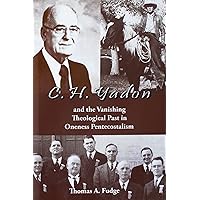
This book examines the evolution of salvation doctrine in Oneness Pentecostalism, uncovering a lost theological tradition that diverged from mainstream evangelical Christianity.
Other sellers on Amazon
Book details
- Print length402 pages
- LanguageEnglish
- Publication dateApril 5, 2003
- Dimensions7.44 x 0.91 x 9.69 inches
- ISBN-101581125844
- ISBN-13978-1581125849
Book overview
Frequently bought together

You might also like
-  
-  
-  
-  
-  
-  
-  
Customers who bought this item also bought
You might also like
-  
-  
-  
-  
-  
-  
-  
Features & details
Features
- Used Book in Good Condition
Product information
| Publisher | Universal Publishers |
| Publication date | April 5, 2003 |
| Language | English |
| Print length | 402 pages |
| ISBN-10 | 1581125844 |
| ISBN-13 | 978-1581125849 |
| Item Weight | 1.6 pounds |
| Dimensions | 7.44 x 0.91 x 9.69 inches |
| Best Sellers Rank |
|
|---|---|
| Customer Reviews | 4.6 out of 5 stars 64Reviews |
Related books
Customers say
Generated from the text of customer reviewsSelect to learn more
Top reviews from the United States
- 5 out of 5 starsVerified Purchase
Conversion Without Apostolic Distinctions and "Standards of Dress" for Holiness
Reviewed in the United States on March 28, 2010Format: PaperbackFrom a former ordained member in the UPCI, I am transfering ordination to the United Methodist Church. The UMC showed me how one is absolutely saved by grace through faith without legalism or the standards of dress. Conversion and the Baptism in the Holy Spirit can occur without the Standards of Dress for holiness. Conversion, the Baptism in the Holy Spirit, and Holiness is accomplished by grace through faith without the Standards of Dress. Holiness is really HOLY LOVE for God and neighbor as self. Plus, it is theological gymnastics to say that their is only "one normative experience," one sequencial order of spiritual events, and one chronological order to receive salvation. Plus, it is theological gymnastics to say one has to speak in tongues at conversion in order to have salvation. More importantly, the Spirit can bear witness in you and in myself that we are God's children, I am God's child, my sins are forgiven, I am unconditionally accepted by Christ, Christ unconditionally loves me by His grace, Christ unconditinally takes care of my needs because of His grace, and Christ by His Spirit empowers/works with me to accomplish ministry in the Kingdom of God on earth (e.g., I am not a full-Preterist UPCI; I am not a partial-preterist, partial-preterism is a cope out for those still in UPCI; go learn your Bible, theology, and pastoral care UPCI). Hence, the Baptism in the Holy Spirit can occur at salvation or after salvation. The Baptism of the Holy Spirit occured before, during, or after one's water baptism. Nevetheless, one sequence of events or normative experience is not the doctrine; the confession Jesus Christ is Lord begins conversion.
In Acts 15: The Pharisees were incorrect in their method to convey the Gentiles had to adopt the distinctions of the Mosaic Praxis in order to be saved after they received the Holy Spirit. Therefore, it is Pharisaic to promote distinctions more so than the cross and Christ crucified. It is not legalism itself not getting the Pharisees the bad reputation in the Bible. The problem withe the Pharisees is that they promoted and taught their distinctions as more important than the actual gospel. For example, the Gentiles received the Baptism in the Holy Spirit without the Mosaic Praxis. Therefore, as a Methodist, one can receive the Baptism in the Holy Spirit and tongues without the standards of dress for holiness. Plus, one can be absolutely saved by grace through faith at conversion without the standards of dress and even without speaking in tongues and even without water baptism in Jesus' Name, and without any Apostolic distinctive doctrine. Hence, Fudge is right when he says Christianity without the cross.
The proclamation that Jesus Christ is Lord sparked conviction which led to the Spiritual outpouring. The people were amazed at the speaking in tongues in the Acts of the Apostles because people were not looking to, preachers were not preaching it, and nor was tongues commanded.
For history, a lot of the standards of dress were not discussed in the UPCI Articles of Faith (approximately 1952). The standards of dress were added later and after "reacting to the culture," and the UPCI leaders read into (eisegesis) and raped the Biblical text.
Fudge has thoroughly researched a movement. I wish more Oneness Pentecostals would work at researching and learning their own movement. I Tim. 2:9, Study thyself to be approved unto God, a WORKMAN that needed not to be ashamed, rightly dividing the word of truth.
Notice how the text says a WORKMAN. Thomas Fudge was a bigger WORKMAN at Oneness Theology than any of the UPCI board members I know. If Oneness Theology is worth believing, the belief system, church, organization, and pastoral theology can be called out on the carpet. Anytime it comes to UPCI pastors and/or board members to learn, do clinicals, or perform an inductive Bible Study, they cannot handle it. However, Fudge has handled all of these things. Maybe, more Oneness adherents should try being a WORKMAN and/or WORKWOMAN at their own game and then try and be Fudge's attorney, judge, and trial jury.
UPCI: You are not Fudge's attorney, trial jury, or judge. Now, go get some formal education and professional training in pastoral/clinical care and then come back and talk to us.
Hope This Helps,
G.P. Norton
- 5 out of 5 starsVerified Purchase
Book on Oneness Pentecostals
Reviewed in the United States on July 5, 2025Format: PaperbackThis is the most comprehensive book I've been able to find concerning Oneness Pentecostals.
I think it's worth reading for anyone who is Oneness Pentecostal. I was Oneness for 27 years. Went to a Oneness Bible College for 3 1/2 years until I was asked to leave because of my controversial questions. Would recommend this book.
- 5 out of 5 starsVerified Purchase
It is the best history of Pentecostalism I have ever read and the ...
Reviewed in the United States on February 6, 2018Format: PaperbackThomas Fudge does extensive research into the history of the UPCI and Pentecostalism in general. It is the best history of Pentecostalism I have ever read and the most scholarly. Yet it is very readable. I like that he compares and contrasts it with the doctrine of the reformers. The best part is that he quotes PCI and UPC leaders private conversations and private doctrinal controversy within the church which casts light on a movement that has not been uniform by any means.
- 4 out of 5 starsVerified Purchase
On the whole truth
Reviewed in the United States on February 5, 2015Format: PaperbackMr. Fudge has done a commendable job in helping people see the danger of making a formula the means of salvation, rather than just simply trusting Christ to receive a new heart. Of course, there is much more to the book than that. He goes into the facts of the merger that formed the United Pentecostal Church. Of the two groups that made the merger, one held to a sacremental salvation (Acts 2:38) Just go through the three steps and you are saved i.e. repent, be baptised in Jesus' Name and receive the Holy Spirit with the evidence of speaking in tongues. The other group believed a person was saved the moment they came to faith in Christ. They, of course, believed in water baptism in the Name of Jesus Christ and the infilling of the Holy Spirit , with tongues. But to them, these two events followed salvation rather than constituting it.. Believing this, they could accept other believers who had trusted Christ for salvation and have at least some fellowship with them. At the merger, there was an agreement that each side would not push their views. In the end this pledge was broken and second group found themselves sort of out in the cold to put it mildly at and after the 1992 General Conference. This is how I would understand the situation, having listened to both types of preaching for many years and having heard Howard Goss a number of times back in the 1950's when he came through our area. Although he was the first General Superintendant of the United Pentecostal Church, what I remember most about him was his gentle spirit. Our attitude tells alot about our Christianity. I believe Mr. Fudge has done a great job in explaining the two sides of the issue. After that I believe he has shown that the leadership of the organization in 1992 and before, has not kept to the pledge of the merger.
- 5 out of 5 starsVerified Purchase
Now here's all the facts
Reviewed in the United States on December 15, 2013Format: PaperbackHaving been a part of the UPCI, and known many of the people this book talks about, I can truly say this book was life changing. Thank you Dr Fudge for having the courage to write the facts. Any self searching Christian will think again about their views on salvation when they read this book and search for the facts, not the historically and politically-motivated suppositions about salvation and grace, but the facts of the Holy Scripture.
- 5 out of 5 starsVerified Purchase
Excellent History of the Oneness movement and the UPCI
Reviewed in the United States on August 10, 2016Format: KindleExcellent history of the Apostolic and Oneness movements. The book, thoroughly researched gives a detailed an accurate history of events straight from the mouths of many of the people featured in the manuscript. It is not the altered history that many tell today. This is the straight dope. I highly recommend this book to anyone interested in the UPCI, The Apostolic or Oneness Pentecostal movements in the US and Canada in the 20th Century.
- 5 out of 5 starsVerified Purchase
Great Research--Answers Many Questions
Reviewed in the United States on June 29, 2005Format: PaperbackI come from a Trinitarian Pentecostal background with affiliation with the Church of God (Cleveland, TN). I read this book to learn more about the historical background of the Oneness Pentecostal doctrine, and I am very pleased with how well done the research is.
I am always explaining to my friends the differences between Oneness and Trinitarian Pentecostals, and this book answers many questions concerning salvation, the Trinity, baptism, and the use of rules to produce "holiness."
For information on the Trinitarian side of Pentecostalism, I recommend "They Call Me Pentecostal" by Harold L. Bare.
- 5 out of 5 starsVerified Purchase
Very Informative
Reviewed in the United States on October 21, 2008Format: PaperbackI have been trying diligently with little success to find accurate historical information about the PCI and accidentally ran across this book. I immediately ordered it and it has served it's purpose well. Thank you for your many hours of research and interviews that were necessary to put this into print!
Top reviews from other countries
Joe5 out of 5 starsVerified PurchaseGreat for reevaluating your walk with God.
Reviewed in Canada on February 3, 2021Format: PaperbackFantastic read that will get anyone following the UPCI doctrine to rethink their membership. It puts a lot of holes in "the Truth." I grew up in the doctrine and it took me a long time to think unbiasedly about my faith, and walking away from the doctrine was honestly the hardest thing I've ever done. This book helped me reassure me that I am not the crazy one.
Sending feedback...Thanks, we'll investigate in the next few days.Sorry, We failed to report this review. Please try again
Winston J. Bygrave5 out of 5 starsVerified PurchaseA warning to Oneness Christians of their tendency to distort the message of salvation.
Reviewed in the United Kingdom on March 14, 2026Format: KindleThomas Fudge has rewritten his doctoral thesis as a book focussing on the aberrant teaching of the Oneness Pentecostal movement on salvation, as expressed through the largest oneness denomination in the world, the United Pentecostal Church (UPC).
While certainly not a deliberate attempt doctrinally by what were sincere Christians pursuing apostolic truth, Fudge argues, that the cross has become only a stepping stone, not the cornerstone, in the theology of many Oneness Christians. P. 705.
In 1945 the Pentecostal Assembly of Jesus Christ (PAJC) and the Pentecostal Church Inc. (PCI) decided they had sufficient in common to unite and form a single denomination. Fudge points out, that the chief stumbling block in this merger was the interpretation of the Acts 2:38 message.
All agreed on the practice of baptism in Jesus' name, but no consensus could be reached on its precise meaning. There were those from the PAJC who adamantly affirmed that Acts 2:38 encapsulated the gospel; the new birth experience. Others, mainly from the PCI were not so certain and indeed some were convinced that indeed it did not.
After considerable debate W.T. Witherspoon of the PAJC composed a statement which read ‘we shall endeavor to keep the unity of the Spirit until we all come into the unity of the faith, at the same time admonishing all brethren that they shall not contend for their different views to the disunity of the body.' That statement became part of the Fundamental Doctrine of the newly formed United Pentecostal Church. P. 133.
Fudge argues that the doctrine of salvation in the UPC after a half century of development, unwittingly, has resulted in a theological expression which presents and cultivates the gospel as a form of Christianity without the cross.
There were some leaders in the UPC who resisted any notion that the validity of baptism was contingent upon any particular formula, i.e. in Jesus' name only, by discouraging the practice of rebaptism of those who were baptised in the trinitarian formula (Mt. 28:19), by pointing out that no where does Scripture provide an example of Christian rebaptism, and rejecting as unscriptural the teaching that John 3:5 equalled Acts 2:38. However, overtime the dogmatic views of many of the ministers from the PAJC prevailed. P.113.
Fudge states, that most fundamentalist Oneness or Apostolic Christians would limit ‘full’ and certain salvation to those baptised in the ‘Name of Jesus’ by immersion and experiencing the baptism of the Holy Ghost with the initial evidence of speaking in other tongues, appealing to Acts 2:38 as their summative proof text.
For such Christians, Fudge argues, that their doctrine of salvation depends emphatically and unarguably upon a new birth experience situated unequivocally within ‘water and Spirit’ (Jn. 3:3,5), with little or no direct meaningful reference or connection to the cross and the atonement obtained by Christ. P. 704.
Fudge finds it interesting that the PAJC and the PCI (forerunners of the UPC), like the Assemblies of God (AOG), separated from the holiness movement on the theological implications precipitated by William Durham’s ‘finished work of Calvary’ idea, that nothing more was required for salvation, but genuine faith in Christ's finished work on the cross, and yet the UPC ends up teaching a legalistic application of salvation through 'water and Spirit' theology. P. 704.
Fudge ironically concludes, that although the Holiness ‘second work of grace’ may well have disappeared in early Oneness history, sadly, the cross seems not to have been its primary replacement. P. 704.
This book is a must read for all Pentecostals in order to understand their Oneness and Apostolic brothers and sisters. It is also essential reading for all Oneness and Apostolic Christians as a warning against their cultic and heretical tendency in failing to understand and expound correctly the biblical teaching on salvation, to know nothing "except Jesus Christ and him crucified." ( 1 Cor. 2:2).
Sending feedback...Thanks, we'll investigate in the next few days.Sorry, We failed to report this review. Please try again
Roman Dembek4 out of 5 starsVerified PurchaseGood though a subjective view of Charismatic Movement.
Reviewed in the United Kingdom on December 16, 2021Format: PaperbackI bought this book because of online review. It’s not bad at all though pretty subjective view of Charismatic Movement. And I was searching for more factual & historical review of the movement.
Sending feedback...Thanks, we'll investigate in the next few days.Sorry, We failed to report this review. Please try again
How customer reviews and ratings work
Customer Reviews, including Product Star Ratings help customers to learn more about the product and decide whether it is the right product for them.Learn more how customers reviews work on Amazon