

 Guillaume Jacques

580 California St., Suite 400
San Francisco, CA, 94104


AI
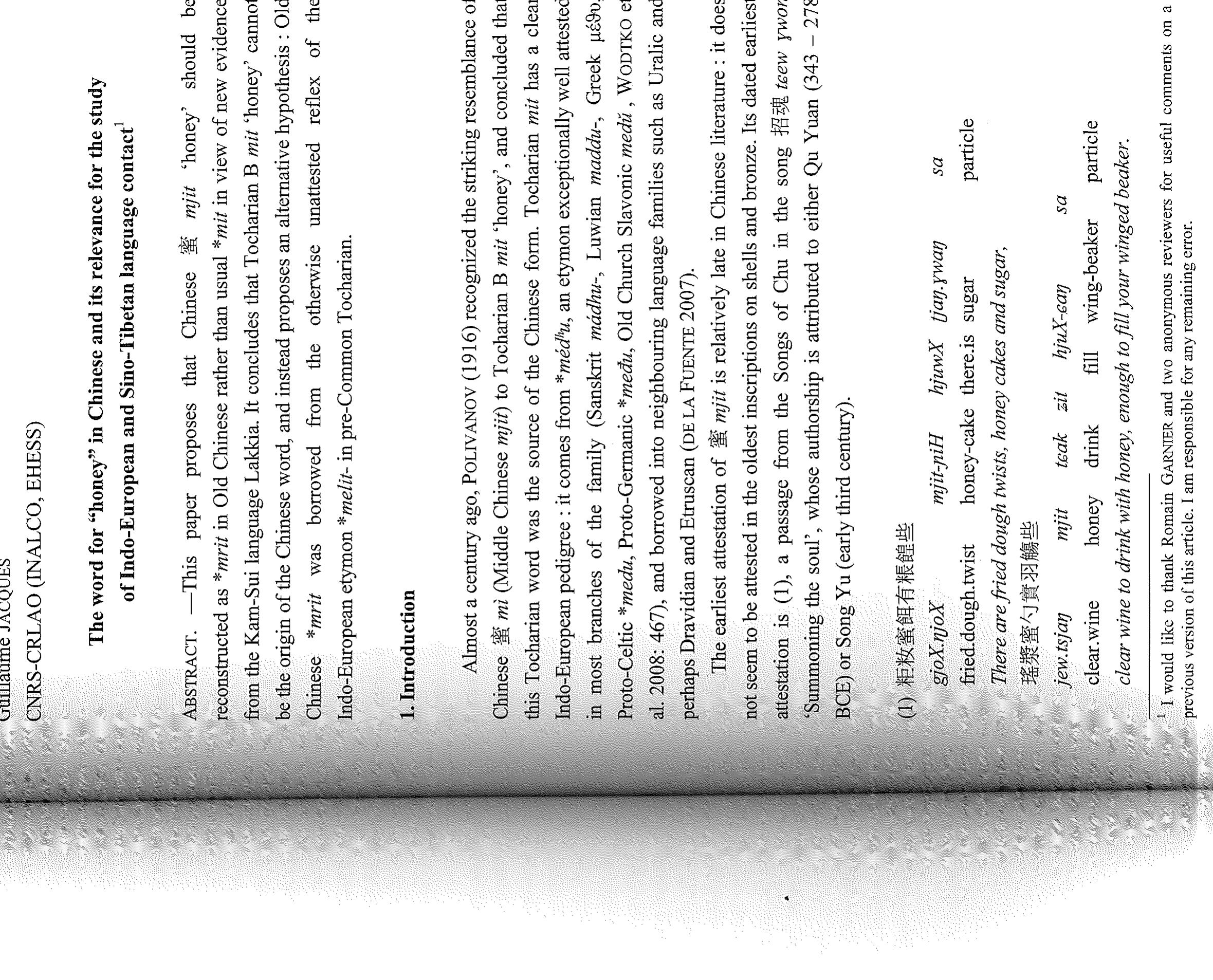
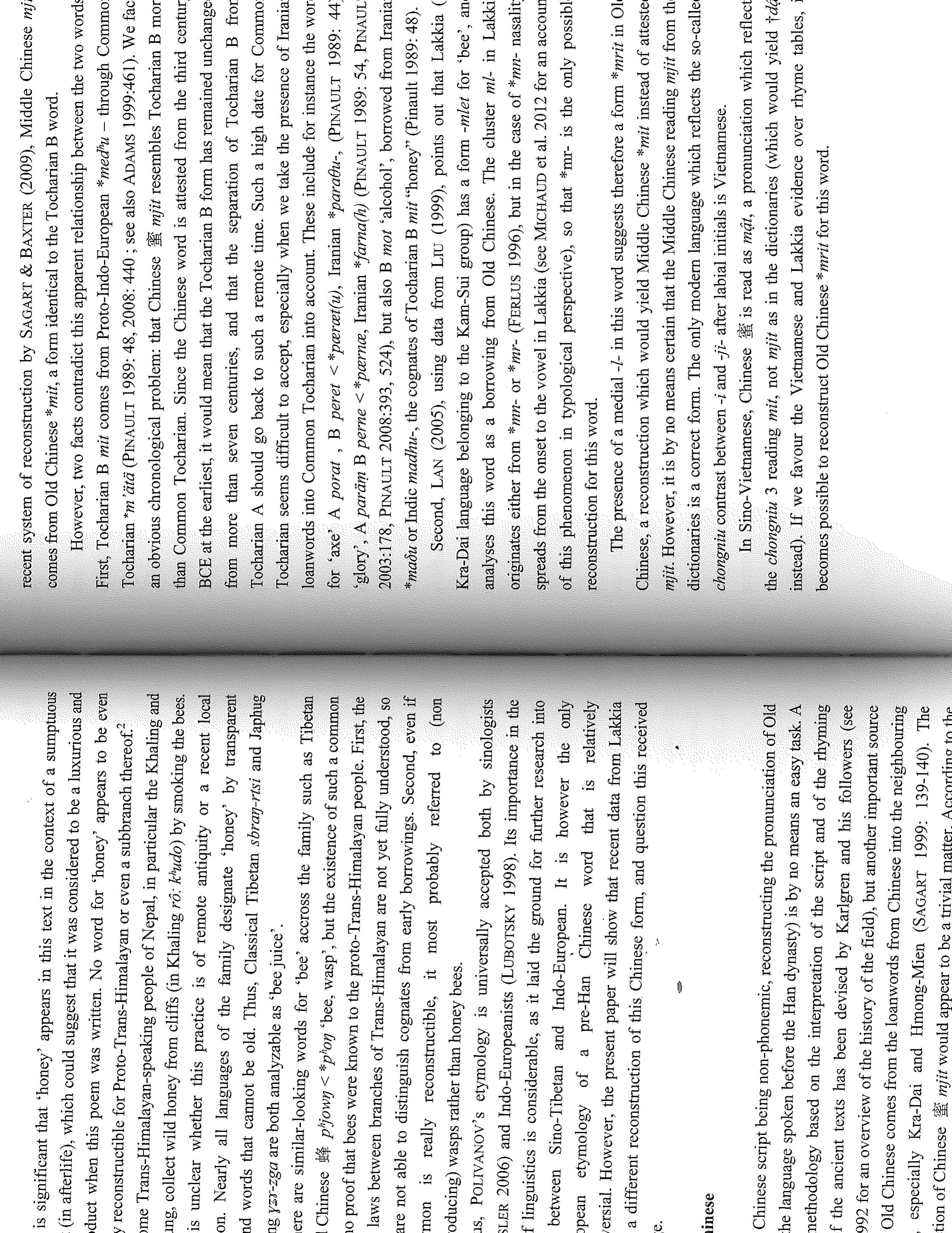
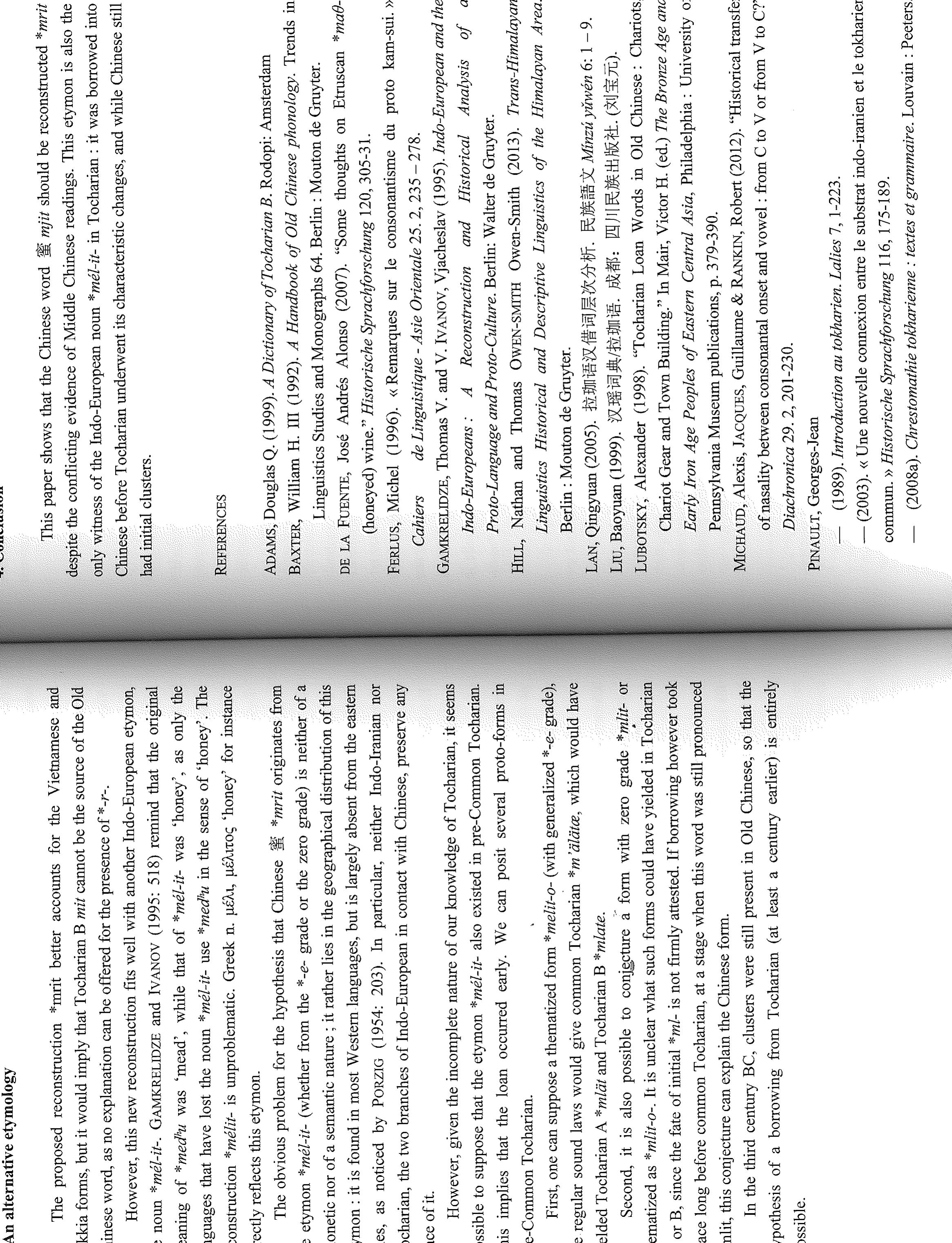
The study finds that the Chinese term for honey, 蜜 (mì), shows phonetic similarities with the Proto-Indo-European term *melit, suggesting a common etymological lineage or contact.
Analysis indicates that linguistic exchanges related to honey likely occurred around 1500-500 BCE, coinciding with trade routes active during that period.
The paper illustrates that, while Indo-European languages often use root variations of *melit, Sino-Tibetan languages prefer distinct phonetic constructions, such as 蜜 (mì) reflecting different linguistic development.
The research employs comparative linguistic analysis, examining phonological patterns and historical texts, particularly from the Zhou Dynasty (1046-256 BCE), to trace term evolution.
The findings suggest a deeper linguistic interaction than previously recognized, indicating that trade and cultural exchange influenced language development beyond the familiar Indo-European family.

