Contemplating in a dream-like room: The Virgin Suicides and the aesthetic imagination of girlhood
2013
https://doi.org/10.1386/FFC.2.2.139_1Abstract
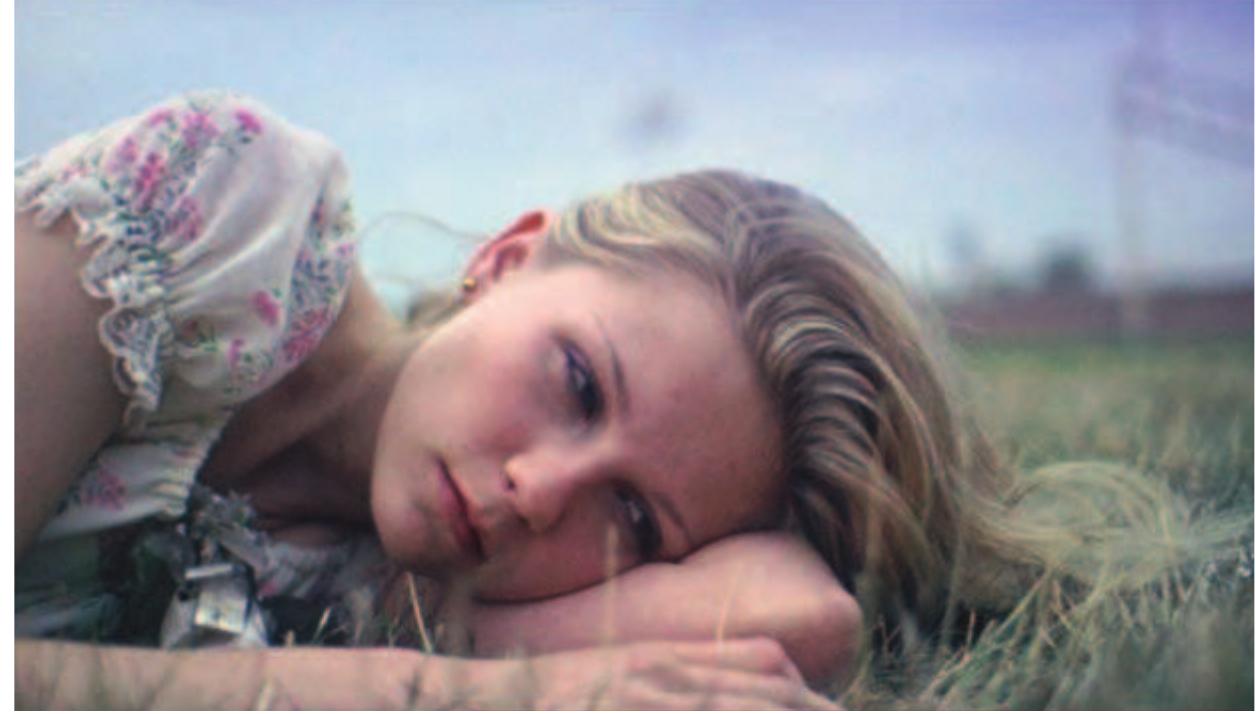
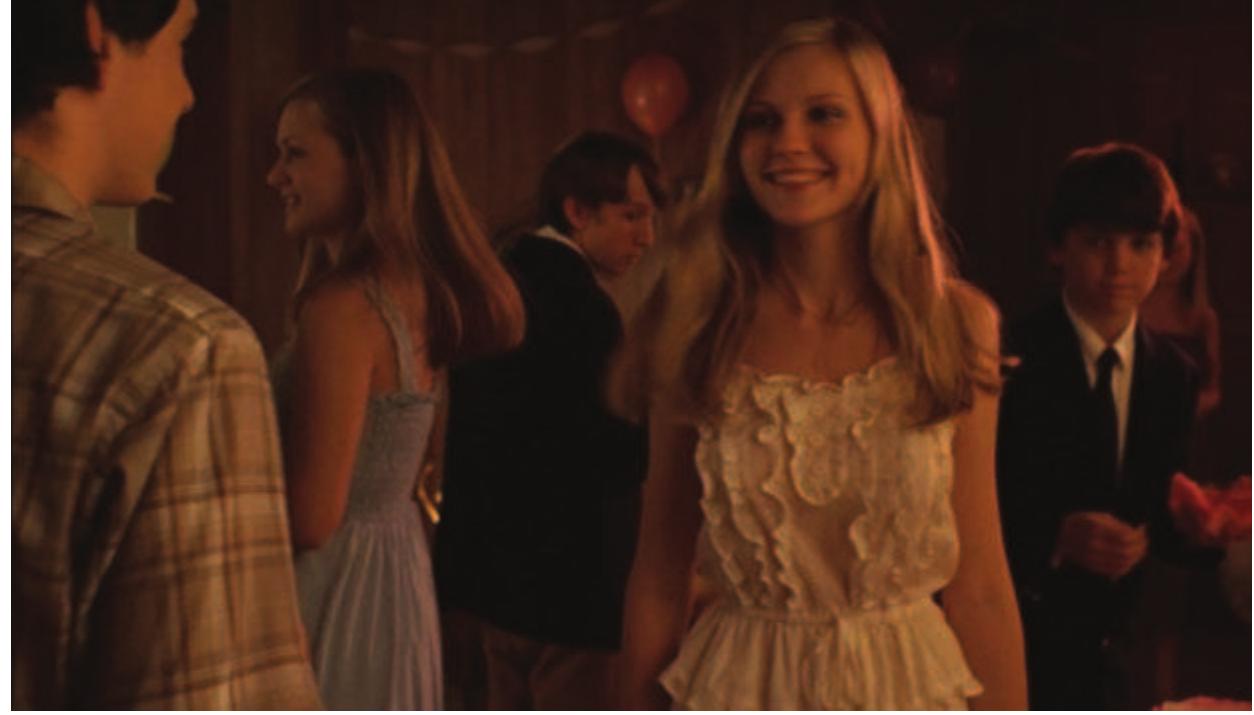
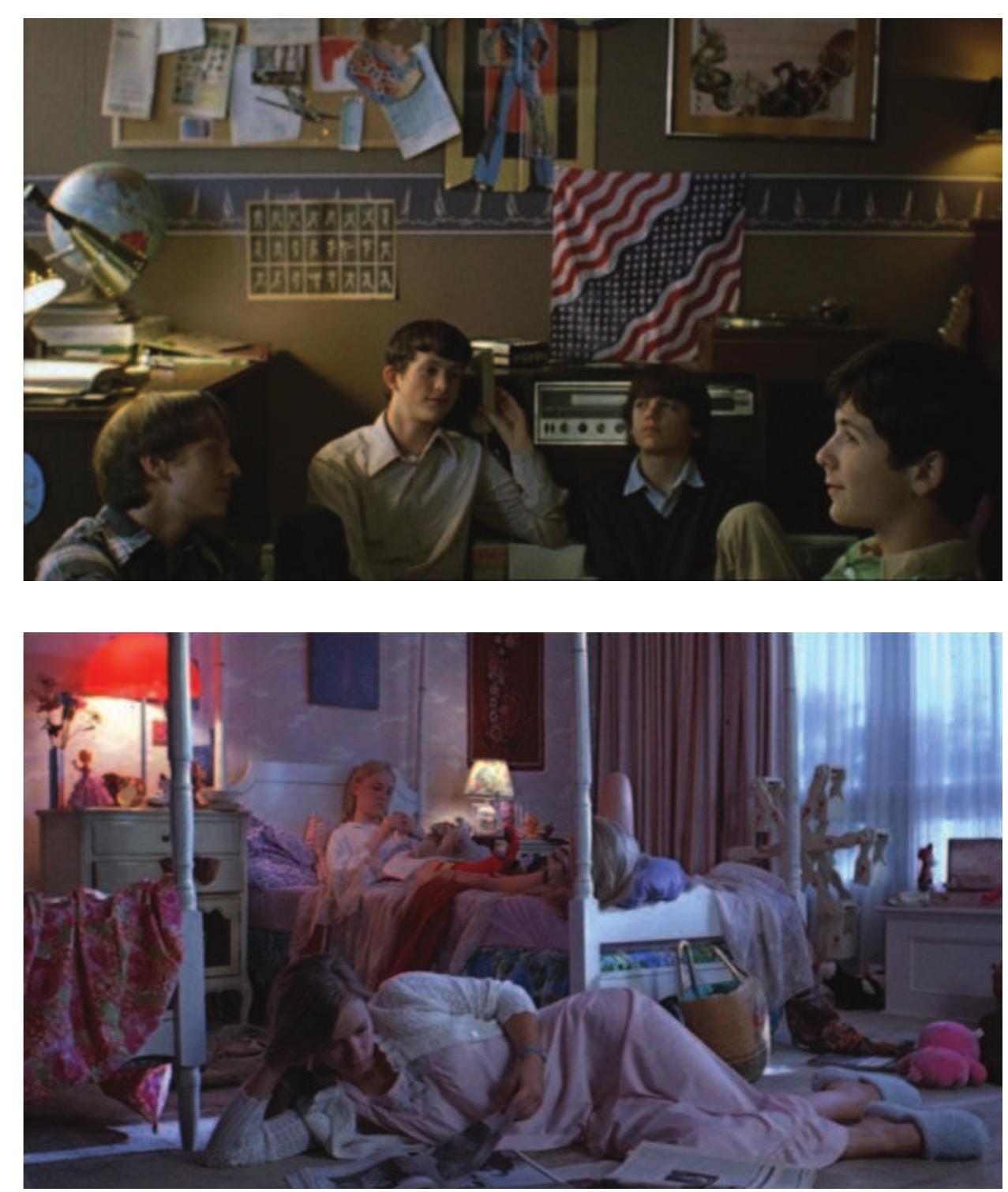
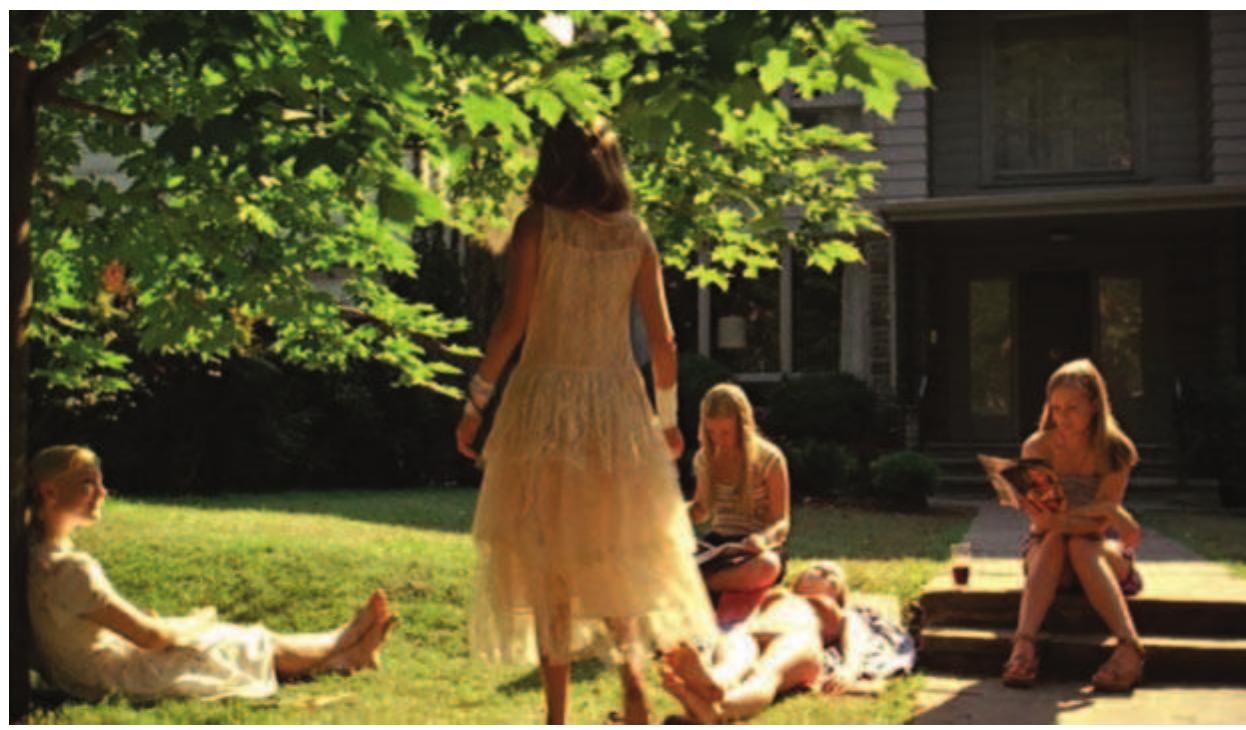
Sofia Coppola’s film The Virgin Suicides (1999) can be viewed as visualizing the (re)negotiation process of the twinned aspects of girlish ‘autonomy’ and ‘restriction’. Although the film’s references to more established images of girlhood are observable, its vague, narrative neutrality, supported by cinematic aesthetics with a dreamy and melancholic effect, leaves their meanings largely unexplained. Connected to our contemporary ideas about adolescence, femininity is generally linked to either pathological fragility or emphasized sexual assertiveness. I question the legitimacy of these binaries and instead read The Virgin Suicides as a depiction of female complexity where the subtle complexity of the heroines contradicts these stereotypes. Instead of situating on either polar of extreme assertiveness and fragility, Coppola presents her conception of adolescent girls as floating between these two. The film’s ethereal and maidenly aesthetics conveyed through the visual qualities of the Lisbon Sisters, including the dresses they wear, effectively layer the girls’ sense of autonomy and sexual maturity, signifying the negotiation of idealizing, suppressing, and empowering adolescent girls. The tragic fate of the girls, on the other hand, limits the film’s capacity to offer an alternative to the monolithic idea of adolescent ‘girlhood’ and how it is visualized in our contemporary culture.
Key takeaways
AI
AI
- Coppola's film explores the duality of adolescent girlhood, balancing autonomy and restriction.
- The portrayal of the Lisbon sisters challenges conventional stereotypes of femininity in Hollywood.
- Visual aesthetics, particularly costumes, emphasize the complexity of girlish femininity.
- The tragic fate of the sisters suggests that agency in girlhood may lead to dire consequences.
- The text critiques the limited representation of strong female characters in contemporary cinema.
References (68)
- Allison, Anne (2000), 'Sailor Moon: Japanese superheroes for global girls', in Timothy J. Craig (ed.), Japan Pop!: Inside the World of Japanese Popular Culture, Armonk, NY: M.E. Sharpe, pp. 259-78.
- Bem, Sandra L. (1993), The Lenses of Gender: Transforming the Debate on Sexual Inequality, New Haven: Yale University Press.
- Beynon, John (2001), Masculinities and Culture, Philadelphia: Open University Press.
- Bronfen, Elisabeth (1992), Over Her Dead Body: Death, Femininity and the Aesthetic, Manchester: Manchester University Press.
- Bruzzi, Stella (1997), Undressing Cinema: Clothing and Identity in the Movies, London and New York: Routledge.
- Burton, Tim (2010), Alice in Wonderland, USA: Walt Disney Pictures.
- Butler, Judith ([1990] 2004), 'Bodily inscriptions, performative subversions', in S. Salih and J. Butler (eds), The Judith Butler Reader, Malden, MA: Blackwell Publishers, pp. 90-118.
- Canetto, Silvia Sara and Sakinofsky, Isaac (1998), 'The gender paradox in suicide', Suicide and Life-Threatening Behavior, 28: 1, pp. 1-23.
- Coppola, Sofia (1999), The Virgin Suicides, USA: Muse Productions.
- Craik, Jennifer (2005), Uniforms Exposed: From Conformity to Transgression, Oxford: Berg.
- Cranny-Francis, Anne (1990), Feminist Fiction: Feminist Uses of Generic Fiction, Cambridge: Polity Press.
- Donizetti, Gaetano (1835), Lucia di Lammermoor, opera in three acts, libretto by Salvadore Cammarano, first performed Naples: the Teatro San Carlo.
- Driscoll, Catherine (2002), Girls: Feminine Adolescence in Popular Culture & Cultural Theory, Columbia: Columbia University Press.
- Durham, M. Gigi (2008), The Lolita Effect: The Media Sexualization of Yong Girls and What We Can Do About it, New York: Overlook Press.
- Eugenides, Jeffrey (1993), The Virgin Suicides, London and New York: Bloomsbury.
- Fournier, Gina (2007), Thelma and Louise and Women in Hollywood, Jefferson, NC: McFarland & Co.
- Frankel, David (2006), Devil Wears Prada, USA: Fox 2000 Pictures. Gonick, Marnina (2006), 'Between "Girl Power" and "Reviving Ophelia": Constituting the neoliberal girl subject', NWSA Journal, 18: 2, pp. 1-23.
- Grant, Barry Keith (2007), Film Genre: From Iconography to Ideology, London: Wallflower Press.
- Heckerling, Amy (1995), Clueless, USA: Paramount Pictures.
- Hodkinson, Paul (2007), 'Youth cultures: A critical outline of key debates', in P. Hodkinson and W. Deicke (eds), Youth Cultures: Scenes, Subcultures and Tribes, New York: Routledge, pp. 1-23.
- Hollinger, Karen (1998) In the Company of Women: Contemporary Female Friendship Films, Minneapolis: University of Minnesota Press.
- --(2002) 'From female friends to literary ladies: The contemporary woman's film', in S. Neale (ed.), Genre and Contemporary Hollywood, London: British Film Institute, pp. 77-90.
- Honda, Masuko (2010), 'The genealogy of Hirahira: Liminality and the girl', in T. Aoyama and B. Hartley (eds), Girl Reading Girl in Japan (trans. T. Aoyama and B. Hartley), New York: Routledge, pp. 19-37.
- Hughes, Clare (2006), Dressed in Fiction, Oxford and New York: Berg.
- Jaworski, Katrina (2010), 'The gender-ing of suicide', Australian Feminist Studies, 25: 63, pp. 47-61.
- Jones, Meredith (2008), Skingtight: An Anatomy of Cosmetic Surgery, Oxford and Yew York: Berg.
- Kennedy, Todd (2010), 'Off with Hollywood's head: Sofia Coppola as femi- nine auteur' Film Criticism, 35: 1, pp. 37-59.
- Kubrick, Stanley (1962), Lolita, USA, UK: MGM.
- Lees, Sue (1993), Sugar and Spice: Sexuality and Adolescent Girls, London: Penguin Group USA.
- Luketic, Robert (2001), Legally Blonde, USA: MGM.
- Marshall, Garry (2001), Princess Diaries, USA: Walt Disney Pictures.
- Mayshark, Jesse Fox (2007), Post-pop Cinema: The Search for Meaning in New American Film, Westport, CT: Praeger, pp. 161-86.
- Mazzarella, Sharon R., and Pecora, Norma O. (2007) 'Girls in crisis: Newspaper coverage of adolescent girls', Journal of Communication Inquiry, 31: 1, pp. 6-27.
- Merskin, Deborah (2004), 'Reviving Lolita? A media literacy examination of sexual portrayals of girls in fashion advertising', American Behavioral Scientist, 48: 1, pp. 119-29.
- Miller, Laura (2004), 'You are doing burikko!: Censoring/scrutinizing artificers of cute femininity in Japanese', in J. Shibamoto Smith and S. Okamoto (eds), Japanese Language, Gender, and Ideology: Cultural Models and Real People, New York: Oxford University Press, pp. 146-65.
- Minnelli, Vincent (1958), Gigi, USA: MGM.
- Mottram, James (2006), The Sundance Kids: How the Mavericks Took Back Hollywood, London: Faber and Faber, pp. 243-54.
- Möller-Leimkühler, Anne Maria (2003), 'The gender gap in suicide and premature death or: Why are men so vulnerable?', Eur Arch Psychiatry Clin Neurosci, 253: 1, pp. 1-8.
- Mulvey, Laura ([1975] 2001), 'Visual pleasure and narrative cinema in Durham', in M. G. Durham and D. Kellner (eds), Media and Cultural Studies: Key Works, Oxford: Blackwell Publishers, pp. 394-403.
- O'Shaughnessy, Michael (1999), Media and Society: An Introduction, South Melbourne: Oxford University Press.
- Ofek, Galia (2009), Representations of Hair in Victorian Literature and Culture, Surrey: Ashgate.
- Olsen, Mark (2000), 'The Virgin Suicides', Sight and Sound, no. 6, p. 59. Paechter, Carrie (2006), 'Masculine femininities/feminine masculinities: Power, identities and gender', Gender and Education, 18: 3, pp. 253-63.
- Pease, Bob (2002), Men and Gender Relations, Croydon: Tertiary Press.
- Pitt, Angela (1981), Shakespeare's Women, Newton Abbot: David & Charles. Reitman, Jason (2007), Juno, USA: Fox Searchlight Pictures.
- Rhodes, Kimberly (2008), Ophelia and Victorian Visual Culture: Representing Body Politics in the Nineteenth Century, Aldershot: Ashgate.
- Rimbaud, Arthur ([1870] 2001), 'Ophélia' in Collected Poems, Oxford: Oxford University Press, pp. 29-32.
- Riviere, Joan ([1929] 1991), 'Womanliness as Masquerade', in A. Hughes (ed.), The Inner World and Joan Riviere: Collected Papers: 1920-58, London: Karnac Books.
- Romanska, Magda (2005), 'Ontology and eroticism: Two bodies of Ophelia', Women's Studies, 34: 6, pp. 485-503.
- Ross, Karen and Nightingale, Virginia (2003), Media and Audiences: New Perspectives, Maidenhead: Open University Press.
- Sanders, Rupert (2012), Snow White and The Huntsman, USA: Universal Pictures.
- Scott, Ridley (1991), Thelma and Louise, USA: Pathé Entertainment.
- Scott, Sir Walter ([1819] 2000), The Bride of Lammermoor, London: Penguin Books.
- Shakespeare, William ([the early 17 th century] 2001), Hamlet, London: Penguin Popular Classics.
- Smaill, Belinda (2013), 'Sofia Coppola', Feminist Media Studies, 13: 1, pp. 148-162.
- Smart, Mary Ann (1992), 'The silencing of Lucia', Cambridge Opera Journal, 4:2, pp. 119-41.
- Springer, Julie Anne (1985), 'Art and the feminine muse: Women in interiors by John White Alexander', Woman's Art Journal, 6: 2, pp. 1-8.
- Starrs, D. Bruno (2008), 'Picnic at hanging rock and the puzzle of the art film', Screen Education, 48, pp. 139-144.
- Thomas, Ambroise (1868), Hamlet, opera in five acts, libretto by Michael Carré and Jules Barbier, first performed Paris: Paris Opéra.
- Thompson, Sharon (1995), Going All the Way: Teenage Girls' Tales of Sex, Romance, and Pregnancy, New York: Hill and Wang.
- Verbinski, Gore (2003-2007), Pirates of the Caribbean Series, USA: Walt Disney Pictures.
- Walker, Dorian (1989), Teen Witch, USA: Trans World Entertainment.
- Warner, Marina (1994), From the Beast to the Blonde: On Fairy Tales and their Tellers, New York: Farrar, Straus and Giroux, pp. 218-40.
- Weir, Peter (1975), Picnic at Hanging Rock, Australia: Picnic Productions.
- White, Merry (1993), Material Child: Coming of Age in Japan and America, California: University of California Press.
- --(1995), 'The marketing of adolescence in Japan: Buying and dreaming', in L. Skov and B. Moeran (eds), Women, Media, and Consumption in Japan, Richmond, Surrey: Curzon Press, pp. 225-73.
- Wilson, Elizabeth (1985), Adorned in Dreams: Fashion and Modernity, London: Virago.
- Zwigoff, Terry (2001), The Ghost World, USA and UK, Germany: Granada Film Productions. SuggeSted citation
- Monden, M. (2013), 'Contemplating in a dream-like room: The Virgin Suicides and the aesthetic imagination of girlhood', Film, Fashion & Consumption 2: 2, pp. 139-158, doi: 10.1386/ffc.2.2.139_1 contributor detailS Masafumi Monden earned his Ph.D. in the school of Design at the University of Technology, Sydney (2012), where he regularly collaborates as an Associate. He publishes in the areas of men's and women's clothing, Japan, art, youth and popular culture. His first book will be published by Bloomsbury in 2014. Particular interests include the role of fashion in the media, ballet, opera and cinema culture.
FAQs
AI
What aesthetic aspects characterize girlhood in The Virgin Suicides?
The film visualizes girlhood through ethereal imagery and the juxtaposition of confined spaces, emphasizing fragility and allure within femininity.
How do costumes signify gender identities in The Virgin Suicides?
Costumes in the film differentiate girlhood and boyhood, using pastel shades for girls and muted tones for boys to highlight social constraints.
What impact do the Lisbon sisters' suicides have on perceptions of femininity?
Their suicides depict a complex interplay of agency and passivity in girlhood, challenging conventional portrayals of femininity through a fatal narrative.
How does The Virgin Suicides compare to traditional girl films?
Unlike traditional films focusing on girls’ transitions to maturity, The Virgin Suicides presents girlhood as an independent and significant stage.
What influences the portrayal of girls' agency in The Virgin Suicides?
The film reflects on cultural constructions of femininity, emphasizing autonomy in a restrictive environment, as critiqued through Bronfen's theory.
Masafumi Monden


![Figure 9: Ophelia (1851-1852), by John Everett Millais (1829-1896). © De Agostini/ The British Library Board. All Rights Reserved 17/10/2013, 92002484, 823. MODERN DAY OPHELIA Ophelia is a very curious heroine. In Shakespeare’s play, she is conventionally portrayed as neither impressively dramatic nor visibly essential as a character (Pitt 1981: 56).° It is rather, the artists and poets in the nineteenth century onward who ascribed the artistic and poetic significance to Ophelia. This might be explained by the popularization of ‘maidenly madness’ as an artistic subject in the Romantic era. In the early to mid-nineteenth century opera, for example, ‘maidenly madness’ was a popular theme. The similarities between Ophelia and the heroine of Lucia di Lammermoor (1835), Gaetano Donizetti’s operatic adaptation of Sir Walter Scott’s novel The Bride of Lammermoor (1819), are often assumed. Apparently, ‘[t]he vision of Lucia in a white nightdress, with dishevelled hair, still a feature of most modern productions, inevitably recalls the dishevelment of the mad Ophelia’ (Smart 1992: 125).](https://figures.academia-assets.com/32548068/figure_008.jpg)