





580 California St., Suite 400
San Francisco, CA, 94104

495
views
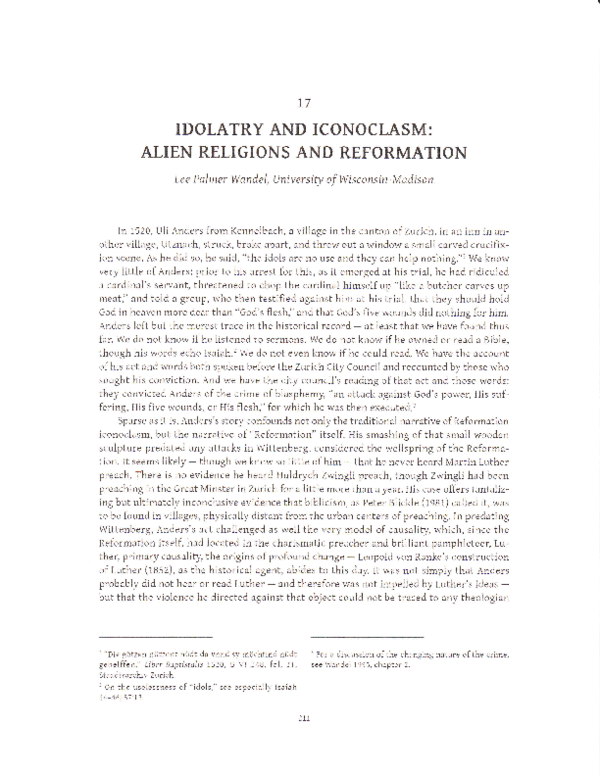
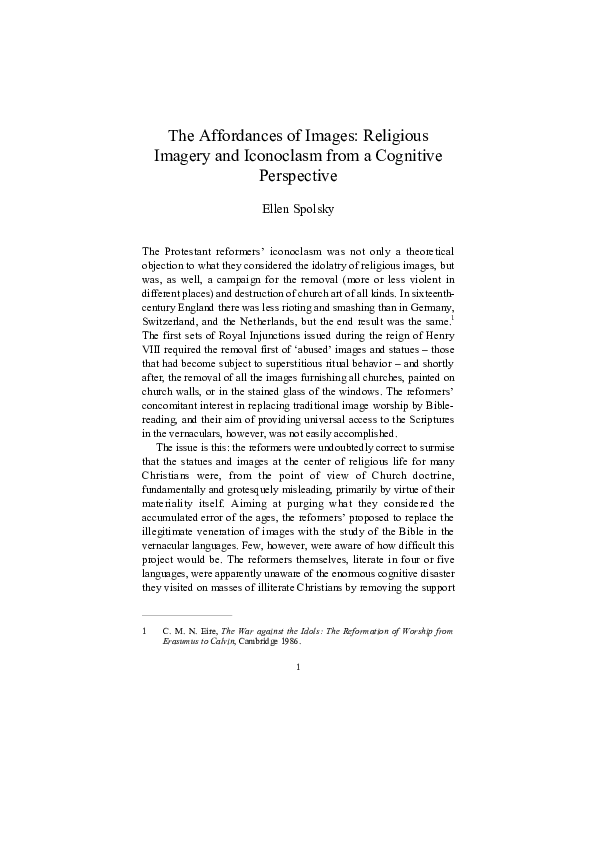
May God will that our lords be like the pious secular kings and lords of the Jews whom the Holy Spirit praises. In sacred Scripture they have always had the power to take action in churches and abolish what offends and hinders the faithful.-Andreas Karlstadt, "On the Removal of Images" 1

AI generated
AI generated
The paper reveals that iconoclastic fervor was driven by royal proclamations and the necessity to consolidate power under Henry VIII and later monarchs. For instance, the Act of Supremacy in 1534 legally established the king as head of the Church of England, facilitating the destruction of religious artifacts.
The findings indicate that Calvin resurrected anti-image sentiments from the Carolingian past, thereby championing iconoclasm during the Reformation. His references to documents like the Libri Carolini, which opposed the Second Nicene Council's acceptance of images, underpinned his arguments against religious imagery.
The study shows that secular authorities increasingly assumed religious functions, exemplified by Andreas Karlstadt advocating for political leaders to remove religious images, stating it was a divine mandate. This dynamic marked a significant shift, as civic leaders began to dictate religious practices.
The paper documents outbreaks of iconoclasm in various regions including Basel (1529), France, Switzerland, the Netherlands, and England, especially during significant events like the dissolution of monasteries from 1536-39. Each region witnessed violent attacks on religious images and artifacts.
The findings highlight that Luther opposed the radical iconoclasm espoused by leaders like Karlstadt, emphasizing that images should not be removed entirely but instead understood appropriately within a faith context. His stance contrasted sharply with the more destructive approaches of others, leading to regional variations in iconoclastic activity.
Used by Academics at 12,939 universities


