Economic consequences of the Gujarat earthquake
2001
https://doi.org/10.2307/4410512…
33 pages
Sign up for access to the world's latest research
Abstract
AI
AI
This study estimates the economic impact of the Gujarat earthquake, focusing on losses to immovable and movable assets, economic losses due to business interruption, and public sector costs. The paper highlights the importance of assessing casualties, job disruption, and fiscal impacts while noting the challenges in quantifying losses due to inadequate building inventories. It discusses the implications for relief and rehabilitation efforts, offering insights into future disaster management strategies.
Key takeaways
AI
AI
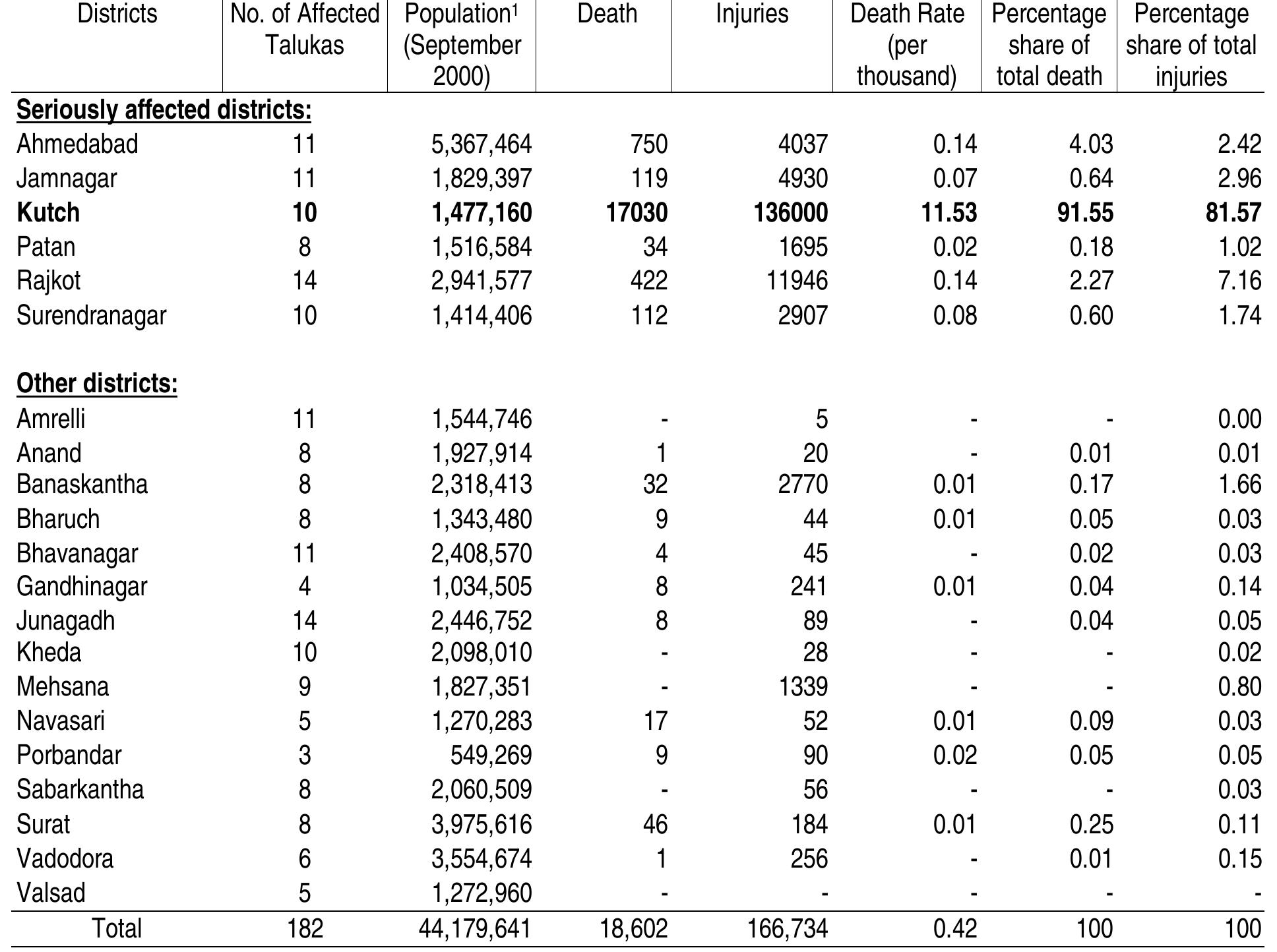
- The Gujarat earthquake resulted in over 18,000 deaths and 166,000 injuries, significantly affecting Kutch district.
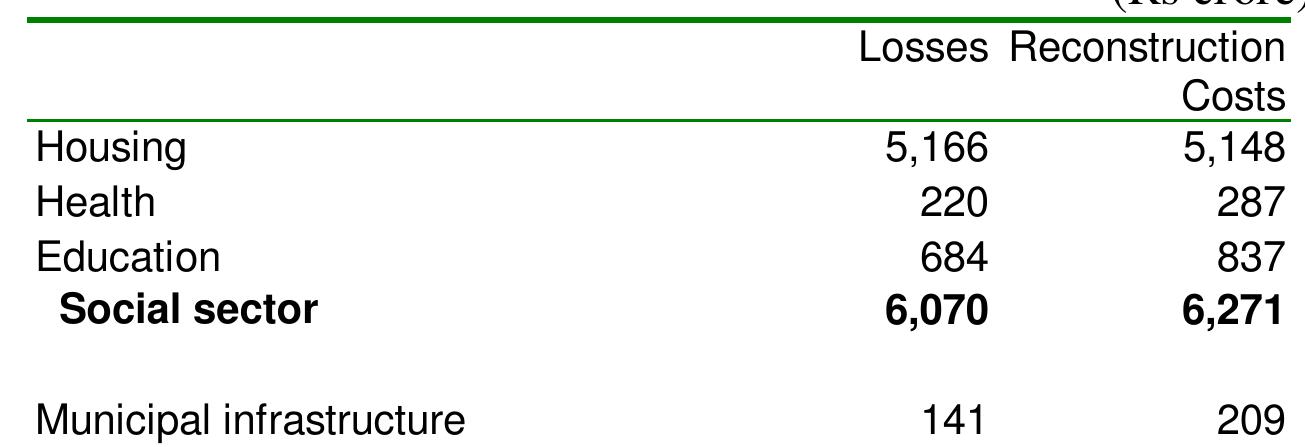
- Economic losses from the earthquake are estimated at Rs.14,454 crore, with public sector costs and household income losses highlighted.
- A lack of building inventory complicates accurate loss estimation, impacting policy and assistance planning.
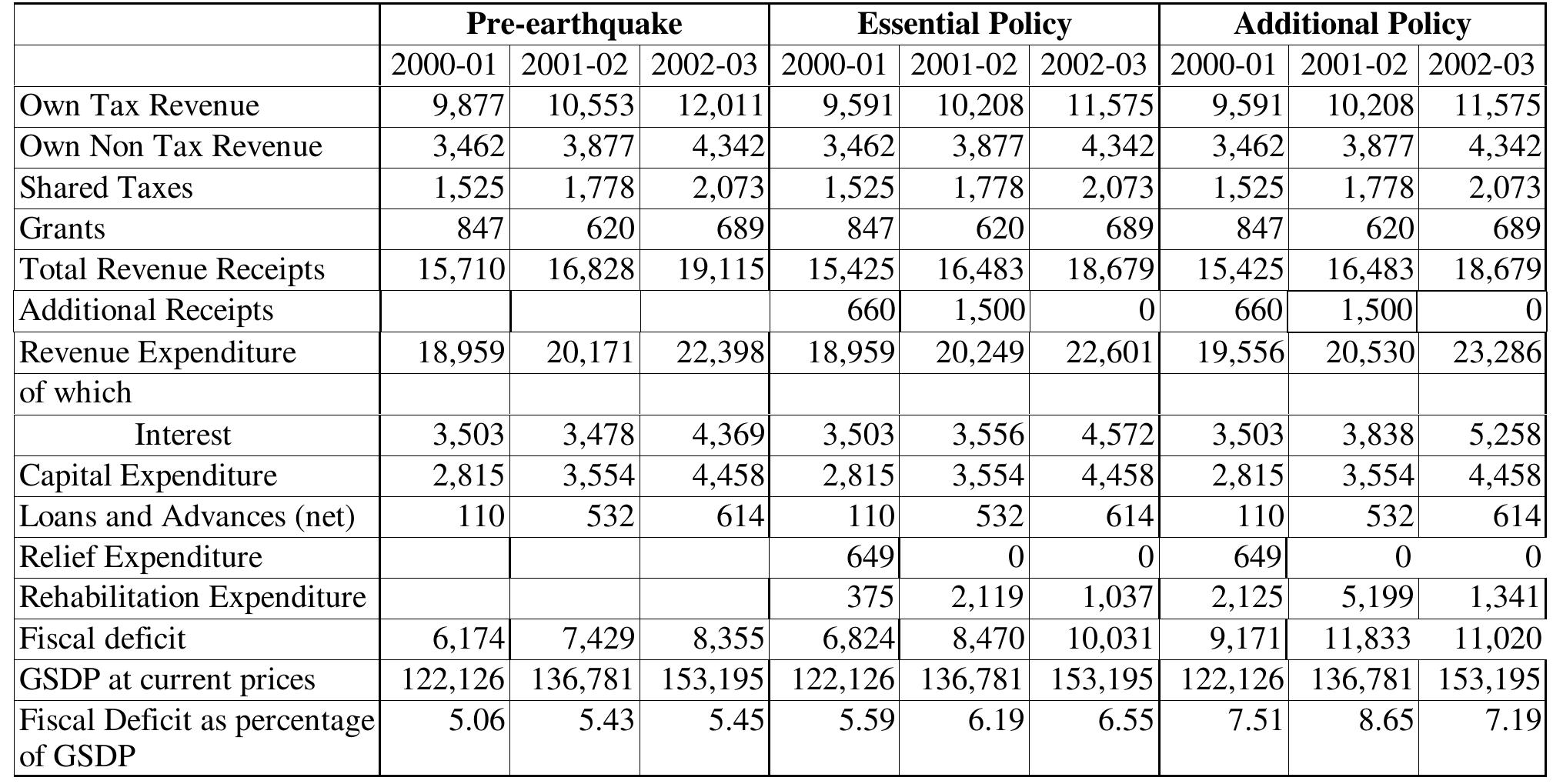
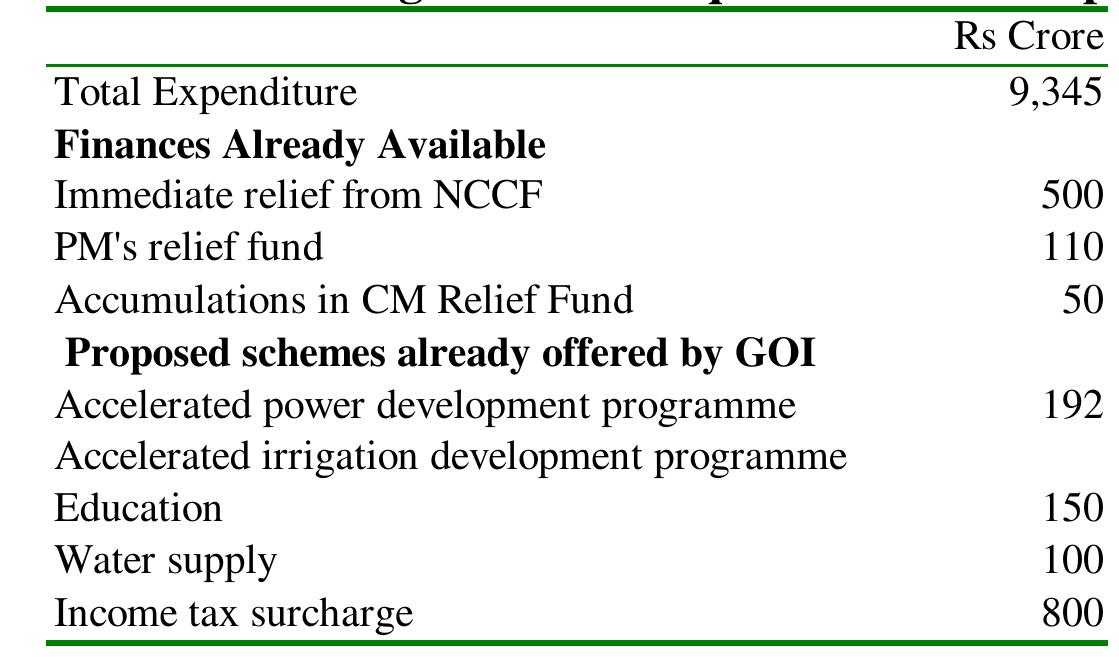
- Reconstruction efforts face fiscal challenges, increasing the state's deficit amidst pre-existing financial distress.
- The earthquake's immediate impact on Gujarat's GDP is minimal, with long-term recovery dependent on effective reconstruction policies.


Related papers
Natural Hazards, 2001
The abodes in Costa Rica have almost the same vulnerability as the old civil houses in China, which represent the vulnerability in worst cases. On the other hand, the high quality buildings in Middle East have the same vulnerability as the reinforced concrete buildings in China due to employing the state-of-art-design and construction techniques, which represent the vulnerability of the best cases. The macroeconomic vulnerability is defined as the ratio of physical economic loss caused by earthquake to the Gross Domestic Product (GDP) within a given area. Since the total macroscopic loss is the sum of losses of different types of buildings and facilities, the macroeconomic vulnerability must be greater than that of best cases while less than that of worst cases. In the present paper, the implications of macroeconomic vulnerability to earthquake loss estimate are discussed.
International Journal of Remote Sensing, 2005
International Journal of Research in Engineering and Technology, 2016
Buildings have been repaired or strengthened for many different reasons throughout of their service life. It can be decided to demolition of buildings when strengthening or repairing is unsuitable. There can be many reasons for repairing, strengthening or demolition buildings. Earthquake is one of these reasons. In this study, firstly performance calculations were made for a RC building according to Turkish Earthquake Code 2007 (TEC'2007) which has been damaged after an earthquake. The results of performance based assessment show that performance level of building is not desired level. The building is not safe and not economical to strengthen so it needs to be demolished. The institution has decided to demolish the building after detailed analysis of building. In this study demolition cost and reconstruction cost have been separately calculated. The results have been compared and suggestions have been made. The construction cost of the building has been calculated according to the unit production method using the unit prices of 2014.
Natural Hazards, 2005
Prognostic estimations of the expected number of killed or injured people and about the approximate cost associated with the damages caused by earthquakes are made following a suitable methodology of wide-ranging application. For the preliminary assessment of human life losses due to the occurrence of a relatively strong earthquake we use a quantitative model consisting of a correlation between the number of casualties and the earthquake magnitude as a function of population density. The macroseismic intensity field is determined in accordance with an updated anelastic attenuation law, and the number of casualties within areas of different intensity is computed using an application developed in a geographic information system (GIS) environment, taking advantage of the possibilities of such a system for the treatment of space-distributed data. The casualty rate, defined as the number of killed people divided by the number of inhabitants of the affected region, is also computed and we show its variation for some urban concentrations with different population density. For a rough preliminary evaluation of the direct economic cost derived from the damages, equally through a GIS-based tool, we take into account the local social wealth as a function of the gross domestic product of the country. This last step is performed on the basis of the relationship of the macroseismic intensity to the earthquake economic loss in percentage of the wealth. Such an approach to the human casualty and damage levels is carried out for sites near important cities located in a seismically active zone of Spain, thus contributing to an easier taking of decisions in emergency preparedness planning, contemporary earthquake engineering and seismic risk prevention.
In disaster management, earthquakes are one of the leading causes of death. The aftermath of such phenomena can be abated if proper actions take place before the onset of the earthquake. Various sectors in a country are responsible for managing earthquakes but lack of knowledge about the positive effects of their actions makes them reluctant to do so. Stabilizing houses and structures, positioning humanitarian goods, retrofitting transportation links, and devising a disaster response plan can help save more lives. Of course, these actions are separate projects with defined budgets which are assigned to different sectors, but coordination of them is necessary. To highlight the effects of pre-disaster actions on recovery costs, Recovery Indexes are introduced which show the state of the city after the earthquake. Also a model is proposed to calculate the recovery costs of an earthquake when different actions have taken place. The results show how significant any pre-disaster action can be on the recovery cost and the essentiality of taking actions before it is too late.
Natural Hazards, 2014
Pakistan is an earthquake-prone region due to its tectonic setting resulting in high hazard with moderate-to-strong ground motions and vulnerability of structures and infrastructures, leading to the loss of lives and livelihood, property damage and economic losses. Earthquake-related disaster in Pakistan is a regular and serious threat to the community; however, the country lack tools for earthquake risk reduction through early warning (preearthquake planning), rapid response (prompt response at locations of high risk) and prefinancing earthquake risk (property insurance against disaster). This paper presents models for physical damageability assessment and socioeconomic loss estimation of structures in Pakistan for earthquake-induced ground motions, derived using state-of-the-art earthquake loss estimation methodologies. The methodologies are being calibrated with the site-specific materials and structures response, whereas the derived models are tested and validated against recent observed earthquakes in the region. The models can be used to develop damage scenario for earthquakes (assess damaged and collapsed structures, casualties and homeless) and estimate economic losses, i.e., cost of repair and reconstruction (for a single earthquake event as well as all possible earthquakes). The models can provide help on policy-and decision-making toward earthquake risk mitigation and disaster risk reduction in Pakistan.
Civil Engineering Collaboration
The earthquake that occurred in Pasaman on February 25, 2022, has caused considerable losses to local residents. Thousands of buildings have been damaged and collapsed due to the earthquake, especially houses of residents, which in the field investigations are caused mainly by a lack of knowledge in building these houses. This study aims to identify the level of damage to houses damaged by the earthquake in Nagari Malampah, Pasaman District, West Sumatera. This research method is carried out by direct observation and investigation of the research location, then identifying the level of damage to residents' houses, by taking 10 samples of affected residents' houses. Of the 10 houses, the percentage of damage will be grouped based on the level of Light Damage, Medium Damage, and Heavy Damage, with reference to the Technical Guidelines for the Director General of Human Settlements, SNI 1726-2019, and PU Guidelines. The results of this study indicate that the percentage of the l...

Loading Preview
Sorry, preview is currently unavailable. You can download the paper by clicking the button above.
References (1)
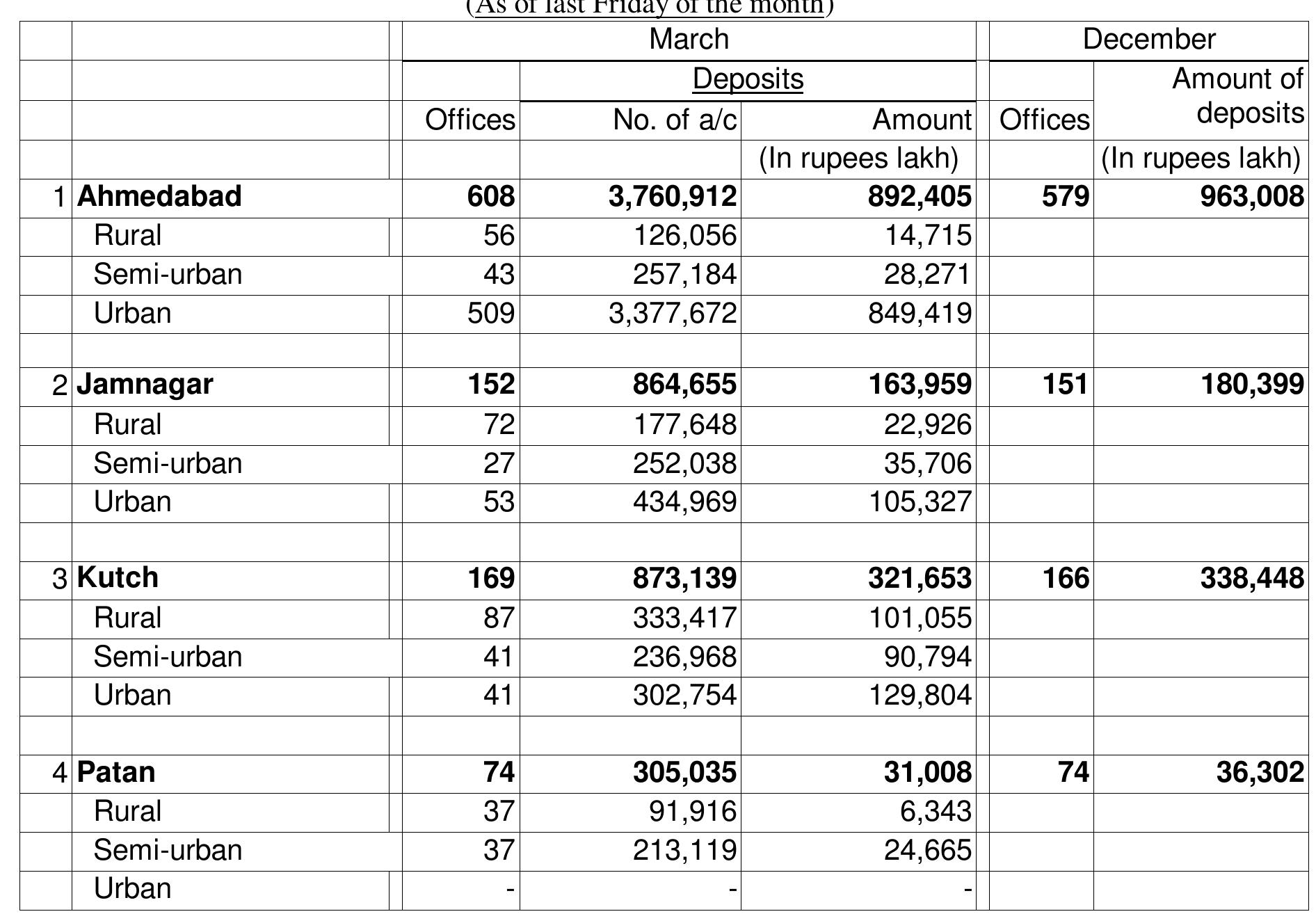
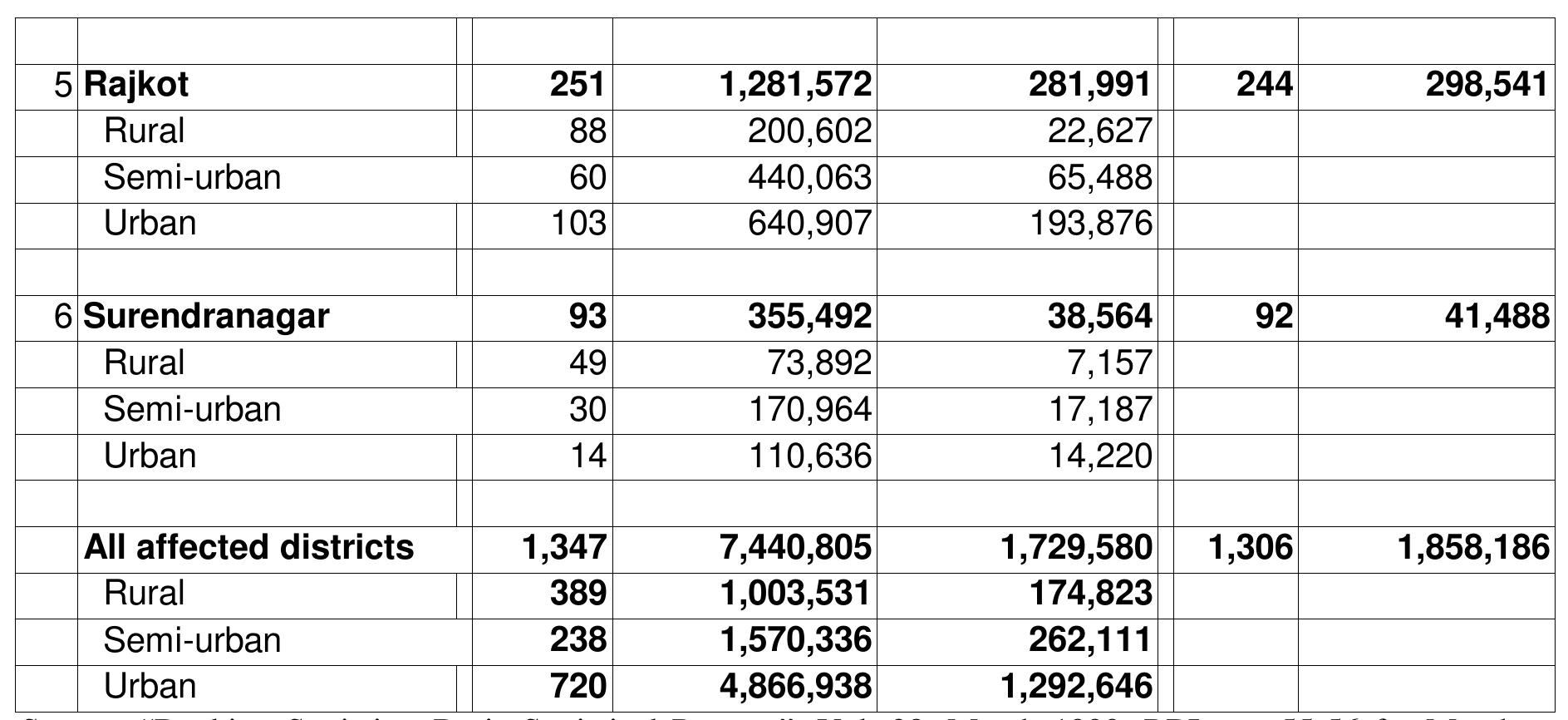
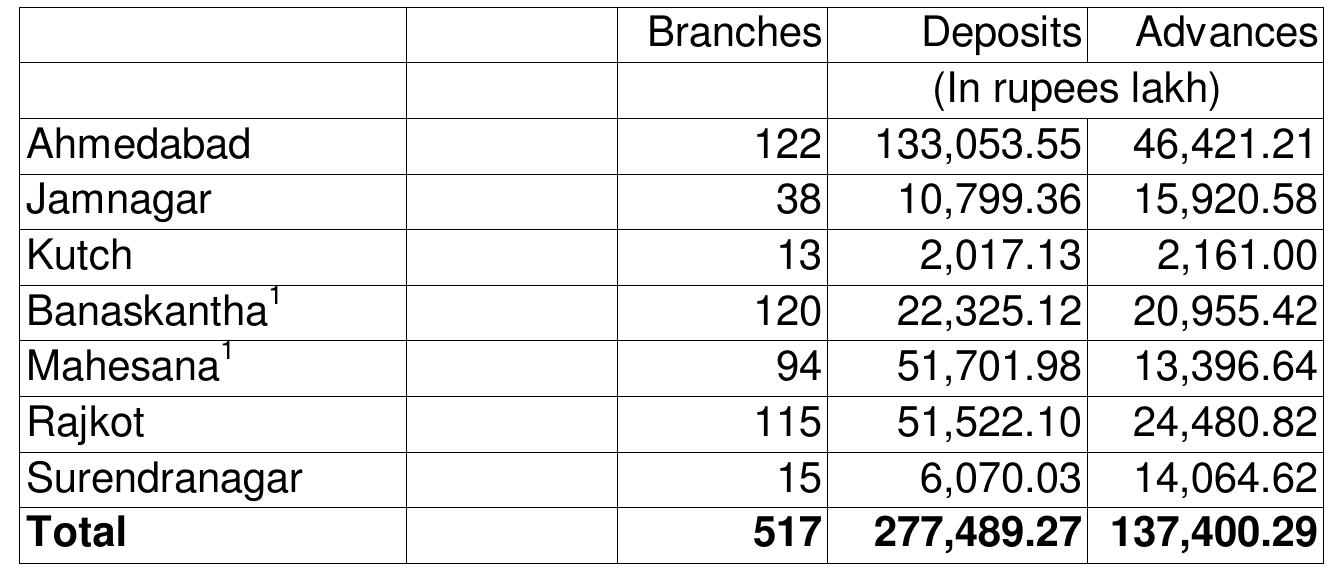
- Source: "Banking Statistics: Basic Statistical Returns", Vol. 28, March 1999, RBI, pp. 55-56 for March 1999 and "Banking Statistics: Quarterly Handout -December 1999", Banking Statistics Division, Department of Statistical Analysis and Computer Services, RBI, p. 32.
FAQs
AI
What were the main economic losses due to the Gujarat earthquake?add
The earthquake resulted in an estimated loss of Rs. 14,454 crore to Gujarat's economy, with damaged immovable and movable assets contributing significantly to this figure.
How did the earthquake affect employment in affected regions?add
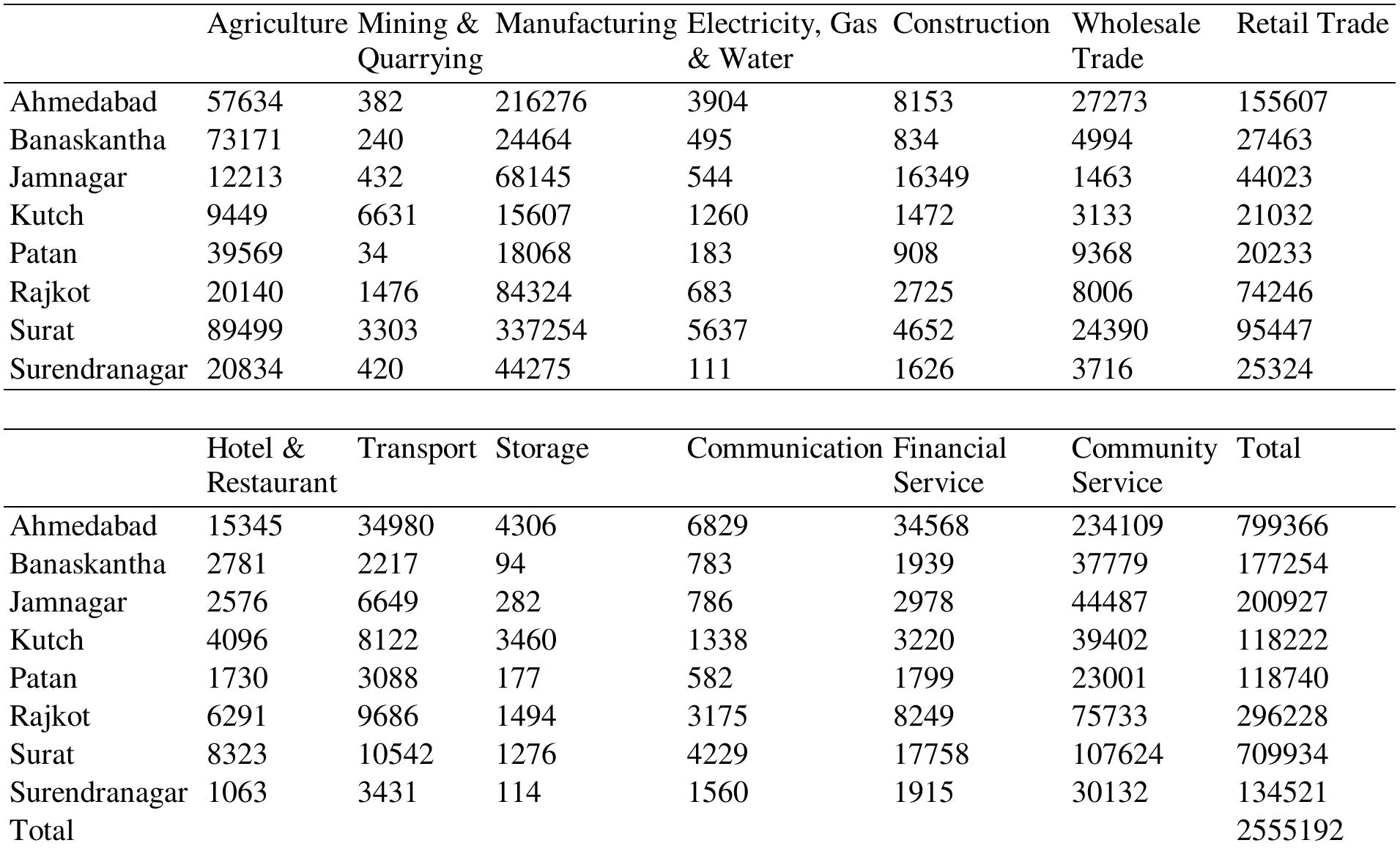
Approximately 4.88 lakh people are estimated to become unemployed due to direct damages in various industries, with 80% loss anticipated in Kutch district.
What percentage of the casualties were reported in Kutch district?add
Kutch district accounted for 92% of recorded deaths and 82% of injuries from the earthquake.
How did the earthquake impact Gujarat's fiscal accounts?add
The earthquake likely increased Gujarat's fiscal deficit significantly, with relief and recovery measures expected to cost around Rs. 10,031 crore by 2002-03.
What is the expected impact on Gujarat's GDP from the earthquake?add
The earthquake's impact on Gujarat's GSDP is estimated to be about Rs. 2,475 crore, a quarter percent of the state's economy.
Kavita Sen