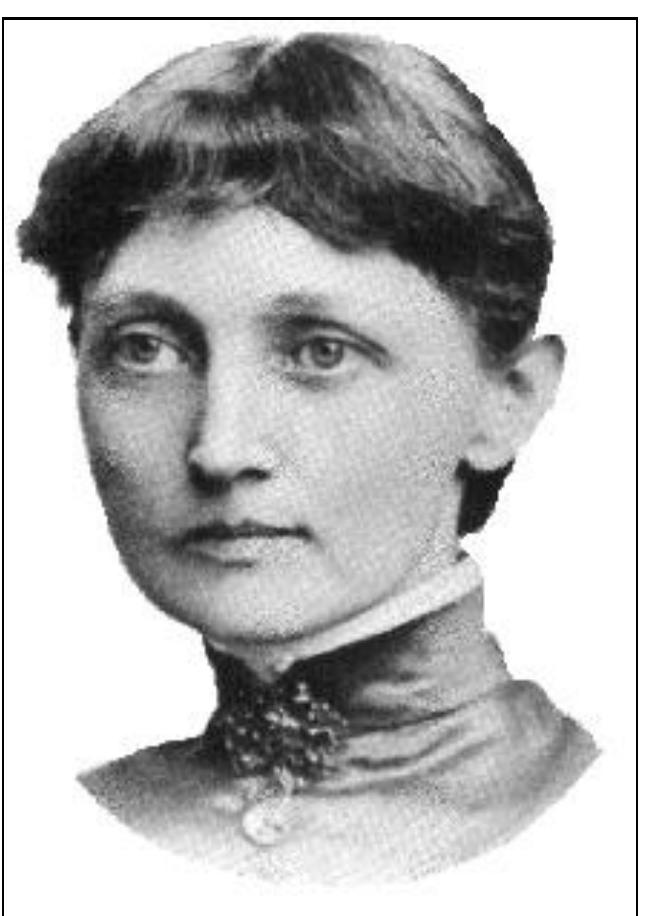
New Thinking, New Thought, New Age: The Theology and Influence of Emma Curtis Hopkins (1849-1925)
2002, The Flinders University Online Journal of Interdisciplinary Conference Papers 2(1)
Abstract
AI
AI
This paper examines Emma Curtis Hopkins, an influential figure in the New Thought movement and the 20th-century Christian healing movement. The study highlights Hopkins' contrasting theology with orthodox Christian Science and explores her impact on the women's movement, mainstream Christian healing practices, and the New Age movement. The analysis addresses the gaps in academic scholarship regarding Hopkins and seeks to elevate her significance in feminist theology and religious history.
Key takeaways
AI
AI
- Emma Curtis Hopkins founded the New Thought movement, influencing 1 million adherents by 1902.
- Her theology emphasized the universality of truth across religious traditions, contrasting with orthodox Christian Science.
- Hopkins integrated feminism into her teachings, ordaining 20 women at her seminary's first graduation in 1889.
- Her students contributed significantly to the women's movement and feminist theology in the 20th century.
- The New Thought movement's ideas persist in contemporary practices, influencing the New Age movement's growth.
References (27)
- Gordon J Melton, "New Thought and New Age," in Perspectives on the New Age, ed. James R Lewis & J Gordon Melton (Albany, New York: State University of New York Press, 1992), 18. 55 Australian historian Jill Roe notes that the New Age in Australia can be traced to Theosophy, Christian Science, New Thought, Anthroposophy, the Baha'i and Scientology. Jill Roe, "Dayspring: Australia & NZ as a Setting for the 'New Age' from the 1890's to Nimbin," Australian Cultural History 16 (1997- 1998).
- Melton, "New Thought," 18, 25.
- Arnold S. Weiss, "A New Religious Movement and Spiritual Healing Psychology Based on a Course in Miracles.," in Religion & the Social Order. Between Sacred & Secular: Research & Theory on Quasi- Religons (London: JAI Press, 1994), 198.
- Larson, "Chapter VI. The Great Popularizers," 147.
- Satter, Each Mind a Kingdom, 252.
- Darling, Frank C. The Restoration of Christian Healing. New Freedom in the Church Since the Reformation. Colorado: Vista Publications, 1992.
- Dennison, Monica. "Galileo's Daughter and Other Daughters. A Reflection." Women-Church. An Australian Journal of Feminist Studies in Religion 29, (2001): 43-49.
- Eddy, Mary Baker. "Questions Answered." Journal of Christian Science 5, no. 1 (1887): 26.
- Gill, Gillian. Mary Baker Eddy. Reading, Massachusetts: Merloyd Lawrence, 1998.
- Harley, Gail M. Emma Curtis Hopkins. Forgotten Founder of New Thought. Syracus, New York: Syracus University Press, 2002.
- Hopkins, Emma Curtis. Scientific Christian Mental Practice. Marina Del Rey, California: DeVorss & Company, 1888. Reprint, 1970.
- Jorgensen, Danny L. "Foreword." In Emma Curtis Hopkins. Forgotten Founder of New Thought, ix-xv. Syracuse, New York: Syracuse University Press, 2002.
- Kern, Kathi. Mrs Stanton's Bible. Ithaca & London: Cornell University Press, 2001.
- Kern, Kathi L. "Rereading Eve: Elizabeth Cady Stanton and "the Woman's Bible," 1885-1896." Women's Studies 19 (1991): 13.
- 60 Most of the biographical information about Hopkins during her time in New York has been taken from correspondence between Luhan and Hopkins.
- Harley, Emma Curtis Hopkins, 140.
- Millions of people have heard of Norman Vincent Peale and his 1952 bestseller The Power of Positive Thinking. But few people know of Emma Curtis Hopkins and that two New Thought groups -Unity School of Christianity and the Church of Religious Science -were primary sources of inspiration for Peale's book.
- Larson, Martin. "Chapter VI. The Great Popularizers." In New Thought Religion. A Philosophy for Health, Happiness, and Prosperity, 129-94. New York: Philosophical Library, 1986.
- Lord, Frances. Christian Science Healing: It's Principles & Practices with Full Explanations for Home Students. London: George Redway, 1888.
- Melton, Gordon J. "Emma Curtis Hopkins: A Feminist of the 1880s and Mother of New Thought." In Women's Leadership in Marginal Religions: Explorations Outside the Mainstream, edited by Catherine Wessinger, 88-101. Chicago: University of Illinois Press, 1993.
- ---. "New Thought and New Age." In Perspectives on the New Age, edited by James R Lewis & J Gordon Melton. 15-29. Albany, New York: State University of New York Press, 1992.
- Peel, Robert. Mary Baker Eddy: The Years of Trial. 3 vols. Vol. 2. New York: Holt, Rinehart & Winston, 1971.
- Roe, Jill. "Dayspring: Australia & NZ as a Setting for the 'New Age' from the 1890's to Nimbin." Australian Cultural History 16 (1997-1998): 170-87.
- Satter, Beryl. Each Mind a Kingdom. American Women, Sexual Purity, and the New Thought Movement 1875-1920. Berkeley: University of California Press, 1999.
- Strange, Lisa. "Elizabeth Cady Stanton's Woman's Bible & the Roots of Feminist Theology." Gender Issues 17, no. 4 (1999): 1-21.
- Trible, Phyllis. "Eve and Adam." In Womanspirit Rising, edited by Carol P Christ & Judith Plaskow. 74-83. New York: Harper & Row, 1979.
- Weiss, Arnold S. "A New Religious Movement and Spiritual Healing Psychology Based on a Course in Miracles." In Religion & the Social Order. Between Sacred & Secular: Research & Theory on Quasi-Religions. 197-215. London: JAI Press, 1994.
FAQs
AI
What are the characteristics of Emma Curtis Hopkins' theology?
Hopkins' theology emphasizes a universal understanding of God as both Father and Mother, advocating for gender equality in divinity. Her teachings include practical affirmations and denials aimed at personal transformation, as detailed in her 1888 work 'Scientific Christian Mental Practice'.
How did the New Thought movement influence the women's movement?
New Thought provided a platform for women's leadership, prominently featuring female clergy and educators. The movement aligned with feminist ideals, as seen during the Christian Science Theological Seminary's 1889 graduation, where 20 of 22 graduates were women.
What role did Emma Curtis Hopkins play in the New Age movement?
Hopkins is regarded as foundational to New Thought, which significantly influenced the rise of the New Age movement in the 1970s. Her teachings on spiritual healing and universal truth resonate strongly with New Age philosophies and practices.
How did Hopkins' students contribute to the New Thought movement?
Key students like Malinder Cramer and Annie Rix Militz helped establish major New Thought groups, expanding the movement's reach. By 1902, New Thought reportedly had over a million adherents, largely attributable to the dedication of Hopkins' students.
What distinctions exist between Mary Baker Eddy's and Hopkins' approaches?
Eddy focused on inspiration for healing, whereas Hopkins formulated specific affirmations and denials as healing techniques. Additionally, Hopkins acknowledged a divine Feminine aspect in her view of the Trinity, contrasting with Eddy's traditional approach.
Dee Michell