Academia.eduAcademia.edu

A New Join to the Hurro Akkadian Version of the Weidner God List from Emar (Msk 74.108a + Msk 74.158k)

2017, Altorientalische Forschungen

https://doi.org/10.1515/AOFO-2017-0009

Abstract

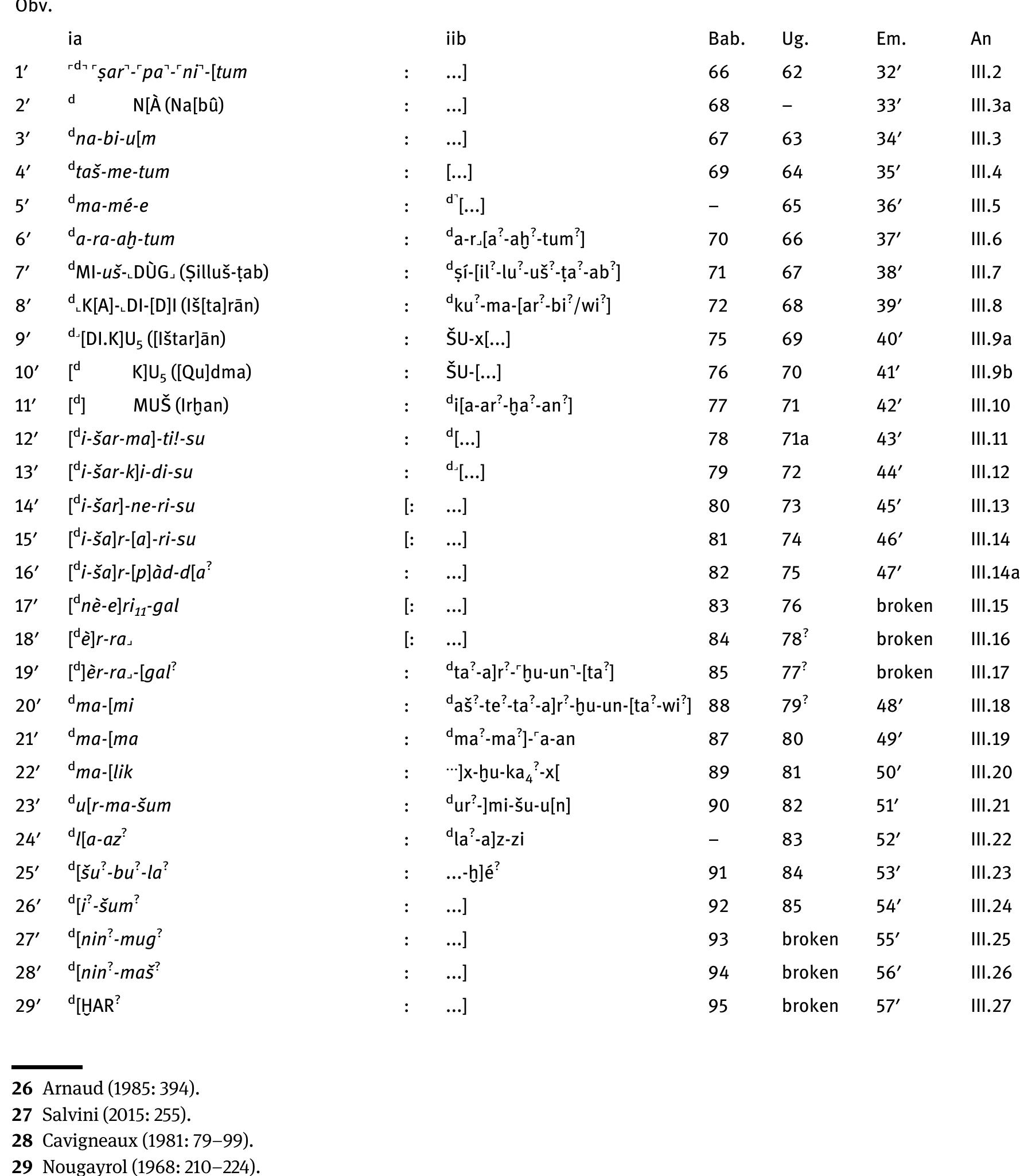
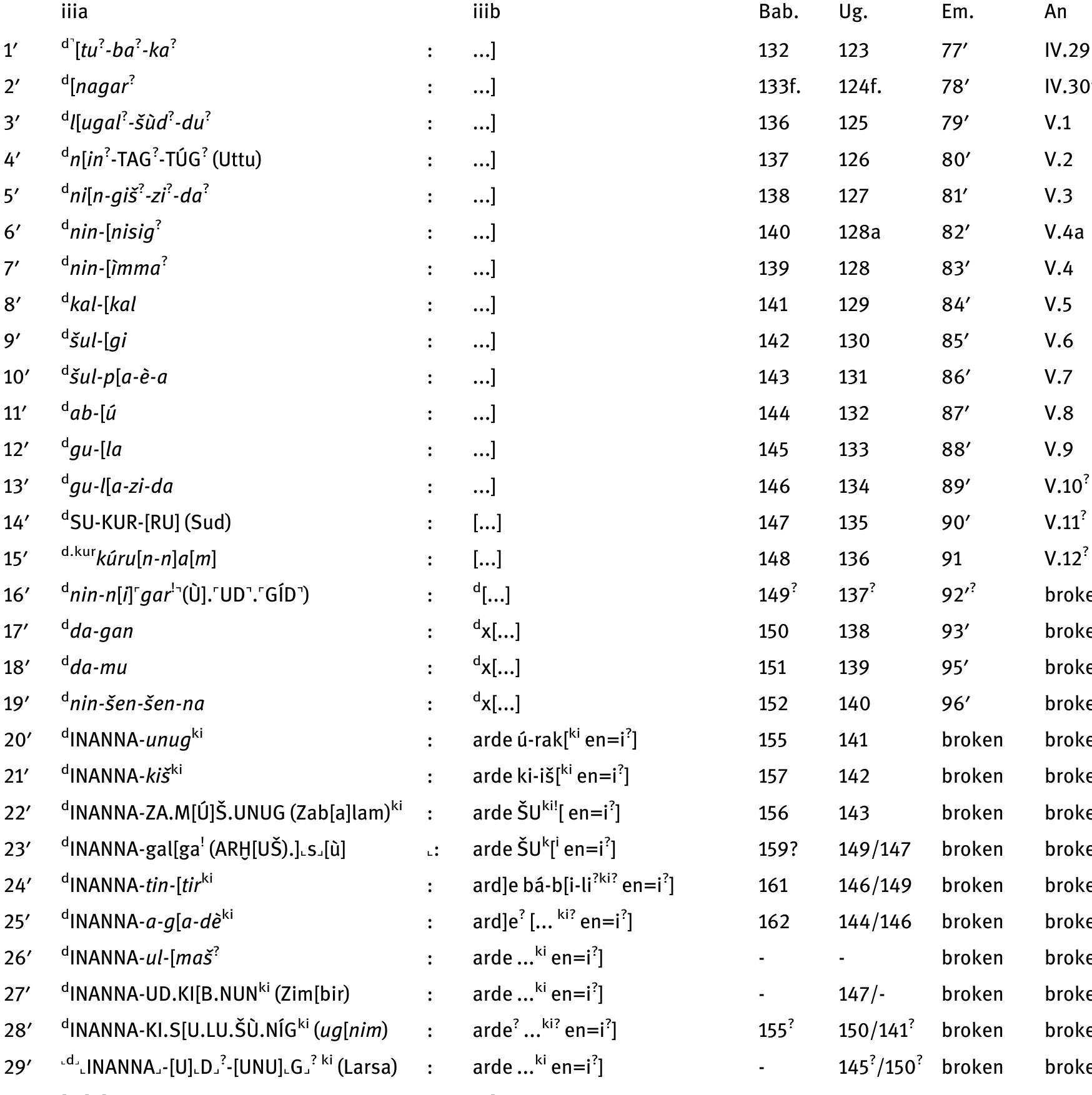
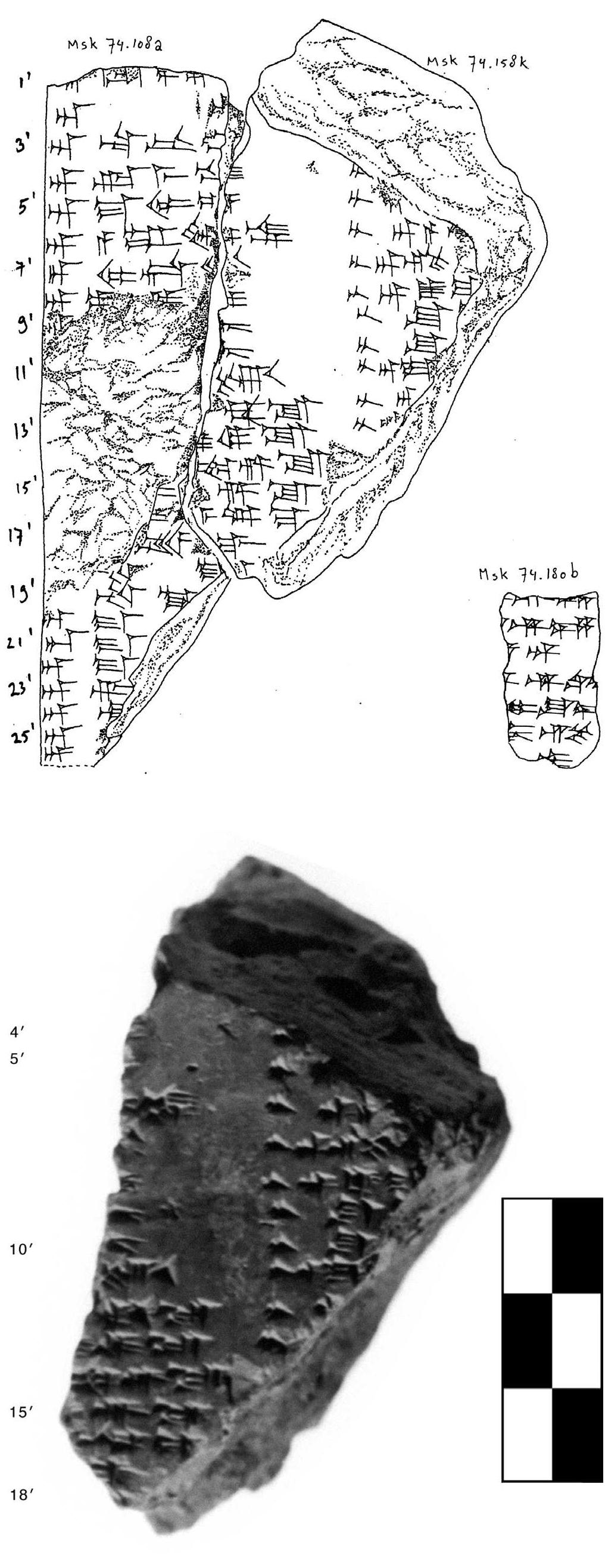
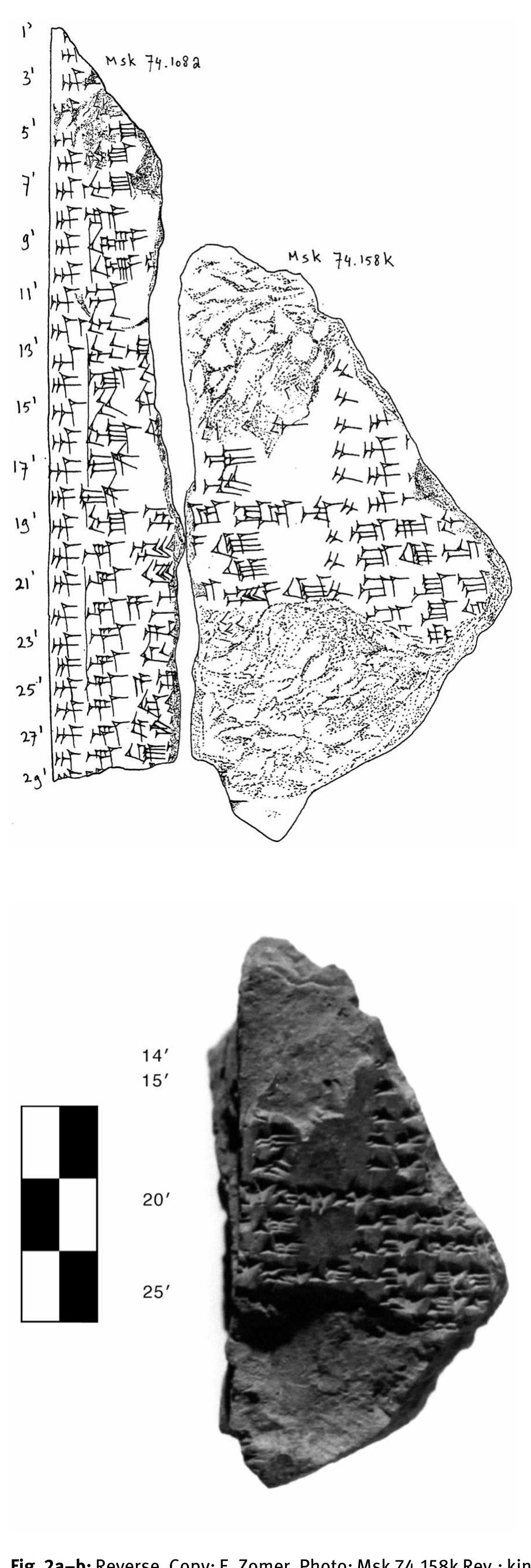
The present article offers an edition, copy and photographs of a newly identified join to the Hurro-Akkadian bilingual tablet of the so-called Weidner god list from Emar. The new fragment adds substantially to our knowledge of the Hurrian translation of the list and fills in some small gaps in the Akkadian portion. It also offers valuable evidence concerning the identities of three relatively little known deities: Ištarān, who is equated in the text with Kumarbi, Erragal who is equated with Tarḫunta, and INANNA-g a l g a.s ù, a wife of the god Amurru.

Key takeaways
sparkles

AI

  1. The newly identified join adds critical data on the Hurro-Akkadian Weidner god list from Emar.
  2. Three lesser-known deities are clarified: Ištarān, Erragal, and INANNA-g a l g a.s ù.
  3. This join enhances understanding of the theological equivalences between Hurrian and Akkadian deities.
  4. The Weidner god list is integral to Middle Babylonian scribal curriculum, containing 1,703 cuneiform tablets.
  5. The text exemplifies adaptation for non-native Sumerian and Akkadian speakers in ancient education.

References (179)

  1. Litke (1998: 195).
  2. Litke (1998: 97).
  3. Litke (1998: 135).
  4. Gabbay et al. (2015: l. 26).
  5. Jiménez/Finkel (2016: ll. 1-9).
  6. Cavigneaux (1981: 86, ll. 73-74);
  7. van der Meer (1938: 58, ll. 8-9); Weidner (1924-1925: 16, ll. 9a-9c). Some manuscripts in each edition omit the extra lines.
  8. Litke (1998: 38).
  9. Litke (1998: 236).
  10. Litke (1998: 201).
  11. Krebernik (2006-2008: 190).
  12. Lambert (2013: 238-239).
  13. Shibata (2009: 40).
  14. Van Soldt (1995: 175, n. 30).
  15. See most simply Veldhuis (DCCLT). Weidner (1924-1925: 4) exemplar F is also substantially complete, but only easily readable in copy as the edition is subsumed into Weidner's composite text.
  16. Nougayrol (1968: 214, l. 58a).
  17. Nougayrol (1968: 218, l. 113a).
  18. Nougayrol (1968: 218, l. 140a).
  19. Wiggermann (1998-2000: 217-218). The syncretism of distinct figures within the Weidner list due to phonetic or graphic similarities can also be seen in the case of d DI DI. .KU KU 5 5 and d KU KU 5 (see commentary to obv. 9′-10′), who are both equated with Madānu in the Late Assyrian multi-column tablet. While this is perfectly reasonable (if incorrect) for d DI DI. .KU KU 5 , it is otherwise unattested for d KU KU 5 , which was originally a logogram for Qudma.
  20. Lambert (unpublished: I 316) = Litke (1998: 332).
  21. Livingstone (1986: 179, l. 44 and 191, l. 13).
  22. This is to be discussed in a forthcoming article by Henry Stadhouders and the current writer, provisionally entitled 'The Charred Drumstick and the Thunder Cymbal'. The details are too extensive to be treated here.
  23. Lambert/Millard (1969: 87, III vii 51 and 125, U rev. 15);
  24. George (2003: 708-709, XI 102). One manuscript of the Gilgameš tablet has [ d èr ? -ra ? ]-gal.
  25. Cagni (1977: 56, ll. 118-120).
  26. Cagni (1977: 54, ll. 81).
  27. Nougayrol (1968: 249, l. 50′).
  28. Nougayrol (1968: 249, n. 2).
  29. Nougayrol (1968: 246, ll. 34′′ and 36′′).
  30. Rutz (2013: 169). d [Utt]u? ([TAG.TÚ]G).
  31. Arnaud (1987: 35). Arnaud notes the possibility that this is a mistake covered by an erasure.
  32. Nougayrol (1968: 216, l. 85). Rev. 1′ The monolingual list has d tu-tu-ba-[...], but this is presumably a dittographic error, following d tu-tu in the preceding line. It is nonetheless possible that Tutuba[ki ? ] was intended, in which case the restoration here should be altered. In any case, the restoration is extremely tentative. Rev. 4′ Most exemplars of the Weidner list do not include a NIN at the start of this name. The Emar monolingual duplicate is silent -just the end of the line survives. 94 A single unprovenienced Old Babylonian manuscript does include the NIN, 95 and as this fits the traces more closely we have followed it here. Rev. 6′-7′ Ninnisig 96 and Ninimma are recorded in this order only in the monolingual Emar manuscript. In addition to Bab. Ug. and An, a small fragment from Uruk 97 also records the order Ninim[ma], Nin[nisig]. As discussed above, the Emar manuscripts seem to follow one another closely and so the restorations here follow the less well-attested tradition. Rev. 15′ d KAŠ KAŠ--TIN TIN-nam = d kurun-nam is the more usual writing of this name, 98 but is attested within the Weidner god list only in a Neo-Babylonian school exercise tablet BM 50676. 99 That KURUN is the reading of KAŠ KAŠ--TIN TIN in the name is certain from the writings in the Old and Middle Babylonian texts. The Tall Taban manuscript and the unprovenienced VS 24, 20 have d kúrun-na, 100 while Ugarit A and F, and the Emar monolingual have d.kur kúrun-nam. 101 KÚRUN is TIN, and a difference of spelling between two types of KURUN is far more likely than the omission of the syllable KAŠ. Kurunnam is the name of a minor deity worshipped in the temple of Gula at Nippur, mentioned in the Nippur compendium, 102 on a Kudurru stone from the reign of Marduk-apla-idinna I, 103 and elsewhere, 104 always in the circle of Gula. Rev. 16′ This line is damaged in the majority of manuscripts, though several texts preserve traces of some spelling of Ninnigarra. 105 In An=Anum V 135 this name is equated with the healing goddess Ninkarrak, a form of Gula. 106 Elsewhere, they are separate figures, but always associated with one another. 107 There are a number of problems with this line: The traces following the NIN are unclear. We have opted to read Ù, an error for the U of NIGAR, though P[À], as an error for PA 4 is conceivable. Our preference for Ù stems from the fact that PA 4 is not required in the 94 Rutz (2013: 169, l. 3′).
  33. Langdon (1928: 31 iii 8′) = W-B. 9.
  34. This name has been read Ninmú (Cavigneaux 1981: 192, l. 140; Rutz 2013: 169, l. 5′), Nin.ezen.n[a ? ] (Nougayrol 1968: 218, l. 128a), and Ninšar (Lambert, unpublished: I, 8-9). Nin-nisig, which is read by Cavigneaux and Krebernik (1998-2000b: 484-486), is confirmed by the Sumerian hymn known as Nuska B (CBS 8548: rev. 6): ˹ d NIN˺-NISIG-RA giš BANŠUR SI 12 -GA-ME-EN 'For Lady-Greenery, (Nuska) makes the table green.' The meaning of this line is not entirely clear, but the wordplay is unmistakeable and does not work if we read the name differently -NISIG 'greenery' is juxtaposed with SI 12 'green.' The text was edited most recently by Sjöberg (1977: 27-29) and by the compilers of ETCSL (http://etcsl.orinst.ox.ac.uk/section4/c4292.htm), but both misread the line in question. The correct reading of the line was shared with me by Hannelore Agnethler, who is preparing a new edition of the text.
  35. Von Weiher (1993: 116, l. 7-8).
  36. Gesche (2000: 337, l. 2′). See also rev. 16′ commentary.
  37. Shibata (2009: 36 iii 3′) and Veldhuis (DCCLT: rev. i 9). Shibata is partially restored from Veldhuis.
  38. Nougayrol (1968: 218, l. 136) and Arnaud (1987: 35, l. 91).
  39. George (1992: 159 v 14).
  40. Paulus (2014: 434 v 28), who following Borger (1970: 25), writes d kaš-tin-nam.
  41. E.g. Nougayrol (1947: 35, l. 5).
  42. Veldhuis (DCCLT: VS 24, 20 rev. i. 10);
  43. Nougayrol (1968: 218: 137);
  44. Arnaud (1982: 204, l. 141);
  45. Shibata (2009: 36, l. iii 4′). All but VS 24, 20 are restored from traces. 106 Litke (1998: 181).
  46. E.g. Böck (2014: 31). See also Cavigneaux/Krebernik (1998-2000a: 477).
  47. Lambert (unpublished: II, l. 61) = Litke (1998: 74, l. 63).
  48. Krebernik (2003-2005: 236).
  49. Gurney/Hulin (1964: pl. 256, 377, ll. 4′-5′).
  50. Gesche (2000: 337, ii 3′-4′).
  51. Gesche (2000: 337, ii 6′).
  52. Krebernik (1986: 199);
  53. Krebernik (2003-2005: 325). The reading is not included in Borger (2010).
  54. Gantzert (2011: 49, iii 15′′′).
  55. Nougayrol (1968: Pl. 124, ll. 100 and 135).
  56. Richter (2012: 49).
  57. Richter (2012: 86).
  58. Veldhuis (DCCLT: rev. i 14-16).
  59. Shibata (2009: 36 iii 9′-12′).
  60. Nougayrol (1968: 218-220, ll. 141-151).
  61. E and F = Nougayrol (1968: 218-220, ll. 142-151). L = Arnaud (1982: 204-205, ll. 142-151).
  62. Cavigneaux (1981: 92-93, l. 155-163).
  63. Van der Meer (1938: pl. 32). Transliterated in Cavigneaux (1981: 93, l. 159-163).
  64. Litke (1998: 156-158).
  65. Peterson (2009: 25-27, ll. 54-62).
  66. Peterson (2009: 86, ll. 1-4). 128 TCL 15, 10. Genouillac (1923: 102, v 14-19). This is generally understood to be the forerunner of An=Anum. 129 Van Dijk (1976: Pl. 69). 130 Peterson (2009: 50-51). 131 Gesche (2000: 512). 132 See below, rev. 20′.
  67. George (1993: 16, ll. 313ff.).
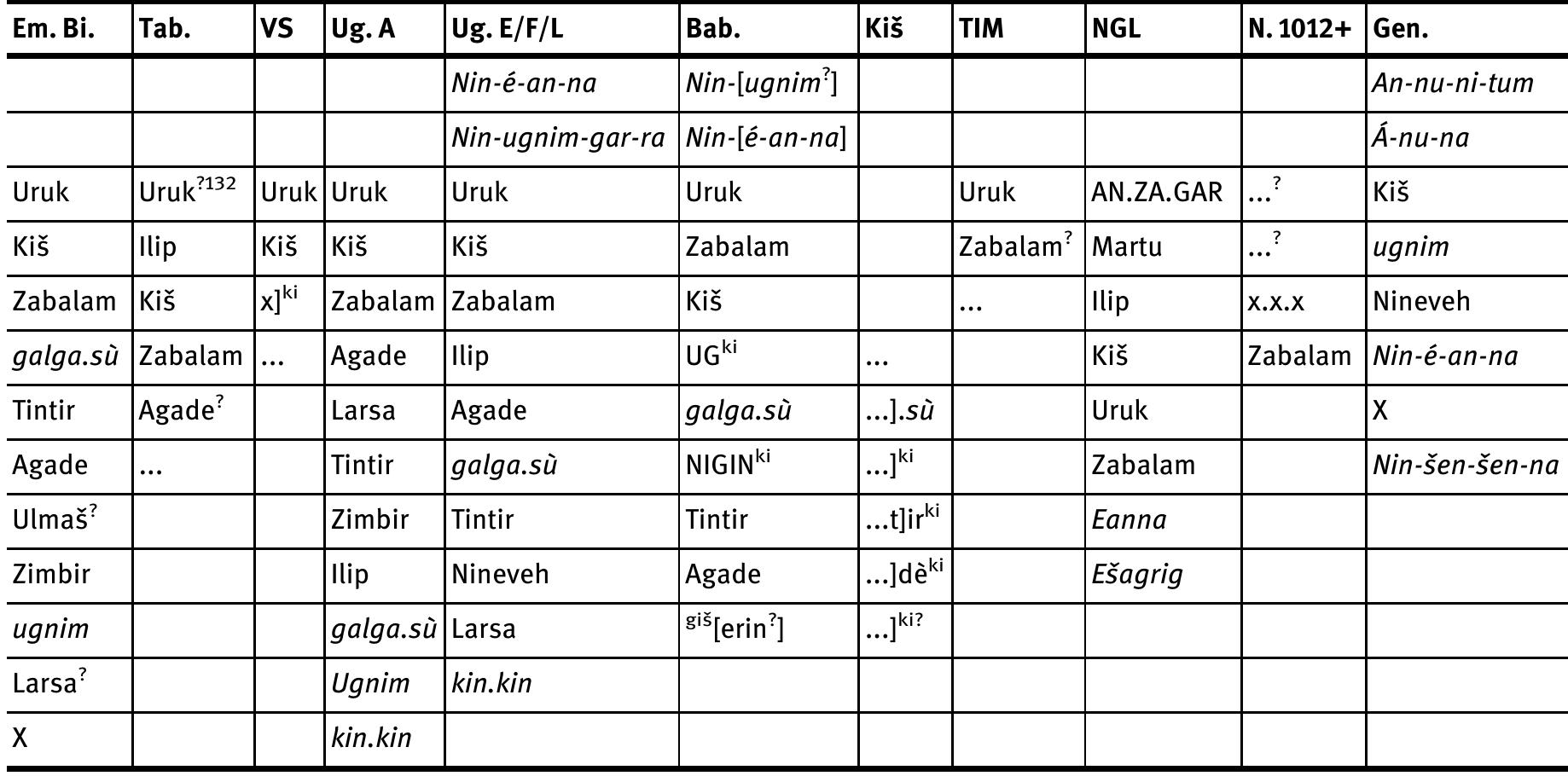
  68. INANNA INANNA-g a l g a -s ù , though very rarely attested, is the consort of the god Amurru, 138 the city god of Ninab. 139 The location of Ninab is still uncertain. An alternative spelling, according to Sjöberg, is Inab, 140 which Edzard tentatively gives as a reading for the city Ilip. 141 Reiner proved Ilip, also written k i . b a l . m a š . d à , to be the correct reading of the city previously read ì-lul or ì-nari. 142 Through this string of names, we come to an interesting point. If we accept the, admittedly uncertain, chain that leads from Ninab to Ilip, we must understand Amurru to be the city god of Ilip. INANNA INANNA-ì-lip ki , though absent from our manuscript and Cavigneaux's Neo-Babylonian texts, is present in each of the Middle and Old Babylonian versions in which this section is preserved. 143 In the Ugarit texts, INANNA INANNA-ì-lip and INANNA INANNA-g a l g a -s ù are either written consecutively or interrupted by only one entry. In the Tall Taban text, INANNA INANNA-g a l g a -s ù is missing, though as the tablet is broken in the middle of the Inanna section it may have been lost. Because INANNA INANNA-g alga-sù, 'Inanna the Queen' 144 is the name of Inanna as consort of Amurru, it must be equivalent to INANNA INANNA-ì-lip, city goddess of Amurru's city. The Ugarit versions of the list contain both names, but duplication of this sort is common in god lists. The Ugarit versions are mirrored by the sequence in the Old Babylonian Nippur god list ll. 56-57 ' 56 d Inana Mar-tu 57 d Inana Ì-lip ki ' 145 . Martu is the Sumerian equivalent of Amurru, and, as the Nippur god list is arranged along broadly theological lines, the succession of names therefore supports the identification suggested here. The absence of INANNA INANNA-ì-lip in Cavigneaux's Neo-Babylonian exemplars is perhaps to be explained by the relatively large lacunae at this point. Only a single manuscript preserves more than fragments of the list, 135 Litke (1998: 156).
  69. Following George (1993: 30, l. 342).
  70. ŠU is technically distinct from ditto, which is written MIN. It functions as a horizontal ditto mark -what is written in the neighbouring column, rather than the neighbouring row, is to be repeated.
  71. Beaulieu (2003: 327-328).
  72. Sjöberg/Bergmann (1969: 127).
  73. Sjöberg (1973: 30).
  74. Edzard (1976-1980: 52).
  75. Reiner (1961: 123, n. 7 and 124).
  76. Arnaud (1982: 204, l. 145) d inana.ì.nar-...; Nougayrol (1968: 218, A. l. 148) d inana.ì.nar ki , (F. l. 145) d inana.ì.nar.nagar ? .ra ki ; Shibata (2009: 36, l. 9′) d Inanna Ì-lip ki .
  77. Malkatu 'Queen' is the Akkadian translation given in An=Anum (Litke 1998: 157, IV 127) and Nabnitu (Finkel 1982: 84, l. 203), and George understands the same meaning in the Canonical Temple List (George 1993: 16, l. 324 and 30, n. 324).
  78. Peterson (2009: 14, ll. 56-57).
  79. Cavigneaux (1981: 93: 79.B.1/135 vii′ 155-163).
  80. George (1993: 155, no. 1168).
  81. Lambert (1989: 324).
  82. Cohen (1993: 137).
  83. Lambert (1989: 324).
  84. Peterson (2009: 52, ll. 71-72).
  85. Lambert (1989: 324).
  86. Lambert (1989: 324; 1973: 364).
  87. André-Salvini, B. (2004): Textes lexicographiques de Ras-Shamra-Ugarit (Campagnes 1986-1992), SMEA 46/2, 147-154.
  88. Arnaud, D. (1982): Les textes cunéiforms suméro-accadiens des campagnes 1979-1980 à Ras Shamra-Ougarit, Syria 59, 199-222.
  89. Arnaud, D. (1985): Recherches au pays d'Aštata, Emar VI/1-2: Textes sumériens et accadiens, Paris.
  90. Arnaud, D. (1987): Recherches au pays d'Aštata, Emar VI/4: Textes de la bibliothèque, transcriptions et traductions, Paris. Bartelmus, A. (2016a): The Role of Babylon in Babylonian Scribal Education. In: S. Yamada/D. Shibata (ed.) Cultures and Societies in the Middle Euphrates and Habur Areas in the Second Millennium BC. Vol. 1: Scribal Education and Scribal Tradtions (StCh. 5/1), Wiesbaden, 25-43.
  91. Bartelmus, A. (2016b): Fragmente einer großen Sprache (UAVA 12), Leiden.
  92. Beaulieu, P.-A. (2003): The Pantheon of Uruk During the Neo-Babylonian Period (CunMon. 23), Leiden.
  93. Böck, B. (2014): The Healing Goddess Gula (CHANE 67), Leiden.
  94. Borger, R. (1970): Vier Grenzsteinurkunden Merodachbaladans I. von Babylon, AfO 23, 1-26.
  95. Borger, R. (2010): Mesopotamisches Zeichenlexikon. Second Edition (AOAT 305), Münster.
  96. Cagni, L. (1977): The Poem of Erra (SANE 1/3), Malibu.
  97. Cavigneaux, A. (1981): Textes scolaires du temple de Nabû ša harê, Baghdad.
  98. Cavigneaux, A. (2012): Fragments lexicaux et littéraires du Musée d'Art et d'Histoire de Genève. In: C. Mittermayer/S. Ecklin (ed.) Altorientalische Studien zu Ehren von Pascal Attinger (OBO 256), Fribourg, 65-89.
  99. Cavigneaux A./M. Krebernik (1998-2000a): NIN-nigara, RlA 9, 477.
  100. Cavigneaux A./M. Krebernik (1998-2000b): NinSAR, RlA 9, 484-486.
  101. Civil, M. (1989): The Texts from Meskene-Emar, AulaOr. 7, 5-25.
  102. Civil, M. (2010): The Lexical Texts in the Schøyen Collection (CUSAS 12), Bethesda.
  103. Clay, A. (1912): Personal Names from Cuneiform Inscriptions of the Cassite Period (YOSR 1), New Haven.
  104. Cohen, M. E. (1993): The Cultic Calendars of the Ancient Near East, Bethesda.
  105. Cohen, Y. (2010): The "Second Glosses" in the Lexical Lists from Emar: West Semitic or Akkadian? In: L. Kogan (ed.) Language in the Ancient Near East. Proceedings of the 53 e RAI (Orientalia et Classica 30-31), Winona Lake, 813-839.
  106. de Genouillac, H. (1923): Grande liste de noms divins sumériens, RA 20, 89-106.
  107. Edzard, D. O. (1976-1980): Ilip, RlA 5, 52.
  108. Reade (1986: xxxiv).
  109. Reade (1986: xxxii).
  110. Feliu, L. (2003): The God Dagan in Bronze Age Syria (Trans.: W. G. E. Watson) (CHANE 19), Leiden.
  111. Finkel, I. J. (1982): The Series sig 7 .alan= nabnītu (MSL 16), Rome.
  112. Fleming, D. (2000): Time at Emar (MesCiv. 11), Winona Lake.
  113. Gabbay, U. et al. (2015): BM 36595 on: http://ccp.yale.edu/P469985
  114. Gantzert, M. (2006): Syrian Lexical Texts (3): The Peripheral Weidner God Lists, UF 38, 299-311.
  115. Gantzert, M. (2011): The Emar Lexical Texts. Vol. 1-3, Maastricht.
  116. George, A. (1992): Babylonian Topographical Texts (OLA 40), Leuven.
  117. George, A. (1993): House Most High (MesCiv. 5), Winona Lake.
  118. George, A. (2003): The Babylonian Gilgamesh Epic. Vol. 1, Oxford.
  119. George, A. (2010): The Colophon of MS 5007. In: M. Civil, The Lexical Texts in the Schøyen Collection (CUSAS 12), Bethesda, 274-279.
  120. Gesche, P. (2000): Schulunterricht in Babylonien (AOAT 275), Münster.
  121. Guichard, M. (2016): H.E.416: une copie scolaire de la "Weidner God-list", NABU 2016/2, 66-67.
  122. Gurney, O. R./P. Hulin (1964): The Sultantepe Tablets. Vol. 2, Ankara.
  123. Güterbock, H. G. (1951): The Song of Ullikummi: Revised Text of the Hittite Version of a Hurrian Myth, JCS 5, 135-161.
  124. Güterbock, H. G. (1980-1983): Kumarbi, RlA 5, 324-330.
  125. Hoffner, H. A. (1998): Hittite Myths (Second Edition) (SBL WAW 2), Atlanta.
  126. Jiménez, E. (2016): K.1 on: http://ccp.yale.edu/P237754.
  127. Jiménez, E./I. L. Finkel (2016): BM 47458 on: http://ccp.yale.edu/P461230
  128. Krebernik, M. (1986): Die Götterlisten aus Fāra, ZA 76, 161-204.
  129. Krebernik, M. (2003-2005): Pa(p)-nigara, RlA 10, 325-327.
  130. Krebernik, M. (2006-2008): Qudma, RLA 11, 190-191.
  131. Krebernik, M. (2009-2011): Ṣilluš-ṭab, RlA 12, 498.
  132. Lambert, W. G. (1960): Babylonian Wisdom Literature, Oxford.
  133. Lambert, W. G. (1973): Studies in Nergal, BiOr. 30, 354-363.
  134. Lambert, W. G. (1976-1980) Ištarān, RlA 5, 211.
  135. Lambert, W. G. (1989): A Babylonian Prayer to Anūna. In: H. Behrens et al. (ed.), DUMU-É-DUB-BA-A. Studies in Honour of Åke W. Sjöberg (OccPubl. S.N. Kramer Fund 11), Philadelphia, 321-336.
  136. Lambert, W. G. (1999-2000): Literary Texts from Nimrud, AfO 46-47, 149-155.
  137. Lambert, W. G. (2003-2004): Review of S. Izre'el, The Amarna Scholarly Tablets and Adapa and the South Wind, AfO 50, 394-396.
  138. Lambert, W. G. (2013): Babylonian Creation Myths (MesCiv. 16), Winona Lake.
  139. Lambert, W. G. (unpublished): An=Anum I, II, III and V.
  140. Langdon, S. (1928): Sumerian and Semitic Religious and Historical Texts (OECT 1), Oxford.
  141. Laroche, E. (1989): La version hourrite de la liste AN de Meskéné-Emar, CRAIBL 133, 8-12.
  142. Leichty, E. (1986): Tablets from Sippar 1 (CBT 6), London.
  143. Litke, R. (1998): A Reconstruction of the Assyro-Babylonian God-Lists, A n : d A-nu-um and A n : Anu ša amēli (TBC 3), New Haven.
  144. Livingstone, A. (1986): Mystical and Mythological Explanatory Works of Assyrian and Babylonian Scholars, Oxford.
  145. Maynard, J. A. (1919): A Neo-Babylonian Grammatical School Text, JSOR 3, 65-69.
  146. Nougayrol, J. (1947): Textes et documents figurés, RA 41, 23-53.
  147. Nougayrol, J. (1968): Textes suméro-accadiens des archives et bibliothèques priviés d'Ugarit, Ugaritica 5, 1-446.
  148. Paulus, S. (2014): Die babylonischen Kudurru-Inschriften von der kassitischen bis zur frühneubabylonischen Zeit (AOAT 51), Münster.
  149. Pedersén, O. (2005): Archive und Bibliotheken in Babylon: Die Tontafeln der Grabung Robert Koldeweys 1899-1917 (ADOG 25), Saarwellingen. Peterson: J. (2008): Neo-Babylonian Exemplars of the Weidner Godlist from Nippur in the University Museum, Philadelphia, NABU 2008/2, 46-48.
  150. Peterson, J. (2009): Godlists from Old Babylonian Nippur in the University Museum, Philadelphia (AOAT 362), Münster.
  151. Pfeiffer, R. H./E. R. Lacheman (1942): Miscellaneous Texts from Nuzi. Part 1 (HSS 13), Cambridge Massachussetts.
  152. Pfeiffer, R. H./E. A. Speiser (1936): One Hundred New Selected Nuzi Texts (1935-1936), AASOR 16, 1-168.
  153. Reade, J. (1986): Introduction. In: E. Leichty, Tablets from Sippar 1 (CBT 6), London, xiii-xxxvi.
  154. Reiner, E. (1961): The Year Dates of Sumu-Jamūtbāl, JCS 15, 121-124.
  155. Richter, T. (1998): Die Lesung des Götternamens AN.AN.MAR.TU. In: D. I. Owen/G. Wilhelm (ed.), General Studies and Excavations in Nuzi 10/2 (SCCNH 9), Bethesda, 135-137.
  156. Richter, T. (2012): Bibliographisches Glossar des Hurritischen, Wiesbaden.
  157. Roberts, J. J. M. (1971): Erra: Scorched Earth, JCS 24, 11-16.
  158. Roberts, J. J. M. (1973): The Earliest Semitic Pantheon, Baltimore.
  159. Rutz, M. (2013): Bodies of Knowledge in Ancient Mesopotamia (AMD 9), Leiden
  160. Salvini, M. (2015): Les textes hourrites de Meskéné/Emar. Vol. 1 (AnOr. 57/1), Rome.
  161. Scheil, V. (1898): Une saison de fouilles à Sippar (Abou Habba) [Janvier-Avril 1894], Paris.
  162. Schwemer, D. (2008): The Storm-Gods of the Ancient Near East: Summary, Synthesis and Recent Studies. Part 2, JANER 8/1, 1-44.
  163. Shibata, D. (2009): An Old Babylonian Manuscript of the Weidner God-List from Tell Taban, Iraq 71, 33-42.
  164. Sjöberg, Å. W./E. Bergmann (1969): The Collection of the Sumerian Temple Hymns (TCS 3), Locust Valley. Sjöberg, Å. W. (1973): Miscellaneous Sumerian Hymns, ZA 63, 1-55.
  165. Sjöberg, Å. W. (1977): Miscellaneous Sumerian Texts II, JCS 29, 1-45.
  166. Tanret, M. (2002): Per aspera ad astra. L'apprentissage du cunéiforme à Sippar-Amnanum pendant la période paléobabylonienne tardive (MHET 1/2), Ghent.
  167. Thureau-Dangin, F. (1939): Tablettes hurrites provenant de Mâri, RA 36, 1-28.
  168. van der Meer, P. E. (1938): Syllabaries A, B1 and B: With Miscellaneous Lexicographical Texts from the Herbert Weld Collection (OECT 4), Oxford.
  169. van Dijk, J. J. A. (1976) Texts in the Iraq Museum. Vol. 9 (TIM 9), Leiden.
  170. van Dijk, J. J. A. (1987) Literarische Texte aus Babylon, VAS 24, Berlin.
  171. van Soldt, W. (1995): Babylonian Lexical, Religious and Literary Texts, ALASP 7, 171-212.
  172. van Soldt, W. (2015): Middle Babylonian Texts in the Cornell University Collections. Vol. 1: The Later Kings (CUSAS 30), Bethesda. Veldhuis, N. (DCCLT): VS 24, 020 + SE 55 on: http://oracc.museum.upenn.edu/dcclt/corpus Veldhuis, N. (2014): History of the Cuneiform Lexical Tradition (GMTR 6), Münster.
  173. Weiher, E. (1988): Spätbabylonische Texte aus Uruk III (SpTU 3), Berlin.
  174. Weiher, E. (1993): Uruk Spätbabylonische Texte aus dem Planquadrat U 18, IV (SpTU 4), Mainz am Rhein.
  175. Weidner, E. (1924-1925): Altbabylonische Götterlisten, AfO 2, 1-18 and 71-82.
  176. Westenholz, A. (1975): Review of J. J. M. Roberts, The Earliest Semitic Pantheon, JSS 34, 288-293.
  177. Wiggermann, F. A. M. (1997): Transtigridian Snake Gods. In: I. L. Finkel/M. J. Geller (ed.), Sumerian Gods and their Representa- tions (CunMon. 7), Groningen, 33-55.
  178. Wiggermann, F. A. M. (1998-2000): Nergal, RlA 9, 215-226.
  179. Yamada, S. (2016): Old Babylonian School Exercises from Tell Taban. In: S. Yamada/D. Shibata (ed.), Cultures and Societies in the Middle Euphrates and Habur Areas in the Second Millennium BC. Vol. 1: Scribal Education and Scribal Tradtions (StCh. 5), Wiesbaden, 45-68.

FAQs

sparkles

AI

What does the recent publication of Msk 74.108a+ reveal about the Weidner god list?add

The study reveals that Msk 74.108a+ is the first fully published Hurro-Akkadian bilingual manuscript of the Weidner god list, filling a critical gap in understanding its transmission.

How does the Hurro-Akkadian version differ from other exemplars of the Weidner list?add

The bilingual version employs distinct strategies for translating god names, often providing Hurrian equivalents rather than phonetic representations, differing from other manuscripts which may lack standardization.

What archaeological context surrounds the fragments of the Weidner god list?add

The fragments were found in the 'Diviner's Archive' at Emar, comprising over 1,703 cuneiform tablets related to administrative, ritual, and educational texts.

What is the significance of the join between Msk 74.158k and Msk 74.108a+?add

This join enhances our understanding of the text's continuity, contributing additional lines from the Hurrian columns that were previously missing or badly damaged.

How do the Hurrian translations in the Weidner list reflect local dialectal adaptations?add

Certain god equivalences, such as Šimigi for Utu, indicate localized theological adaptations rather than direct linguistic translations, exemplifying the influence of regional dialects in the curriculum.

About the author
Trinity College Dublin, Post-Doc
Papers
16
Followers
264
View all papers from Frank Simonsarrow_forward