Sennar Capital of Islamic Culture 2017 Project, Preliminary results of archaeological surveys in Sennar East and Sabaloka East
Abstract
AI
AI
The article presents preliminary results from archaeological surveys conducted in Sennar East and Sabaloka East in Sudan, focusing on uncovering historical sites and artifacts linked to the Fung kingdom and other cultures from the Islamic period to the Medieval era. Despite previous studies, these regions had remained largely unexplored, highlighting the significance of newly identified sites such as settlements, cemeteries, and non-monumental structures. The findings contribute to a better understanding of the area's landscape and its cultural connections across African history.
Key takeaways
AI
AI
- The Sennar Capital of Islamic Culture 2017 project identified 35 archaeological sites in Sennar East and 20 in Sabaloka.
- Systematic surveys revealed extensive remains from the early Islamic, Meroitic, and Medieval periods in both regions.
- GIS mapping and probability sampling were employed to record and analyze archaeological data effectively.
- The archaeological landscape indicates significant agricultural activity linked to the settlement patterns in Sennar East.
- Findings suggest the Fung kingdom's expansion into the Abdallab chiefdom during the Islamic period.
References (24)
- Addison, F. 1949. Jebel Moya. 2 vols. London.
- Ahmed, K. A. 1984. Meroitic Settlement in the Central Sudan. An Analysis of Sites in the Valley and the Western Butana. BAR Int. Ser. 197. Oxford.
- Almond, D. and F. Ahmed 1993. Field Guides to the Geology of the Sabaloka Inlier, Central Sudan. Khartoum.
- Arkell, A. J. 1946. 'More about Fung origins', Sudan Notes and Records 27, 87-98.
- Arkell, A. J. 1955. A History of the Sudan. London.
- Caneva, I. 1988. El Geili. The History of a Middle Nile Environment 7000BC- AD1500. BAR. Int. Ser. 424. Oxford.
- Chittick, H. N. 1963. 'The Last Christian Stronghold in the Sudan', Kush 11, 264-272.
- Crawford, O. G. S. 1951. The Fung Kingdom of Sennar. Gloucester.
- Dixon, D. M. 1963. 'A Meroitic cemetery at Sennar (Makwar)', Kush 11, 227-234.
- Edwards, D. N. 1998. Gabati. A Meroitic, Post-Meroitic and Medieval Cem- etery in Central Sudan, vol. 1. Sudan Archaeological Research Society Publication 3. London.
- El-Sangak, A. H. 1978. An Archaeological Survey Between Raw'an and Jebel Qarri station from the Railway line to the Nile. Unpublished BA thesis, Department of Archaeology, University of Khartoum.
- El-Tayeb, M. and E. Kołosowska 2005. 'Burial Traditions on the Right Bank of the Nile in the Fourth Cataract Region', Gdańsk Archaeologi- cal Museum African Reports 4, 52-74.
- Elzein, I. 1988. Islamic Domed Tombs of Central Sudan. unpublished MA thesis. Centre of Arabic Studies, American University Cairo.
- Fernandez, V. M. 2003. 'An archaeological exploration of the Blue Nile in January-February 2000', Sudan & Nubia 7, 85-90.
- Geus, F. 1984. Rescuing Sudan's Ancient Culture. Khartoum.
- Hintze, F. 1959. 'Preliminary report of the Butana expedition', Kush 7, 171-196.
- Khalid, B. Amgad 2013. Settlement Pattern of the area between HajarAlasal and Geili. unpublished MA thesis (in Arabic). Shendi University.
- Mallinson, M. D. S., L. M. V. Smith, S. Ikram, C. Le Quesne and P. Sheehan 1996. Road Archaeology in the Middle Nile: Volume 1: The SARS Survey from Bagrawiya -Meroe to Atbara 1993. Sudan Archaeological Research Society Publication 1. London.
- Nassr, A. H. forthcoming. 'New archaeological discoveries from the third season of Sabaloka project', 7th Graduate College Annual Conference of the Graduate, College, GCNU#7. Gradute College Journal. Khartoum.
- Poncet, C. J. 1709. A Voyage to Aethiopia, made in the years 1698, 1699 and 1700, describing particularly that famous empire; as also the kingdoms of Dongola, Sennar, part of Egypt, &, with the natural history of those parts. By Monsieur Poncet. Faithfully translated from the French original. London.
- Sadig, A. and D. C. Almond 1974. 'A Gravity study of the Sabaloka Igneous Complex, Sudan', Journal of the Geological Society 130, 249-262.
- Suková, L. and L. Varadzin 2012. 'Preliminary report on the explora- tion of Jebel Sabaloka (West Bank), 2009-2012', Sudan & Nubia 16, 118-131.
- Stringer, C. B. 1979. 'A reevaluation of the fossil human calvaria from Singa, Sudan', Bulletin of the British Museum of Natural History (Geol- ogy) 32, 77-93.
- Whiteman, A. J. 1971. The Geology of the Sudan Republic. Oxford.
FAQs
AI
What archaeological evidence supports the extension of the Fung kingdom during the Islamic period?
The surveys revealed numerous archaeological sites, including farming settlements and Islamic cemeteries, indicating Fung kingdom expansion into Sabaloka and surrounding regions during the Islamic period.
How did satellite imagery contribute to the archaeological surveys in Sabaloka?
Satellite images were utilized to locate archaeological features in the complex rocky terrain, aiding systematic walking surveys that recorded 20 significant sites.
What confirms the permanent nature of settlements in Sennar East?
The investigation identified large, artifact-rich permanent settlements, particularly along the Blue Nile, indicative of long-term occupation during the Early Islamic period.
What types of artifacts were most commonly found during the excavations?
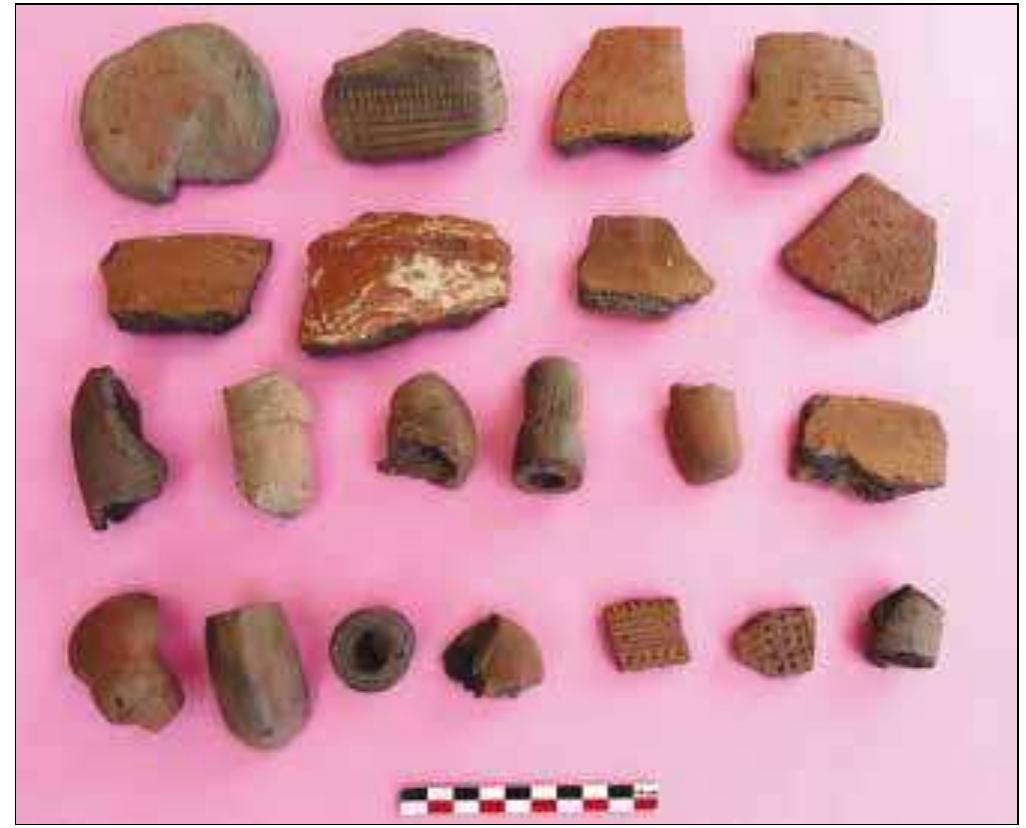
Excavations yielded a wide range of pottery shards, including finewares, burnished items, and religious paraphernalia from the Fung period.
What archaeological features were observed around Sabaloka Gorge?
The area featured small settlements, tumuli of late Meroitic and Post-Meroitic date, and evidence of workshops, reflecting diverse land use patterns.
Ahmed Nassr