Academia.eduAcademia.edu

The Language Contact Situation in Prehistoric Northeastern Europe

2015, Robert Mailhammer, Theo Vennemann gen. Nierfeld, and Birgit Anette Olsen (eds.), The Linguistic Roots of Europe: Origin and Development of European Languages, pp. 77-102. Copenhagen Studies in Indo-European 6. Copenhagen.

Abstract
sparkles

AI

This article investigates the language contact situation in prehistoric Northeastern Europe, considering linguistic developments from the Palaeolithic through the Bronze Age. It argues that the concept of a widespread lingua franca during the Mesolithic is incorrect due to low population density and conflict. The paper highlights that while knowledge-intensive skills such as pottery began to foster communication among groups in the Subneolithic, significant linguistic expansions, particularly of the Indo-European and Uralic families, occurred mainly during the Copper and Bronze Ages. The assessment reexamines linguistic homelands and dialects, challenging prevailing theories about Proto-Baltic and Uralic origins.

Key takeaways
sparkles

AI

  1. The absence of a widespread lingua franca in Northeastern Europe during the Mesolithic is emphasized.
  2. Pottery spread around 6000 BC necessitated communication in a common language during the Subneolithic.
  3. Indo-European and Uralic are the only prehistoric language families in Northeastern Europe.
  4. The Proto-Uralic language likely emerged later than previously thought, post-dating Proto-Indo-Iranian around 3000 BC.
  5. Baltic languages have a millennia-long continuity, with major expansions occurring post-2500 BC.

References (98)

  1. Abondolo, Daniel (ed.). 1998. The Uralic languages. London: Routledge.
  2. Aikio, Ante. 2002. New and old Samoyed etymologies. Finnisch-Ugrische Forschungen 57, 9-57.
  3. Aikio, Ante. 2004. An essay on substrate studies and the origin of Saami. In Irma Hyvärinen et al. (eds.), Etymologie, Entleh nungen und Entwicklun- gen: Festschrift für Jorma Koivulehto zum 70. Geburtstag (Mémoires de la Société néophilo logique de Helsinki 63), 5-34. Helsinki: Société néophi- lologique.
  4. Aikio, Ante. 2007. e study of Saami substrate toponyms in Finland. In Ritva Liisa Pitkänen & Janne Saarikivi (eds.), Borrowing of place names in the Uralian languages (Onomastica Uralica 4), 159-197. Debrecen: Debre- ceni Egyetem Magyar Nyelvtudományi Intézete.
  5. Ainiala, Terhi. 2001. Change in place names. In Congressus nonus inter nati o- nalis Fenno-Ugristarum IV. Dissertationes sectio num: Linguistica I, 48-55. Tartu: Trükk OÜ Paar. Finnic rather than Finnic.
  6. Ariste, Paul. 1971. Die ältesten Substrate in den ostseefinnischen Sprachen. Советское финно-угроведение 7, 251-258.
  7. Balode, Laimute & Bušs, Ojārs. 2007. On Latvian toponyms of Finno-Ugrian origin. In Ritva Liisa Pitkänen & Janne Saarikivi (eds.), Borrowing of place names in the Uralian languages (Onomastica Uralica 4), 27-43. Debrecen: Debreceni Egyetem Magyar Nyelvtudományi Intézete.
  8. Blažek, Václav. 2003. Review of Abondolo 1998. Philologia Fenno-Ugrica 9, 29-36.
  9. Carpelan, Christian. 2006. On archaeological aspects of Uralic, Finno-Ugric and Finnic societies before AD 800. In Juhani Nuorluoto (ed.), The slavi- cization of the Russian North: Mechanisms and chronology (Slavica Hel- singiensia 27), 78-92. Helsinki: Department of Slavonic and Baltic Lan- guages and Literatures.
  10. Carpelan, Christian & Parpola, Asko. 2001. Emergence, contacts and disper- sal of Proto-Indo-European, Proto-Uralic and Proto-Aryan in archaeo- logical perspective. In Christian Carpelan et al. (eds.), Early contacts be- tween Uralic and Indo-European: Linguistic and archaeological considera- tions (Mémoires de la Société Finno-Ougrienne 242), 55-150. Helsinki: Suomalais-Ugrilainen Seura.
  11. Collinder, Björn. 1955-1960. A handbook of the Uralic languages. Stockholm: Almqvist & Wiksell.
  12. Collinder, Björn. 1965. Hat das Uralische Verwandte? Eine sprach ver gleichende Untersuchung (Acta Societatis Linguisticae Upsali ensis, Nova Series 1(4)). Uppsala: Almqvist & Wiksell.
  13. Décsy, Gyula. 1965. Einführung in die finnisch-ugrische Sprach wissen schaft. Wiesbaden: Harrassowitz.
  14. Décsy, Gyula. 1990. The Uralic protolanguage: A comprehensive recon struc- tion (Bibliotheca Nostratica 9). Bloomington (IN): Eurolingua.
  15. Gimbutas, Marija. 1963. The Balts. London: ames and Hudson.
  16. Grünthal, Riho. 1997. Livvistä liiviin: Itämerensuomalaiset etnonyymit (Cas- trenianumin toimitteita 51). Helsinki: Suomalais-ugrilainen laitos.
  17. Hajdú, Péter. 1976. Linguistic background of genetic relationships. In Péter Hajdú (ed.), Ancient cultures of the Uralian peoples, 11-46. Budapest: Cor- vina Press.
  18. Häkkinen, Jaakko. 2007. Kantauralin murteutuminen vokaalivastaa vuuksien valossa. Helsinki: Unpublished Master's thesis.
  19. Häkkinen, Jaakko. 2009. Kantauralin ajoitus ja paikannus: perustelut punta- rissa. Journal de la Société Finno-Ougrienne 92, 9-56.
  20. Harmatta, János. 1992. e emergence of the Indo-Iranians: e Indo-Ira- nian languages. In A. H. Dani & V. M. Masson (eds.), History of civiliza- tions of Central Asia 1. The dawn of civilization: Earliest times to 700 B.C., 357-378. Paris: Unesco Publishing.
  21. Helimski, Eugene. 2001a. Early Indo-Uralic linguistic relationships: Real kinship and imagined contacts. In Christian Carpelan et al. (eds.), Early contacts between Uralic and Indo-European: Linguistic and archaeological considerations (Mé moires de la Société Finno-Ougrienne 242), 187-205. Helsinki: Suomalais-Ugrilainen Seura.
  22. Helimski, Eugene. 2001b. Уральцы и их предшественники: белые пятна на этноисторической карте Северной Евразии и уральские языки. In Congressus Nonus Internationalis Fenno-Ugristarum IV. Dissertationes sectionum: Linguistica I, 332-336. Tartu: Trükk OÜ Paar.
  23. Helimski, Eugene. 2006. e "Northwestern" group of Finno-Ugric languag- es and its heritage in the place names and sub stra tum vocabulary of the Russian North. In Juhani Nuorluoto (ed.), The slavicization of the Russian North: Mechanisms and chronology (Slavica Helsingiensia 27), 109-127. Helsinki: Department of Slavonic and Baltic Languages and Literatures.
  24. Helimski, Eugene. 2008. Ladoga and Perm revisited. Studia etymo logica Cracoviensia 13, 75-88.
  25. Itkonen, Terho. 1983. Välikatsaus suomen kielen juuriin. [Zu sam men fas- sung: Über die Wurzeln der finnischen Sprache -Zwischen betrachtung.].
  26. Virittäjä 87, 190-229, 349-386.
  27. Ivars, Ann-Marie & Huldén, Lena (eds.). 2002. När kom svenskarna till Fin- land? (Skrifter utgivna av Svenska litteratur sällskapet i Finland 646). Hel- singfors: Svenska litteratursällskapet i Finland.
  28. Janhunen, Juha. 1983. On early Indo-European-Samoyed contacts. In Sympo- sium saeculare Societatis Fenno-Ugricae (Mé mo ires de la Société Finno- Ougrienne 185), 115-127. Helsinki: Suomalais-Ugrilainen Seura.
  29. Janhunen, Juha. 1999. Critical remarks on current Indo-Uralic com parisons. In Cornelius Hasselblatt & Paula Jääsalmi-Krüger (eds.), Europa et Si- biria: Beiträge zu Sprache und Kultur der kleineren finnougrischen, samo- jedischen und paläosibirischen Völker (Veröffentlichungen der Societas Uralo-Altaica 51), 211-215. Wiesbaden: Harrassowitz.
  30. Janhunen, Juha. 2008. Some old world experience of linguistic dating. In John D. Bengtson (ed.), In hot pursuit of language in prehistory: Essays in the four fields of anthropology in honor of Harold Crane Fleming, 223-239. Amsterdam: John Benjamins.
  31. Janhunen, Juha. 2009a. Some additional notes on the macro hydro nyms of the Ladoga region. Studia etymologica Cracovi ensia 14, 203-212.
  32. Janhunen, Juha. 2009b. Proto-Uralic: What, where, and when? In Jussi Ylikoski (ed.), The quasquicentennial of the Finno-Ugrian society (Mé- moires de la Société Finno-Ougrienne 258), 57-78. Helsinki: Suomalais- Ugrilainen Seura.
  33. Julku, Kyösti. 2002. e European origin of the Finns and their relation to the Indo-Europeans. Mankind quarterly 43, 177-212.
  34. Juškova, M. A. 2006. North-western Russia before its settling by Slavs (8th century BC -8th century AD). In Juhani Nuorluoto (ed.), The Slaviciza- tion of the Russian North: Mechanisms and chronology (Slavica Helsin- giensia 27), 140-153. Helsinki: Department of Slavonic and Baltic Lan- guages and Literatures.
  35. Kallio, Petri. 2002. Prehistoric contacts between Indo-European and Uralic. In Karlene Jones-Bley et al. (eds.), Proceedings of the thirteenth annual UCLA Indo-European conference (Journal of Indo-European Studies, Monograph Series 44), 29-44. Washington (DC): Institute for the Study of Man.
  36. Kallio, Petri. 2003. Languages in the prehistoric Baltic sea region. In Alfred Bammesberger & eo Vennemann (eds.), Languages in prehistoric Eu- rope, 227-244. Heidelberg: Winter.
  37. Kallio, Petri. 2006a. On the earliest Slavic loanwords in Finnic. In: Juhani Nuorluoto (ed.), The slavicization of the Russian North: Mechanisms and chronology (Slavica Helsingi ensia 27), 154-166. Helsinki: Department of Slavonic and Baltic Languages and Literatures.
  38. Kallio, Petri. 2006b. Suomen kantakielten absoluuttista kronologiaa. [Sum- mary: On the absolute chronology of the proto-lan guages of Finnish.]. Virittäjä 110, 2-25.
  39. Kallio, Petri. 2007. Kantasuomen konsonanttihistoriaa. In Jussi Ylikoski & Ante Aikio (eds.), Sámit, sánit, sátnehámit: Riepmočála Pekka Sammal- lahtii miessemánu 21. beaivve 2007 (Mémoires de la Société Finno-Ougri- enne 253), 229-249. Helsinki: Suomalais-Ugrilainen Seura.
  40. Kallio, Petri. 2008. On the "early Baltic" loanwords in common Finnic. In Alexander Lubotsky et al. (eds.), Evidence and counter-evidence: Essays in honour of Frederik Kortlandt, 1. Balto-Slavic and Indo-European linguistics (Studies in Slavic and General Linguistics 32), 265-277. Amsterdam & New York: Rodopi.
  41. Kallio, Petri. 2012. e prehistoric Germanic loanword strata in Finnic. In Riho Grünthal & Petri Kallio (eds.), A linguistic map of prehistoric North- ern Europe (Mémoires de la Société Finno-Ougrienne 266), 225-238. Hel- sinki: Suomalais-Ugrilainen Seura.
  42. Kallio, Petri & Koivulehto, Jorma. Forthcoming. On the Finnic hydrogeo- graphical terminology. In Festschrift for N.N.
  43. Katz, Hartmut. 2003. Studien zu den älteren indoiranischen Lehn wörtern in den uralischen Sprachen. Heidelberg: Winter.
  44. Kettunen, Lauri & Vaula, Martti. 1938. Suomen kielioppi sekä tyyli-ja runo- opin alkeet oppikouluille ja seminaareille. Porvoo: WSOY.
  45. Kiparsky, Valentin. 1963-1975. Russische historische Grammatik. Heidelberg: Winter.
  46. Koivulehto, Jorma. 1967. Zur Etymologie von germ. *saiwa-'See' . Neuphilolo- gische Mitteilungen 68, 113-118.
  47. Koivulehto, Jorma. 1986: Pinta ja rasva. [Zusammenfassung: Germ. *spinda- und *krausa-im Finnischen.]. Virittäjä 90, 164-177.
  48. Koivulehto, Jorma. 1987. Namn som kan tolkas urgermanskt. In Klassiska problem inom finlandssvensk ortnamnsforskning (Studier i nordisk filologi 67), 27-42. Helsingfors: Svenska litteratursällskapet i Finland.
  49. Koivulehto, Jorma. 1990. Zu den ältesten Kontakten zwischen Ost see finnisch und Balto-Slavisch. In Sari Vaula (ed.), Itämeren suomalaiset kielikontaktit (Kotimaisten kielten tutki muskeskuksen julkaisuja 61), 148-153. Helsinki: Valtion painatuskeskus.
  50. Koivulehto, Jorma. 1997. Were the Baltic Finns "clubmen"? On the etymo- logy of some ancient ethnonyms. In Ritva Liisa Pitkänen & Kaija Mallat (eds.), You name it: Perspectives on onomastic research (Studia Fennica Linguistica 7), 151-169. Helsinki: SKS.
  51. Koivulehto, Jorma. 1999. Varhaiset indoeurooppalaiskontaktit: aika ja paikka lainasanojen valossa. In Paul Fogelberg (ed.), Pohjan poluilla: Suomalais- ten juuret nykytutkimuksen mukaan (Bidrag till kännedom av Finlands natur och folk 153), 207-236. Helsinki: Societas Scientiarum Fennica.
  52. Koivulehto, Jorma. 2000. Finno-Ugric reflexes of North-West Indo-Euro- pean and early stages of Indo-Iranian. In Karlene Jones-Bley et al. (eds.), Proceedings of the eleventh annual UCLA Indo-European conference (Jour- nal of Indo-European Studies, Monograph Series 35), 21-44. Washington (DC): Institute for the Study of Man.
  53. Koivulehto, Jorma. 2009. Etymologisesti hämäriä -(is)tA-johdos verbejä, lai- noja ja omapohjaisia. Journal de la Société Finno-Ougrienne 92, 79-102.
  54. Korhonen, Mikko. 1981. Johdatus lapin kielen historiaan (Suomalaisen Kir- jallisuuden Seuran Toimituksia 370). Helsinki: SKS.
  55. Kortlandt, Frederik. 1982. Early dialectal diversity in South Slavic I. In South Slavic and Balkan linguistics (Studies in Slavic and General Linguistics 2), 177-192. Amsterdam: Rodopi.
  56. Kriiska, Aivar & Tvauri, Andres. 2007. Viron esihistoria (Suomalaisen Kirjal- lisuuden Seuran Toimituksia 1105). Helsinki: SKS.
  57. Laakso, Johanna. 1999. Vielä kerran itämerensuomen vanhimmista muis- tomerkeistä. [Summary: e first Finnic text revisited.]. Virittäjä 103, 531-555.
  58. Lehtisalo, T. 1924. Zu den samojedisch-arischen Beziehungen. In Kieli-ja kansatieteellisiä tutkielmia: Juhlakirja professori E. N. Setä län kuusikym- menvuotispäiväksi 27.II.1924 (Mémoires de la Société Finno-Ougrienne 52), 156-159. Helsinki: Suomalais-Ugrilainen Seura.
  59. Liukkonen, Kari. 1999. Baltisches im Finnischen (Mémoires de la Société Finno-ougrienne 235). Helsinki: Suomalais-Ugrilainen Seura.
  60. Michalove, Peter A. 2002. e classification of the Uralic languages: Lexical evidence from Finno-Ugric. Finnisch-Ugrische For schungen 57, 58-67.
  61. Misra, Satya Swarup. 2005. e date of the Rigveda and the Aryan migra- tion: Fresh linguistic evidence. In Edwin F. Bryant & Laurie L. Patton (eds.), The Indo-Aryan controversy: Evidence and inference in Indian his- tory, 181-233. London: Routledge.
  62. Napolskikh, Vladimir V. 1995. Uralic original home: History of studies. Ижевск: РАН.
  63. Nikkilä, Osmo. 1999. Sporadischer Konsonantenwechsel im Ost see finni- schen. Finnisch-Ugrische Mitteilungen 21/22, 129-160.
  64. Pareren, Remco van. 2008. Die direkten baltischen Lehnwörter im Mordwi- nischen. Finnisch-Ugrische Mitteilungen 30/31, 69-224.
  65. Parpola, Asko. 2002. From the dialects of old Indo-Aryan to Proto-Indo- Aryan and Proto-Iranian. In Nicholas Sims-Williams (ed.), Indo-Iranian languages and peoples, 43-102. London: Proceed ings of the British Acad- emy 116.
  66. Parpola, Asko. 2012. Formation of the Indo-European and Uralic (Finno- Ugric) language families in the light of archaeology: Revised and in- tegrated "total" correlations. In Riho Grünthal & Petri Kallio (eds.), A linguistic map of prehistoric Northern Europe (Mémoires de la Société Finno-Ougrienne 266), 119-184. Helsinki: Suomalais-Ugrilainen Seura.
  67. Posti, Lauri. 1977. Some new contributions to the stock of Baltic loanwords in Finnic languages. Baltistica 13, 263-270.
  68. Rédei, Károly. 1986. Zu den indogermanisch-uralischen Sprach kon takten (Sit- zungsberichte der Österreichischen Aka de mie der Wissenschaften 468). Wien: Verlag der Österreichischen Akademie der Wissenschaften.
  69. Saarikivi, Janne. 2004a. Is there Palaeo-European substratum interference in western branches of Uralic? Journal de la Société Finno-Ougrienne 90, 187-214.
  70. Saarikivi, Janne. 2004b. Über das saamische Substratnamengut in Nordruß- land und Finnland. Finnisch-Ugrische Forschungen 58, 162-234.
  71. Saarikivi, Janne. 2007a. On the Uralic substrate toponymy of Arkhangelsk Region: Problems of research methodology and ethnohistorical interpre- tation. In Ritva Liisa Pitkänen & Janne Saarikivi (eds.), Borrowing of place names in the Uralian languages (Onomastica Uralica 4), 45-109. Debre- cen: Debreceni Egyetem Magyar Nyelvtudományi Intézete.
  72. Saarikivi, Janne. 2007b. Finnic personal names on Novgorod birch bark documents. In Juhani Nuorluoto (ed.), Topics on the ethnic, linguistic and cultural making of the Russian North (Slavica Helsingiensia 32), 196-246. Helsinki: Department of Slavonic and Baltic Languages and Literatures.
  73. Saarnisto, Matti & Grönlund, Tuulikki. 1996. Shoreline displacement of Lake Ladoga: New data from Kilpolansaari. Hydrobiologia 322, 205-215.
  74. Salminen, Tapani. 2002. Problems in the taxonomy of the Uralic languag- es in the light of modern comparative studies. In Лингвистический беспредел: Сборник статей к 70-летию А. И. Кузнецовой, 44-55. Москва: Изд-во МГУ.
  75. Salo, Unto. 2000. Suomi ja Häme, Häme ja Satakunta. In Jukka Peltovirta (ed.), Hämeen käräjät I, 18-231. Hämeenlinna: Hämeen heimoliitto.
  76. Salo, Unto. 2004. Suomen ja Hämeen synty. [Summary: e origins of Fin- land and Häme.].
  77. Suomen Museo 2003, 5-58.
  78. Sammallahti, Pekka. 1988. Historical phonology of the Uralic languages with special reference to Samoyed, Ugric, and Permic. In Denis Sinor (ed.), The Uralic languages: Descrip tion, history, and foreign influences, 478-554. Leiden: Brill.
  79. Sammallahti, Pekka. 1998. The Saami languages: An introduction. Kárášjohka: Davvi Girji.
  80. Sauvageot, Aurelien. 1958. A propos de certains noms de lieux de Russie sep- tentrionale. Ural-Altaische Jahrbücher 30, 1-7.
  81. Schrijver, Peter. 2001. Lost languages in northern Europe. In Christian Car- pelan et al. (eds.), Early contacts between Uralic and Indo-European: Lin- guistic and archaeological considera tions (Mémoires de la Société Finno- Ougrienne 242), 417-425. Helsinki: Suomalais-Ugrilainen Seura.
  82. Serebrennikov, B. 1956. Ortsnamen der Wolga-Oka-Gegend im euro päischen Teil der Sowjetunion. Acta linguistica Hunga rica 6, 85-105.
  83. Serebrennikov, B. 1959. Einige Bemerkungen zur Frage der Herkunft der Flußnamen im Norden Rußlands. Ural-Altaische Jahr bücher 31, 406-416.
  84. Sherratt, Andrew & Sherratt, Susan. 1988. e archaeology of Indo-Europe- an: An alternative view. Antiquity 62, 584-595.
  85. Shevelov, George Y. 1964. A prehistory of Slavic: The historical phono logy of common Slavic. Heidelberg: Winter.
  86. Suhonen, Seppo. 1988. Die baltischen lehnwörter der finnisch-ugrischen Sprachen. In Denis Sinor (ed.), The Uralic lan guages: Description, history, and foreign influences, 596-615. Leiden: Brill.
  87. Taagepera, Rein. 1994. e linguistic distances between Uralic lan guages. Linguistica Uralica 30, 161-167.
  88. Teush, O. A. 2007. Finnic geographical terminology in the topo nymy of Northern Russia. In Ritva Liisa Pitkänen & Janne Saarikivi (eds.), Bor- rowing of place names in the Uralian languages (Onomastica Uralica 4), 111-127. Debrecen: Debreceni Egyetem Magyar Nyelvtudományi Intézete.
  89. Toivonen, Y. H. 1952. Zur Frage der finnisch-ugrischen Urheimat. Journal de la Société Finno-Ougrienne 56, 1-41.
  90. Tuomi, Tuomo. 1967. Neva. [Zusammenfassung: Der Gelände terminus neva.]. Virittäjä 71, 220-234.
  91. Tvauri, Andres. 2007. Migrants or natives? e research history of long bar- rows in Russia and Estonia in the 5th-10th centuries. In Juhani Nuor- luoto (ed.), Topics on the ethnic, linguistic and cultural making of the Rus- sian North (Slavica Helsingiensia 32), 247-285. Helsinki: Department of Slavonic and Baltic Languages and Literatures.
  92. Uino, Pirjo. 2006. e background of the early medieval Finnic population in the region of the Volkhov River: Archaeo logical aspects. In Juhani Nuorluoto (ed.), The slavicization of the Russian North: Mechanisms and chronology (Slavica Helsingiensia 27), 355-373. Helsinki: Department of Slavonic and Baltic Languages and Literatures.
  93. Vaba, Lembit. 1990. Die baltischen Sonderentlehnungen in den ostseefin- nischen Sprachen. In Sari Vaula (ed.), Itämeren suomalaiset kielikontaktit (Kotimaisten kiel ten tutki muskeskuksen julkaisuja 61), 125-139. Helsinki: Valtion painatuskeskus.
  94. Vasmer, Max. 1953-1958. Russisches etymologisches Wörterbuch. Heidelberg: Winter.
  95. Vennemann, eo. 2003. Languages in prehistoric Europe north of the Alps. In Alfred Bammesberger & eo Vennemann (eds.), Languages in prehis- toric Europe, 319-332. Heidelberg: Winter.
  96. Vermeer, Willem. 1986. e rise of the North Russian dialect of common Slavic. Dutch studies in Russian linguistics (Studies in Slavic and General Linguistics 8), 503-515. Amsterdam: Rodopi.
  97. Vermeer, Willem. 2000. On the status of the earliest Russian isogloss: Four untenable and three questionable reasons for separat ing the progressive and the second regressive palatalization of Common Slavic. Russian Lin- guistics 24, 5-29.
  98. Witzel, Michael. 2000. e home of the Aryans. In Almut Hintze & Eva Tichy (eds.), Anusantatyai: Festschrift für Johanna Narten (Münchener Studien zur Sprachwissen schaft, Beiheft 19), 283-338. Dettelbach: Röll.

FAQs

sparkles

AI

How did the spread of pottery influence language communication in Subneolithic Europe?add

The study finds that pottery-making introduced crucial knowledge transfer, necessitating communication in shared languages circa 6000 BC. This indicates increased social interaction but still relied heavily on bilingual trade facilitators until the Copper Age.

When did more widespread language families begin to emerge in Northeastern Europe?add

The emergence of widespread language families likely correlates with the onset of the Copper Age around 4500 BC. Additionally, significant linguistic expansions occurred following the transition into the Bronze Age around 2500 BC.

What evidence supports the Proto-Uralic linguistic development timeline?add

The research suggests Proto-Uralic cannot be dated much earlier than Proto-Indo-Iranian, circa 3000 BC, based on Indo-Iranian loanwords appearing in dialectal Proto-Uralic. The phonological patterns indicate a close relationship between these proto-stages.

How does the concept of binary classification affect Uralic studies?add

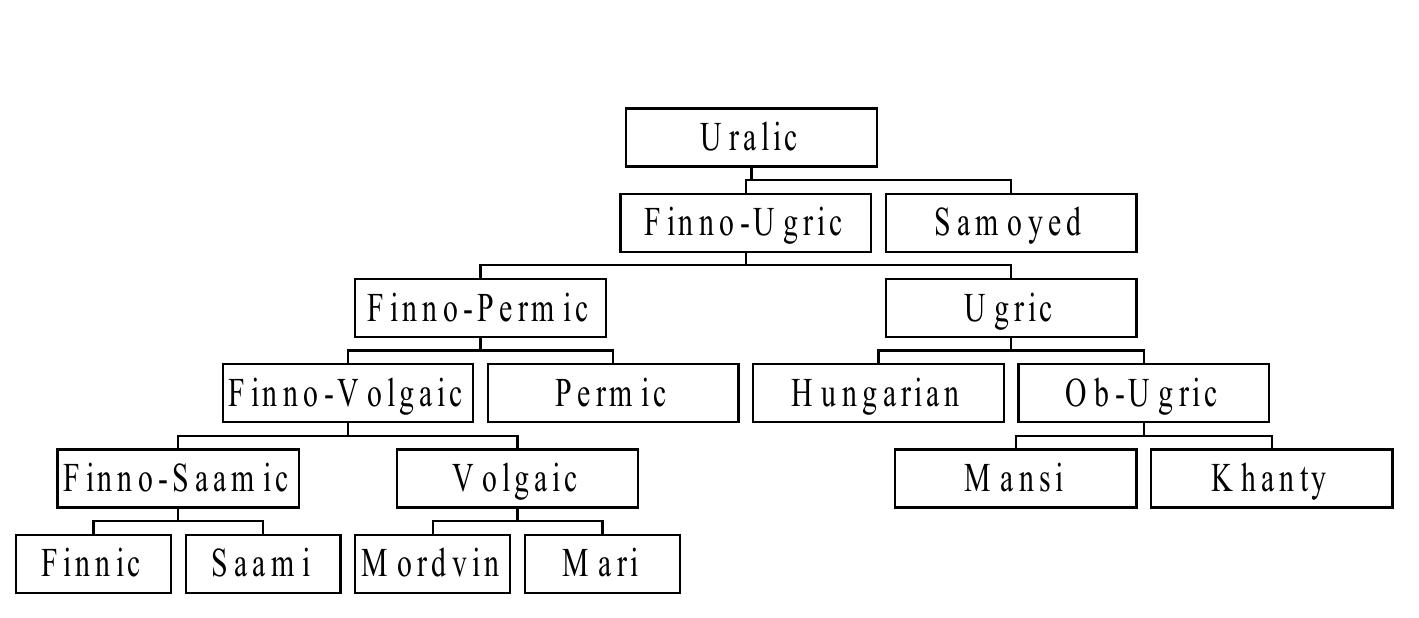
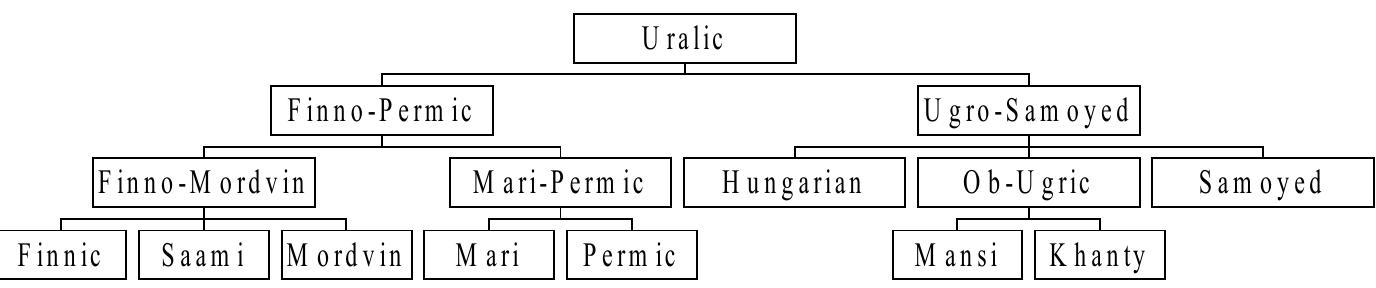
The analysis critiques the binary classification, arguing it contradicts lexical evidence supporting a potential four-branch division of Uralic languages. This reevaluation could redefine linguistic relationships within Uralic studies significantly.

What are the implications of substrate and superstrate influences on Finnic languages?add

The findings reveal that Finnic languages exhibit significant Indo-European superstrate influences and potentially an Indo-European substrate, evidenced by geographical terms of non-Uralic origin. This suggests complex interactions between Uralic and Indo-European languages during their development.

About the author
University of Helsinki, Adjunct
Papers
75
Followers
1,071
View all papers from Petri Kallioarrow_forward