Horseback riding and Cavalry in Mycenaean Greece
https://doi.org/10.2143/AWE.11.0.2175875Abstract
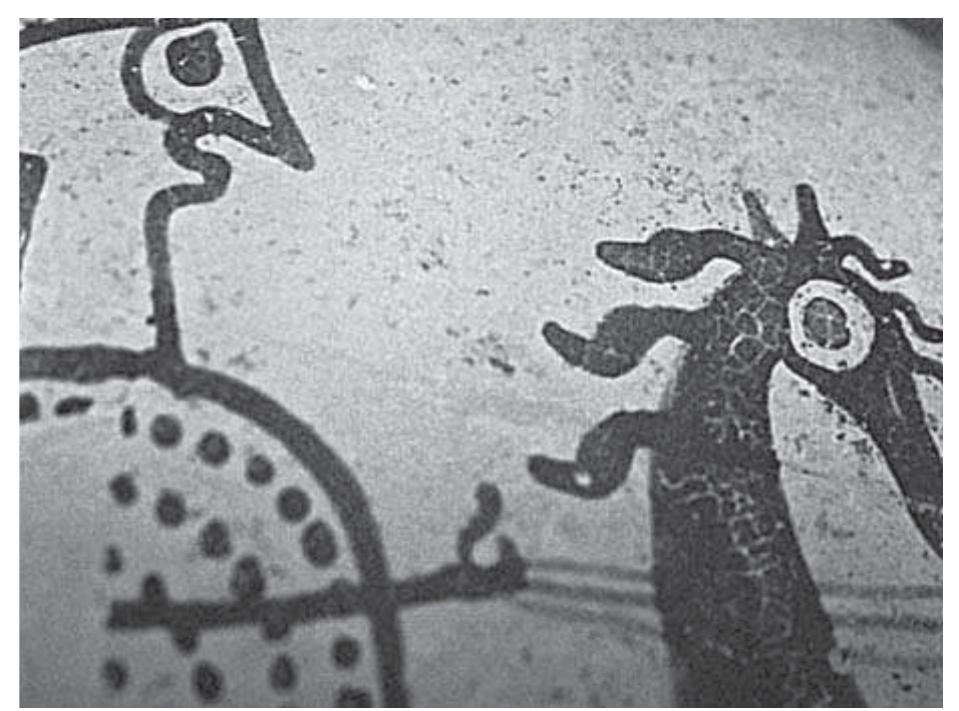
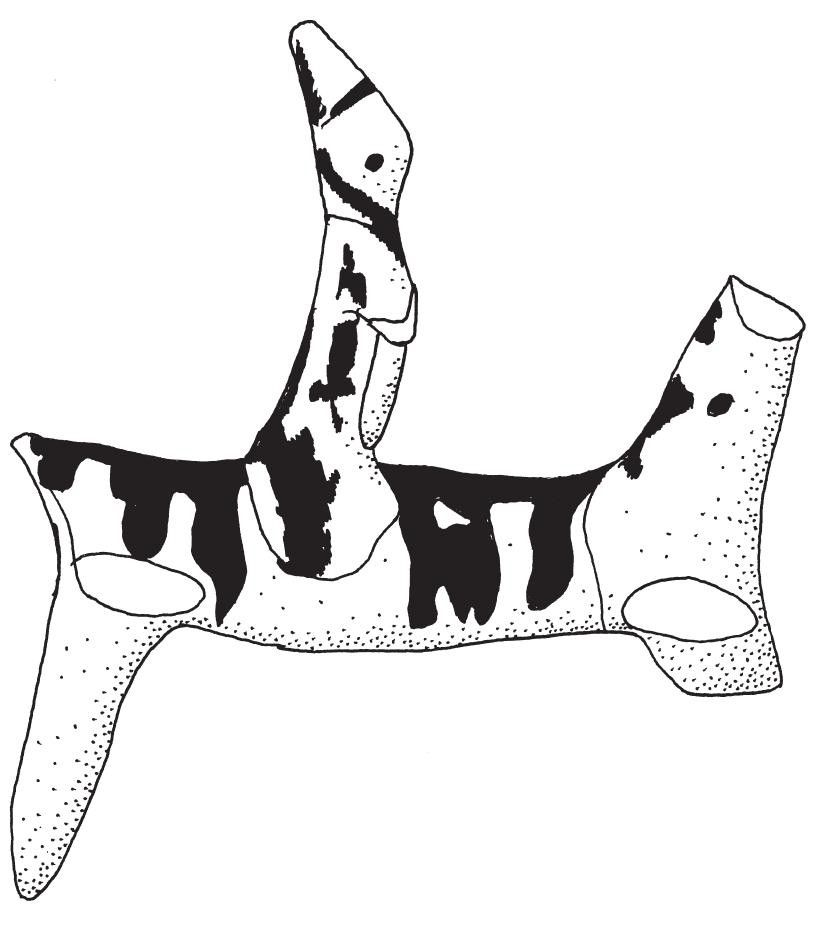
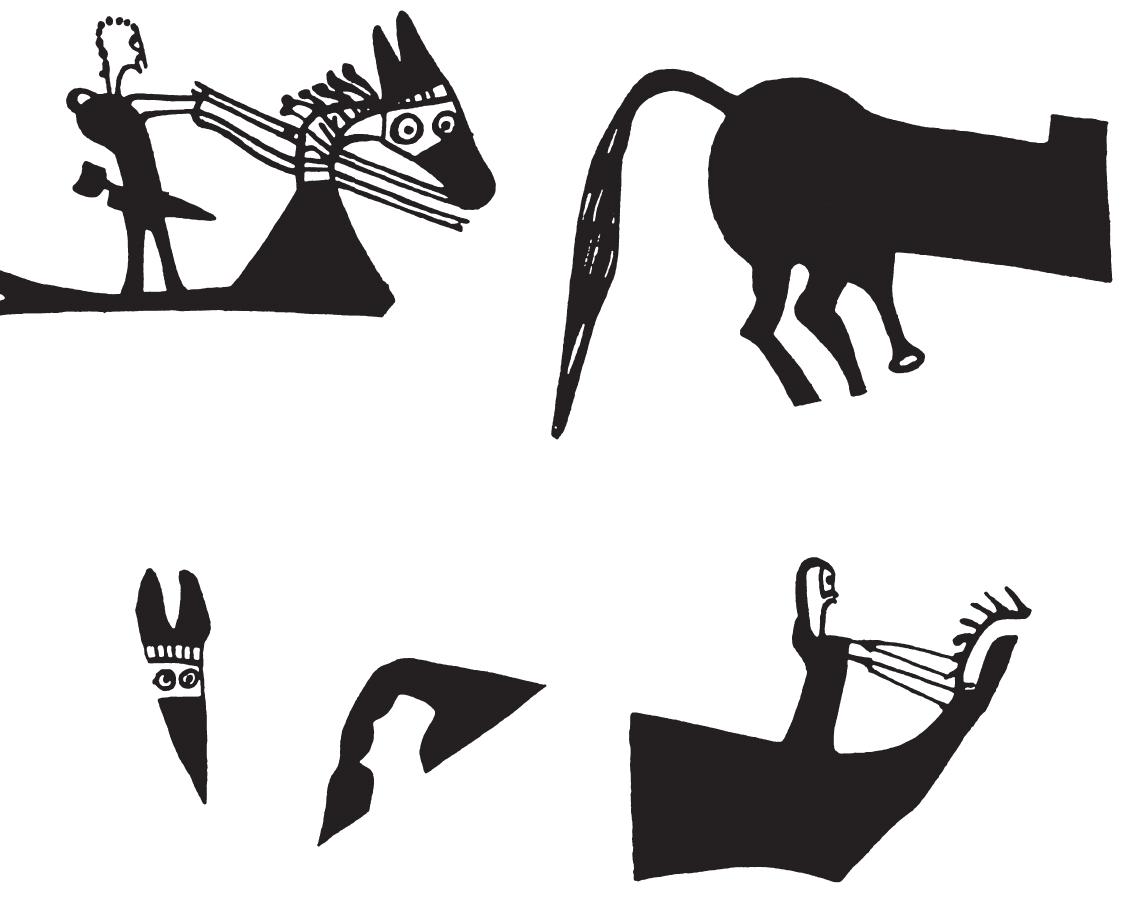
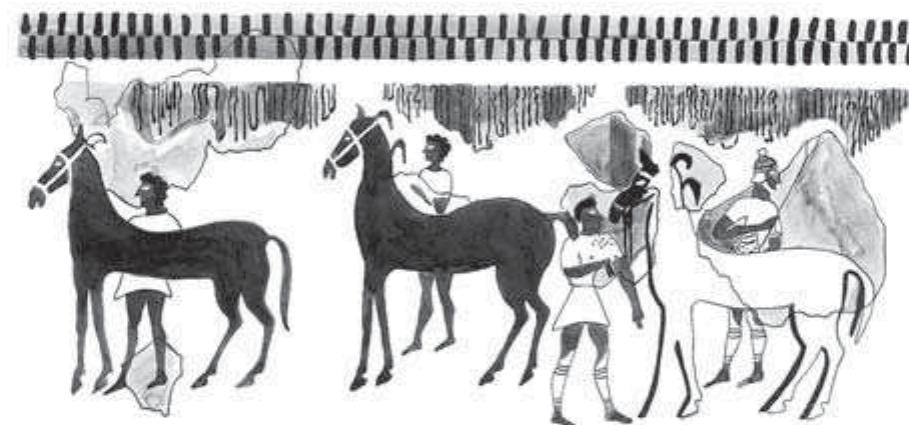
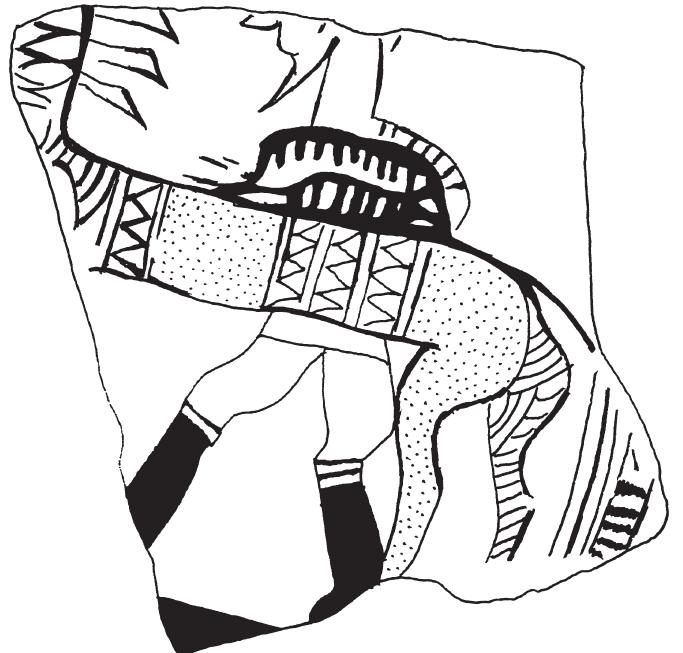
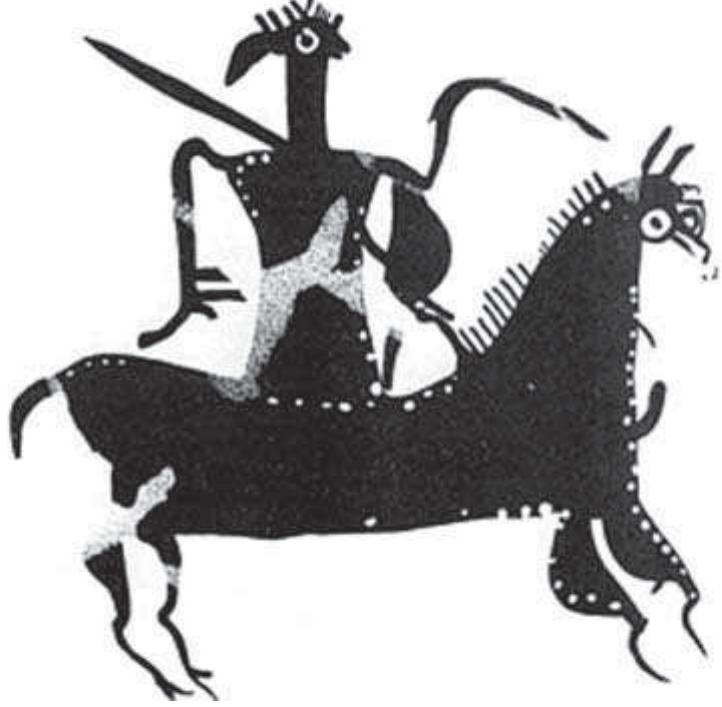
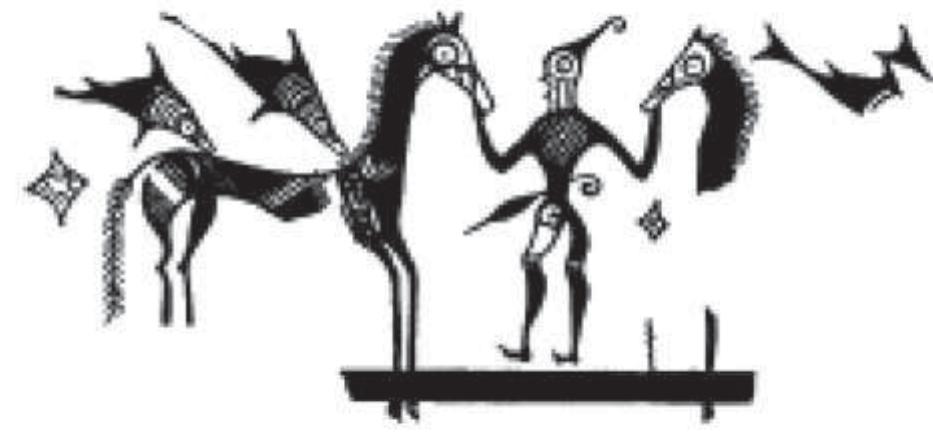
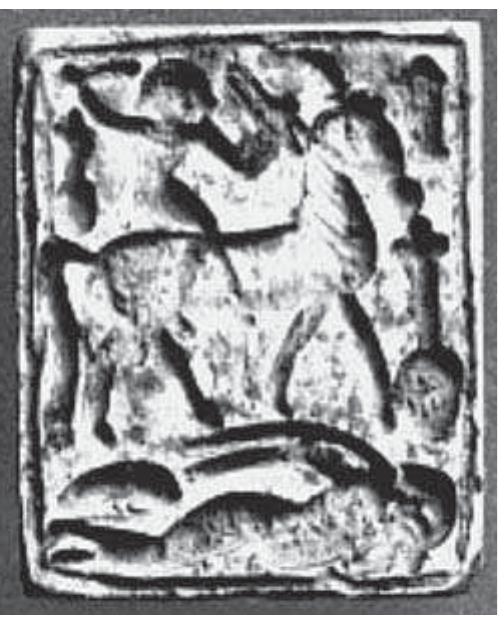
This paper evaluates the evidence for horseback riding in Mycenaean Greece. This paper argues that horseback riding, which is widely held to be an Iron Age development (of especially the 9th and 8th centuries BC), was practised by members of the aristocracies throughout the eastern Mediterranean as early as the 13th century BC, and that the first cavalry can be identified around the same time in Mycenaean Greece and other regions in the eastern Mediterranean. To that end, a range of iconographical, physical-anthropological and archaeological evidence will be reviewed.
Key takeaways
AI
AI
- Horseback riding existed in Mycenaean Greece as early as the 13th century BC, challenging previous timelines.
- Archaeological evidence, including figurines and vases, indicates the presence of cavalry in Mycenaean art.
- Mycenaean horsemen, often unarmed, suggest elite social status and possible military roles.
- Iconography reveals the evolution of horseback riding practices across the eastern Mediterranean.
- Cavalry's military use appears plausible, drawing parallels with contemporary Near Eastern practices.
References (55)
- Cultraro, M. 2005: 'Hunter and Horseman: Glimpses into an Unknown Mycenaean Iconography'.
- In Gardeisen, A. (ed.), Les équides dans le monde méditerranéen antique (Lattes), 289-98.
- De Garis Davies, N. 1917: 'Drawings on Limestone Flakes'. JEgA 4.4, 234-40.
- Deger-Jalkotzy, S. 2006: 'Late Mycenaean Warrior Tombs'. In Deger-Jalkotzy, S. and Lemos, I.S. (eds.), Greece: From the Mycenaean Palaces to Homer (Edinburgh), 151-79.
- Demakopoulou, K. and Divari-Valakou, N. 2001: 'Evidence for Cult Practice at Midea: Figures, Figurines and Ritual Objects'. In Laffineur, R. and Hagg, R. (eds.), Potnia: Deities and Religion in the Aegean Bronze Age (Brussels/Liège/Austin, TX), 181-91
- Desborough, V.R.d'A. 1964: The Last Mycenaeans and their Successors (Oxford).
- Drews, R. 1995: The End of the Bronze Age: Changes in Warfare and the Catastrophe ca. 1200 BC (Princeton).
- --. 2004: Early Riders: The Beginnings of Mounted Warfare in Asia and Europe (London/New York).
- Drower, M.S. 1969: 'The Domestication of the Horse'. In Ucko, P.S. and Dimbleby, G.W. (eds.), The Domestication and Exploitation of Plants and Animals (Chicago), 471-76.
- Emery, W.B. 1960: 'A preliminary report on the excavations of the Egypt Exploration Society at Buhen 1958-59'. Kush 8, 7-10.
- Fields, N. 2006: Bronze Age War Chariots (Oxford).
- French, E. 1971: 'The development of Mycenaean terracotta figurines'. BSA 66, 101-87.
- 'The Figures and Figurines'. In Renfrew, A.C. (ed.), The Archaeology of Cult: The Sanctuary at Phylakopi (London), 209-80.
- Furumark, A. 1941: The Chronology of Mycenaean Pottery (Stockholm).
- Goldman, K. 1931: Excavations at Eutresis in Boeotia (Cambridge, MA).
- Götze, A. 1968: Madduwattas (Darmstadt).
- Güterbock, H.G. 1983: 'The Hittites and the Aegean World: Part 1. The Ahhiyawa Problem Recon- sidered'. AJA 87, 133-43.
- Hanfmann, G.M.A. 1961: 'A Near Eastern Horseman'. Syria 38.3, 243-55.
- Hayes, W.C. 1959: The Scepter of Egypt: A Background for the Study of the Egyptian Antiquities in the Metropolitan Museum of Art, Part II: The Hyksos Period and the New Kingdom (1675-1080 B.C.) (New York).
- Hood, M.S.F. 1953: 'A Mycenaean Cavalryman'. BSA 48, 84-93.
- Hyland, A. 1990: Equus: The Horse in the Roman World (London).
- --. 2003: The Horse in the Ancient World (Stroud).
- Kanta, A. 1980: The Late Minoan III Period: A Survey of Sites, Pottery and their Distribution (Goth- enburg).
- Kelder, J.M. 2004-05: 'The chariots of Ahhiyawa'. Dacia 48-49, 151-60.
- --. 2009: 'Royal Gift Exchange between Mycenae and Egypt'. AJA 113.3, 339-52.
- --. 2010: 'The Egyptian Interest in Mycenaean Greece'. Jaarbericht Ex Oriente Lux 42, 125-40.
- Kelekna, P. 2009: The Horse in Human History (Cambridge).
- Kendall, T. 1974: Warfare and Military Matters in the Nuzi Tablets (Ann Arbor).
- Konsolaki, E. 1999: 'A Group of New Mycenaean Horsemen from Methana'. In Betancourt, P.H., Karageorghis, V., Laffineur, R. and Niemeier, W.-D. (eds.), Meletemata: Studies in Aegean History Presented to Malcolm H. Wiener as he Enters his 65th Year, 3 vols. (Liège/Austin, TX), 427-33.
- --. 2002: 'A Mycenaean Sanctuary on Methana'. In Hägg, R. (ed.), Peloponnesian Sanctuaries and Cults (Stockholm), 25-36.
- Langdon, S. 1989: 'The Return of the Horse-Leader'. AJA 93, 185-201.
- Lorimer, H.L. 1950: Homer and the Monuments (London).
- Lunsingh Scheurleer, R. 2009: Allard Pierson Museum 75 jaar (Amsterdam).
- McDonald, C. 1986: 'Problems of the Twelfth Century BC in the Dodecanese'. BSA 81, 125-51.
- Mylonas, G.E. 1951: 'The Figured Mycenaean Stelai'. AJA 55.2, 134-47.
- Pilafidis-Williams, K. 1998: The Sanctuary of Aphaia on Aigina in the Bronze Age (Munich).
- Raulwing, P. and Clutton-Brock, J. 2009: 'The Buhen Horse: Fifty Years after its Dicovery'. Journal of Egyptian History 2.1-2, 1-105.
- Rodenwaldt, G. 1911: 'Fragmente Mykenischer Wandgemälde'. Mitteilungen des Kaiserlich Deutschen Archäologischen Instituts, Athenische Abteilung 36, 221-50.
- Schaeffer, C.F.-A. 1939: Ugaritica I: Études relatives aux découvertes de Ras Shamra (Paris).
- Schilardi, D. 1999: 'The Mycenaean Horseman (?) of Koukounaries'. In Betancourt, P.H., Karageorghis, V., Laffineur, R. and Niemeier, W.-D. (eds.), Meletemata: Studies in Aegean History Presented to Malcolm H. Wiener as he Enters his 65th Year, 3 vols. (Liège/Austin, TX), 751-55.
- Schliemann, H. 1878: Mykenae: Bericht über meine Forschungen (Leipzig).
- Schofield, L. 2007: The Mycenaeans (London).
- Schofield, L. and Parkinson, R.B. 1994: 'Of Helmets and Heretics: a possible Egyptian representa- tion of Mycenaean warriors on a papyrus from el-Amarna'. BSA 89, 157-70.
- Schulman, A.R. 1957: 'Egyptian Representations of Horsemen and Riding in the New Kingdom'. JNES 16, 263-71.
- Sidnell, P. 2006: Warhorse: Cavalry in Ancient Warfare (London).
- Slenczka, E. 1974: Figürlich bemalte mykenische Keramik aus Tiryns (Mainz).
- Snodgrass, A.M. 1971: The Dark Age of Greece: An Archaeological Survey of the Eleventh to the Eighth Centuries BC (Edinburgh).
- Tsountas, C. 1887: 'Arxaiotjtev ek Mukjnwn'. Efjmériv Arxaiologikß 1886, 155-72.
- Van Wijngaarden, G-J. 2002: Use and Appreciation of Mycenaean Pottery in the Levant, Cyprus and Italy (ca. 1600-1200 BC) (Amsterdam).
- Verdelis, N.M. 1977: 'The Metal Finds'. In Aström, P. (ed.), The Cuirass Tomb and Other Finds at Dendra 1: The Chamber Tombs (Gothenburg), 28-65.
- Vermeule, E. and Karageorghis, V. 1982: Mycenaean Pictorial Vase Paintings (Cambridge, MA).
- Wachsman, S. 1998: Seagoing Ships and Seamanship in the Bronze Age Levant (College Station, TX).
- Worley, L.J. 1994: Hippeis: The Cavalry of Ancient Greece (Boulder/Oxford).
- Wreszinski, W. 1935: Atlas zur altägyptische Kulturgeschichte (Leipzig).
- Xenaki-Sakellariou, A. 1985: Oi thalamotoi taphoi ton Mykenon: anaskaphes Chr. Tsounta, 1887- 1898 / Les Tombes a Chambre de Mycènes: fouilles de Chr. Tsountas (1887-1898) (Paris).
Jorrit Kelder