Academia.eduAcademia.edu

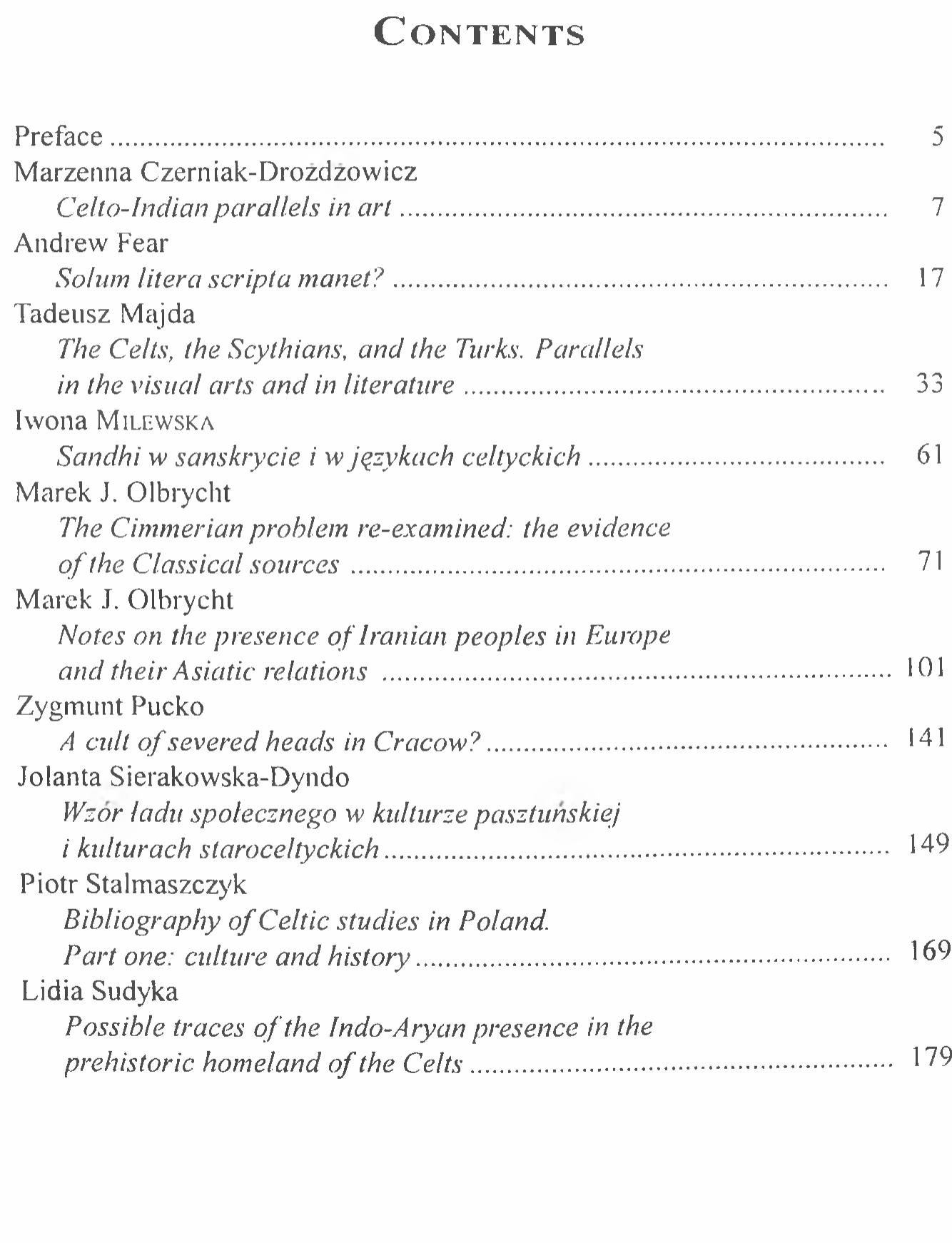
Remarks on the Presence of Iranian Peoples in Europe and Their Asiatic Relations

2000

Abstract

Remarks on the Presence of Iranian Peoples in Europe and Their Asiatic Relations, in: J. Pstrusińska/A. T. Fear (eds.), Collectanea Celto-Asiatica Cracoviensia, Kraków 2000, 101-140. The scope of the problems involving the history of steppe Iranian¬speaking peoples in Europe is large and continues to grow as new information becomes available. For this reason this paper is limited to the most important aspects. The very significant role that the Scythians, Sauromatians, and various so-called “Sarmatian” tribes (including the Royal Sarmatians, Iazygs, Aorsi, and Alans) played in the history of Southeastern Europe has commonly been recognized. This is, however, not the case with their role in the history of Cen¬tral and Western Europe. In the 1st millenium B.C. and in the first centuries A.D., the native populations of Southeastern and Central Europe were faced with the expansion and movement of the Central Asian peoples pressing westwards. Some indig¬enous tribes retreated, setting in motion other peoples, others mingled with the newcomers, giving rise to new hybrid cultures. The contribution of Iranian peoples to the cultures of ancient Europe is discernible in many aspects, including Germanic religion, Celtic folk-poetry, and early Slavic civilization. The in¬flux of Iranian steppe peoples in Europe was linked with tribal movements in Central Asia. This was a consistent pattern, for we have evidence of several great migrations in the 1st millenium B.C. and the 1st millenium A.D. Already Herodotus (4.13), living in the 5th century B.C., had observed such processes: “Except the Hyperboreans, all these nations (and first the Arimaspians) ever make war upon their neighbours; the Issedones were pushed from their lands by the Arimaspians, and the Scythians by the Issedones, and the Cimmerians, dwell¬ing by the southern sea, were hard pressed by the Scythians and left their country” Most Iranian tribes entering Europe took possession of the last outpost of the Eurasian steppe in Central Europe: the Hungarian plain. Here, they underwent a number of changes and were transformed, both ethnically (as they mingled with the indigenous substratum) and economically (denomadicization). The interaction of these Iranian groups with the local populations of Europe was largely ignored by our written sources. However, archaeology points to considerable cultural interchange. The movements of many steppe tribes to¬ward Europe introduced new ethnic elements of Asiatic origin into this large area. Iranian groupings of the pre-Scythian period, the Scythians, the Sauromatians, various Sarmatian tribes, the Roxolani, the Aorsi, and the Alans contributed to the development of culture not only in the Ponto-Caspian steppes, but also in other areas as they were driven into many countries at different points in time. The history of Southeastern and Central Europe in the ancient period can be properly understood only within the context of the relations between the sedentary tribes and the Eurasian steppe nomads. Such a relationship is clearly visible in the medieval history of Rus, the Hungarians, the Bulgars, as well as in that of Poland.

Key takeaways
sparkles

AI

  1. The paper explores the historical impacts of Iranian-speaking peoples on Europe, particularly in cultural exchanges.
  2. Scythians, Sauromatians, and Sarmatians shaped Southeastern Europe's cultural landscape during the first millennium B.C.
  3. Archaeological evidence supports significant Iranian cultural influences on Germanic, Celtic, and Slavic civilizations.
  4. The 1st millennium B.C. saw transformative migrations of Iranian nomads into Central and Southeastern Europe.
  5. Key Iranian tribes contributed to cultural developments across various regions, including the Hungarian plain.

References (137)

  1. Abaev V. I. 1965: Skifo-evropeyskie izoglossy, Moskva.
  2. Abaev V. I. 1979: Skifo-sarmatskie narechiya in: Osnovy iranskogo yazyko- znaniya. I. Drevneiranskie yazyki, Moskva, 272-364.
  3. Abaev V. I. 1985: Alans, Encyclopaedia Iranica I, 801-803.
  4. Abramova M. P. 1991: Voprosy izucheniyapamyatnikovTsentralnogoPredkav- kazya sarmatskogo vremeni, KSIA 204, 18-24.
  5. Abramova M. P. 1992: Nekotorye osobennosti vzaimootnosheniy iranoyazych- nykh kochevnikov i osedlykh piemen Predkavkazya, RA 1992/2, 20-31.
  6. Altheim F. 1969: Geschichte der Hunnen. I. Bd., Berlin2.
  7. Anderson J. G. C. 1934: The Eastern Frontier from Tiberius to Nero, CAHX, 743-780.
  8. Bachrach B. S. 1973: A History o f the Alans in the West, Minneapolis.
  9. Bailey H. W. 1985: Alans: additional notes, Enclran I, 803.
  10. Balcer J. C. 1988: Persian Occupied Thrace (Skudra), Historia 37, 1-21.
  11. Barbarunova Z. A. 1989: Nekotorye problemy istorii rannykh Sarmatov (po pa- myatnikam Yuzhnogo Priuralya i Nizhnego Povolzhya), SA 1989/3,48-60.
  12. Barfield T. J. 1989: The Perilous Frontier: Nomadic Empires and China, Cam bridge (Mass).
  13. Barthold W./Minorsky V. 1960: Alan, Encyclopaedia o f Islam (new ed.), I, Lei den, 354.
  14. Batty R. M. 1994: On Getic and Sarmatian Shores: Ovid's Account of the Danube Lands, Historia 43, 88-111.
  15. Bielmeier R. 1989: Sarmatisch, Alanisch, Jassisch und Altossetisch in R. Schmitt (ed.) Compendium Linguarum Iranicarum, Wiesbaden, 236-245.
  16. Bosworth A. B. 1977: Arrian and the Alani, HSCP 81, 217-255.
  17. Bosworth C. E. 1978, IsmacTl b. Ahmad, Encyclopaedia o f Islam (new ed.), IV, Leiden, 188-189.
  18. Bouzek J./Ondrejova I. 1987: Some Notes on the Relations of the Thracian, Macedonian, Iranian and Scythian Arts in the Fourth Century B.C., Eirene 24, 67-93.
  19. Boyce M. 1955: Zariadres and Zarer, BSOAS 17,463-477.
  20. Chernenko E. V. 1984: Skifo-persidskaya voyna, Kiev.
  21. Chezhina E. F. 1988: Istoriya i sovremennoe sostoyaniye problemy "savromat- skogo" zverinogo stilya, ASGE 29, 59-64.
  22. Chavannese E. 1907: Le pays d'Occident d'apres le Heou Han chou, T 'oung Pao 8, 149-234.
  23. Chochorowski J. 1986: Rola Sigynnow Herodota w srodowisku kulturowym wczesnej epoki zelaza na Nizinie W^gierskiej, Przeglqd Archeologiczny 34, 161-218.
  24. Chochorowski J. 1987: Zur Bestimmung des Siedlungsraumes und des Ursprungs von Agathyrser, AAC26, 139-173.
  25. Chochorowski J. 1993: Ekspansja kimmeryjska na tereny Europy Srodkowej, Krakow.
  26. Chochorowski J. 1994: Skifskie nabegi naterritoriyu Srednej Evropy, RA 1994/ 3,49-63.
  27. Chochorowski J. 1998: Die Vekerzug-Kultur und ihre ostlichen Beziehungen in B. Hansel/J. Machnik (eds.), Das Karpathenbecken und die osteuropaische Steppe. Nomadenbewegungen und Kulturaustausch in den vorchristlichen Metallzeiten (4000-500 v. Chr.), Mtinchen-Rahden/West., 473-491.
  28. Dandamaev M. A. 1989: A Political History o f the Achaemenid Empire, Leiden.
  29. Davis-Kimball J./Bashilov V. A./Yablonsky L. T. (eds.) 1995: Nomads o f the Eurasian Steppes in the Early Iron Age, Berkeley.
  30. Diakonoff I. M. 1985: Media, CHI 2, 36-148.
  31. Diakonoff I. M. 1994: Kimmeriytsy i skify na Drevnem Vostoke, RA 1994/1, 108-116.
  32. Dilke O. A. W. 1985: Greek and Roman Maps, London.
  33. Dudarev C. I. 1995: Kprobleme vzaimodeystviyaplemeni Severnogo Kavkaza s rannimi kochevnikami v predskivskuyu epokhu, Armavir.
  34. Dudarev S. L. 1991: Iz istorii svyazey naseleniya Kavkaza s kimmeriysko-skifskim mirom, Groznyi.
  35. Dvomichenko V. V./Fedorov-Davydov G. A. 1989: Pamyatniki sarmatskoy aristokratii v nizhnem Povolzhe in Sokrovishcha sarmatskikh vozhdey i drevnie goroda Povolzhia, Moskva, 5-12.
  36. Dvomichenko V. V./Fedorov-Davydov G. A. 1993: Sarmatskoe pogrebenie skeptukha I v. n.e. u s. Kosika Astrakhanskoy oblasti, VDI1993/3, 141-189.
  37. Fitz J. 1979: Sarmatae, KP IV, 1557.
  38. Gajdukevich V. F. 1971: Das bosporanische Reich, Berlin.
  39. Gardiner-Garden J. R. 1986: Fourth Century Conceptions of Maiotian Ethno graphy, Historia 35, 192-225.
  40. Gardiner-Garden J. 1987: Greek Conceptions on Inner Asian Geography and Ethnography from Ephoros to Erathostenes, Bloomington (Indiana).
  41. Gardiner-Garden J. 1988: Eudoxos, Skylax and the Syrmatai, Eranos 86, 31- 42.
  42. Grantovskiy E. A. 1970: Rannia istoriya iranskikh piemen Peredeney Azii, Moskva.
  43. Grantovskiy E. A. 1998: Iran i irantsy do Akhemenidov, Moskva.
  44. Guguev V. K. 1990: Ein reiches Sarmatengrab in Rostov am Don, Altertum 36, 37-42.
  45. Guguev V. K. 1992: Kobyakovskiy kurgan (K voprosu o vostochnykh vliyaniyakh na kulturu sarmatov I v.n.e. -nachala II v.n.e.), VDI 1992/4, 116-129.
  46. Guguev V. K./Treyster M. Yu. 1995: Khanskie zerkala i podrazhaniya im na territorii yuga vostochnoy Evropy, RA 1995/3, 143-156.
  47. Gutschmid A. v. 1892: Die Skythen, [in:] Kleine Schriften, Bd. Ill, Leipzig, 421-445.
  48. Gyorffy G. 1985: Landnahme, Ansiedlung und Streifzuge der Ungarn, AH ASH 31,231-270.
  49. Hammond N. G. L. 1980: The Extent of Persian Occupation in Thrace, Chiron, 53-61.
  50. Hansel B./Machnik J. (eds.), Das Karpathenbecken und die osteuropaische Steppe. Nomadenbewegungen undKulturaustausch in den vorchristlichen Metallzeiten (4000-500 v. Chr.), Miinchen-Rahden/West.
  51. Harmatta J. 1954, A recently discovered Old Persian Inscription, AAntASH 2, 1-16.
  52. Harmatta J. 1968: Friiheisenzeitliche Beziehung zwischen dem Karpatenbecken, Oberitalien und Griechenland, AAntASH 20, 153-157.
  53. Harmatta J. 1970: Studies in the History and Language o f the Sarmatians, Szeged.
  54. Harmatta J. (ed.) 1994: History o f Civilization o f Central Asia, Vol. II: The Development o f Sedentary and Nomadic Civilization: 700 B.C. to A.D. 250., Paris.
  55. Humbach H. 1969: Die historische Bedeutsamkeit der alanischen Namen in Studia classica et orientalia Antonio Pagliaro oblata III, Roma, 33-52.
  56. Jagchid S. 1977: Patterns of Trade and Conflict between China and the Nomads of Mongolia, Zentralasiatische Studien 11, 177-204.
  57. Jagchid S./Symons V. Y. 1990: Peace, War and Trade along the Great Wall Nomadic-Chinese Interaction through Two Millenia, Bloomington.
  58. Junge J. 1939: Saka-Studien. Der fem e Nordosten im Weltbild dr Antike (= Klio, Beiheft XLI, N.F., Heft 28), Leipzig.
  59. Justi F. 1895: Iranisches Namenbuch, Marburg.
  60. Karyshkovskiy P. O. 1982: Olviya i Rim v I v. n. e. in Pamyatni/ci rimskogo i sred- nevekovogo vremeni v Severo-Zapadnom Prichernomorye, Kiev, 6-28.
  61. Karyshkovskiy P. 0.1982a: O monetakh tsarya Farzoya [in:] Arkheologicheskie pamyatniki Severo-Zapadnogo Prichernomorya, Kiev, 66-82.
  62. Khazanov A. M. 1971: Ocherki voennogo del a sarmatov, Moskva.
  63. Khazanov A. M. 1975: Sotsyalnaya is tor iy a skifov. Osnovnye problemy razvitiya drevnikh kochevnikov evraziyskikh stepej, Moskva.
  64. Kolosovskaja Yu. K. 1984: K voprosu ob agafirsakh [in:] Etnogenez narodov Balkan i Severnogo Prichernomorya, Moskva, 181-193.
  65. Kretschmer K. 1920: Sarmatae, RE 2. Reihe, 2. Hbbd., 2542-2550.
  66. Kretschmer K. 1921: Sarmatia, RE 2. Reihe, 3. Hbbd., 1-12.
  67. Kretschmer K. 1927: Elpaiceg, RE 2. Reihe, 5. Hbbd., 283-5.
  68. Kuznetsov V.A. 1996: Alany na Zapade: arkheologicheskaya realnost ili mif?, RA 1996/4,71-79.
  69. Lassere F. 1975: Strabon, Geographika, T. VIII (Livre XI), texte etabli et traduit par F. Lasserre, Paris.
  70. Latyshev V. V. 1993: Izvestiya drevnikh pisateley o Skifii i Kavkaze, vol. 2, Sankt-Peterburg.
  71. Machinskiy D. A. 1971: O vremeni pervogo aktivnogo vystupleniya sarmatov v Podneprove po svidetelstvam antichnykh pismennykh istochnikov, ASGE 13,30-54.
  72. Machinskiy D. A. 1974: Nekotorye problemy etnogeografii vostochnoevropey- skikh stepey vo II v. do n.e. -1 v. n.e., ASGE 16, 122 -132.
  73. Maenchen-Helfen O. J. 1978: Die Welt der Hunnen, Wien-Koln-Graz.
  74. Makhortykh S. V. 1991: Skify naSevernom Kavkaze, Kiev.
  75. Makhortykh S. V./Ievlev M. M. 1992: Uber die Anfangsperiode der Geschichte der Kimmerier, AAC 31, 107-121.
  76. Maksimenko V. E. 1983: Savromaty i sarmaty na Nizhnem Donu, Rostov.
  77. Marchenko K. K. 1996: Tretiy period stabilizatsii v Sevemom Prichemomore antichnoy epokhi, RA 1996/2, 70-80.
  78. Markwart J. 1932: Die Sigynnen, Caucasica X, 1-42.
  79. Markwart J. 1938: Wehrot und Arang, Leiden.
  80. Marquart J. 1914: "Uber das Volkstum der Komanen" in: W. Bang/J. Marquart, Osttiirkische Dialektstudien, (Abh. Konigl. Ges. Wiss. zu Gottingen, Phil.- hist. Kl. N.F. Bd. 13, N. 1), Berlin, 25-238.
  81. Me Govern W. 1939: The Early Empires o f Central Asia, New York.
  82. Meister K. 1997, Diodorus Siculus, DNP 5, Stuttgart-Wien, 592-594.
  83. Melyukova A. I. (ed.) 1989: Stepi evropeyskoy chasti SSSR v skifo-sarmatskoe vremya, Moskva.
  84. Melyukova A. I. 1990: The Scythians and Sarmatians in Sinor D. (ed.) 1990: The Cambridge History o f Early Inner Asia, Cambridge-New York-Mel- bourne, 97-117.
  85. Melyukova A. I./Moshkova M. G./Petrenko V. G. (eds.) 1984: Drevnosti Evrazii v skifo-sarmatskoe vremya, Moskva.
  86. Monchi-Zadeh D. 1975: Topographisch-historische Studien zum iranischen Nationalepos (Abhandlungen fur die Kunde des Morgenlandes 41.2), Wies baden.
  87. Moshkova M. G. 1963: Pamyatniki prokhorovskoy kultury (Svod arkheologi- cheskikh istochnikov, Dl-10), Moskva.
  88. Moshkova M. G. 1989: Kratkiy ocherk istorii savromato-sarmatskikh piemen in Melyukova A. I. (ed.) 1989: Stepi evropeyskoy chasti SSSR v skifo- sarm atskoe vremya, Moskva, 153-158.
  89. Moshkova M. G. 1991: Osnovnye problemy sarmatskoy arkheologii, KS1A 204, 10-18.
  90. Moshkova M. G. (ed.) 1992: Stepnaya polosa aziatskoy chasti SSSR v skifo- sarmatskoe vremya, Moskva.
  91. Murzin V. Yu. 1990: Proiskhozhdenie skifov: osnovnye etapy formirovaniya skifskogo etnosa, Kiev.
  92. Nicolai R. 1984: Un sistema di localizzazione geografica relativa. Aorsi e Siraci in Strab. XI 5, 7-8 in: F. Prontera (ed.), Strabone. Contributi alio studio dellapersonalitr e dell*opera, Perugia, 99-125.
  93. Noldeke Th. 1896: Das iranische Nationalepos, Strassburg.
  94. Olbrycht M. J. 1996: "Die Beziehungen der Steppennomaden Mittelasiens zu den hellenistischen Staaten (bis zum Ende des 3. Jahrhunderts vor Chr.)" [in:] B. Funck(ed.), Hellenismus. BeitragezurErforschungvonAkkulturation undpolitischer Ordnung in den Staaten des hellenistischen Zeitalters. Akten des Internationalen Hellenismus-Kolloquiums 9. -14. Marz in Berlin, Tubingen, 147-169.
  95. Olbrycht M. J. 1998: Parthia et ulteriores gentes. Diepolitischen Beziehungen zwischen dem arsakidischen Iran und den Nomaden der eurasischen Steppen (Quellen und Forschungen zur Antiken Welt, Bd. 30), Tuduv- Verlag, Miinchen.
  96. Olbrycht M. J. 1998a: "Die Kultur der Steppengebiete und die Beziehungen zwischen Nomaden und der seBhaften Bevolkerung (Der Arsakidische Iran und die Nomaden volker)" in: J. Wiesehofer (ed.) Das Partherreich und seine Zeugnisse. Beitrdge des Internationalen Colloquiums, Eutin (27. - 30. Juni 1996) (Historia. Einzelschriften. Heft 122), Stuttgart, Steiner, 11- 43.
  97. Paj^jkowski W. 1983: Einige Bemerkungen zur Lokalisierung der persischen Provinz (Satrapie) Skudra, Eos 71, 243-255.
  98. Parzinger H. 1998: Stepnye kochevniki na Vostoke Tsentralnoy Evropy. Nakhod- ki i pamyatniki v svete sravnitelnoy arkheologii, VD11998/2, 104-115.
  99. Pogrebova M. N./Raevskiy D.S. 1992: Rannie skify i Drevniy Vostok, Moskva.
  100. Pritsak O. 1988: "The Distinctive Features of the Pax Nomadica" in: Popoli delle steppe: Unni, Avari, Ungar, 2 vols., Spoleto, 749-780.
  101. Pulleyblank E. G. 1968: "Chinese Evidence for the Date of Kaniska" in: A. Basham (ed.) Papers on the Date o f Kanishka, Leiden, 247-258.
  102. Raevskiy D. S. 1995: Rannie skify: sreda obitaniya i khozyaystvenno-kulturnyi tip, VDI 1995/4, 87-96.
  103. Rostovtzeff M. 1922: Iranians and Greeks in South Russia, New York (reissued 1969).
  104. Rostovtzeff M. 1929: The Animal Style in South Russia and China, Princeton (reissued New York 1973).
  105. Rostovtzeff M. 1936: The Sarmatae and Parthians, CAHXI, 91-130.
  106. Rostovtzeff (Rostowzew) M. 1931: Skythien und der Bosporus, Band I. Kriti- sche Ubersicht der schriftlichen und archaologischen Quellen, Berlin.
  107. Rostovtzeff (Rostowzew) M. 1993: Skythien und der Bosporus, Band II. Wieder- entdeckte Kapitel und Verwandtes, iibersetzt und herausgegeben von H. Heinen, Stuttgart (Historia. Einzelschriften 83).
  108. Schneider G. I. 1880: De Diodori Fontibus (Libr. I-IV), Diss., Berolini.
  109. Schiile W. 1969: Die Meseta-Kulturen der Iberischen Halbinsel Mediterrane und eurasische Elemente in friiheisenzeitlichen Kulturen Siidwesteuropas, Berlin.
  110. Shchukin M. 1982: Tsarstvo Farzoya. Epizod iz istorii Sevemogo Prichiemo- morya, ASGE 47, 35-38.
  111. Simonenko A. V. 1993: Sarmaty Tavrii, Kiev.
  112. Sinor D. (ed.) 1990: The Cambridge History o f Early Inner Asia, Cambridge, New York, Melbourne.
  113. Skripkin A. S. 1982: Aziatskaya Sarmatiya vol. II-IV vv., SA 1982/2, 43-56.
  114. Skripkin A. S. 1996: K voprosu etnicheskoi istorii sarmatov pervych vekov nashei ery, VDI 1996/1, 160-169.
  115. Smirnov K. F. 1972: Sarmatskie katakombnye pogrebeniya Yuzhnogo Priuralya- Povolzhya i ikh otnoshenie k katakombam Sevemogo Kavkaza, SA 1972/ 1,73-81.
  116. Smirnov K. F. 1975: Sarmaty na Ileke, Moskva.
  117. Smirov K. F. 1980: Sauromates et Sarmates, Dialogues d 'Histoire Ancienne 6, 139-153.
  118. Smirnov K. F. 1984: Sarmaty i utverzhdenie ikh politicheskogo gospodstva v Skifii, Moskva.
  119. Stolba V. F. 1993: Demograficheskaya situatsiya v Krymu v V-II vv. do n. e. (po dannym pismennych istochnikov), PAV6, 56-61.
  120. Sulimirski T. 1945: Scythian Antiquities in Central Europe, The Antiquaries Journal 25, London, 1-11.
  121. Sulimirski T. 1954: Scythian Antiquities in Western Asia, Artibus Asiae 17, 282-318.
  122. Sulimirski T. 1961: Die Skythen in Mittel-und Westeuropa in Bericht iiber den V. Kongressfiir Vor-und Friihgeschichte (Hamburg 1958), Berlin, 793-799.
  123. Sulimirski T. 1970: Sarmaci, Warszawa.
  124. Sulimirski T. 1970a: The Sarmatians, London.
  125. Sulimirski T. 1970b: Prehistoric Russia. An Outline, London-Dublin.
  126. Sulimirski T. 1985: The Scyths, CHI2, 149-199.
  127. Treidler H. 1961: Uspe, RE2. Reihe, 17. Hbbd., 1092-1093.
  128. Treyster M. Yu. 1994: "Sarmatskaya shkola khudozhestvennoy torevtiki (K otkrytiyu serviza iz Kosiki)", VDI 1994/1, 172-203.
  129. Vinogradov Yu. A./Marchenko K. K. 1989: Das nordliche Schwarzmeergebiet in der skythischen Epoche, Klio 71, 539-549.
  130. Vinogradov Yu. A./Marchenko K. K./Rogov E. Ya. 1997: Sarmaty i gibel "Velikoy Skifii", VDI 1997/3, 93-103.
  131. Vinogradov V. B. 1966: Lokalizatsiya Akhardeya i sirakskogo soyuza piemen, SA 1966/4, 38-50.
  132. Vinogradov Yu. G. 1989: Politicheskaya istoriya olbiyskogopolisa VII-Ivv. do n.e., Moskva.
  133. Vinogradov Yu. G. 1994: Greek Epigraphy of the North Black Sea Coast, the Caucasus and Central Asia (1985-1990), Ancient Civilizations from Scythia to Syberia (Special Sample Issue), 1-12
  134. Vinogradov Yu. G. 1997: Khersonesskiy dekret o "nesenii Dionisa" IOSPE 12 343 i vtorzhenie sarmatov v Skifiu, VDI1997/3, 104-124.
  135. Yarshater E. 1983: "Iranian National History" in: CHI 3(1), 359-477.
  136. Yatsenko S. A. 1993: Alany v Vostochnoy Evrope v seredine I -seredine IV vv. n. e (lokalizatsiya i politicheskaya istoriya)", PAV6, 83-88.
  137. Zubar V. M. 1994: "Olbiya, sarmaty i Rim vo vtoroy polovine I v.", VDI 1994/ 3,218-222.

FAQs

sparkles

AI

What role did Iranian peoples play in ancient European cultures?add

The paper reveals that Iranian peoples significantly influenced cultures across Europe, notably in Germanic religion, Celtic folk-poetry, and early Slavic civilization, occurring from the 1st millennium B.C. to the 1st millennium A.D.

How did irruptions of Iranian nomads affect Central Europe?add

The study finds that migrations of Iranian nomads like the Scythians forced indigenous tribes in Central Europe to retreat or hybridize, significantly altering the cultural landscape even in regions such as the Hungarian plain.

What evidence links the Sauromatians to Iranian origins?add

Diodorus and Pliny both connect the Sauromatians to Iranian roots, stating they originated from Media around the 7th century B.C., with later classical sources affirming their presence near the Tanais/Don river area.

When did the first Sarmatian tribes emerge in classical literature?add

Classical references to Sarmatian peoples first appeared in the writings of Pseudo-Scylax around the 4th century B.C., although earlier sources suggest their presence as early as the 5th century B.C.

What archaeological findings support connections between Iranian tribes and Europe?add

Artifacts from the Chernogorovka-Novocherkassk complex indicate a strong Eastern impact from Central Asia, evidencing the influence of nomadic Iranian tribes on the development of Central European cultures.

About the author
University of Rzeszów, Faculty Member

ancient history

Papers
160
Followers
3,320
View all papers from Marek Jan Olbrychtarrow_forward