Sleepers 2016 Adam Chodzko

Sleepers 2016 Adam Chodzko
3 mins
HD video with sound
[NB: this is a compressed Vimeo version, and 'Sleepers' operates through its sound design - particularly a frequently panned stereo channel for certain sounds - please listen via good headphones or a good speaker system]
Commissioned by FLAMIN (http://flamin.filmlondon.org.uk/)
for Channel 4's Random Acts series. (http://randomacts.channel4.com/)
________________________________________________
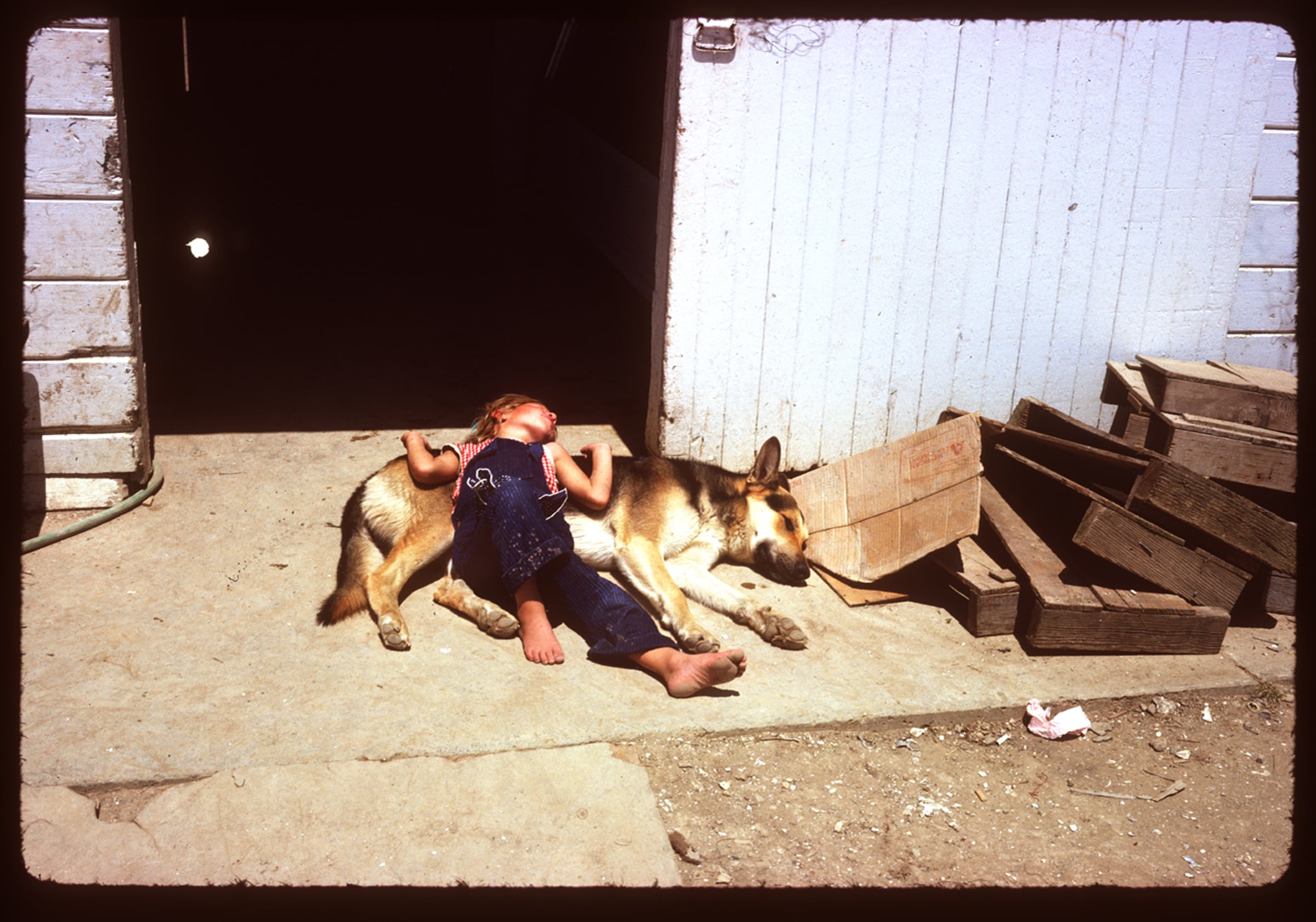
Exploring a collection of amateur 35mm slide photographs of sleeping people, 'Sleepers' imagines the restless movement of a mind as it flickers between perceptions, slipping towards unconsciousness, resisting, or urgently trying to find the path to, sleep.
*
Seeing someone sleep always provokes a level of uncertainty; perhaps this is more than sleep? Are they dead?
Seeing a still image always provokes a level of uncertainty; ('Perhaps, I see movement?')
The sleepers’ ‘withdrawal’ into another world, of dreams, also activates and destabilises our ability to empathise, despite our attempts to observe their slumbering state.
The stillness and silence of a sleeping person, and a still photograph, creates a vacuum for the viewer, provoking a consciousness of sound. Sound here fragments outwards from the image and is drawn towards it, trying to connect with it, to “bring it to life” but never fully adhering to the image.
Holes pierce the thin flat membrane of 35mm film, pouring in light ( -' time to wake up'? - ) allowing a journey through one image and into another.
Equally, as digital imagery is increasingly in motion our expectation from our screens is of activity and not stillness, as restless as we are.
Since 2007 Chodzko has been collecting individual 35mm photographic slide images (so, ‘still’ images), taken by amateurs, of people sleeping. He has found (mostly from ebay) around 100 of these images, shot all around the world, from 1950’s to late 1980’s, from babies to the elderly. People sleeping on buses, aeroplanes, beds, boats, sofa’s, on blankets in the open air, in during military conflict (the Vietnam war) and out, in public, homeless, on the streets.
Accumulatively, by bringing these images together it suggests a kind of collective narcolepsy, an pandemic unconsciousness, a mass sleep or mass dreaming from a fairy tale, or..are they really sleeping, is this perhaps evidence of death, the end of everything?
Chodzko is interested in the relationship between the material flatness of the 35mm film, that was there in a camera, in a room, at the time; a presence in relation to another presence, that of a sleeping person.
'Sleepers' is a camera-less film, or at least, there was a camera, in fact a number of them, but the camera action was between 30- 60 years ago.
Chodzko speculates on the relationship of care that this looking, this image, might imply and the suggestion of voyeurism and the question of consent (what it might mean to look at something that once belonged as an intimate exchange between two people; the photographer and the sleeper) and the role of empathy between the figure of sleeper, photographer and viewer.
There is the psychological space of the dreamer and the actual space of the room which reveals the space between the viewer and the sleeper.
How do we register the difference between a still image and a moving image of a still scene in a film, and connect this perception to our uncertain observation that someone is probably sleeping but could, of course, be dead.
Partly this is in response to the difference between the digital and analogue image. Piercing the 35mm celluloid at the point of the image’s punctum establishes its materiality (it's Achilles heel?). A hole from a pin prick which might wake the sleeper (or in 'Sleeping Beauty', causes the sleep). Its hole lets in light, and operates like a moon. A moon which watches over the sleeper.
(Cf: Chodzko's 1992 work: 'Moon Stealing ', where he would go to the cinema with a Hi-8 camera and whenever the moon appeared in the background of exterior night time shots in a feature film he would zoom into this moon to then (via an edit) zoom out of it and into another film).
In photography, or film, the sleeper (who, of course, mostly sleeps in the dark) can only be revealed and represented as 'sleeping' if there is light making them visible. Therefore the act of recording is immediately invading the sleeper with light (as well as the auditory disturbances; the click of a shutter or the creaking presence of the watcher’s movement in the room). It therefore automatically renders the sleepers’ sleep as extreme; it is during the day, in spite of the light (they must be really tired!)
In 'Sleepers' the brilliance of light is further enhanced through the holes that puncture the celluloid, at times, pouring in through these punctures, into the space of the sleeper (from a place where there is no night, and therefore no sleep?)
Get started for free
24/7 customer support
Our customer support team is available to help 24/7. Enterprise members also receive dedicated account managers and a guaranteed uptime SLA.
© 2026 Vimeo.com, Inc. All rights reserved.
TermsPrivacyYour Privacy ChoicesU.S State PrivacyCopyrightCookies