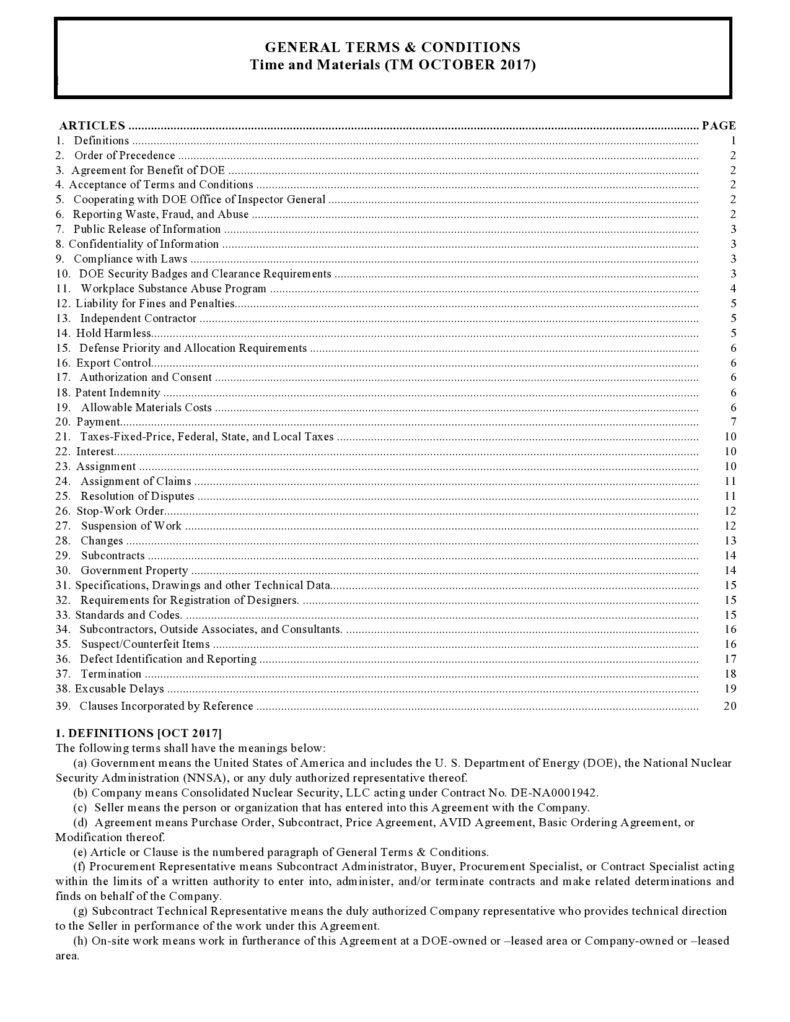
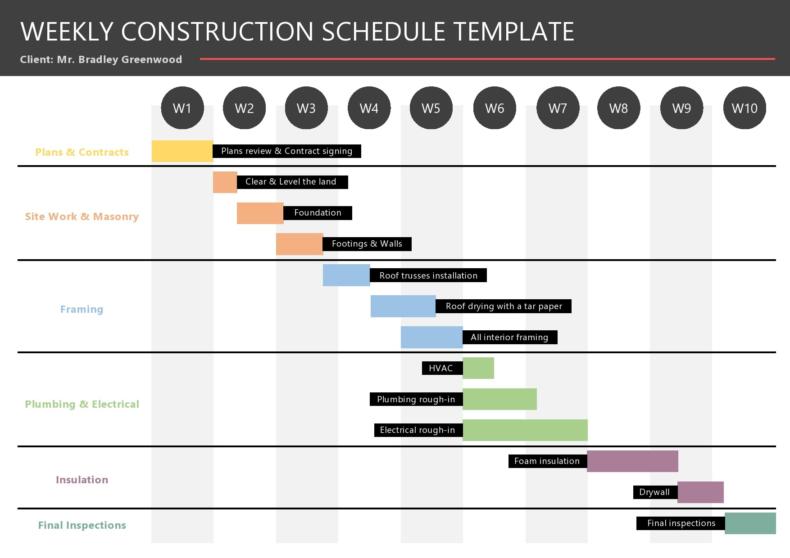
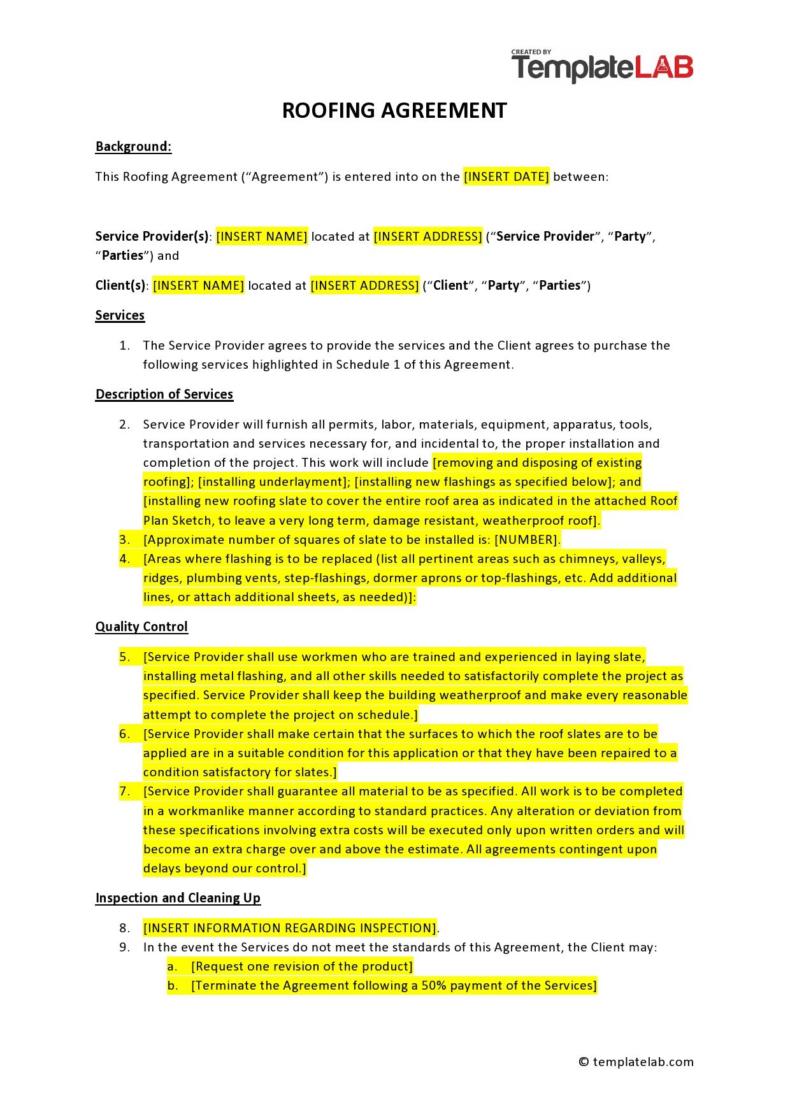
Product spec sheets can help your company build consistency, quality, and communication within teams and with customers.
Whether you are building a product, manufacturing it, or inspecting it, our free spec sheet templates are the ideal tool to build your master reference document. Product spec sheet templates allow you to list everything you need to know about your product for internal and external use.
Contents
- 1 Spec Sheet Templates
- 2 What Is a Spec Sheet?
- 3 Why Use a Spec Sheet Template?
- 4 Data Sheet Templates
- 5 What to Include on a Spec Sheet?
- 6 Types of Spec Sheets
- 7 The Spec Sheet Role in Product Development
- 8 Specification Sheet Examples
- 9 How to Make a Spec Sheet
- 10 Product Spec Sheet Mistakes to Avoid
- 11 Product Spec Sheet in Quality Control
- 12 Customizing Your Spec Sheet
- 13 Using a Spec Sheet Template for Communication
- 14 Editing a Spec Sheet Template for Different Teams
- 15 Create a Spec Sheet Template for Food Products
Spec Sheet Templates



 Download in PDF
 Download for Excel
 Download for Word
 Download for PowerPoint


What Is a Spec Sheet?
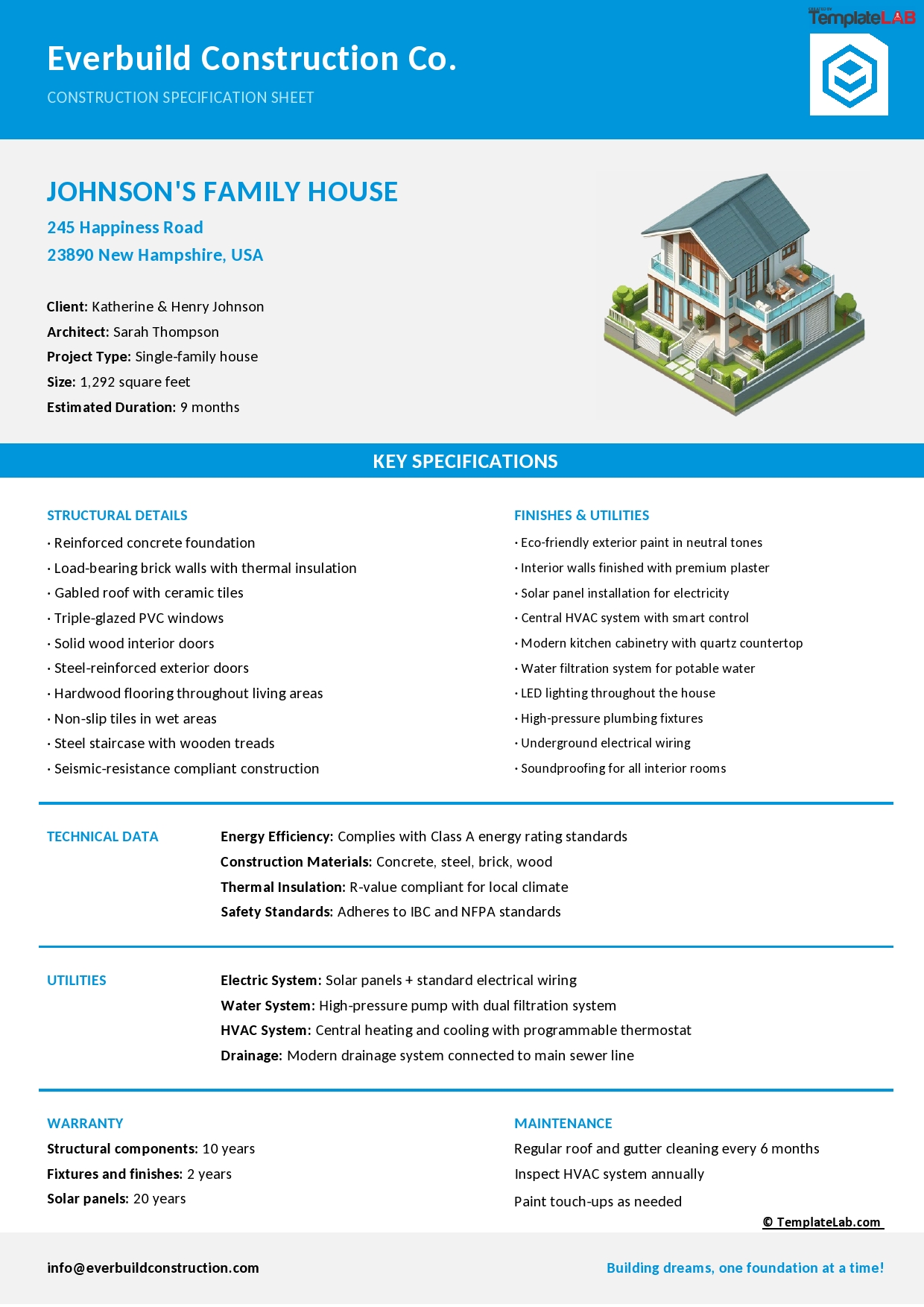
A spec sheet — also known as a data sheet, product data sheet, product specs, or product information sheet — is a document that captures all of your product’s important attributes. This includes everything from technical specifications and key features to dimensions, materials, and performance specs. A product spec sheet tells everyone involved how your product should be made, tested, packaged, and shipped.
Essentially, the spec sheet acts as:
- A complete guide for manufacturing consistency
- A way to communicate specifications across departments
- A reference document and resource for important product info during QA and audits
Accurate spec sheets are critical to brands who deal in exact details — like electronics, food production, or engineering.
Product Spec Sheet Examples
Automotive
Engine size, miles per gallon (MPG), torque, crash test reports, emissions certification, and steel or glass thickness could all be specified on a car spec sheet. This information can be used during production processes or sales, and ensures everyone is aware of how to manufacture or communicate features to buyers.
Electronics
Voltage input, wattage, USB ports, operating temperature, firmware updates, and UL compliance are some specifications you may see on an electronics spec sheet. Design and engineering teams rely on spec sheets to have accurate information when producing and testing electronics.
Food & Drink
Ingredients, nutritional value, allergens, shelf life, and specifications are listed on food spec sheets. From suppliers producing the food, to local grocery stores selling them — everyone needs to understand how to process and label food items.
Why Use a Spec Sheet Template?
Spec sheets are helpful on their own but using a template takes it to the next level. Spec sheet templates make it easy for you to create a formatted, repeatable document every time. If you have multiple products, using spec sheet templates keeps your documents clean, organized, and less likely to have you forget important information.
Benefits of Using a Spec Sheet Template:
- Saves you time formatting each spec sheet from scratch
- Easy for everyone to read since everyone is using the same template
- Less likely you’ll forget to include important sections
- Quick to edit if your product changes
Our spec sheet templates are free and can be used for nearly any product type. No matter if you’re supplying food goods or manufacturing tech items.
Data Sheet Templates


What to Include on a Spec Sheet?
Include anything you need to know about that product. How it’s made, what it’s made of, and how it performs. Your product spec sheet will vary based on what you’re creating but here’s what we typically include:
- Product Name and SKU
- Description
- Dimensions & Weight
- Materials
- Product Features
- Specifications (Be precise with your specs)
- Packaging Specifications
- Label Specifications
- Product Certifications (ISO, FDA, CE marks, etc.)
- Special Instructions / Acceptance Criteria
Types of Spec Sheets
Product specifications are used differently for each industry and department. Below are different types of spec sheets.
- Product specification sheet: Includes basic features and technical requirements.
- Food product specification sheet: Lists ingredients, allergens, shelf life, etc.
- Product data sheet: Delivered to sales and marketing teams.
- Technical document: Complete with engineering specs.
The Spec Sheet Role in Product Development
Product developers should aim to reduce ambiguity as much as possible. Having a spec sheet that everybody from sales to engineering understand will allow you to work towards the same goal.
Use your spec sheet to:
- Align your product team and have your product manufactured correctly
- Set expectations for the manufacturing process
- Ensure your products meets industry standards
- Help set customer expectations
There are many documents you should have for your product. However, spec sheets can tie a lot of these documents together. During your product planning phase, your spec sheet pairs well with user stories. When customers provide you with a user story on what they need from a product, your developers and designers can refer to the spec sheet to provide those needs with measurable goals.
Let’s say a customer needs an easy-to-use device. Your designers and engineers can use the spec sheet to outline dimensions that fit comfortably in a consumer’s hand. Who knows — maybe you can satisfy your user story by providing multiple size options in your spec sheet.
Your spec sheet is also useful when writing development tickets or adding tasks to your team’s board in JIRA or Trello. Anytime a developer is building a feature or working on a task — they can reference your spec sheet to build the correct product. Your spec sheet reduces the chance of your product deviating from what it was intended to be.
Once your product rolls off the production line — your spec sheet can be used for testing and QA. All of your specifications should be included in your test plans to verify your product performs accordingly. Even after your product launches — you can use your spec sheet when creating updates or iterating on your product.
Creating your product spec sheet should be the start of your documentation process. The spec sheet acts as a blueprint that supports every stakeholder throughout the product’s lifecycle, minimizing risk, streamlining communication, and maximizing efficiency.
Specification Sheet Examples


 Download for Excel
Download for Word
Download for PowerPoint
Download for Excel
Download for Word
Download for PowerPoint


How to Make a Spec Sheet
It doesn’t have to be complicated. With our free spec sheet templates, creating your spec sheet is simple.
Here’s how to use our spec sheet templates to create your perfect spec sheet.
- Download Your Template. Start by downloading a template that suits your industry, product, or audience. Each of our spec sheet templates are pre-designed for a specific use so pick the one that’s closest to your product.
- Name your Product. Add in the product name, model number, and SKU. If your product has an SKU this makes it easier for your inventory team to track and you reduce confusion during production.
- Add Product Description. Include a short, high-level description of what your product does and it’s used for. Use plain language and be sure the entire company will understand what your product is.
- Add Technical Specifications. Add as much of the following information as you can.
- Product Dimensions: Include length, width, and height.
- Weight
- Materials
- Operating temperatures (if applicable)
- Power requirements or connectivity information
- List Key Features. Highlight what your product does. List any perks, strengths, and features you want consumers to know about. Include any measurable data like RPM, processing speed, storage capacity, horsepower, etc.
- Add Package Specs. Your package spec should include the type of materials used for packaging. Including box dimensions and where to place branding, barcodes, and standard safety symbols. Food product specifications should comply with food labeling specifications.
- Add Product Certifications. Include any official certifications or products approvals. (IE: ISO, UL, CE, FDA, USDA)
- Specify Special Instructions. Use this section to provide proper storage instructions, usage instructions, handling warnings, and test requirements. Quality teams can use this section as acceptance criteria to approve or reject the product.
- Add Diagrams or Images. Add images of your product. Including diagrams, exploded views, or product sketches. Visuals help communicate specifications quicker and prevent miscommunication.
- Share Your Spec Sheet. Send a draft of your spec sheet to your product team. Have your manufacturing teams and quality experts review the spec sheet. Make sure everything on the spec sheet meets your company’s quality standards.
- Save and Publish your Spec Sheet. Make sure you version-lock your spec sheet and save it to a central location. This will make your spec sheet accessible for future use, audits, or product improvements.
Creating your spec sheet shouldn’t be difficult. Use our free product spec templates to reduce mistakes, miscommunications, and build products your customers love.
Product Spec Sheet Mistakes to Avoid
Don’t let these spec sheet mistakes ruin your product.
- Using the wrong units of measure
- Leaving out important technical information
- Not defining acceptance criteria
- Not including labeling specifications
- Using too much technical jargon
Your spec sheet should be accessible to everyone in your company. From the engineers that created it, to the marketing team that’s trying to sell it.
Product Spec Sheet in Quality Control
Your spec sheet is used as the baseline for quality control. Every product that is manufactured should meet the specifications on your spec sheet. Quality teams will use your spec sheet for a variety of reasons.
Helps quality teams to:
- Confirm product performance. Spec sheets are used to create test plans. If your spec sheet says your product should operate from -10°C to 50°C, your testers will want to test your product at those temperatures.
- Validate your products. Your spec sheet tells quality what good quality looks like. If your product is out of spec (could be a difference in size, material, or output) it can be weeded out before reaching the customer.
- Set Acceptance Criteria. Quality teams use your spec sheet for their acceptance testing. There may be specific things on your spec sheet that need to be tested.
- Ensure Compliance. Specs are often used to list regulatory compliance details. Your quality team will want to double check your product meets those requirements before your product ships.
- Traceability and Document Control. Spec sheets should include version history and update dates. During quality inspections, it’s helpful to track where changes were made.
- Continual improvement. Keeping specs during quality inspections can help improve your products. If you constantly have the same error during testing you can change your processes to prevent them from happening.
Your spec sheet is important to your quality teams and should be used to create a seamless QC process.
Customizing Your Spec Sheet
All of our templates are customizable. With our spec sheet editor you can modify your template to fit your needs.
Customize your Spec Sheet by:
- Adding columns to show product tests and results
- Inserting images or 3D models
- Adding dropdowns to choose from options
- Including fields for audience type
Make sure your spec sheet includes anything you need to know about your product.
Using a Spec Sheet Template for Communication
Your spec sheet should be used by every team member involved with your product. Keep everyone in your organization informed with a spec sheet.
Communicate with your team by:
- Gathering feedback from cross-department teams
- Making sure vendors and suppliers are on the same page
- Creating documentation for onboarding new employees
Editing a Spec Sheet Template for Different Teams
Departments will use different sections of your spec sheet.
- Production: Will care about the raw material specifications and item tolerances.
- Marketing and Sales: Will care about your product’s key features and product images.
- Product Managers: Should bookmark spec sheets to stay on top of changes and customer expectations.
Having a modular spec sheet template will allow multiple teams to use the same document.
Create a Spec Sheet Template for Food Products
Food brands have a lot more things to consider. Not only will your spec sheet inform manufacturers and packaging teams on how to process your products — but you have to make sure your spec sheet follows food safety regulations.
Here are basic requirements for food spec sheets.
- Ingredient list
- Allergens
- Harvest location or country of origin
- Nutrition Facts
- Expiration date and batch number
Region specific Regulations:
United States
Food labels in the United States should comply with the FDA’s food labeling regulations. This includes the nutrition label found at the bottom, allergen information compiled under the FALCPA regulations, and ingredients in order of predominance.
European Union
Food Labels in the EU need to follow EU Regulation No. 1169/2011. Listing allergens, nutrition information, and country of origin on your packaging.
Canada
Food packaging in Canada follows CFIA guidelines. Ensure your label includes English and French labels, includes the common name of the food, and any health claims are approved by the government.
Asia/Pacific
Regulations will change depending on the country. Japan and Australia have specific requirements for labeling allergens, declaring shelf life, and nutrition facts that differ from North America.
Ready to take your product development to the next level? Spec sheets are critical to any successful product and should be used by everyone in your organization.
Our spec sheet templates can help reduce mistakes, ensure quality, and build the perfect product your customers will love. Download our free spec sheet templates today.
Eliminate confusions, mistakes and missed opportunities. Start using spec sheets today!