- New
-
Topics
- All Categories
- Metaphysics and Epistemology
- Value Theory
- Science, Logic, and Mathematics
- Science, Logic, and Mathematics
- Logic and Philosophy of Logic
- Philosophy of Biology
- Philosophy of Cognitive Science
- Philosophy of Computing and Information
- Philosophy of Mathematics
- Philosophy of Physical Science
- Philosophy of Social Science
- Philosophy of Probability
- General Philosophy of Science
- Philosophy of Science, Misc
- History of Western Philosophy
- Philosophical Traditions
- Philosophy, Misc
- Other Academic Areas
- Journals
- Submit material
- More

Hope will die at last: an interview with Wolfgang Schirmacher
Inscriptions 1 (1) (2018)
Abstract
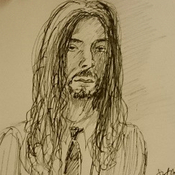
To Wolfgang Schirmacher philosophy is about reading in the spirit of, so that we may follow the logic of the phenomenon that shows itself to us. It is in this spirit of phenomenology Schirmacher asks whether Martin Heidegger's diagnosis of our age – that we live under a Gestell, or fix, of technology – is sufficient. Should we not consider the supplementary notion of technology as an event (Ereignis) of becoming into our own existence? We have an inborn character that is unassailable and yet unknown to us until the day we perish, and from such an ethical perspective – and in distinction to deontological views – Schirmacher rejects science's promise never to clone humans. He regards such a declaration as “only valid until it’s possible.” Rather, he regards our future as one in which humans will be allowed to procreate for as long as it doesn't interfere unambiguously with the functioning of the machines, “and during that interim the poor humans living there will still have hope.”Author's Profile
Other Versions
No versions found
Links
PhilArchive
External links
 (no proxy)
Setup an account with your affiliations in order to access resources via your University's proxy server
Through your library
- Sign in / register and customize your OpenURL resolver
- Configure custom resolver
My notes
Similar books and articles
Introducing Ereignis: philosophy, technology, way of life.Torgeir Fjeld, Stefan Chazbijewicz & Wolfgang Schirmacher - 2022 - Moss, Norway: Tankebanen forlag.
Releasement and Nihilism in the Art of Living with Technology.Marc Van den Bossche - 2017 - Foundations of Science 22 (2):247-253.
Wolfgang Schirmacher, Technik und Gelassenheit. Zeitkritik nach Heidegger. [REVIEW]Reinhard Margreiter - 1985 - Philosophisches Jahrbuch 92 (1):208.
On Living with Technology through Renunciation and Releasement.Robert C. Scharff - 2017 - Foundations of Science 22 (2):255-260.
Technik und Gelassenheit: Zeitkritik Nach Heidegger.Daniel Dahlstrom - 1985 - Review of Metaphysics 38 (3):688-689.
Heidegger's radical critique of technology as an outline of social acts.Wolfgang Schirmacher & Torgeir Fjeld - 2018 - Inscriptions 1 (1).
Moralizing Technology: Understanding and Designing the Morality of Things.Peter-Paul Verbeek - 2011 - University Of Chicago Press.
J. Poulain & W. Schirmacher, Penser après Heidegger. Après du colloque du centenaire (Paris, 25-27 septembre 1989), trad. A Münster, Éditions L'Harmattan, 1992, 312 pages.J. Poulain & W. Schirmacher, Penser après Heidegger. Après du colloque du centenaire (Paris, 25-27 septembre 1989), trad. A Münster, Éditions L'Harmattan, 1992, 312 pages. [REVIEW]Josette Lanteigne - 1994 - Horizons Philosophiques 4 (2):157-164.
Analytics
Added to PP
2026-03-07
Downloads
8 (#2,124,602)
6 months
8 (#1,301,128)
2026-03-07
Downloads
8 (#2,124,602)
6 months
8 (#1,301,128)
Historical graph of downloads
Author's Profile
References found in this work
Hegels Ontologie und die Grundlegung einer Theorie der Geschichtlichkeit.Herbert Marcuse - 1932 - V. Klostermann.
Technik und Gelassenheit. Zeitkritik nach Heidegger.Wolfgang Schirmacher - 1983 - Tijdschrift Voor Filosofie 49 (4):685-687.



Try MATCHA Writer if you're interested in citing directly from PhilPapers and certifying your authorship.
This site uses cookies and Google Analytics (see our terms & conditions for details regarding the privacy implications). Use of this site is subject to terms & conditions.
All rights reserved by The PhilPapers Foundation