

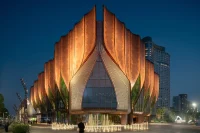



Guwahati Airport Terminal 2 has been named a winner of the International Architectural Award 2025 in the Transport/Airports category, an annual program run by The Chicago Athenaeum and The European Centre.
Guwahati International Airport, also known as Lokpriya Gopinath Bordoloi International Airport, is the principal aviation hub of Northeast India, connecting the Seven Sister States with the rest of the country and the world. Currently under redevelopment by Adani Airport Holdings Limited, the facility is being transformed into a modern, high-capacity terminal capable of handling over 10 million passengers annually.
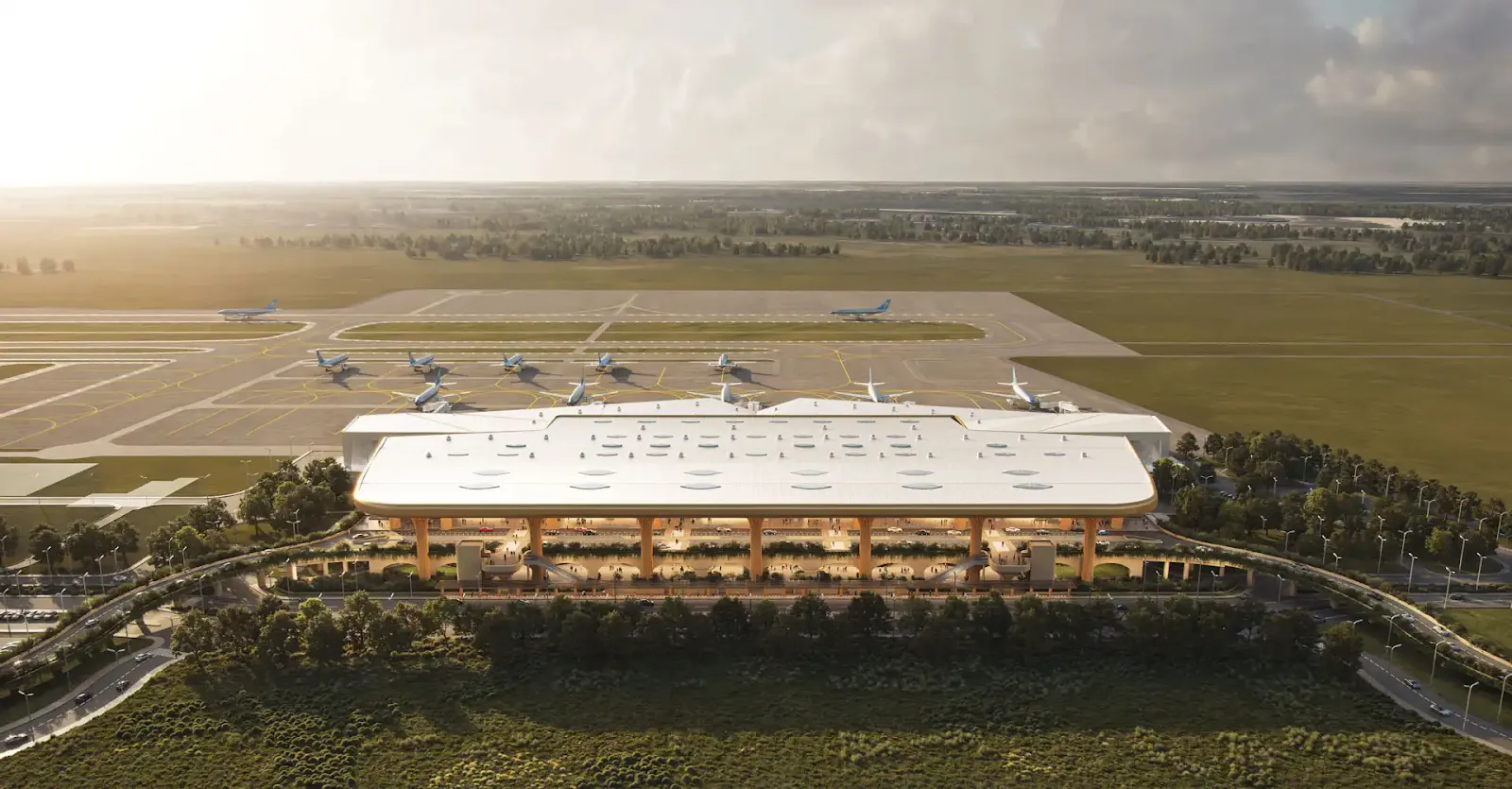
Designed as a “Gateway to the Northeast,” the terminal blends operational efficiency with cultural storytelling, featuring clear passenger flows, daylight-filled concourses, lush indoor gardens, and sustainable infrastructure that reduces environmental impact while elevating the travel experience.
Guwahati Airport Terminal 2 is a new, 140,000‑sq‑m integrated terminal shaped by an Assamese identity, bamboo, and the foxtail orchid (kopou phool) with a design target of 13.1 million passengers per annum (MPPA). It is operated by Adani Airports (Guwahati International Airport Ltd.) and is expected to open to passengers in late 2025, according to airport authorities.
Design and concept: regional identity, clear wayfinding
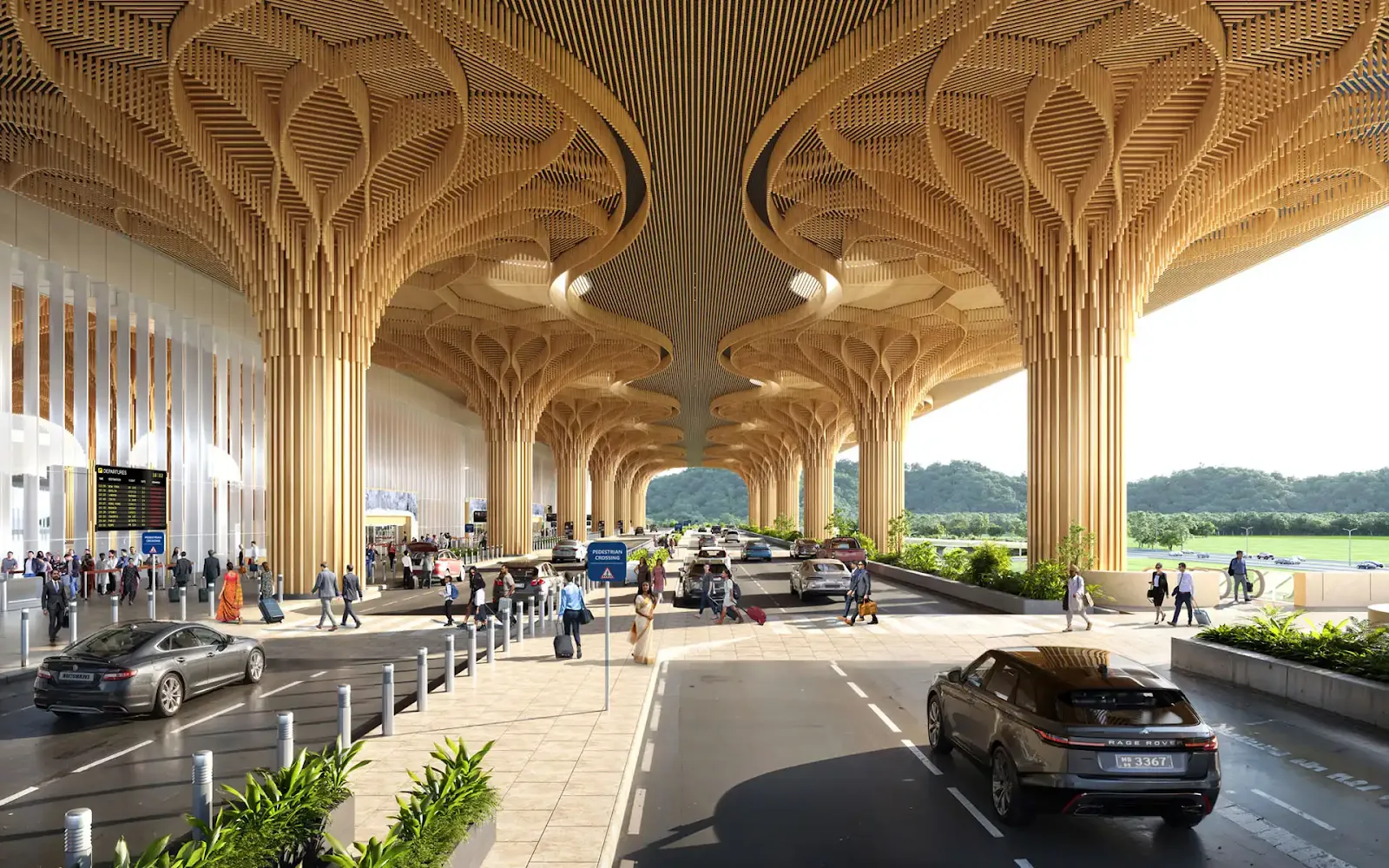
The project is designed by Mumbai-based architecture studio NUDES, led by architect Nuru Karim, under the thematic concept of “Bamboo Orchids.” Drawing inspiration from Assam’s biodiversity, over 600 native orchid species, and its deep bamboo heritage, the design integrates organic forms, tree-like columns, and renewable materials into a modern aviation structure.
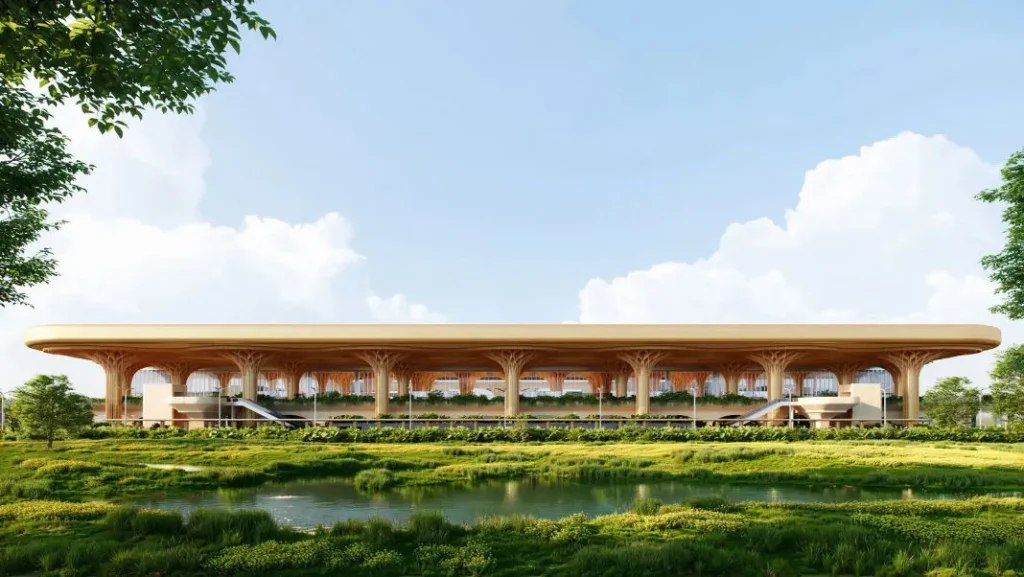
Karim’s approach marries ecological sensitivity with cultural symbolism, using engineered bamboo, passive cooling, natural lighting, and green walls to craft a terminal that is a transit hub and a sustainable landmark that embodies the strength, resilience, and elegance of the Northeast. A planted “Sky Forest” and generous daylighting soften long walks and reduce stress, while a digital‑first passenger journey (DigiYatra, e‑gates, CT scanners) keeps movement intuitive.
Structure: long‑span roof, “tree‑like” supports, open concourses
Structurally, Guwahati Airport Terminal 2 resembles a wide-span concourse hall with rhythmic, tree-like columns that evoke bamboo culms and branch out to support a layered roof. This approach creates large, column-free zones at check-in and security, improving sightlines and wayfinding. A raised kerb with elevated traffic lanes separates arrivals and departures, improving forecourt flow and keeping the terminal’s primary spans uncluttered by vehicular structure.
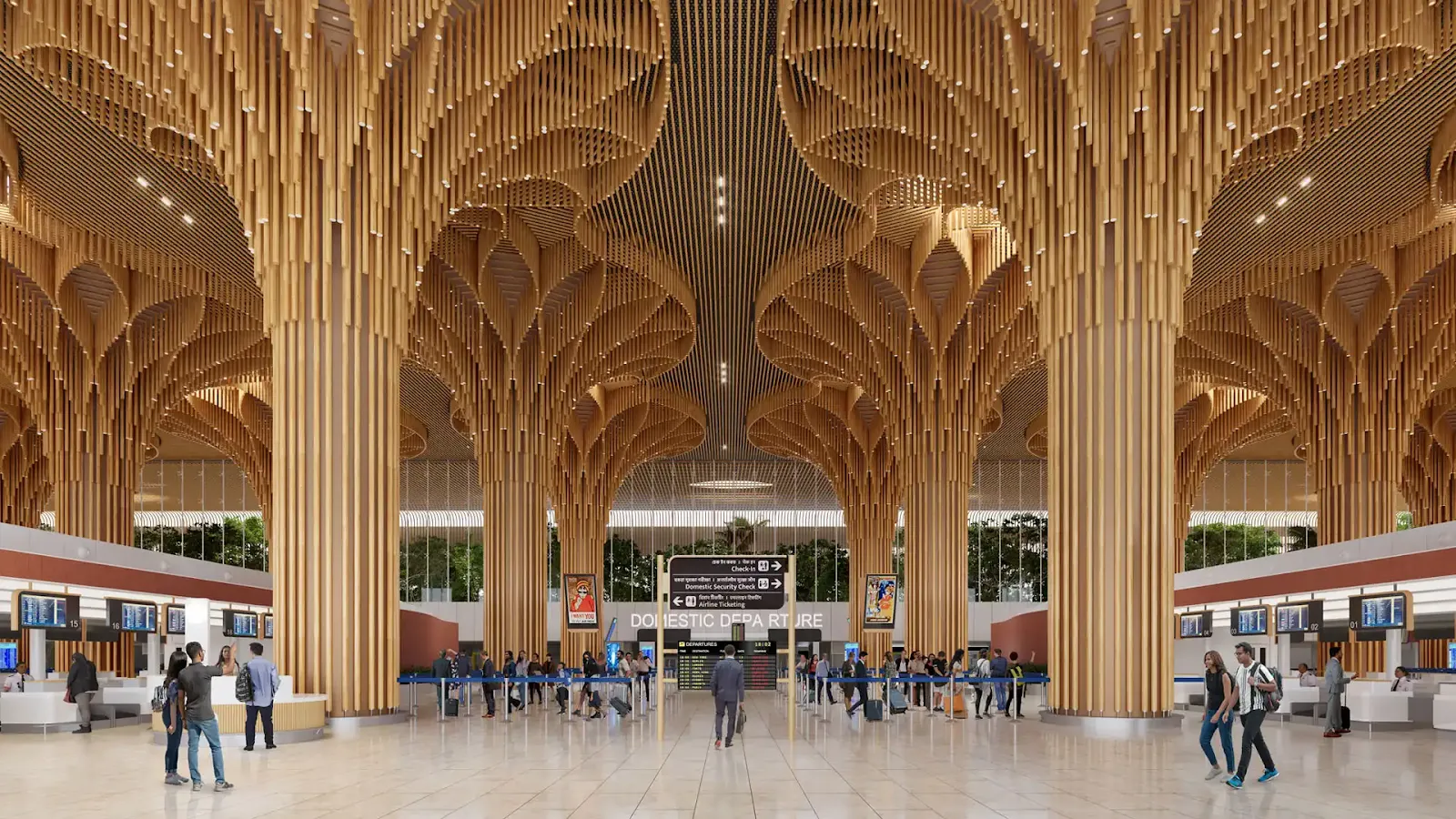
The same structural clarity of the large roof, expressed supports, and daylit clerestories allow Guwahati Airport to integrate public art and cultural patterns without compromising circulation or safety. It’s a simple, proven airport architecture move adapted to a strong local narrative.
Materials: durable shell, warm finishes
Expect a robust steel‑and‑concrete primary frame with metal and glazed roof/wall systems typical of contemporary Indian terminals, then bamboo‑inspired surface treatments, patterned screens, and warm interior finishes that amplify the region’s craft language. Publicly shared material notes emphasise the cultural palette (bamboo/orchid/gamocha) and the visual warmth the design chases. Guwahati Airport Terminal 2 uses these finishes to differentiate zones and make the immense volume feel legible and welcoming.
Sustainability and building performance
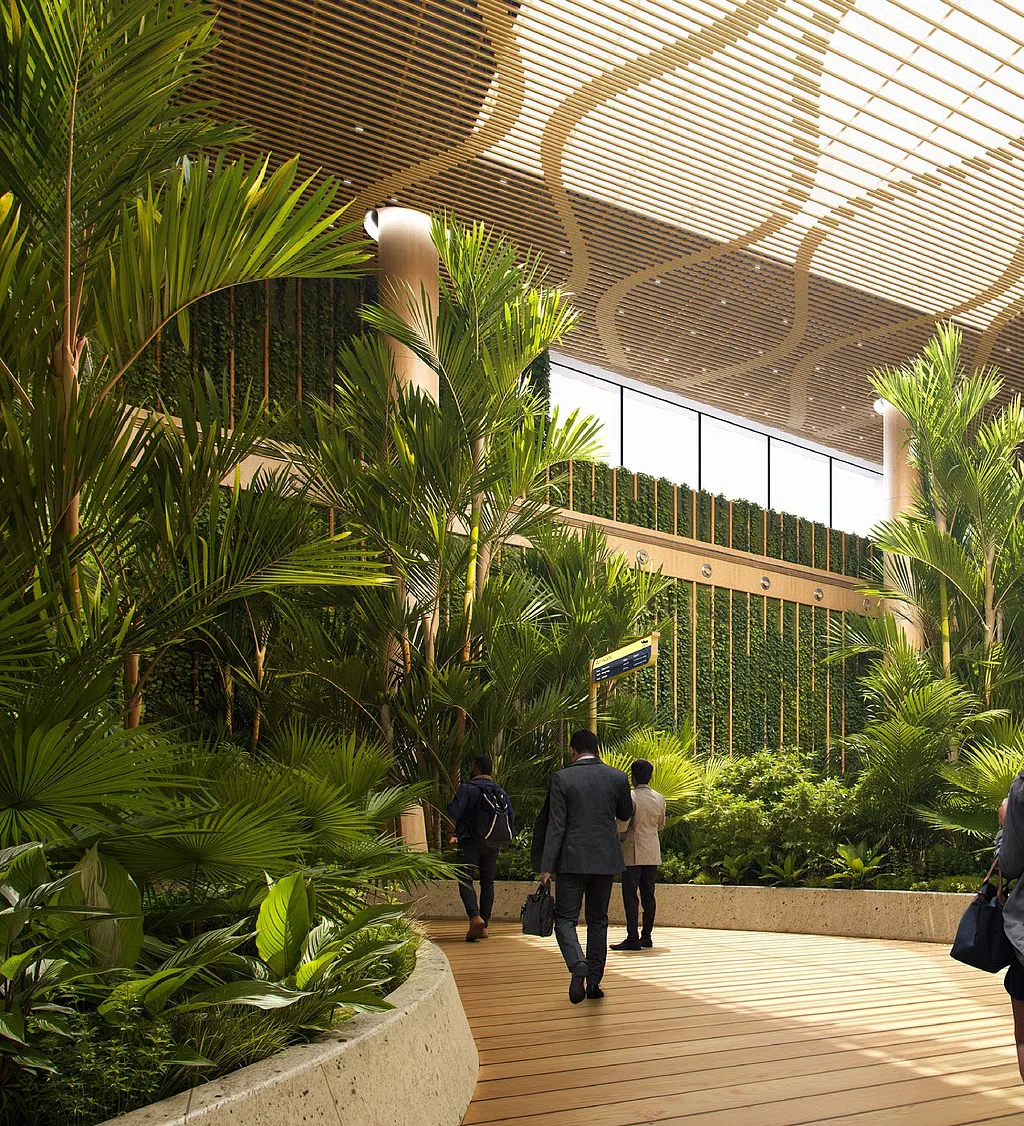
Daylighting and landscape are the terminal’s first “green systems.” Skylights and high‑level apertures pull light deep into the concourses; interior planting (the Sky Forest and other green inserts) moderates acoustics and improves the perceived microclimate.
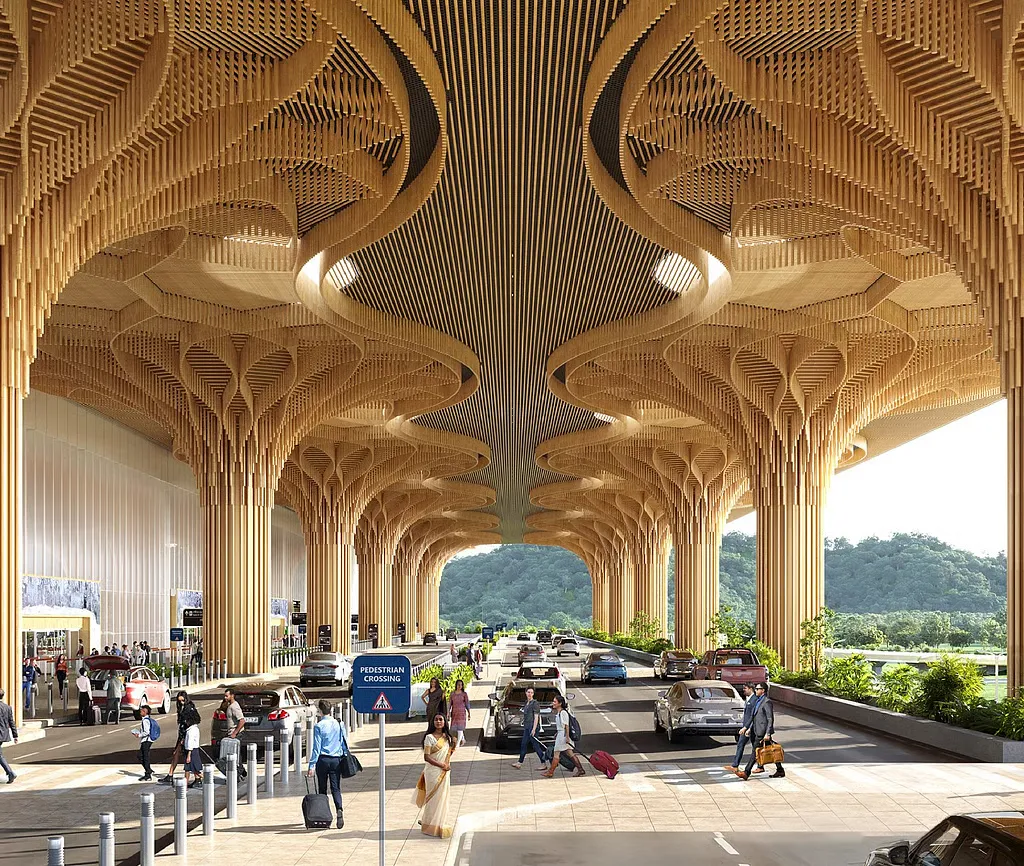
The airport uses passive design, first shade, daylight, and proportions, and active technologies such as DigiYatra, CT baggage systems, and efficient MEP to keep queues short and the building economical to operate.
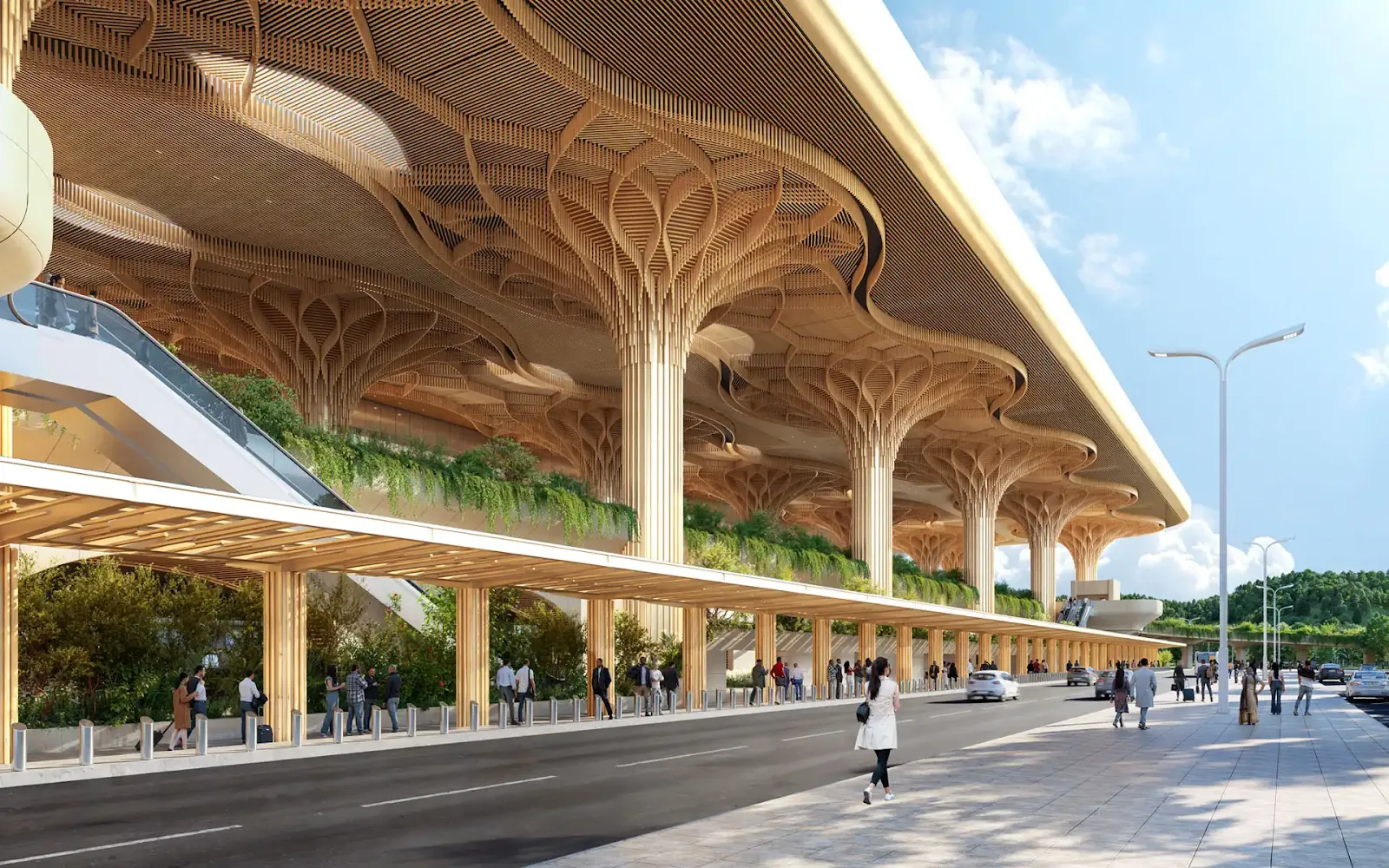
By scaling capacity and weaving culture into infrastructure, Guwahati Airport Terminal 2 positions Assam to attract growth in domestic and international traffic while giving the region a recognisable architectural symbol.
Guwahati Airport Terminal 2 Project Details
Location: Guwahati, Assam, India
Architects: NUDES
Clients: Adani Airports (Guwahati International Airport Ltd.)
Landscape Architects: Hemali Landscape Design Studio
General Contractor: Shapoorji Pallonji and Company Private Limited
Award: International Architectural Award 2025 – Transport/Airports category
Architectural Theme: “Bamboo Orchids” – inspired by Assam’s bamboo craft and foxtail orchid
Built-up Area: 140,000 sq m
Opening Target: Late 2025
Image credits: X/GuwahatiAirport/International Architectural Award 2025
Explore Courses