



Advancing Open Science
A global leader in open access publishing, supporting research
communities and accelerating scientific discovery
 
18 pages, 2359 KB  
Article
Assessment of Spirulina Residue Meal as a Substitute for Fish Meal in Juvenile Rainbow Trout (Oncorhynchus mykiss) Diets: Impact on Growth, Antioxidative Capacity, Carcass Composition and Hepatointestinal Health
by Ning Fu, Yuyu Wang, Shengwen Niu, Mengxin Xing, Meiling An, Lu Zhao, Gefeng Xu, Hairui Yu and Jiubo Cui
Fishes 2026, 11(6), 314; https://doi.org/10.3390/fishes11060314 (registering DOI) - 24 May 2026
Abstract
A 7-week study was conducted to investigate the effects of replacing fish meal (FM) with Spirulina residue meal (SPRM) on the growth, feed utilization, carcass composition, antioxidant ability, liver and intestinal histology of juvenile rainbow trout (Oncorhynchus mykiss) (initial body weight [...] Read more.
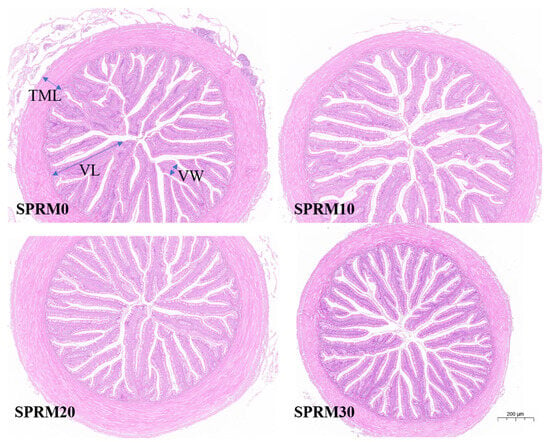
A 7-week study was conducted to investigate the effects of replacing fish meal (FM) with Spirulina residue meal (SPRM) on the growth, feed utilization, carcass composition, antioxidant ability, liver and intestinal histology of juvenile rainbow trout (Oncorhynchus mykiss) (initial body weight 5.36 ± 0.04 g). Four isonitrogenous (42%) and isolipidic (16%) diets were formulated to replace FM protein with SPRM at 0 (SPRM0), 10% (SPRM10), 20% (SPRM20) and 30% (SPRM30), respectively. Results showed that growth, feed utilization, carcass amino acid profile, serum biochemical indices, antioxidant ability, intestinal and liver histology were not significantly affected by dietary SPRM levels. Whole-body lipid content decreased as dietary SPRM replacement levels increased, and fish fed diet SPRM30 had lower lipid content than that fish fed diet SPRM0 (p < 0.05). Fish fed diet SPRM30 had higher C16:1n-7, C20:3n-6, total saturated fatty acid (SFA) and total fatty acid (TFA) contents in muscle than those fed other diets (p < 0.05), while these fatty acids had no change when FM was substituted with 10% and 20% SPRM (p > 0.05). The muscle C22:6n-3 (DHA) content decreased, but C18:3n-6 and n-6/n-3 polyunsaturated fatty acid (PUFA) ratio increased with increasing SPRM levels, and fish fed diet SPRM30 had significantly lower DHA content and higher n-6/n-3 ratio than the group fed SPRM0 (p < 0.05). The C22:1n-9, C18:2n-6c, C20:4n-6, total n-6 PUFA, and monounsaturated fatty acid (MUFA) content in muscle observed in SPRM30 were similar to the SPRM0 group (p > 0.05), but higher than the SPRM10 and SPRM20 groups (p < 0.05). In conclusion, 30% of FM protein could be replaced by SPRM in diets of juvenile rainbow trout without having a significant negative effect on growth, feed efficiency, antioxidant ability, and structure of liver and intestine, but could reduce DHA content, increase n-6 PUFA and n-6/n-3 PUFA ratio in muscle. Full article
(This article belongs to the Section Nutrition and Feeding)
Show Figures

Figure 1
16 pages, 269 KB  
Article
Impact of Moral Responsibility on Tourist Waste Reduction Intentions: A Case Study of Vientiane, Laos
by Lerdsouda Boudsabapaserd and Sanghoon Kang
Sustainability 2026, 18(11), 5267; https://doi.org/10.3390/su18115267 (registering DOI) - 24 May 2026
Abstract
Tourism drives economic growth but also intensifies environmental pressure at travel destinations, particularly by exacerbating local challenges in waste management. Rather than merely testing the theoretical validity of the norm activation model (NAM), this study utilizes its key constructs—specifically moral and accountability variables—as [...] Read more.
Tourism drives economic growth but also intensifies environmental pressure at travel destinations, particularly by exacerbating local challenges in waste management. Rather than merely testing the theoretical validity of the norm activation model (NAM), this study utilizes its key constructs—specifically moral and accountability variables—as a strategic framework to examine the psychological drivers of waste reduction in the urban context of Vientiane, Laos. Data from 382 domestic tourists were analyzed using ordinary least squares regression. Ascription of responsibility (AR) (β = 0.219, p < 0.001) was the strongest predictor of intention, followed by personal norm (PN) (β = 0.173, p < 0.01) and actual waste management behavior (β = 0.160, p < 0.01). Notably, environmental knowledge and awareness of consequences—factors often emphasized in traditional environmental campaigns—had no significant influence. The findings demonstrate that, in addressing urban waste challenges in developing regions, fostering internalized moral sentiments (AR and PN) is far more effective than mere pro-environmental education. This study concludes that sustainable waste management may benefit from operationalized interventions that activate personal accountability rather than relying solely on general environmental awareness. Full article
22 pages, 361 KB  
Perspective
Policy Misalignment in a Warming World: Reforming China’s Cultural Heritage Governance for Climate Adaptation
by Hui Zhong
Heritage 2026, 9(6), 210; https://doi.org/10.3390/heritage9060210 (registering DOI) - 24 May 2026
Abstract
Climate change poses accelerating and intensifying threats to cultural heritage worldwide, necessitating urgent and coordinated state-level responses. This study critically examines China’s governance framework for climate adaptation of cultural heritage, identifying a critical policy misalignment: although relevant legal and governance instruments—spanning cultural heritage [...] Read more.
Climate change poses accelerating and intensifying threats to cultural heritage worldwide, necessitating urgent and coordinated state-level responses. This study critically examines China’s governance framework for climate adaptation of cultural heritage, identifying a critical policy misalignment: although relevant legal and governance instruments—spanning cultural heritage protection, environmental governance, disaster risk reduction, territorial spatial planning, and climate action systems—are nominally in place, they remain profoundly fragmented in practice, resulting in operational inefficiency that severely constrains effective adaptation. To address this, the paper argues for a fundamental paradigm shift from static preservation to dynamic adaptation. It proposes a reform pathway centered on three pillars: reconceptualizing heritage from static preservation to dynamic adaptation, institutionalizing cross-departmental cooperation, and integrating systemic adaptation tools into planning and decision-making. The ultimate objective is to establish an adaptive governance system capable of responding flexibly to climate impacts through interdisciplinary coordination. This transformation is framed as a critical strategic imperative, essential for ensuring the long-term resilience of cultural heritage and civilizational continuity in a warming world. Full article
14 pages, 1179 KB  
Article
Heart Failure Etiology and 6-Month Cardiorenal Recovery Patterns After Early In-Hospital SGLT2 Inhibitor Initiation in HFrEF: A Prospective Real-World Cohort
by Marija Radić, Ivana Jurin, Fran Rode, Luka Šimunović, Petra Kolundžić, Irzal Hadžibegović, Šime Manola, Petra Vitlov, Vanja Ivanović Mihajlović, Danijela Grizelj, Hrvoje Falak, Mario Udovičić and Tomislav Letilović
Medicina 2026, 62(6), 1017; https://doi.org/10.3390/medicina62061017 (registering DOI) - 24 May 2026
Abstract
Background: SGLT2 inhibitors improve outcomes in heart failure with reduced ejection fraction (HFrEF), but whether early recovery patterns after initiation differ according to HF etiology in real-world practice remains uncertain. Objective: To evaluate whether ischemic versus non-ischemic etiology is associated with [...] Read more.
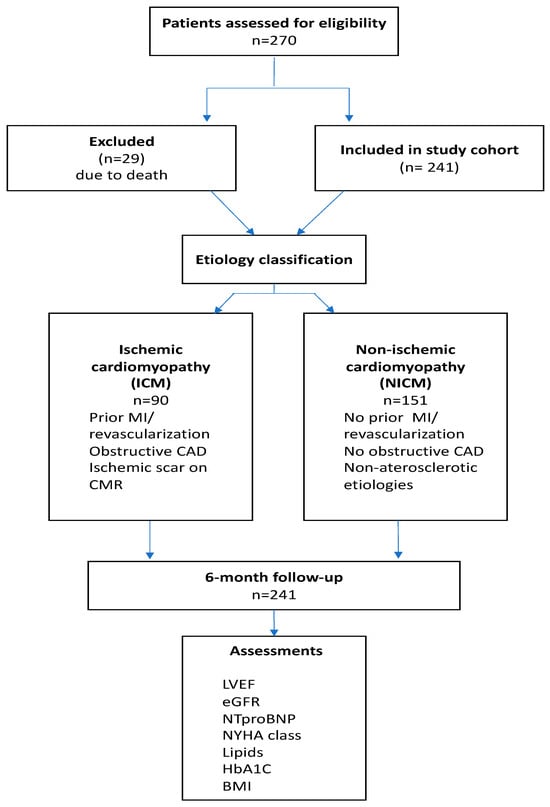
Background: SGLT2 inhibitors improve outcomes in heart failure with reduced ejection fraction (HFrEF), but whether early recovery patterns after initiation differ according to HF etiology in real-world practice remains uncertain. Objective: To evaluate whether ischemic versus non-ischemic etiology is associated with different 6-month cardiac, renal, biomarker, and exploratory metabolic trajectories after early in-hospital SGLT2 inhibitor initiation in HFrEF. Materials and Methods: In this prospective single-center observational cohort (2022–2025), consecutive adults hospitalized with first-presentation acute HFrEF who initiated empagliflozin or dapagliflozin within 48 h of admission were enrolled. Patients were classified as having ischemic cardiomyopathy (ICM) or non-ischemic cardiomyopathy (NICM). The primary analytic cohort included patients with paired baseline and 6-month echocardiography. The primary outcome was change in left ventricular ejection fraction (LVEF); eGFR and NT-proBNP were secondary outcomes. Exploratory metabolic/laboratory variables were summarized descriptively using paired available-case follow-up. The study was approved by the institutional ethics committee and registered in ClinicalTrials.gov under the CaRD registry framework (NCT06090591). Results: The paired 6-month echocardiographic analytic cohort comprised 241 patients who survived to reassessment (ICM n = 90; NICM n = 151). NICM showed greater improvement in LVEF than ICM (ΔLVEF +10% [IQR 0–18] vs. +5% [IQR 0–12]; p = 0.049) and a more favorable eGFR trajectory (ΔeGFR 0.30 [IQR −5.90 to 6.60] vs. −2.70 [IQR −12.60 to 3.40] mL/min/1.73 m2; p = 0.038). NT-proBNP declined substantially in both groups, with no between-group difference in change magnitude (p = 0.845), although 6-month values remained higher in ICM (p = 0.034). However, after multivariable adjustment, ischemic etiology was no longer independently associated with 6-month LVEF or eGFR outcomes. Exploratory metabolic findings varied descriptively by etiology but should be interpreted cautiously because follow-up completeness and background treatment intensity varied across variables. Conclusions: In this real-world cohort of patients with HFrEF who initiated SGLT2 inhibitors during hospitalization, HF etiology was associated with different short-term cardiorenal recovery patterns, whereas NT-proBNP reduction was similar across groups. These findings characterize etiology-related recovery within a treated cohort rather than differential SGLT2 inhibitor efficacy and should therefore be considered as hypothesis-generating. Full article
(This article belongs to the Special Issue New Insights into Heart Failure Management and Treatment)
Show Figures

Figure 1
15 pages, 2389 KB  
Article
Design and Engineering Application of Flat-Bed Laminator for Photovoltaic Modules
by Yu Jin, Pengju Duan and Boda Song
Solar 2026, 6(3), 29; https://doi.org/10.3390/solar6030029 (registering DOI) - 24 May 2026
Abstract
Against the backdrop of the global energy transition and China’s dual-carbon strategy, the photovoltaic (PV) industry is entering a new stage of large-scale, intensive development, where efficiency improvement and cost control in module encapsulation have become the core of industrial competition. To address [...] Read more.
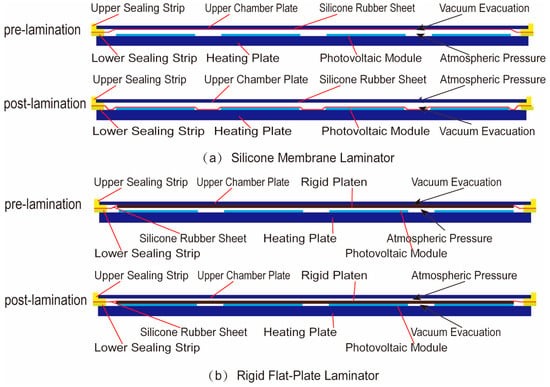
Against the backdrop of the global energy transition and China’s dual-carbon strategy, the photovoltaic (PV) industry is entering a new stage of large-scale, intensive development, where efficiency improvement and cost control in module encapsulation have become the core of industrial competition. To address the drawbacks of traditional silicone plate laminators—frequent consumable replacement, high maintenance costs, and poor adaptability to dual-glass module encapsulation—this paper proposes a flat-plate laminator technical scheme. By replacing flexible silicone plates with rigid pressure plates and optimizing pressure transmission paths and sealing structures, we achieved efficient, low-cost lamination. We first compared the working principles of flat-plate and silicone plate laminators, completed the structural design of five core modules with an optimized rigid platen and annular silicone sealing system, developed a modular retrofitting scheme for existing equipment, and verified performance via engineering tests. Tests show that the retrofitted equipment achieves a module thickness deviation ≤ ±0.06 mm, a product yield of 99.88%, annual cost savings of USD 342,000 per unit, and a 0.61-year investment payback period. This work provides theoretical support and an engineering reference for technical innovation in PV module encapsulation equipment, with significant promotion and application value. Full article
(This article belongs to the Topic Advances in Solar Technologies, 2nd Edition)
Show Figures

Figure 1

12 pages, 1042 KB  
Article
Genome-Wide Analysis of Serial Passage of the Infectious Bronchitis Virus Reveals Evolutionary Dynamics Underlying Attenuation and Immunogenicity
by Joaquín Williman, Gonzalo Tomas, Ariel Vagnozzi, Claudia Techera, Sebastián Brambillasca, Ruben Pérez and Ana Marandino
Vaccines 2026, 14(6), 467; https://doi.org/10.3390/vaccines14060467 (registering DOI) - 24 May 2026
Abstract
Background/Objectives: Serial passage in embryonated eggs is widely used to attenuate the infectious bronchitis virus (IBV) for vaccine production; however, the evolutionary processes underlying attenuation and immunogenicity remain incompletely understood. Here, we analyzed genome-wide viral evolution during serial passages to investigate how [...] Read more.
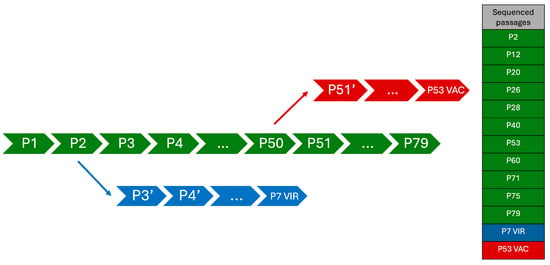
Background/Objectives: Serial passage in embryonated eggs is widely used to attenuate the infectious bronchitis virus (IBV) for vaccine production; however, the evolutionary processes underlying attenuation and immunogenicity remain incompletely understood. Here, we analyzed genome-wide viral evolution during serial passages to investigate how mutations emerge, persist, are lost, or become fixed over time and how these dynamics relate to changes in pathogenicity and immunogenicity. Methods: Deep sequencing was performed on 11 representative serial passages (P2–P79) of the UY/11/CA/18 strain, including two derivative lineages: P7 VIR (virulent) and P53 VAC (attenuated and immunogenic). Results: This study identified an early adaptive phase characterized by a limited set of mutations potentially associated with genome replication, viral RNA processing, and virion assembly, including a key change in non-structural protein 14 and variants in M and 3c (E). This phase was followed by a broader expansion of the variant spectrum across replicase genes and delayed accumulation of Spike protein variants. Most Spike changes emerged during later passages and exhibited transient dynamics, and only a subset reached a high frequency after the establishment of early replicase- and structural-associated changes. Consistent with these dynamics, P7 VIR diverged before the late accumulation of Spike variants and retained a pathogenic phenotype, whereas P53 VAC diverged after the emergence of early high-frequency variants but before the extensive late-stage Spike variation observed in P79, which was associated with reduced immunogenicity. Conclusions: These findings support a multi-step model of IBV attenuation in which progressive filtering of genome-wide variation shapes distinct evolutionary outcomes during serial passages. This evolutionary framework provides insight into the relationship between attenuation and immunogenicity and may help guide the rational design of live attenuated vaccines. Full article
(This article belongs to the Section Vaccine Design, Development, and Delivery)
Show Figures

Figure 1

16 pages, 14897 KB  
Article
Comparative Analysis of PM10 Dust Pollution Predictive Modeling in the Area of Point-Pattern Development Using Machine Learning Algorithms
by Svetlana Manzhilevskaya
Buildings 2026, 16(11), 2087; https://doi.org/10.3390/buildings16112087 (registering DOI) - 24 May 2026
Abstract
The construction sector is undergoing rapid digital transformation, creating opportunities to enhance environmental safety in urban areas. One critical application lies in air pollution forecasting, particularly regarding fine dust (PM10) emissions. While machine learning (ML) models are widely used for city-wide [...] Read more.
The construction sector is undergoing rapid digital transformation, creating opportunities to enhance environmental safety in urban areas. One critical application lies in air pollution forecasting, particularly regarding fine dust (PM10) emissions. While machine learning (ML) models are widely used for city-wide air quality monitoring, a significant research gap exists in the high-resolution (5 min interval) forecasting of dust at localized “point-pattern” development sites. These densely built urban zones present unique challenges due to highly volatile microclimates and intermittent emission sources that directly affect nearby residents. The purpose of this study is to perform a preliminary performance analysis of eight predictive algorithms—ARIMA, EMA, Prophet, NNAR, Random Forest, SVM, and XGBoost—to identify the most robust approach for short-term PM10 forecasting under limited data (N = 1728). Special attention is paid to the non-linear relationship between meteorological conditions and dust concentrations. Unlike previous studies which focused on general urban backgrounds, this work contributes a validated methodological framework for localized monitoring. The results demonstrate that tree-based ensemble models provide the highest stability and accuracy, offering a reliable basis for future real-time environmental management and active pollution mitigation strategies on urban construction sites. Full article
(This article belongs to the Section Construction Management, and Computers & Digitization)
Show Figures

Figure 1

26 pages, 7253 KB  
Article
A Method for Fish Feeding Intensity Assessment Based on Spatial Features and TabNet-DFWL
by Lu Zhang, Shunshun Zhou, Zunxu Liu, Yue Li, Hao Yang and Wenhui Ni
Fishes 2026, 11(6), 313; https://doi.org/10.3390/fishes11060313 (registering DOI) - 24 May 2026
Abstract
Accurate assessment of fish feeding intensity is significant for the timely understanding of feeding demands, dynamically adjusting feeding strategies, and reducing aquaculture costs. However, existing methods often rely on superficial visual features that fail to capture subtle satiety dynamics, resulting in limited reliability. [...] Read more.
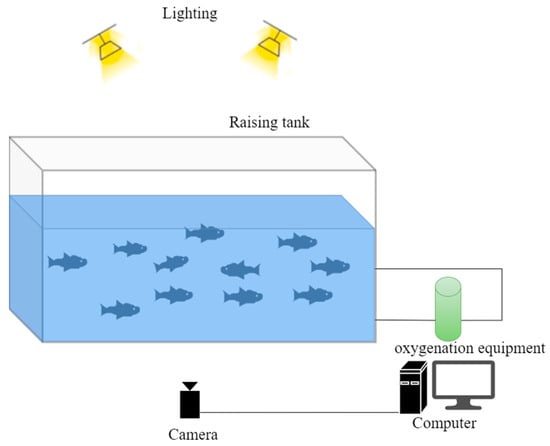
Accurate assessment of fish feeding intensity is significant for the timely understanding of feeding demands, dynamically adjusting feeding strategies, and reducing aquaculture costs. However, existing methods often rely on superficial visual features that fail to capture subtle satiety dynamics, resulting in limited reliability. To address the issue, a method for fish feeding intensity assessment based on spatial features and TabNet model with Dynamic Feature Weighting Layer (TabNet-DFWL) is proposed in this study. Fish body contours are extracted from lateral-view images through a pipeline of segmentation, enhancement, and binarization. Subsequently, spatial features highly correlated with fish feeding mechanisms are proposed to characterize behavioral changes. Based on these, an interpretable model integrating spatial features and TabNet-DFWL is constructed to achieve precise fish feeding intensity assessment. This method explores spatial features related to feeding behavior from the underlying mechanism of fish behavioral changes and establishes a feeding intensity assessment model based on TabNet-DFWL. By doing so, it avoids the black-box risk commonly associated with traditional deep learning models and significantly improves model interpretability and reliability, thereby providing a trustworthy basis for precision feeding in aquaculture. Experiments conducted on a real-world fish feeding dataset demonstrate that the proposed method achieves an accuracy of 95.96%, an average precision of 93.44%, an average recall of 93.33%, an average specificity of 98.15%, and an average F1-score of 93.38%. Compared with comparative algorithms, all evaluation metrics exhibit improvements. These results indicate that the proposed method enables accurate assessment of fish feeding intensity and can effectively support the dynamic adjustment of feeding strategies in aquaculture systems. Full article
(This article belongs to the Special Issue Computer Vision Applications for Fisheries and Aquaculture)
Show Figures

Figure 1

13 pages, 4718 KB  
Article
Enhanced Temperature Sensitivity of Fiber Bragg Grating Sensors Using PTFE Sleeve Encapsulation with Adhesive-Assisted Packaging
by Feng Wang, Shuhui Liu, Haoze Du, Zan Liu, Xixi Hong, Jin Qiu, Quanrong Deng, Wei Huang and Weijun Tong
Photonics 2026, 13(6), 510; https://doi.org/10.3390/photonics13060510 (registering DOI) - 24 May 2026
Abstract
To overcome the inherently low temperature sensitivity of fiber Bragg gratings (FBGs) in engineering applications under low-temperature conditions, a sensitivity-enhanced FBG temperature sensor based on a polytetrafluoroethylene (PTFE) encapsulation sleeve was developed. Four adhesive materials—silicone thermal grease, polydimethylsiloxane (PDMS), epoxy resin, and modified [...] Read more.
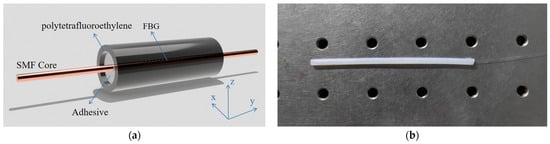
To overcome the inherently low temperature sensitivity of fiber Bragg gratings (FBGs) in engineering applications under low-temperature conditions, a sensitivity-enhanced FBG temperature sensor based on a polytetrafluoroethylene (PTFE) encapsulation sleeve was developed. Four adhesive materials—silicone thermal grease, polydimethylsiloxane (PDMS), epoxy resin, and modified acrylic ester—were employed to package the FBG within the PTFE sleeve to improve its temperature sensitivity. Thermal stress simulations of the proposed sensor structure were carried out using COMSOL Multiphysics® 6.2, and the simulation results showed good agreement with the experimental data. Based on the experimental results, the sensitivity-enhancement effects of PTFE combined with different adhesives, as well as the influences of the PTFE sleeve length and wall thickness, were systematically investigated. The results indicate that, within the temperature range of −35 °C to 15 °C, increasing both the length and thickness of the PTFE sleeve can effectively improve the temperature sensitivity of the sensor. When epoxy resin was used as the encapsulating adhesive, the sensor achieved a maximum sensitivity of 117.4 pm/°C, corresponding to a 13.19-fold increase compared with that of a bare FBG sensor. This sensitivity-enhancing packaging structure significantly improves both the temperature sensitivity and linearity of FBG temperature sensors, while also substantially reducing fabrication costs. Full article
(This article belongs to the Special Issue Applications and Development of Optical Fiber Sensors)
Show Figures

Figure 1

13 pages, 18766 KB  
Article
Wear Behavior of Austenitic Stainless Steel 308L Fabricated by Wire Arc Additive Manufacturing
by Saleh Alzughaibi, Youssef Alammari, Abdulrahman Alrumayh, Mohammed T. Alamoudi, Faisal J. Alzahrani, Hussam H. Noor and Khalid Alqosaibi
Materials 2026, 19(11), 2207; https://doi.org/10.3390/ma19112207 (registering DOI) - 24 May 2026
Abstract
Wire Arc Additive Manufacturing (WAAM) has emerged as a cost-effective and high-deposition-rate technique for fabricating large-scale metallic components; however, the complex thermal history inherent to the process leads to heterogeneous microstructures that can significantly influence tribological performance. In this study, the dry sliding [...] Read more.
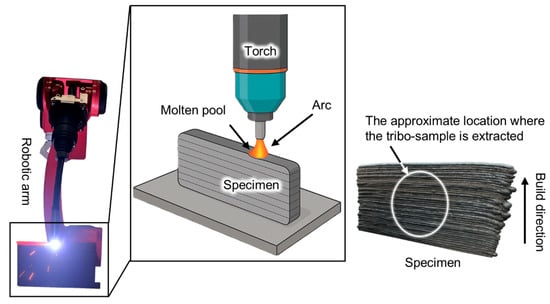
Wire Arc Additive Manufacturing (WAAM) has emerged as a cost-effective and high-deposition-rate technique for fabricating large-scale metallic components; however, the complex thermal history inherent to the process leads to heterogeneous microstructures that can significantly influence tribological performance. In this study, the dry sliding wear behavior of WAAM-fabricated austenitic stainless steel 308L (SS308L) was systematically investigated using a pin-on-disk configuration. The influence of applied normal load (1.5–15 N) and sliding speed (0.03–0.229 m/s) on wear volume, specific wear rate, coefficient of friction (COF), and tangential force was evaluated. Optical microstructural observations indicated features consistent with a ferritic–austenitic solidification structure, including regions resembling polygonal ferrite, Widmanstätten ferrite, and austenitic dendritic morphologies. Wear results showed that wear volume and cross-sectional area increased monotonically with increasing load, while the effect of sliding speed was comparatively less significant. The specific wear rate remained on the order of 10−4 mm3/N·m with minor variations across test conditions. The COF decreased with increasing load up to 10 N, followed by a speed-dependent response at higher loads. The findings demonstrate that load is the dominant factor governing wear behavior in WAAM SS308L, while microstructural heterogeneity may contribute to frictional stability and wear resistance. This study provides valuable insight into the structure–tribology relationship of WAAM stainless steels and supports the optimization of process parameters for wear-critical applications. Full article
(This article belongs to the Special Issue 3D Printing Technology Using Metal Materials and Its Applications)
Show Figures

Figure 1

14 pages, 693 KB  
Article
Benchmarking Time-Series Artificial Intelligence Architectures for Wearable Sensor-Based Fall Prediction: A Synthetic Data Simulation Framework
by Edward R. Sykes, Mohammad Maghsoudimehrabani and Abdulrahman Al-Shanoon
Sensors 2026, 26(11), 3326; https://doi.org/10.3390/s26113326 (registering DOI) - 24 May 2026
Abstract
Falls among older adults are a major cause of injury and loss of independence, yet most existing systems detect falls only after onset or provide very limited warning time. This study presents a synthetic benchmarking framework for early fall-risk prediction using multimodal wearable-inspired [...] Read more.
Falls among older adults are a major cause of injury and loss of independence, yet most existing systems detect falls only after onset or provide very limited warning time. This study presents a synthetic benchmarking framework for early fall-risk prediction using multimodal wearable-inspired time-series data and compares classical and temporal machine learning architectures under a realistic evaluation protocol. A synthetic dataset of 1000 sequences was generated to emulate normal activity, slip events, and pre-fall instability using biomechanical, physiological, and contextual variables. Eight baseline models and two augmented temporal variants were trained and evaluated using subject-wise splits to reduce leakage. Performance differed substantially by model family and evaluation protocol. Classical baselines achieved the strongest overall macro-F1 scores, whereas temporal models showed more modest discrimination. Under a fixed alerting rule, operational early-warning behavior varied considerably: some models failed to trigger alerts, while others achieved higher pre-fall trigger rates at the cost of increased false alarms. These findings show that apparent performance depends strongly on partitioning strategy, calibration, and alert design. The proposed framework provides a reproducible basis for benchmarking early-warning fall-risk models and supports future validation using real-world cohorts and deployment-oriented calibration strategies. Full article
(This article belongs to the Special Issue Sensor-Based Wearable Devices: Health, Activity and Monitoring)
Show Figures

Figure 1

16 pages, 902 KB  
Article
Burnout and Insomnia Among Greek Physicians Affiliated with the Athens Medical Association After the Acute Phase of the COVID-19 Pandemic: Prevalence and Contributing Factors
by Dimosthenis Akrivakis, Dimitrios Lamprinos, Maria Patatoukou, Stavroula Alevizou, Georgios Zoumpoulis, Theodoros Pouletidis, Paraskevi Deligiorgi, Panagiotis Georgakopoulos, Evangelos Oikonomou, Gerasimos Siasos, Kostas A. Papavassiliou, Christos Damaskos, Georgios Rachiotis, Dimitrios Schizas and Georgios Marinos
Epidemiologia 2026, 7(3), 73; https://doi.org/10.3390/epidemiologia7030073 (registering DOI) - 24 May 2026
Abstract
Background: The COVID-19 pandemic has been a global crisis, affecting healthcare systems and professionals worldwide. This study investigates the prevalence and factors associated with burnout and insomnia among Greek physicians affiliated with the Athens Medical Association after the acute phase of the COVID-19 [...] Read more.
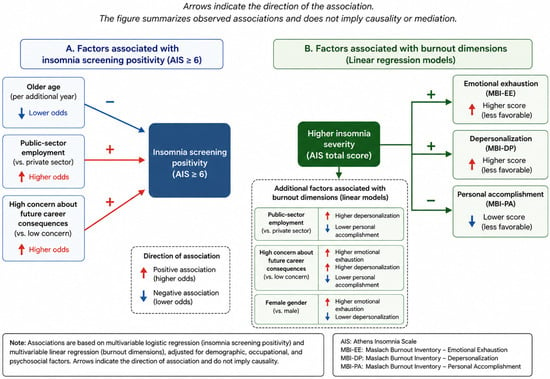
Background: The COVID-19 pandemic has been a global crisis, affecting healthcare systems and professionals worldwide. This study investigates the prevalence and factors associated with burnout and insomnia among Greek physicians affiliated with the Athens Medical Association after the acute phase of the COVID-19 pandemic. Methods: Data were collected through an anonymous online survey distributed to active physician members of the Athens Medical Association between 15 June 2023 and 15 July 2023. Burnout was assessed using the Maslach Burnout Inventory (MBI), and insomnia was assessed using the Athens Insomnia Scale (AIS). Descriptive, unadjusted, and multivariable analyses were performed. Results: A total of 1023 physicians participated. Insomnia (AIS ≥ 6) affected 83.0% of the participants. Based on standard MBI cut-offs, 52.4% had high emotional exhaustion, 35.9% had high depersonalization, and 39.2% had low personal accomplishment. In multivariable logistic regression, older age was significantly associated with lower odds of insomnia, while public-sector employment and high concern about future career consequences were associated with higher odds. In multiple linear regression models, a higher AIS total score was significantly associated with higher emotional exhaustion and depersonalization and with lower personal accomplishment. Conclusions: These findings suggest high rates of insomnia and burnout in this physician sample. Greater insomnia was significantly associated with less favorable scores across all three burnout dimensions. Younger age, public-sector employment, and higher concern about future career consequences were associated with insomnia. These findings should be interpreted as associations, rather than causal effects. Full article
Show Figures

Figure 1

25 pages, 2631 KB  
Article
DS2 Attention: Dual-Stream Segmented Information Propagating Linear Attention for Vision Transformers
by Rigel Mahmood, Sarosh Patel and Khaled Elleithy
AI 2026, 7(6), 188; https://doi.org/10.3390/ai7060188 (registering DOI) - 24 May 2026
Abstract
While Vision Transformers (ViTs) have achieved state-of-the-art (SOTA) results in visual recognition, their scalability remains fundamentally constrained by the quadratic complexity of global self-attention. To address this, we present a linear complexity attention design employing dual-stream information propagation to enhance representational efficiency and [...] Read more.
While Vision Transformers (ViTs) have achieved state-of-the-art (SOTA) results in visual recognition, their scalability remains fundamentally constrained by the quadratic complexity of global self-attention. To address this, we present a linear complexity attention design employing dual-stream information propagation to enhance representational efficiency and structured feature aggregation. Our proposed DS2 attention acts as a versatile replacement for standard attention in various SOTA designs, such as Tokens-to-Token (T2T) and FasterViT. In our design, half of the attention heads perform left-to-right segmented information propagation in a Perceiver-style manner, while the remaining half of the heads perform right-to-left propagation. This bidirectional structured attention enables efficient long-range dependency modeling without the overhead of full global attention. To improve classification performance, we introduce a segment-level classification strategy in which each segment is associated with a summary token. The final prediction is produced via cross-attention between image tokens and these summary tokens, enabling hierarchical semantic comprehension. Extensive experiments demonstrate that the proposed attention design achieves on average 0.3% higher accuracy on the ImageNet-1K dataset, while offering improved information flow and higher efficiency across SOTA Vision Transformer designs. Full article
13 pages, 3286 KB  
Article
Different Concentrations of Copaiba Oil (Copaifera spp.) in Ruminal Fermentation
by Anderson Luiz de Lucca Bento, Raizza Fátima A. Tulux Rocha, Marcelo Vedovatto, Jocely Gomes de Souza, Fábio José Carvalho Faria, Luís Carlos Vinhas Ítavo, Anuzhia Paiva Moreira, Andréa Roberto D. Lopes Souza and Gumercindo Loriano Franco
Fermentation 2026, 12(6), 253; https://doi.org/10.3390/fermentation12060253 (registering DOI) - 24 May 2026
Abstract
The use of copaiba oil (COP) in ruminant nutrition is relatively recent, and the results reported in the literature remain controversial. This study evaluated the effects of increasing dietary concentrations of COP on ruminal fermentation in steers. Five rumen-cannulated steers were assigned to [...] Read more.
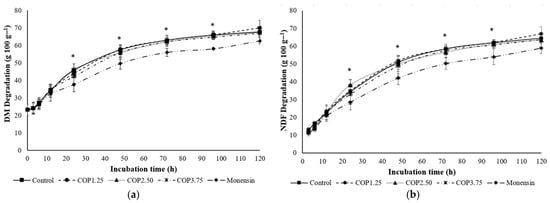
The use of copaiba oil (COP) in ruminant nutrition is relatively recent, and the results reported in the literature remain controversial. This study evaluated the effects of increasing dietary concentrations of COP on ruminal fermentation in steers. Five rumen-cannulated steers were assigned to a 5 × 5 Latin square design and received the following treatments: Control (0 g kg−1 of COP), 1.25 g kg−1 COP, 2.50 g kg−1 COP, and 3.75 g kg−1 COP dry matter (DM), and monensin (positive control; 40 mg kg−1 DM in the concentrate). Animals were fed a 50:50 forage:concentrate diet. Copaiba oil supplementation (1.25 to 3.75 g kg−1 DM) did not affect ruminal pH, the concentrations of NH3-N, or propionate (mmol L−1; p > 0.05). Similarly, COP had no effect on intake or nutrient digestibility (p > 0.05). In contrast, monensin increased (p ≤ 0.05) the concentrations of NH3-N and propionate (mmol L−1). Overall, COP supplementation did not modify ruminal fermentation under the conditions of this study. However, further studies are needed to assess its effects in diets with higher forage proportions, which better represent grazing systems. Full article
(This article belongs to the Section Animal and Feed Fermentation)
Show Figures

Figure 1

18 pages, 8648 KB  
Article
Transparent Conductive Films Based on rGO/AgNW/PET for Electrical Heating and Electromagnetic Interference Shielding Applications
by Ke Hu, Wen-Hao Geng and Hong-Zhang Geng
Nanomaterials 2026, 16(11), 655; https://doi.org/10.3390/nano16110655 (registering DOI) - 24 May 2026
Abstract
Flexible transparent conductive films (TCFs) and their applications have attracted extensive interest. Silver nanowires (AgNWs) have been explored to replace conventional indium tin oxide (ITO) due to their high optical transmittance and superior electrical conductivity. Nevertheless, AgNWs tend to oxidize under ambient conditions, [...] Read more.
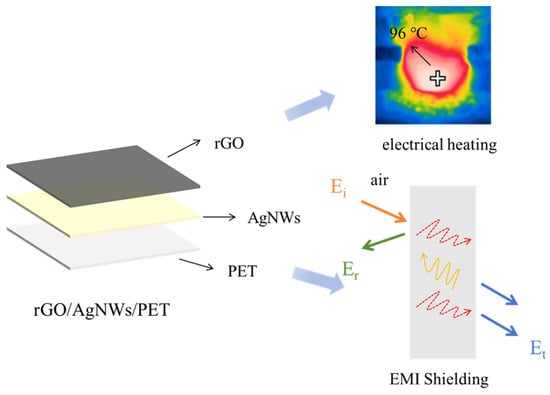
Flexible transparent conductive films (TCFs) and their applications have attracted extensive interest. Silver nanowires (AgNWs) have been explored to replace conventional indium tin oxide (ITO) due to their high optical transmittance and superior electrical conductivity. Nevertheless, AgNWs tend to oxidize under ambient conditions, which weakens the conductive network and limits long-term performance. Spraying reduced graphene oxide (rGO) can stabilize the conductive network and inhibit oxidation, thereby enhancing the overall properties of the films. In this work, rGO/AgNW/PET TCFs were prepared using a spray-coating approach. The transmittance of the rGO/AgNW/PET TCFs was measured at 77% at 550 nm, accompanied by a sheet resistance of 6.8 Ω/sq. The films achieved the surface temperature of 95 °C at 6 V with stable operation while also achieving an electromagnetic interference shielding effectiveness of 27 dB. This structural design improves both performance and stability, offering great potential for flexible TCFs in advanced optoelectronic applications. Full article
(This article belongs to the Section Nanocomposite Materials)
Show Figures

Graphical abstract

14 pages, 2395 KB  
Article
Stable Core–Shell ZIF-8@TPPa Hybrids: Synthesis and Enhanced Herbicide Removal from Water
by Zeyuan Li, Zhenzhen Liu, Xiangping Lin, Mengyuan Ge, Nannan Wu, Xinquan Wang, Yuteng Zhou, Shuchun Wu, Wei Ding and Peipei Qi
Molecules 2026, 31(11), 1799; https://doi.org/10.3390/molecules31111799 (registering DOI) - 24 May 2026
Abstract
The excessive use of herbicides in agricultural fields has emerged as a critical environmental concern. This study innovatively synthesized a ZIF-8@TPPa composite through a solvothermal method for the efficient removal of herbicides from aqueous environment. The material exhibited remarkable adsorption capacities for butachlor [...] Read more.
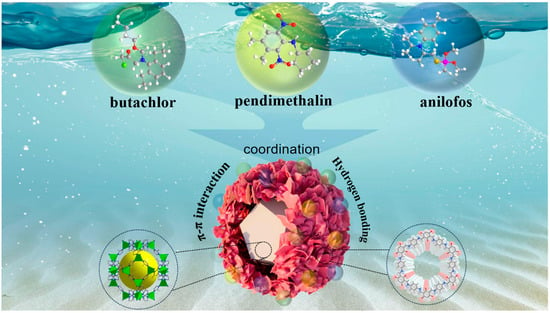
The excessive use of herbicides in agricultural fields has emerged as a critical environmental concern. This study innovatively synthesized a ZIF-8@TPPa composite through a solvothermal method for the efficient removal of herbicides from aqueous environment. The material exhibited remarkable adsorption capacities for butachlor (232.56 mg/g), anilofos (188.68 mg/g), and pendimethalin (285.71 mg/g), along with excellent acid–base stability (pH 3–9), strong anti-ion interference capability, and good reusability (adsorption efficiency >80% after five cycles). The adsorption processes were well-described by the two isotherm models and the pseudo-second-order model, indicating that the dominant mechanism is a synergistic effect between monolayer chemical adsorption and multilayer physical adsorption, primarily driven by π-π stacking, hydrogen bonding, and coordination. The material maintained outstanding adsorption efficiency (>85%) in real water samples (tap water, seawater, and river water). This study not only provides a sustainable and effective strategy for herbicide remediation from aqueous environment but also expands the practical applications of MOF@COF in aqueous environment. Full article
Show Figures

Graphical abstract

15 pages, 334 KB  
Article
Perceptions of Home Concept Among British Homeowners in Primary and Secondary Homes: The Case of Ortaca
by Onur Akbulut, Yakin Ekin and Tunahan Celik
Sustainability 2026, 18(11), 5266; https://doi.org/10.3390/su18115266 (registering DOI) - 24 May 2026
Abstract
This study addresses second-home ownership not merely as a form of tourism accommodation or real estate investment, but as a home-building process intersecting with local life, belonging, daily practices, and sustainable destination governance. While the economic, environmental, and community impacts of second-homes have [...] Read more.
This study addresses second-home ownership not merely as a form of tourism accommodation or real estate investment, but as a home-building process intersecting with local life, belonging, daily practices, and sustainable destination governance. While the economic, environmental, and community impacts of second-homes have been extensively discussed in the literature, how individuals perceive their primary and secondary homes differently in terms of the bodily, material, vibrant, imaginary, and emotional dimensions of home has been examined in a limited number of studies. This research analyzes paired data obtained through a two-stage online questionnaire from 223 British participants who own a secondary home in the Mugla–Ortaca region and a primary home in the United Kingdom. The 18-item Home Scale was used as the measurement tool. Confirmatory factor analysis, reliability–validity analyses, measurement invariance, and paired-samples t-tests were applied. The findings show that the bodily home difference was not statistically significant at the conventional 0.05 threshold, whereas primary-home scores were significantly higher in the material, vibrant, imaginary, and emotional home dimensions. The small to small-medium effect sizes suggest that the results should be interpreted cautiously as an asymmetrical home-building process rather than as evidence of a hierarchical superiority of the primary home. The study proposes a planning approach that does not view second home owners as merely transient consumers in sustainable coastal–rural destinations, but rather considers social sustainability, service planning, seasonality management, and local community engagement channels together. Full article
22 pages, 1511 KB  
Article
Improving Ethereum Price Forecasting Through Hybrid Decomposition and LSTM–Attention Mechanisms
by Amina Ladhari and Heni Boubaker
J. Risk Financial Manag. 2026, 19(6), 377; https://doi.org/10.3390/jrfm19060377 (registering DOI) - 24 May 2026
Abstract
This study investigates the predictive performance of decomposition-based deep learning models through a focused case study on Ethereum price forecasting. Using hourly Ethereum price data from 5 September 2020 to 13 July 2025, we develop hybrid forecasting frameworks that integrate three signal decomposition [...] Read more.
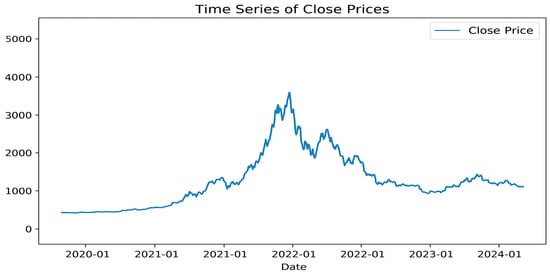
This study investigates the predictive performance of decomposition-based deep learning models through a focused case study on Ethereum price forecasting. Using hourly Ethereum price data from 5 September 2020 to 13 July 2025, we develop hybrid forecasting frameworks that integrate three signal decomposition techniques—Wavelet Decomposition (WD), Variational Mode Decomposition (VMD), and Empirical Mode Decomposition (EMD)—with a Long Short-Term Memory network enhanced by an attention mechanism (LSTM–Attention). The decomposition methods are first applied to extract multiple frequency components from the original time series, allowing the forecasting model to capture both short-term fluctuations and long-term dynamics inherent in this specific digital asset. Each decomposed component is then modeled using the LSTM–Attention architecture, and the forecasts are aggregated to produce the final prediction. The predictive performance of the proposed models is evaluated using MAE, MSE, RMSE, and MAPE, and the results are compared with benchmark models including ARIMA-GARCH and standard LSTM–Attention. Forecast accuracy is assessed through out-of-sample one-step-ahead predictions, and robustness is ensured by averaging results across 10 independent runs. The empirical results demonstrate that incorporating decomposition techniques substantially improves forecasting accuracy. Among the tested models, the EMD–LSTM–Attention framework achieves the best performance, producing the lowest forecasting errors. While focused on the Ethereum market, these findings highlight the effectiveness of combining signal decomposition and attention-based deep learning architectures to enhance predictive performance in high-volatility cryptocurrency environments. Full article
(This article belongs to the Special Issue Machine Learning, Economic Forecasting, and Financial Markets)
Show Figures

Figure 1

22 pages, 5570 KB  
Article
Quality and Genesis of Shale Reservoir Rich in Feldspar, Taking the Qiongzhusi Formation in the Sichuan Basin of China as an Example
by Majia Zheng, Ya Wu, Junyu Chen, Zeyun Wang, Xianglu Tang, Dadong Liu and Shitan Ning
Minerals 2026, 16(6), 564; https://doi.org/10.3390/min16060564 (registering DOI) - 24 May 2026
Abstract
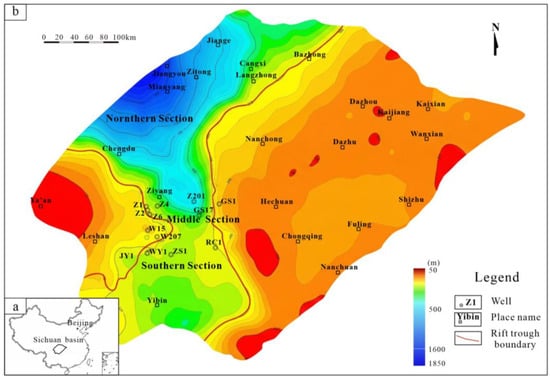
Shale gas will be the focus of global oil and gas exploration in the future. As a key mineral component in shale, the characteristics and genesis of feldspar are of great significance for reservoir quality. The feldspar in the Qiongzhusi Formation shale was [...] Read more.
Shale gas will be the focus of global oil and gas exploration in the future. As a key mineral component in shale, the characteristics and genesis of feldspar are of great significance for reservoir quality. The feldspar in the Qiongzhusi Formation shale was studied through core observation, X-ray diffraction (XRD), field emission scanning electron microscopy (FE-SEM), and major and trace elements analysis. The results show that the content of feldspar in the Qiongzhusi Formation shale is relatively high, with an average content of 27.3%, mainly sodium feldspar. The feldspar presents various forms, such as angular clastic particles and strongly altered particles. It exhibits localized dissolution and illitetization. The feldspar in the Qiongzhusi Formation shale is multi-source, mainly provided by the mixture of felsic sedimentary rocks and granites from the upper crust. The main source areas are the Western Sichuan Block, the Motianling Block, and the Hanyang Block. Rapid sedimentation leading to rapid burial is the primary sedimentary control factor for the high initial content of feldspar in the Qiongzhusi Formation shale. During the late burial and diagenetic stages, localized fluid action, comprising the synergy between micro-scale migration and chemical reactions driven by hydrocarbon generation, acts as a key factor influencing the minor variations in feldspar content. Under a stable tectonic background, the fluids in the Qiongzhusi Formation mainly come from organic acids produced by shale hydrocarbon generation, and the influence of formation water fluids is relatively limited, with a low degree of feldspar mineral transformation. Full article
Show Figures

Figure 1

37 pages, 3174 KB  
Article
Accountability-Aware Fractional Control for Embodied Intelligent Systems: Mittag-Leffler Stability and Conditional Proxemic Safety
by Slim Dhahri, Essia Ben Alaia, Sahar Almashaan, Hatem Alwardi and Omar Naifar
Symmetry 2026, 18(6), 889; https://doi.org/10.3390/sym18060889 (registering DOI) - 24 May 2026
Abstract
This paper develops an accountability-aware fractional control framework for embodied intelligent systems in shared human environments. The approach combines a Caputo fractional-order stabilizing law, an intent-evidence realization with softmax belief reconstruction, and a conditional proxemic safety layer. Sufficient conditions are established for local [...] Read more.
This paper develops an accountability-aware fractional control framework for embodied intelligent systems in shared human environments. The approach combines a Caputo fractional-order stabilizing law, an intent-evidence realization with softmax belief reconstruction, and a conditional proxemic safety layer. Sufficient conditions are established for local Mittag-Leffler stability of the augmented error dynamics and forward invariance of the safe set. Numerical results are presented as a theorem-validation benchmark. For the base case with α=0.9, the augmented error norm decays from 1.2359 to 9.90×10³ while the safety margin remains strictly positive, and the robustness condition is satisfied with a margin of 1.8641. An α-sweep and a step-size convergence study further show that the fractional order induces a systematic safety–performance trade-off and that the reported behaviors are numerically stable. Additional simulations with four intent classes, bounded observation noise, and Monte Carlo uncertainty stress tests are included to strengthen the numerical evidence beyond the two-intent theorem-validation case. The manuscript also clarifies the quantitative interpretation of the accountability index, the conditional nature of the safety theorem, and an implementable sampled safety-filter realization for concrete robotic platforms. The results support the proposed framework as a mathematically consistent tool for shaping the balance between regulation and proxemic safety. Full article
11 pages, 234 KB  
Article
Physical Activity and Clinically Defined Arterial Hypertension in Consecutive Primary Care Patients: A Real-World Cross-Sectional Study
by Peter M. Kalanin and Ivan Uher
J. Clin. Med. 2026, 15(11), 4049; https://doi.org/10.3390/jcm15114049 (registering DOI) - 24 May 2026
Abstract
Background: Arterial hypertension (AH) remains a leading modifiable risk factor for cardiovascular disease. Although the inverse association between physical activity (PA) and AH is well established, practice-based evidence from consecutive primary care populations remains clinically relevant for evaluating how this association appears under [...] Read more.
Background: Arterial hypertension (AH) remains a leading modifiable risk factor for cardiovascular disease. Although the inverse association between physical activity (PA) and AH is well established, practice-based evidence from consecutive primary care populations remains clinically relevant for evaluating how this association appears under routine healthcare conditions. Methods: This retrospective cross-sectional study evaluated the association between self-reported PA and clinically defined AH in 1284 adult patients from routine primary care practice. PA was categorized according to World Health Organization recommendations as low (<150 min/week), moderate (150–300 min/week), or high (>300 min/week). AH was defined as a documented clinical diagnosis and/or ongoing antihypertensive treatment. Logistic regression was used to assess associations between PA category and AH, with adjustment for age, sex, body mass index (BMI), and LDL-C. Results: AH was present in 41.2% of the study population. AH prevalence differed significantly across PA categories, decreasing from 55.9% in the low PA group to 40.8% in the moderate PA group and 26.7% in the high PA group (p < 0.001). Compared with low PA, moderate and high PA were associated with lower odds of AH in crude analysis (OR = 0.54, 95% CI: 0.41–0.71; and OR = 0.29, 95% CI: 0.21–0.39, respectively). These associations remained significant after adjustment for age, sex, BMI, and LDL-C. Conclusions: Higher self-reported PA was associated with lower prevalence of clinically defined AH in consecutive primary care patients. The main contribution of this study is the replication and quantification of this established association in a real-world primary care cohort using pragmatic PA categories and routinely documented AH. Because of the cross-sectional design, these findings should be interpreted as associations and do not establish causality or directionality. Broader physiological and self-regulatory capacity may represent a hypothesis-generating direction for future research, but these processes were not directly measured in this study. Full article
(This article belongs to the Section Cardiovascular Medicine)
47 pages, 2047 KB  
Review
Analysis and Risks of Emerging Contaminants and Microplastics in Natural and Treated Waters and Human Health: A Critical Review
by Maryam Mallek and Damià Barceló
J. Xenobiot. 2026, 16(3), 93; https://doi.org/10.3390/jox16030093 (registering DOI) - 23 May 2026
Abstract
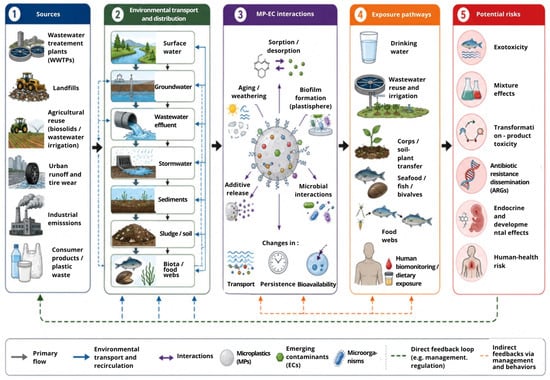
Emerging contaminants (ECs) and microplastics (MPs) are increasingly detected in surface waters, wastewaters, and drinking water, often as complex mixtures, transformation products, and particle-associated burdens that challenge routine monitoring. This critical review examines current analytical strategies for the detection and characterization of both [...] Read more.
Emerging contaminants (ECs) and microplastics (MPs) are increasingly detected in surface waters, wastewaters, and drinking water, often as complex mixtures, transformation products, and particle-associated burdens that challenge routine monitoring. This critical review examines current analytical strategies for the detection and characterization of both molecular and particulate emerging contaminants in aquatic systems, with particular emphasis on their relevance to environmental and human health risk assessment. For molecular ECs, targeted LC–MS/MS and GC–MS and GC–MS/MS approaches are evaluated alongside high-resolution mass spectrometry (HRMS)-based suspect and non-target screening, retrospective data mining, and transformation-product elucidation. For MPs, particle-resolved vibrational spectroscopy including µ-FTIR and µ-Raman is critically assessed in comparison with complementary thermal analysis methods, such as pyrolysis–GC–MS and thermal extraction–desorption GC–MS (TED–GC–MS). Particular attention is given to the influence of sampling design, matrix-adapted sample preparation, analytical confidence, and method-dependent size and polymer coverage on data quality and interstudy comparability. The review further highlights the risks of ECs in relation to exposure pathways, mixture effects, and the potential carrier role of MPs for ECs, additives, and microorganisms. Finally, key priorities are identified for next-generation monitoring frameworks, including harmonized workflows, transparent confidence reporting, and stronger integration of analytical evidence with fate, exposure, and risk assessment. Full article
Show Figures

Figure 1

38 pages, 730 KB  
Review
Artificial Intelligence Applications in Implant Positioning, Dislocation Risk Prediction, and Surgical Indications in Orthopaedic Surgery
by Mihai Emanuel Gherghe, Alex-Gabriel Grigore, Iosif-Aliodor Timofticiuc, Adelina-Elena Moise, Constantin-Adrian Andrei, Serban Dragosloveanu, Dana-Georgiana Nedelea, Łukasz Pulik, Catalin Anghel, Cristian Scheau and Romica Cergan
Bioengineering 2026, 13(6), 610; https://doi.org/10.3390/bioengineering13060610 (registering DOI) - 23 May 2026
Abstract
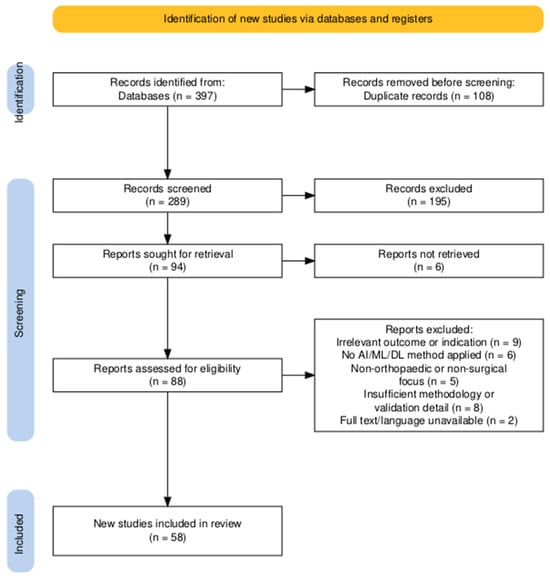
Background: Artificial intelligence (AI) is becoming increasingly integrated into orthopaedic surgery for tasks such as implant positioning, dislocation risk prediction, and surgical decision-making. However, the current evidence varies widely across anatomical regions and applications. Methods: A structured narrative review was conducted using PubMed [...] Read more.
Background: Artificial intelligence (AI) is becoming increasingly integrated into orthopaedic surgery for tasks such as implant positioning, dislocation risk prediction, and surgical decision-making. However, the current evidence varies widely across anatomical regions and applications. Methods: A structured narrative review was conducted using PubMed and Web of Science Core Collection to identify studies applying machine learning or deep learning in orthopaedic procedures, focusing on parameters such as the anatomical region addressed, data types used, primary AI tasks, evaluation designs, and validation strategies. Reviews and meta-analyses were excluded. Study selection was summarized using a PRISMA-style flow diagram, and included studies were narratively synthesized according to anatomical region, AI task, imaging modality, validation strategy, and clinical relevance. Results: We identified three main application areas: (1) AI in imaging-driven planning and implant positioning, often linked with navigation or robotic systems; (2) postoperative evaluation related to implants; and (3) prediction of clinically relevant outcomes such as dislocation risk. The strongest evidence is found in hip arthroplasty, where AI improves measurement accuracy and workflow efficiency, whereas applications in knee, shoulder, and spine surgery are less developed and often supported by smaller studies. Although existing risk prediction models demonstrate good performance, their generalizability is hindered by limited external validation and inconsistent reporting. Conclusions: Overall, while AI shows significant promise in enhancing various aspects of orthopaedic surgery, stronger links between technical advancements and patient outcomes are needed. Future research should prioritize extensive validations, workflow-aware evaluations, failure analysis, and adherence to AI-specific reporting guidelines to facilitate safe and effective clinical implementation. Full article
(This article belongs to the Special Issue Deep Learning for Medical Applications: Challenges and Opportunities)
Show Figures

Figure 1

23 pages, 2472 KB  
Article
Stability-Controlled Continual Federated Learning for Energy-Harvesting AIoT Systems
by Junsoo Park, Ikjune Yoon and Dong Kun Noh
Sensors 2026, 26(11), 3325; https://doi.org/10.3390/s26113325 (registering DOI) - 23 May 2026
Abstract
Energy-harvesting (EH) AIoT systems enable long-term autonomous operation but suffer from time-varying energy availability, which makes stable learning difficult. In such environments, federated learning (FL) is prone to energy depletion (blackout), while continual learning is required to handle evolving data distributions, leading to [...] Read more.
Energy-harvesting (EH) AIoT systems enable long-term autonomous operation but suffer from time-varying energy availability, which makes stable learning difficult. In such environments, federated learning (FL) is prone to energy depletion (blackout), while continual learning is required to handle evolving data distributions, leading to a trade-off between energy stability and catastrophic forgetting. In this paper, we propose a stability-controlled continual federated learning framework that jointly regulates local training intensity and rehearsal usage based on the residual energy state. The proposed method is derived from a Lyapunov drift-plus-penalty formulation and implemented as a lightweight mode-based control policy. Simulation results using real solar energy traces show that the proposed method significantly reduces blackout while improving accuracy and mitigating forgetting compared to existing approaches. These results demonstrate the effectiveness of energy-aware joint control for stable continual federated learning in EH-AIoT systems. Full article
(This article belongs to the Special Issue New Trends in Artificial Intelligence of Things (AIoT))
18 pages, 3365 KB  
Article
Beyond Sights: A Configurational Analysis of Multisensory Pathways to Electronic Word-of-Mouth in VR Cultural Heritage Systems
by Chenhan Jiang, Rui Han, Xiu Hui, Jihong Yu and Shengyu Huang
Electronics 2026, 15(11), 2263; https://doi.org/10.3390/electronics15112263 (registering DOI) - 23 May 2026
Abstract
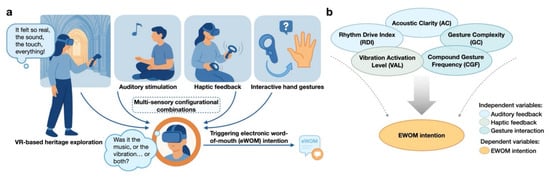
Virtual reality heritage experiences can be understood as multisensory interaction systems, yet how auditory, haptic, and gestural cues combine at the system level to shape electronic word-of-mouth (eWOM) intention remains insufficiently understood. Addressing this problem from a configurational systems perspective, this study applies [...] Read more.
Virtual reality heritage experiences can be understood as multisensory interaction systems, yet how auditory, haptic, and gestural cues combine at the system level to shape electronic word-of-mouth (eWOM) intention remains insufficiently understood. Addressing this problem from a configurational systems perspective, this study applies fuzzy-set qualitative comparative analysis (fsQCA) to five auditable interaction cues (acoustic clarity, rhythmic drive, vibrotactile actuation level, gesture complexity, and compound gesture frequency) across a set of widely used VR cultural heritage applications. The results identify two sufficient system-level pathways to high eWOM intention: a rhythm-driven, low-burden pathway and a coordination-driven pathway characterized by clearer audio, stronger rhythmic structure, and tighter haptic and gestural action closure. Low eWOM intention is most consistently associated with weak cue interpretability, limited temporal drive, or unbalanced stimulation patterns, suggesting that isolated enhancement of single channels does not reliably translate into downstream sharing intentions. These findings reposition VR heritage design as a problem of configuring coherent multisensory interaction systems rather than maximizing individual stimuli. The study contributes a bounded, case-comparative account of how auditable cue bundles shape eWOM intention and offers system design guidance for resource-sensitive multisensory coordination in VR heritage applications. Full article
Show Figures

Figure 1

26 pages, 3410 KB  
Article
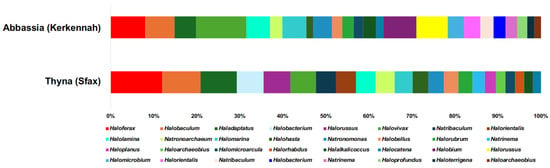
Unraveling the Taxonomic Diversity and Functional Potential of the Tunisian Salterns, Abbassia and Thyna, via Integrated 16S-18S Amplicons and Shotgun Metagenomics
by Sondes Mechri, Afef Najjari, Séverine Croze, Hadda-Imene Ouzari, Marilize Le Roes-Hill, Slim Tounsi, Joel Lachuer and Bassem Jaouadi
Int. J. Mol. Sci. 2026, 27(11), 4714; https://doi.org/10.3390/ijms27114714 (registering DOI) - 23 May 2026
Abstract
Hypersaline environments are unique ecosystems harboring specialized microbial communities with significant biotechnological potential. This study provides a comprehensive characterization of the taxonomic diversity and functional potential of two Tunisian salterns, Abbassia (Kerkennah) and Thyna (Sfax), using an integrated approach that combines 16S/18S rRNA [...] Read more.
Hypersaline environments are unique ecosystems harboring specialized microbial communities with significant biotechnological potential. This study provides a comprehensive characterization of the taxonomic diversity and functional potential of two Tunisian salterns, Abbassia (Kerkennah) and Thyna (Sfax), using an integrated approach that combines 16S/18S rRNA gene amplicons (Illumina and full-length Nanopore) with shotgun metagenomics. Taxonomic profiling revealed a high species richness (S ≈ 1250 taxa); however, the Abbassia site was characterized by extreme taxonomic polarization, with over 95% of the community dominated by specialized halophilic Bacillota (Salinicoccus and Jeotgalicoccus). In contrast, Thyna exhibited a more even distribution dominated by Pseudomonadota and methanogenic Archaea. Beyond taxonomy, functional annotation via the HUMAnN 3.0 pipeline identified site-specific metabolic specializations. Abbassia was enriched in biosynthetic pathways and robust stress-response mechanisms, including ectoine biosynthesis and ppGpp-mediated stringent response, reflecting adaptation to stable hypersaline conditions. Conversely, Thyna’s microbiome prioritized energy extraction and nutrient recycling, with a high abundance of fermentation and glyoxylate cycle pathways. These findings demonstrate that environmental filtering shapes not only the microbial structure but also the metabolic landscape, highlighting the ecological plasticity of microbial life in extreme Tunisian salterns. Full article
Show Figures

Figure 1

Open Access Journals

Browse by Indexing Browse by Subject Selected Journals
Back to TopTop