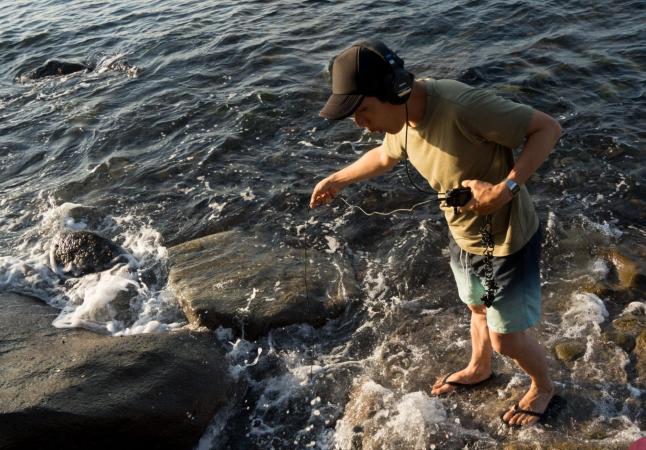
For how crucial whales have been for humanity, from their harvest for meat and oil to their future use of saving the world from a space probe, humans knew very little about them until surprisingly recently. Most people, even in Herman Melville’s time, considered whales to be fish, and it wasn’t until humans went looking for submarines in the mid-1900s that we started to understand the complexities of their songs. And you don’t have to be a submarine pilot to listen now, either; all you need is something like these homemade hydraphones.
audio394 Articles
How To Build Good Contact Mics
We’re most familiar with sound as vibrations that travel through the atmosphere around us. However, sound can also travel through objects, too! If you want to pick it up, you’d do well to start with a contact mic. Thankfully, [The Sound of Machines] has a great primer on how to build one yourself. Check out the video below.
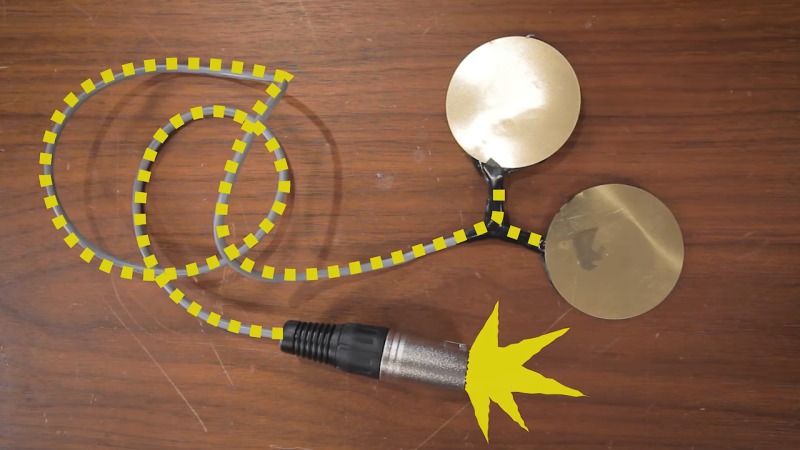
The key to the contact mic is the piezo disc. It’s an element that leverages the piezoelectric effect, converting physical vibration directly into an electrical signal. You can get them in various sizes; smaller ones fit into tight spaces, while larger ones perform better across a wider frequency range.
[The Sound of Machines] explains how to take these simple piezo discs and solder them up with connectors and shielded wire to make them into practical microphones you can use in the field. The video goes down to the bare basics, so even if you’re totally new to electronics, you should be able to follow along. It also covers how to switch up the design to use two piezo discs to deliver a balanced signal over an XLR connector, which can significantly reduce noise.
There’s even a quick exploration of creative techniques, such as building contact mics with things like bendable arms or suction cups to make them easier to mount wherever you need them. A follow-up explores the benefits of active amplification. The demos in the video are great, too. We hear the sound of contact mics immersed in boiling water, pressed up against cracking spaghetti, and even dunked in a pool. It’s all top stuff.
These contact mics are great for all kinds of stuff, from recording foley sounds to building reverb machines out of trash cans and lamps.
Audio Sound Capture Project Needs Help
When you are capturing audio from a speaker, you are rarely capturing the actual direct output of such a system. There are reflections and artifacts caused by anything and everything in the environment that make it to whatever detector you might be using. With the modern computation age, you would think there would be a way to compensate for such artifacts, and this is what [d.fapinov] set out to do.
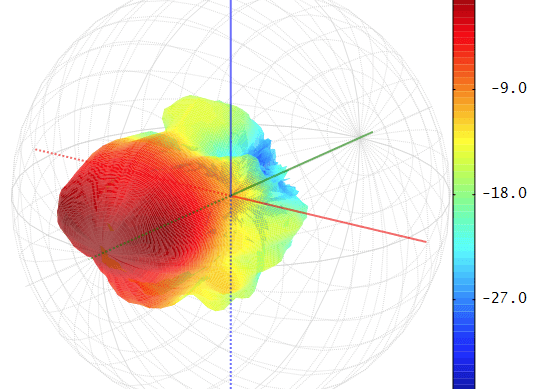
[d.fapinov] has put together a code base for simulating and reversing environmental audio artifacts made to rival systems, entirely orders of magnitude higher in cost. The system relies on similar principles used in radio wave antenna transmission to calculate the audio output map, called spherical harmonic expansion. Once this map is calculated and separated from outside influence, you can truly measure the output of an audio device.
The only problem is that the project needs to be tested in the real world. [d.fapinov] has gotten this far but is unable to continue with the project. A way to measure audio from precise locations around the output is required, as well as the appropriate control for such a device.
Audio enthusiasts go deep into this tech, and if you want to become one of them, check out this article on audio compression and distortion.
An Audio Brick For Your Smart Home
If you’ve ever wanted to pump sound to all the rooms of your house, you might use any one of a number of commercial solutions. Or, you could go the more DIY route and whip up something like the Esparagus Audio Brick built by [Andriy].
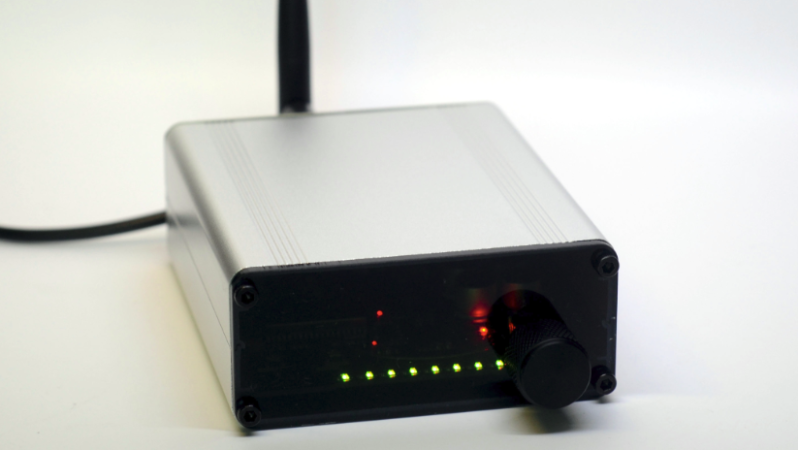
The concept is simple—it’s a small unit, roughly the size of a brick, which streams high-quality audio. It’s based around an ESP32, which pulls in digital audio over Wi-Fi or Ethernet. The microcontroller is hooked up to a TAS5825M DAC, which comes with a built-in amplifier for convenience. The Esparagus is designed for integration with Home Assistant, allowing for easy control as part of a smart home setup. It’s also compatible with Spotify Connect, AirPlay, and Snapcast—the latter of which provides excellent sync when using multiple units across several rooms.
Design files are available on Github for the curious. We’ve seen other neat projects in this space, before, too—like the charmingly-named OtterCast. Video after the break.
Know Audio: Lossy Compression Algorithms And Distortion
In previous episodes of this long-running series looking at the world of high-quality audio, at every point we’ve stayed in the real world of physical audio hardware. From the human ear to the loudspeaker, from the DAC to measuring distortion, this is all stuff that can happen on your bench or in your Hi-Fi rack.
We’re now going for the first time to diverge from the practical world of hardware into the theoretical world of mathematics, as we consider a very contentious topic in the world of audio. We live in a world in which it is now normal for audio to have some form of digital compression applied to it, some of which has an effect on what is played back through our speakers and headphones. When a compression algorithm changes what we hear, it’s distortion in audio terms, but how much is it distorted and how do we even measure that? It’s time to dive in and play with some audio files. Continue reading “Know Audio: Lossy Compression Algorithms And Distortion”
Attack Turns Mouse Into Microphone
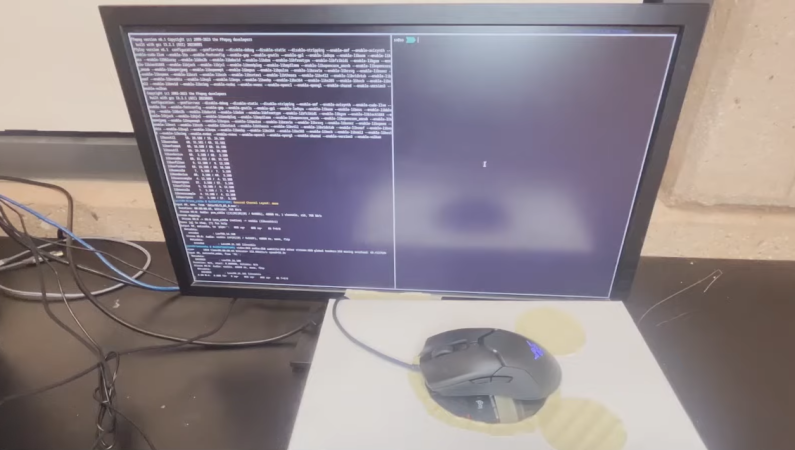
As computer hardware gets better and better, most of the benefits are readily apparent to users. Faster processors, less power consumption, and lower cost are the general themes here. But sometimes increased performance comes with some unusual downsides. A research group at the University of California, Irvine found that high-performance mice have such good resolution that they can be used to spy on a user’s speech or other sounds around them.
The mice involved in this theoretical attack need to be in the neighborhood of 20,000 dpi, as well as having a relatively high sampling rate. With this combination it’s possible to sense detail fine enough to resolve speech from the vibrations of the mouse pad. Not only that, but the researchers noted that this also enables motion tracking of people in the immediate vicinity as the vibrations caused by walking can also be decoded. The attack does require a piece of malware to be installed somewhere on the computer, but the group also theorize that this could easily be done since most security suites don’t think of mouse input data as particularly valuable or vulnerable.
Even with the data from the mouse, an attacker needs a sophisticated software suite to be able to decode and filter the data to extract sounds, and the research team could only extract around 60% of the audio under the best conditions. The full paper is available here as well. That being said, mice will only get better from here so this is certainly something to keep an eye on. Mice aren’t the only peripherials that have roundabout attacks like this, either.
Thanks to [Stephen] for the tip!
A Record Lathe For Analog Audio Perfection
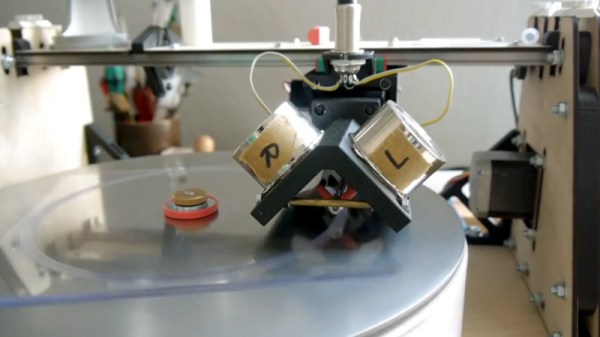
It’s no secret that here at Hackaday we’ve at times been tempted to poke fun at the world of audiophiles, a place where engineering sometimes takes second place to outright silliness. But when a high quality audio project comes along that brings some serious engineering to the table we’re all there for it, so when we saw [Slyka] had published the files for their open source record lathe, we knew it had to be time to bring it to you.
Truth be told we’ve been following this project for quite a while as they present tantalizing glimpses of it on social media, so while as they observe, documentation is hard, it should still be enough for anyone willing to try cutting their own recordings to get started. There’s the lathe itself, the controller, the software, and a tool for mapping EQ curves. It cuts in polycarbonate, though sadly there doesn’t seem to be a sound sample online for us to judge.
If you’re hungry for more this certainly isn’t the first record lathe we’ve brought you, and meanwhile we’ve gone a little deeper into the mystique surrounding vinyl.
Continue reading “A Record Lathe For Analog Audio Perfection”