Table of Contents

Equipboard
Equipboard is the world's largest community of artists and their gear. Read our review process.
We are reader-supported. When you buy through links on our site, we may earn an affiliate commission. Learn more.
Our Picks
-l.webp?v=1779635112)
The Moog Matriarch is a versatile semi-modular synthesizer that combines classic Moog sound with modern design, offering deep sound design potential and expressive performance features.
Read more


The Moog Subsequent 37 brilliantly bridges the gap between vintage analog charm and modern synthesizer functionality, offering enhanced sound quality, extensive modulation options, and improved performance features.
Read more
The Moog Mother-32 offers an accessible yet deep dive into the world of analog synthesis, serving as both a powerful standalone instrument and a gateway to larger modular systems.
Read more
The Moog Grandmother offers a perfect blend of vintage Moog character and modern functionality, providing an inspiring playground for both seasoned synthesists and newcomers to the world of analog sound.
Read more
Arturia's Mini V captures the magic of the Minimoog Model D in software form, offering classic analog warmth with modern conveniences and expanded sonic possibilities.
Read more

Universal Audio's Moog Minimoog plugin offers an exceptionally authentic recreation of the classic synthesizer, combining meticulous analog modeling with subtle modern enhancements.
Read more

Native Instruments' Monark offers a fresh digital take on the Minimoog sound, combining authentic analog modeling with innovative features that expand the sonic palette of this classic synthesizer concept.
Read more
Picture the moment Keith Emerson first fired up his Model D on stage. That massive, growling bass that kicks off "Lucky Man" was so much more than just a sound - it was a revolution wrapped in wood and wires. Back in 1970, synthesizers were hulking beasts that belonged in university labs, not on stage. Then the Model D showed up and flipped the script. Three oscillators and a filter that would become legendary didn't just make new sounds possible - they made them musical. From Pink Floyd's cosmic journeys to Kraftwerk's robot rhythms, this unassuming box became the voice of the future. And half a century later, musicians still chase that sound.
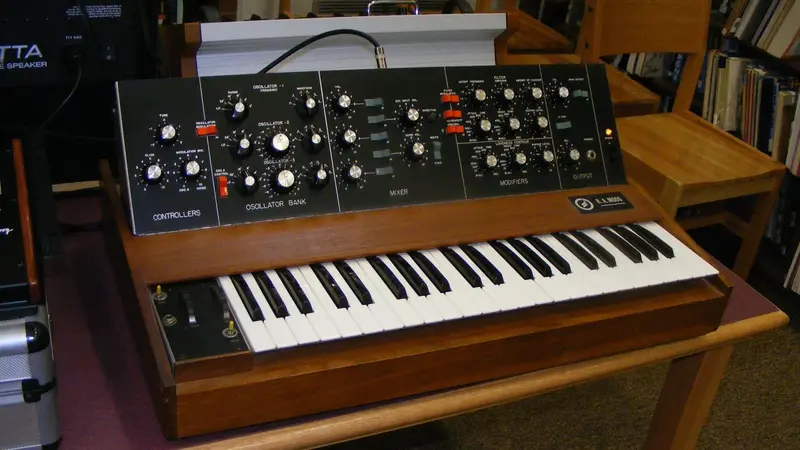
The Moog Model D, often referred to as the Minimoog, was the world's first portable synthesizer. Its creation marked a pivotal moment in music history, bridging the gap between the complex, room-sized modular synthesizers of the 1960s and the needs of gigging musicians. For the first time, keyboard players could bring the power of analog synthesis to the stage, unleashing a sonic palette that was previously confined to studios and academic institutions.
The Birth of an Icon

Before the Model D, electronic music was a complex affair of patch cables and modules that required an engineer's mindset to master. The journey from those early experiments to a revolutionary instrument is a tale of innovation and perfect timing.
Robert Moog's Vision
In the late 1960s, Robert Moog wasn't trying to change music forever - he was just listening to musicians. While his modular synthesizers were groundbreaking, they were also massive, expensive, and complicated. Progressive rock pioneers like Keith Emerson kept pushing him for something they could actually take on tour. Moog took this challenge seriously, working closely with engineers and musicians to strip down his modular system into something more practical.
From Modular to Portable
The breakthrough came when Moog realized that most musicians used similar patch configurations on his modular systems. By hardwiring these common signal paths and putting the most musical controls at the player's fingertips, he created something revolutionary. The first prototype was built in 1969, with help from engineers Bill Hemsath and Jim Scott. While not the first portable synthesizer, it was the first that truly thought like a musical instrument rather than a scientific tool.
Breaking New Ground
When the Model D finally launched in 1970, it looked deceptively simple. Three voltage-controlled oscillators, a noise generator, and that famous filter were packed into a compact wooden case with a keyboard attached. But this simplicity was exactly what musicians had been waiting for. No more patch cables, no more massive racks of modules - just pure electronic sound ready to play.
The Era Before the Model D: Early Synthesizer Technology

Before the revolutionary Moog Model D arrived on the scene, synthesizers were complex, room-sized affairs that required significant technical expertise to operate. These early synthesizers laid the groundwork for the more compact and user-friendly instruments that would follow.
Modular Behemoths
The first commercially available synthesizers were modular systems, consisting of separate electronic modules connected by patch cables. These modules included voltage-controlled oscillators (VCOs), filters (VCFs), and amplifiers (VCAs), as well as envelope generators, noise generators, and ring modulators. Musicians and composers had to manually connect these components to create sounds, a process that was both time-consuming and required a deep understanding of electronic music principles.
The RCA Mark II
One of the most notable early synthesizers was the RCA Mark II Sound Synthesizer, completed in 1957. This massive instrument used hundreds of vacuum tubes and was controlled by punched paper tape. It was primarily used for academic and experimental music composition, residing at the Columbia-Princeton Electronic Music Center.
Voltage Control Innovation
Robert Moog's key innovation in the 1960s was the use of voltage control for pitch. By using transistors with an exponential relationship between input voltage and output current, Moog created voltage-controlled oscillators that could be easily tuned and controlled. This development standardized the relationship between voltage and pitch, using a 1 volt per octave scale.
Early Moog Systems
The first Moog synthesizers were also modular systems, but they incorporated Moog's voltage-controlled components. These systems were still large, expensive, and primarily used in studios or academic institutions. By 1970, only 28 musicians owned Moog modular synthesizers, highlighting their limited accessibility.
Challenges of Early Synthesizers
These early synthesizers faced several challenges:
- Size and Portability: Most were too large to be easily transported for live performances.
- Cost: With price tags in the tens of thousands of dollars, they were out of reach for most musicians.
- Stability: Early synthesizers were sensitive to temperature and humidity, making them unreliable in various environments.
- Complexity: The modular nature and need for patch cables made creating and recreating sounds a complex process.
The Need for Simplification
As the 1960s progressed, there was a growing demand for more practical and affordable electronic music equipment. Musicians and composers like Herb Deutsch, Richard Teitelbaum, and Wendy Carlos provided input to synthesizer designers, pushing for innovations that would make these instruments more accessible and musically versatile.
Technical Marvel

Understanding how early modular synths worked makes the Model D's innovations truly shine. It took all those separate modules, voltage-controlled processes, and troublesome tuning problems and transformed them into a reliable, musical instrument. Here's how it revolutionized everything.
What Makes the Moog Model D Special
The Moog Model D's enduring legacy is built on a foundation of innovative design and exceptional sound quality. Its unique features set it apart from other synthesizers of its time and continue to inspire musicians and instrument designers today.
The Power of Three Oscillators
At the heart of the Model D's sound are its three voltage-controlled oscillators (VCOs). This trio of sound generators is key to the instrument's rich, full-bodied tones. Each oscillator can be tuned independently, allowing for thick unison sounds, complex harmonies, or subtle detuning effects that add warmth and movement to the sound.
The ability to mix these oscillators in various combinations gives musicians an incredible palette of tonal possibilities. From deep, growling bass to piercing leads, the Model D's oscillators can cover a vast sonic territory. The third oscillator can even be used as a modulation source, opening up even more creative sound design options.
The Iconic Moog Filter
Perhaps the most famous component of the Model D is its filter. The Moog ladder filter, with its steep 24 dB/octave slope, is renowned for its smooth, musical quality. It's capable of dramatically shaping the tone of the oscillators, from subtle timbral adjustments to aggressive, squelchy resonant sweeps.
The filter's resonance can be pushed to self-oscillation, effectively turning it into another sound source. This characteristic, combined with its rich, warm coloration, contributes significantly to the "Moog sound" that has become legendary in the world of electronic music.
Simplicity Meets Versatility
One of the Model D's greatest strengths is its intuitive layout. Unlike the complex patch bay systems of earlier modular synthesizers, the Model D presents its controls in a logical, easy-to-understand format. This simplicity doesn't come at the cost of versatility, however.
The instrument features a noise generator, an LFO (low-frequency oscillator) for modulation effects, and two envelope generators for shaping the amplitude and filter cutoff over time. These components can be combined in numerous ways, allowing for a wide range of expressive sounds and textures.
A New Workflow for Musicians
The Model D's design revolutionized the way musicians interact with synthesizers. Its compact, all-in-one format meant that keyboardists could now bring the power of analog synthesis to live performances. The addition of pitch and modulation wheels allowed for expressive control during playing, a feature that has become standard on keyboards and synthesizers since.
Moreover, the immediacy of the Model D's interface encouraged experimentation. Musicians could quickly tweak knobs and switches to discover new sounds, fostering a more intuitive approach to sound design. This accessibility played a crucial role in popularizing synthesizers among a broader range of musicians, ultimately changing the sound of popular music.
The Model D's Impact on Music

The Moog Model D didn't just change the way synthesizers were built; it fundamentally altered the landscape of music creation and performance. Its influence spread across genres, inspiring musicians to push the boundaries of sound and composition.
Revolutionizing Rock
In the world of rock music, the Model D quickly became a staple for progressive and psychedelic bands. Its ability to create otherworldly sounds perfectly complemented the experimental nature of these genres.
Pink Floyd's Richard Wright used the Model D extensively, most notably on the album "The Dark Side of the Moon." The synthesizer's distinctive tones can be heard throughout the record, from the pulsing sequences in "On the Run" to the soaring lead lines in "Any Colour You Like."
Keith Emerson of Emerson, Lake & Palmer was another early adopter, incorporating the Model D into his elaborate keyboard setups. His virtuosic performances helped establish the synthesizer as a lead instrument in its own right, capable of standing alongside guitars and vocals in rock music.
Funk and Soul's Secret Weapon
The Model D's impact wasn't limited to rock. In the hands of funk and soul artists, it became a powerful tool for creating deep, punchy basslines and searing lead sounds.
Stevie Wonder was particularly adept at harnessing the Model D's capabilities. His groundbreaking album "Innervisions" features the synthesizer prominently, with tracks like "Living for the City" showcasing its ability to create both gritty bass parts and expressive lead lines.
Shaping the Sound of Electronic Music
As electronic music began to emerge as a distinct genre, the Model D played a crucial role in defining its sound. German band Kraftwerk used the instrument extensively, helping to lay the foundation for genres like synthpop and techno.
In the late 1970s and early 1980s, the Model D became a cornerstone of the emerging synthwave and new wave movements. Artists like Gary Numan and Depeche Mode used its distinctive sound to create futuristic, electronic-driven pop music.
Iconic Tracks Featuring the Model D
The Model D's unique sound can be heard on countless hit records across decades and genres. Some notable examples include:
The Moog Model D has left an indelible mark on music history, featuring prominently in numerous iconic tracks across various genres. Here's a more comprehensive list of songs that showcase the instrument's versatility and impact:
"Lucky Man" by Emerson, Lake & Palmer: One of the first synthesizer solos on a pop record, performed by Keith Emerson.
"I Feel Love" by Donna Summer: Giorgio Moroder used the Model D to create the pulsing bassline that defined this disco classic.
"The Chain" by Fleetwood Mac: The iconic bass riff in the song's finale was created using a Model D.
"Chameleon" by Herbie Hancock: This jazz-funk masterpiece showcases the Model D's ability to create funky, squelchy bass sounds.
"Autobahn" by Kraftwerk: The Model D helped shape the futuristic sound of this electronic music pioneer.
"Are 'Friends' Electric?" by Gary Numan: The song that inspired Numan to embrace synthesizers fully.
"On the Run" by Pink Floyd: The pulsing sequences on this track from "The Dark Side of the Moon" were created with a Model D.
"Living for the City" by Stevie Wonder: Features both gritty bass parts and expressive lead lines from the Model D.
"Flash Light" by Parliament: The distinctive bassline was created using a Model D.
"Blue Monday" by New Order: While not exclusively using a Model D, this influential track showcases the Moog sound.
"Closer to the Heart" by Rush: Geddy Lee used the Model D for both bass and lead sounds.
"Wish You Were Here" by Pink Floyd: The Model D contributes to the atmospheric sounds on this classic rock staple.
"Wonderous Stories" by Yes: Rick Wakeman used a Polymoog, a polyphonic successor to the Model D, on this track.
"Oxygen" by Jean-Michel Jarre: The French electronic music pioneer made extensive use of the Model D in his compositions.
"The Model" by Kraftwerk: Another example of the Model D's role in shaping electronic pop music.
The Moog Model D's versatility and distinctive character made it a favorite among producers and musicians across the musical spectrum. Its influence extended far beyond its original production run, shaping the sound of popular music for decades to come.
The Legacy of the Moog Model D

The Moog Model D's influence extends far beyond its original production run, which ended in 1981. Its iconic sound and innovative design continue to shape the world of music and synthesizer technology to this day.
Modern Iterations and Reissues
The enduring popularity of the Model D has led to numerous reissues and reimaginings of the classic instrument:
In 2016, Moog Music introduced a limited-edition reissue of the Model D, meticulously recreating the original circuitry and design. This move was met with enthusiasm from musicians and producers eager to get their hands on an authentic Moog sound.
Moog has also released more affordable tributes to the Model D, such as the Subsequent 37 and the Mother-32, which incorporate many of the original's design principles in more modern, feature-rich packages.
The software world has embraced the Model D as well. Numerous virtual instruments aim to recreate its distinctive sound, with companies like Arturia and Native Instruments offering highly regarded emulations.
Influencing Contemporary Synth Design
The Model D's impact on synthesizer design philosophy cannot be overstated:
Intuitive Interface: The Model D's logical layout set a standard for user-friendly design in electronic instruments. Modern synthesizers, both hardware and software, often draw inspiration from its straightforward signal flow and hands-on control scheme.
Analog Revival: The warm, rich sound of the Model D has been a driving force behind the resurgence of analog synthesis in recent years. Many contemporary synthesizer manufacturers emphasize analog signal paths and components in their instruments, directly inspired by the Model D's sonic character.
Modular Synthesis: While the Model D simplified synthesis by eliminating patch cables, it ironically helped fuel a renewed interest in modular systems. Many modern Eurorack modules are designed to emulate specific functions or the overall sound of the Model D.
Hybrid Systems: The Model D's influence can be seen in the design of many modern hybrid analog/digital synthesizers. These instruments often combine analog oscillators and filters (inspired by the Model D) with digital control and modulation systems.
The Moog Model D's legacy is not just about its sound, but also about the way it changed musicians' relationships with technology. It made complex synthesis accessible and intuitive, encouraging experimentation and fostering new forms of musical expression.
Is the Moog Model D Still Relevant Today?

Despite being over half a century old, the Moog Model D continues to hold a significant place in the world of music production and performance. Its enduring relevance is a testament to the instrument's groundbreaking design and timeless sound.
Current Availability and Options
For those looking to incorporate the Model D sound into their music, several options are available:
Original Vintage Units: While rare and expensive, original Model D synthesizers from the 1970s are still sought after by collectors and professional studios. These units offer the authentic vintage experience but often require maintenance due to their age.
Moog Reissues: Moog Music's limited reissue of the Model D provides a faithful recreation of the original instrument, built to the same specifications. These modern units offer the classic sound with improved reliability.
Software Emulations: Many software companies offer virtual versions of the Model D. These plugins provide the flexibility of digital workflows while aiming to capture the essence of the analog original. They're an accessible option for producers working in-the-box.
Hardware Clones: Several companies produce hardware synthesizers inspired by the Model D, offering similar sound and functionality at various price points.
Comparing with Other Legendary Synths
While the Model D remains iconic, it's worth considering how it stacks up against other classic synthesizers:
Model D vs. ARP 2600: The ARP 2600 offers more complex modulation options and a built-in speaker, but lacks the Model D's immediacy and focused sound.
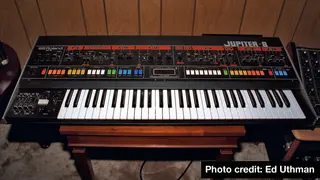
Model D vs. Roland Jupiter-8: The Jupiter-8 is polyphonic and offers more complex programming, but many argue it lacks the raw punch of the Model D's monophonic sound.
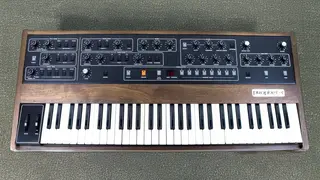
Model D vs. Sequential Circuits Prophet-5: The Prophet-5 brought polyphony and patch memory to the table, features the Model D lacks, but it has a distinctly different character.
Considerations for Modern Musicians
When deciding whether to incorporate a Model D or its modern equivalents into their setup, musicians should consider:
Sound Character: The Model D's thick, warm tone is still highly prized in many genres, from electronic music to rock and hip-hop.
Workflow: The hands-on, immediate nature of the Model D can be inspiring and lead to creative sound design.
Integration: Modern reissues and clones often include MIDI and CV/Gate connectivity, allowing for easier integration with contemporary setups.
Learning Curve: The Model D's relatively simple interface makes it an excellent tool for learning subtractive synthesis principles.
Cost vs. Benefit: While original units are expensive, modern hardware and software alternatives offer the Model D sound at various price points.
The Moog Model D's continued relevance speaks to its revolutionary design and timeless sound. Whether through original hardware, modern reissues, or software emulations, the spirit of the Model D continues to inspire and shape the music of today, making it a worthy consideration for any serious electronic musician or producer.
Timeline of Moog Synthesizers

The evolution of Moog synthesizers represents a fascinating journey through electronic music history. Here's a chronological overview of key milestones:
- 1964: Robert Moog introduces the first modular Moog synthesizer
- 1967: Release of "Switched-On Bach" by Wendy Carlos, showcasing Moog's modular systems
- 1970: Introduction of the Minimoog Model D, revolutionizing portable synthesizers
- 1975: Launch of the Polymoog, Moog's first polyphonic synthesizer
- 1978: Release of the Moog Prodigy, an affordable monophonic synthesizer
- 1981: Introduction of the Moog Source, featuring patch memory
- 1983: Release of the Moog SL-8, one of the last synths before the company's temporary closure
- 2002: Moog Music reestablished under new ownership
- 2006: Launch of the Little Phatty, marking Moog's return to analog synthesis
- 2015: Introduction of the Moog Mother-32 semi-modular synthesizer
- 2016: Limited reissue of the Minimoog Model D
- 2018: Release of the Moog One, a polyphonic analog synthesizer
- 2019: Introduction of the Moog Matriarch, a semi-modular analog synthesizer
Moog Gear Recommendations

For those looking to explore the Moog sound, several modern options are available:
Hardware Synthesizers
- Moog Matriarch: A powerful semi-modular analog synthesizer, ideal for those seeking deep sound design capabilities
- Moog Subsequent 37: A paraphonic analog synthesizer, offering a modern take on the classic Moog sound
- Moog Mother-32: An excellent entry point into the world of modular synthesis
- Moog Grandmother: A semi-modular analog synthesizer with a vintage-inspired design
Software Emulations
- Arturia Mini V: A highly regarded software recreation of the Minimoog Model D
- Universal Audio Moog Minimoog: A detailed emulation that captures the nuances of the original hardware
- Native Instruments Monark: A software synthesizer inspired by the Minimoog, known for its authentic sound
Let's take a closer look at each of these.
Moog Matriarch
5.0 (20)
The Semi-Modular Powerhouse
-s.webp?v=1779635112)







Average Price: $1,884
High-end/Boutique
$500
$1501+
Budget
Standard
High-end
- Superior sound quality with Moog oscillator's thickness
- Encourages experimentation with numerous patch points
- Versatile use with instrument input for external modulation
- Offers hands-on experience with knobs and switches, no presets needed
- See 6 more
- No preset memory can be prohibitive to workflow
- Some may find the global parameters cumbersome to adjust without a screen
- Limited sonic palette compared to fully modular systems
- The analog delay, while charming, can be noisy
- See 2 more
| Analog/Digital | analog |
| Polyphony | monophonic, duophonic, 4-note paraphonic |
| Number of Keys | 49 |
The Moog Matriarch packs a punch with its robust four-oscillator architecture, delivering a rich, full-bodied sound that ranges from subtle textures to earth-shaking basses. This semi-modular synthesizer offers a vast sonic playground for both beginners and seasoned professionals.
At the heart of the Matriarch lies its expansive 90-point patchbay, a feature that sets it apart from many modern synths. This patchbay opens up a world of deep sound design and experimentation, allowing users to create complex modulation routings and unique sonic landscapes that go far beyond traditional synthesis.
The synth's stereo ladder filters are a standout feature, delivering the classic Moog warmth with an added dimension of stereo imaging. This stereo capability adds depth and space to patches, creating immersive soundscapes that can fill a mix or stand out on stage.
Despite its complexity, the Matriarch boasts an intuitive interface. The logical layout makes it accessible for those new to modular synthesis while offering depth for experienced users. The built-in sequencer and arpeggiator add another layer of creative potential, perfect for crafting evolving patterns and rhythmic textures.
For performers, the Matriarch shines with its responsive 49-key keyboard and expressive aftertouch. This allows for nuanced playing and real-time sound shaping, making it an excellent choice for live settings. The keyboard's size and feel strike a balance between portability and playability, suitable for both studio and stage use.
The Matriarch's paraphonic capabilities further expand its versatility. In paraphonic mode, each oscillator can be played independently, allowing for chord-like structures and complex harmonies not possible on many monophonic synths.
See how artists use this







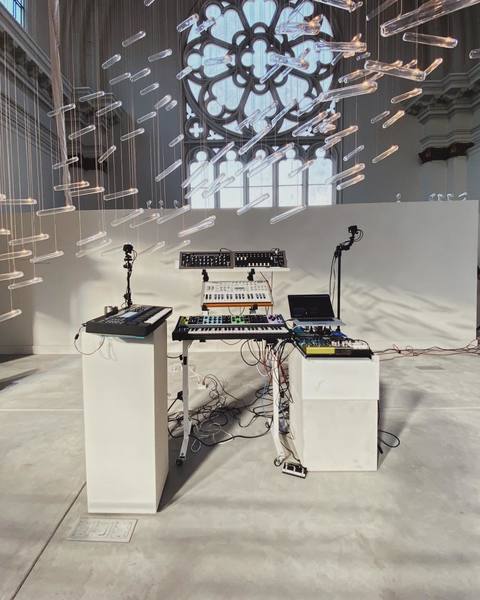
Moog Subsequent 37
5.0 (33)
The Modern Moog Classic


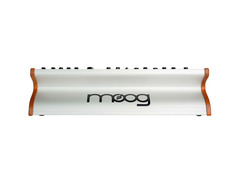
Average Price: $1,795
High-end/Boutique
$500
$1501+
Budget
Standard
High-end
- Robust, high-quality build feels durable
- Intuitive, well-organized controls require minimal learning
- Rich, versatile sound palette, from silky leads to deep bass
- DUO mode adds unique character and depth to sounds
- See 6 more
- Some units may have quality control issues, like uneven keys
- Learning curve for those new to synthesizers
- Keys can feel "clacky" and lack desired resistance
- Limited to 37 keys, which may feel restrictive for advanced users
- See 2 more
| Analog/Digital | analog |
| Polyphony | monophonic, 2 note paraphonic |
| Number of Keys | 37 |
The Moog Subsequent 37 builds upon the legacy of its predecessor, the Sub 37, offering a refined analog synthesizer experience with enhanced sonic capabilities. This paraphonic instrument combines classic Moog sound with modern features, making it a versatile tool for both studio production and live performance.
At the heart of the Subsequent 37 are two analog oscillators and one sub-oscillator, providing a rich foundation for sound design. The reimagined Moog ladder filter offers an extended range and overdrive circuit, allowing for everything from smooth, creamy tones to aggressive, distorted textures. This filter is a standout feature, delivering the iconic Moog warmth with added versatility.
One of the Subsequent 37's strengths is its extensive modulation capabilities. With two dedicated envelope generators and a flexible LFO, users can create complex, evolving sounds that go far beyond traditional analog synthesis. The synth's duo mode allows for two-note paraphony, opening up new possibilities for chord-like sounds and harmonies.
The Subsequent 37's intuitive interface combines hands-on control with digital convenience. Its 37-note keyboard with velocity and aftertouch provides expressive playability, while the onboard arpeggiator and sequencer offer powerful tools for pattern creation. The logical layout of controls makes it accessible for beginners while offering depth for experienced users.
For performers, the Subsequent 37 shines with its improved headroom in the mixer section, allowing for cleaner sounds at higher volumes. This enhancement addresses a limitation of its predecessor and expands the instrument's dynamic range, making it even more suitable for stage use.
See how artists use this


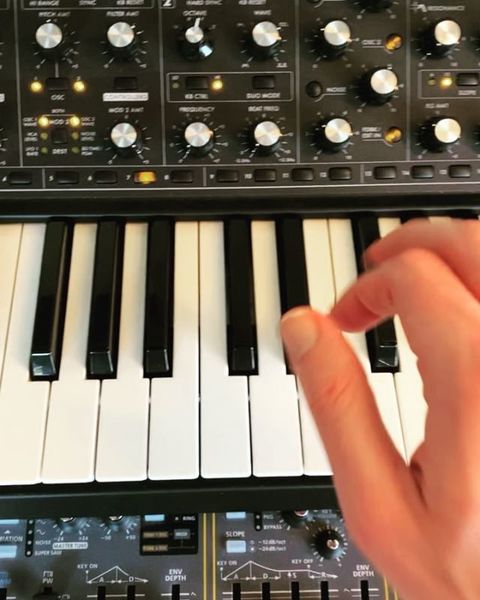


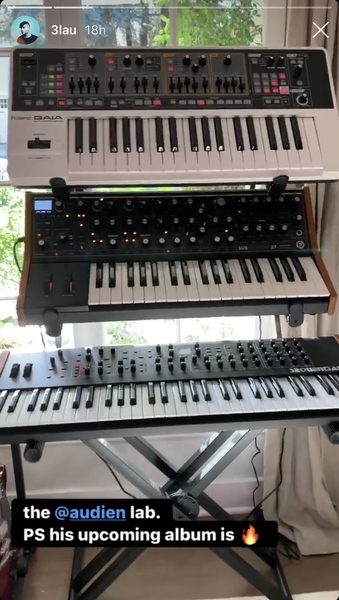


Moog Mother-32
4.5 (102)
The Gateway to Modular Synthesis



Average Price: $571
Standard/Professional
$249
$700+
Budget
Standard
High-end
- Excellent entry point for those new to analog synths
- Integrates well with Eurorack and Moog ecosystems
- Versatile sound creation capabilities
- Quality Moog sound and ladder filter
- See 6 more
- MIDI sync and connectivity issues reported
- Single oscillator limits polyphonic capabilities
- Learning curve for beginners without synthesis background
- Some users report desire for more built-in effects
- See 3 more
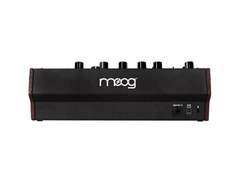
The Moog Mother-32 serves as an excellent entry point into the world of modular synthesis, offering a compact yet powerful package that embodies the classic Moog sound. This semi-modular synthesizer packs a surprising amount of functionality into its desktop-friendly format.
At the heart of the Mother-32 is a single voltage-controlled oscillator paired with Moog's legendary ladder filter. This combination delivers the rich, warm tones that Moog is famous for, capable of everything from thick, resonant basses to piercing leads. The included white noise generator adds texture and percussion possibilities to the sonic palette.
What sets the Mother-32 apart is its 32-point patchbay, which allows users to experiment with modular routing and expand the synth's capabilities. This feature not only provides a great learning tool for understanding signal flow but also allows the Mother-32 to integrate seamlessly with larger Eurorack systems.
The built-in sequencer is another standout feature, offering 64 steps of pattern memory. This makes the Mother-32 a powerful standalone instrument for creating evolving basslines and rhythmic patterns. The assignable CV outputs further extend its utility in modular setups.
Despite its compact size, the Mother-32 doesn't skimp on sound-shaping tools. With a mixer, VCA, two envelopes, and an LFO, it provides a comprehensive set of controls for crafting dynamic and expressive sounds. Its intuitive layout makes it accessible to beginners while offering depth for more experienced users.
See how artists use this





.jpg)


Moog Grandmother
5.0 (40)
Vintage-Inspired Semi-Modular Magic


Average Price: $976
Standard/Professional
$500
$1501+
Budget
Standard
High-end
- Solid build quality ensures durability
- Exceptional sound quality, rich Moog tones
- Spring reverb adds unique character
- Semi-modular design allows creative sound exploration
- See 6 more
- Some units have reported issues with scratchy filter pots
- Limited to monophonic sound without external processing
| Analog/Digital | analog |
| Polyphony | monophonic |
| Number of Keys | 32 |
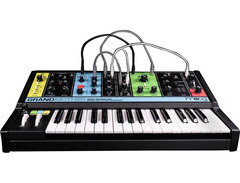
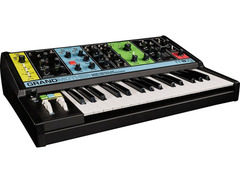
The Moog Grandmother is a semi-modular analog synthesizer that beautifully marries vintage Moog circuits with modern design sensibilities. Its colorful, retro-inspired aesthetic houses a powerful instrument that pays homage to Moog's modular heritage.
At its core, the Grandmother features two oscillators and a classic Moog ladder filter, delivering the rich, warm tones that have defined countless recordings. The spring reverb tank adds a unique dimension to the sound, providing lush, spacious textures that set it apart from other modern synthesizers.
One of the Grandmother's strengths lies in its intuitive, hands-on interface. Each section of the synth is color-coded, making it easy to understand signal flow and encouraging experimentation. The 32-point patchbay allows for complex routing possibilities, opening up a world of sound design options.
The Grandmother shines as a performance instrument, thanks to its responsive 32-key keyboard with velocity sensitivity. The arpeggiator and sequencer add another layer of creative potential, perfect for crafting evolving patterns and rhythmic textures.
What makes the Grandmother truly special is its ability to serve as both a standalone synthesizer and a powerful controller for larger modular systems. Its extensive CV/Gate connectivity allows it to integrate seamlessly with Eurorack modules, making it an excellent centerpiece for a growing modular setup.
See how artists use this






Arturia Minimoog Mini V
4.5 (113)
The Digital Minimoog Reborn



- Extensive mod matrix offers unparalleled sound customization
- Close emulation of Minimoog's analog sound with TAE technology
- Allows for polyphony and velocity enhancements
- Easier automation in DAWs like Ableton Live
- See 5 more
- Lacks natural oscillator drift of original Model-D
- CPU intensive, can slow down older computers
- Requires a dedicated MIDI controller for optimal tweaking
- Built-in effects like chorus and delay may be unnecessary for some patches
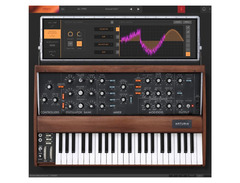
Arturia's Mini V stands as a highly respected software emulation of the iconic Minimoog Model D. This virtual instrument captures the essence of the original hardware with remarkable accuracy while adding modern features that expand its capabilities.
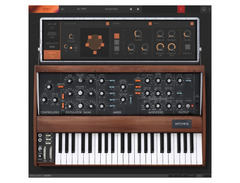
At its core, the Mini V faithfully recreates the Minimoog's three-oscillator architecture and legendary ladder filter. Arturia's proprietary TAE (True Analog Emulation) technology ensures that the warmth and character of the original analog circuits are preserved in the digital domain. The result is a rich, full-bodied sound that's strikingly close to the hardware original.
Where the Mini V truly shines is in its expanded feature set. The addition of polyphony allows for chord play and rich pads, something the original Minimoog couldn't achieve. The modulation matrix opens up a world of sound design possibilities, far beyond what was possible with the original instrument.
The user interface strikes a perfect balance between authenticity and functionality. While it maintains the look and feel of the original Minimoog, additional panels provide access to advanced features like effects and an arpeggiator. This makes the Mini V both a nostalgic trip for Minimoog enthusiasts and a powerful tool for modern music production.
One of the Mini V's strengths is its extensive preset library, offering a wide range of sounds that showcase the instrument's versatility. From classic leads and basses to evolving textures, the presets provide excellent starting points for sound design.
See how artists use this



.jpg)



Universal Audio Moog Minimoog
Analog Precision in the Digital World

- Authentic 70's-80's Moog lead sound, perfect for retro projects
- Created in collaboration with Moog, ensuring high-quality sound emulation
- Convenient presets with customizable and storable options
- Easy to use and integrates well with sequencers
- See 1 more
- Long loading times, taking up to 20 minutes in some cases
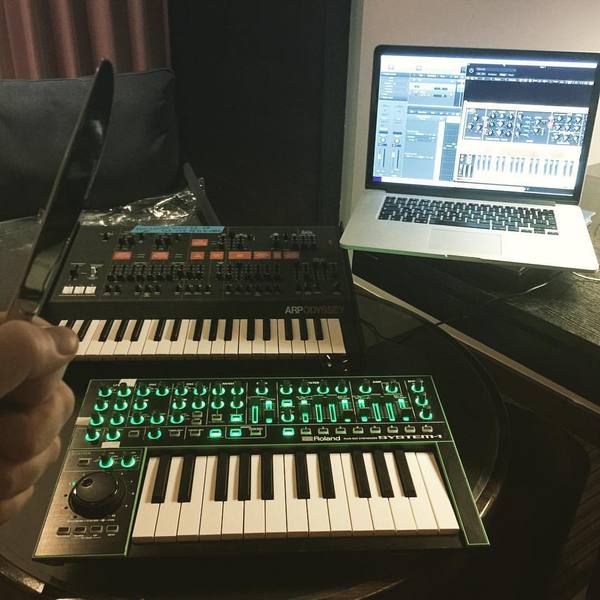
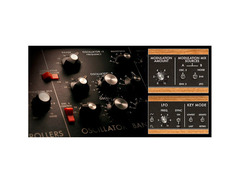
Universal Audio's Moog Minimoog plugin stands out as one of the most meticulous software recreations of the legendary synthesizer. Developed in close collaboration with Moog Music, this emulation aims to capture every nuance of the original hardware.
The plugin's attention to detail is remarkable, from the accurate modeling of the Minimoog's three oscillators to the precise recreation of its iconic ladder filter. Universal Audio's expertise in analog modeling shines through, delivering a warmth and depth that's strikingly close to the hardware original.
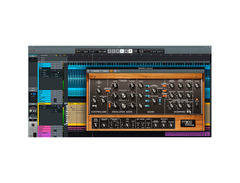
What sets this emulation apart is its focus on authenticity. The user interface is a faithful recreation of the original Minimoog panel, providing an intuitive and familiar experience for those accustomed to the hardware. This commitment to authenticity extends to the sound itself, with UA painstakingly modeling the subtle nonlinearities and imperfections that give analog synthesizers their character.
The plugin goes beyond mere emulation by incorporating some thoughtful modern additions. The polyphonic mode allows for rich chord play, while the arpeggiator adds rhythmic possibilities not found in the original. These features are implemented in a way that complements rather than detracts from the authentic Minimoog experience.
One of the plugin's strengths is its integration with Universal Audio's ecosystem. Users of UA hardware can benefit from near-zero latency when using the plugin, making it feel remarkably responsive and "hardware-like" in use.
Native Instruments MONARK
4.5 (80)
Minimoog-Inspired Innovation

- Outstanding analog sound emulation for authentic vintage vibes
- Impressive selection of classic and distorted filters
- Excellent for creating powerful bass lines
- Easy to create great sounding patches
- See 4 more
- Requires Reaktor Player to use
- Limited polyphony; monophonic only
Native Instruments' Monark takes a slightly different approach to Minimoog emulation, offering a plugin inspired by the classic synthesizer rather than a direct recreation. This approach allows for both authenticity and innovation in equal measure.
At its core, Monark captures the essence of the Minimoog's sound, with three oscillators and a meticulously modeled filter that delivers the warmth and punch associated with the original hardware. Native Instruments' advanced modeling techniques ensure that the subtle nonlinearities and organic character of analog circuits are faithfully reproduced.
Where Monark truly shines is in its extended feature set. The addition of a flexible envelope section, including a fourth envelope not found on the original Minimoog, opens up new sound design possibilities. The feedback circuit adds an extra layer of grit and character, allowing for tones that range from subtle warmth to aggressive distortion.
The user interface strikes a balance between classic design and modern functionality. While it echoes the layout of the original Minimoog, it incorporates additional controls and visual feedback that enhance usability. The oscilloscope display is particularly useful, providing real-time visualization of the waveform.
Monark's integration with Native Instruments' Komplete Kontrol ecosystem is another strong point. This allows for seamless integration with NI hardware controllers, providing a tactile, hands-on experience that bridges the gap between software and hardware.
See how artists use this





A Timeless Blueprint

The Model D's innovative design set a standard for intuitive interfaces and powerful sound shaping capabilities. This blueprint is clearly visible in contemporary hardware like the Moog Matriarch and Subsequent 37, which build upon the Model D's foundation with expanded features and modern connectivity.
Analog Renaissance
The resurgence of interest in analog synthesis owes much to the Model D's iconic sound. Instruments like the Moog Mother-32 and Grandmother demonstrate how the principles behind the Model D can be adapted for modern music production while retaining the warmth and character of analog circuitry.
Digital Homage
The Model D's influence extends into the digital realm, with software emulations like Arturia's Mini V, Universal Audio's Moog Minimoog, and Native Instruments' Monark striving to capture its essence. These plugins make the classic Moog sound accessible to a new generation of producers, ensuring its continued relevance in contemporary music production.
Educational Tool
From its original incarnation to modern hardware and software versions, the Model D remains an excellent platform for learning synthesis. Its straightforward signal path and hands-on control make it an ideal instrument for understanding the fundamentals of sound design.
Evolving Legacy
The Moog Model D's place in history is secure, but its story is far from over. Through reissues, modern interpretations, and software emulations, the spirit of the Model D continues to evolve. It remains a source of inspiration for instrument designers and musicians alike, bridging the gap between analog heritage and digital innovation.
What Next?
Ready to dive into the world of analog synthesis and explore the legendary Moog sound for yourself? Here's how you can get started:
Discover Moog Gear on Equipboard Explore a [wide range of Moog synthesizers]((https://equipboard.com/brands/moog), from modern interpretations of classics to cutting-edge designs. Whether you're a beginner or a seasoned pro, you'll find instruments that capture the essence of the Model D's iconic sound.
Explore Beginner-Friendly Options If you're new to the world of synthesizers, consider starting with more accessible options that still offer that classic Moog character. The Moog Mother-32 or the Subsequent 37 are excellent entry points into the Moog ecosystem.
Modern Analog Alternatives For those seeking the analog warmth inspired by the Model D but with modern features, check out our guide to contemporary analog synthesizers. These instruments carry forward the legacy of the Model D while offering expanded sonic possibilities.
About the authors

S. Jino is an accomplished multi-instrumentalist and music producer based in Kolkata, India, distinguished by his self-taught mastery and unique blend of technical acumen and musical performance. His extensive experience was forged through hands-on dedication, starting with the full restoration of a broken guitar. Jino's capabilities span keyboards, pedals, and advanced digital production, reflecting a comprehensive skill set developed independently. As a significant contributor to the music scene, Jino regularly performs with worship bands and college ensembles. He has also established himself as a reliable and authoritative professional in freelance mixing, mastering, and original music creation. Inspired by the innovative sounds of Brian May and David Gilmour, and influenced by Kolkata's vibrant metal community, Jino is committed to the intricate art of vintage gear restoration and the continuous exploration of music and technology fusion. His current professional setup, featuring a meticulously restored nameless guitar, a Fender Player Strat, and a Boss Katana 50. Read more







.webp)