


About Elements
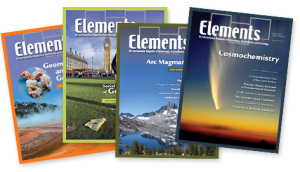
Elements is an international magazine of mineralogy, petrology, and geochemistry.
Published bimonthly, every issue explores a theme of broad and current interest. Elements publishes invited peer-reviewed articles for each thematic collection of papers. Topics of interest can be proposed to the editors who will review every proposal submitted.
Elements also presents regular features including a opinion articles, calendar of events, short course announcements, awards, conference reports, policy news, as well as news of the 18 participating societies.
Elements is jointly published by:
- Mineralogical Society of America
- Mineralogical Society of Great Britain and Ireland
- Mineralogical Association of Canada
- Geochemical Society
- The Clay Minerals Society
- European Association of Geochemistry
- International Association of GeoChemistry
- Société Française de Minéralogie et de Cristallographie
- Association of Applied Geochemists
- Deutsche Mineralogische Gesellschaftchemists
- Società Italiana di Mineralogia e Petrologia
- International Association of Geoanalysts
- Polskie Towarzystwo Mineralogiczne (Mineralogical Society of Poland)
- Sociedad Española de Mineralogía (Spanish Mineralogical Society)
- Swiss Geological Society
- Meteoritical Society
- Japan Association of Mineralogical Sciences
- International Association on the Genesis of Ore Deposits
2017 Impact Factor: 4.34
ISSN 1811-5209 Elements (Print)
ISSN 1811-5217 Elements (online)
© Mineralogical Society of America