


Regulated industries like banking, legal, finance, and healthcare face a far greater level of scrutiny when something goes wrong. Driven by tighter oversight, stricter privacy rules and higher stakes for consumers, these companies have to approach major shifts like AI with a lot more caution than other sectors.
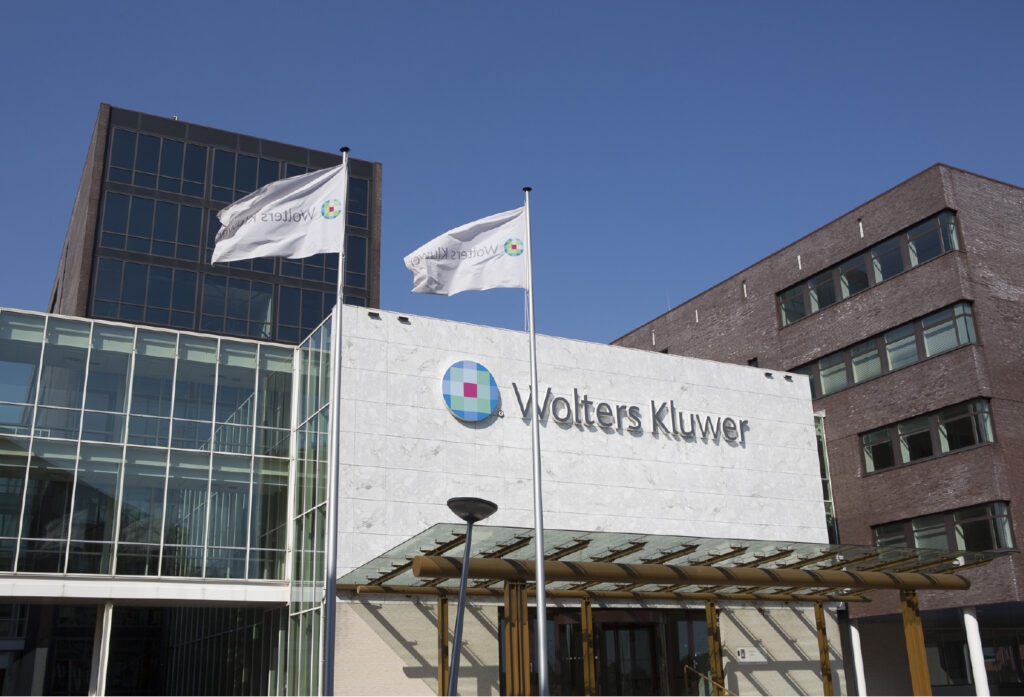
Wolters Kluwer, an information services company serving legal, finance and healthcare markets (amongst others), is no stranger to this fact. They blend a strong industry know-how with software and AI to help clients manage all that complexity.
Maria Montenegro, Chief Strategy Officer for Wolters Kluwer, explains that the company has an extensive set of coverage areas. “We like to say that we help customers make critical decisions every day by providing what we call expert solutions that combine our deep domain knowledge and proprietary content with advanced technologies, including AI.”
Developing a holistic strategy
A company with such diverse markets has distinct challenges when it comes to setting strategy. Montenegro starts by looking at areas where they have a key competitive advantage, typically companies with a very strong compliance and regulatory focus.
Then the idea is to concentrate on leveraging their industry expertise using technology to deliver trusted information, software and services to customers in a safe and secure way. Montenegro serves as the connector making sure that the different parts of the company are working together. “Part of my role is to accelerate the pace of innovation across the company, and I do that by partnering very closely with our technology function, as well as with our product management groups that are embedded in each of the businesses,” Montenegro said.
The individual units also help define the company’s direction based on pain points they observe directly with customers, and how the company’s products can address them. She emphasized that it’s not an ivory tower kind of approach. It’s really about partnering with the different teams.
“We are embedded in the business versus being sort of a strategy team off to the side,” she said. “So it doesn’t feel like it’s my strategy team. It feels like it’s the company strategy team, and each business leader has his or her own strategy person or strategy function that is then linked to this broader community to ensure that we’re aligned.” That raises a key question: how can AI help in this regard?
Building on their AI foundation
It’s not as though the company just discovered AI. They have been incorporating it into their product catalog in the form of machine learning and natural language processing for 15 years now. The difference is that they were focused more on narrow tasks like finding anomalies in an invoice. Today’s AI offers a much broader range of capabilities.
Montenegro says the biggest change with generative AI is how people are interacting with the software: It’s shifting from clicking and navigating to prompts and conversations, undeniably changing the business in a positive way.
“We also have some really important competitive advantages in this new world of accelerated AI, because we’ve got our trusted and proprietary data and content, which is a foundation upon which AI can provide quality answers and insights,” she said.
For those who might think AI might represent a threat to her industry, especially around supplying trusted information, she doesn’t agree. “A lot of people wonder if AI is a risk or an opportunity for a company like ours, and for us, we believe it’s an opportunity,” she said.
And of course, her company is exploring agentic AI and what that can mean to the product set. They are using a set of agents that can do very specific tasks across products. “We use a taxonomy of 10 agent archetypes that sort of mirror how professionals in our spaces actually work, and they cut across different parts of the workflow from data preparation to discovery, analysis and execution,” she said.
To build or buy
A big part of the company’s strategy is strategic acquisitions and partnerships to fill holes in the product portfolio. Montenegro says when they encounter a problem they want to solve, they may decide to build a solution, buy one or as the circumstances dictate, partner with a startup or established company.
Their tendency is to build because it plays to their strengths as subject experts. “Our primary strategy is to build because we have established positions in most of our markets, and we have a very strong technology capability,” she said. But she also recognizes that they can’t build everything and that’s where acquisitions come in.
It goes the acquisition route when it needs capabilities or technologies that would take too long or would be too difficult to build internally, or when an acquisition enables faster entry into attractive markets where building from scratch isn’t practical. The company has made almost 50 purchases including two this year alone. The most recent was legal spend and matter management software company Brightflag for approximately €425 million in May.
While the company does not have a corporate venture arm like many companies its size, it does still work with startups, who she says, like the company’s size and access to quality customers. “We’re usually very attractive for startups because we’re a household name in the niches that we serve. So we have our brand associated with trust and quality and expertise,” she said.
Wolters Kluwer has a broad set of markets, and it has to keep up with changes happening across highly regulated industries, helping their customers get the information they need, while taking advantage of AI and advanced technologies in a safer way.
This interview originally appeared in FastForward, which offers insights on AI and other enterprise tech trends. It has been republished with permission. Learn more or subscribe to the weekly FastForward newsletter here.


