
Clinical Research
Abstract
Glioblastoma (GBM) is an aggressive brain tumor that often progresses despite resection and treatment. Timely and continuous assessment of GBM progression is critical to expedite secondary surgery or enrollment in clinical trials. However, current progression detection requires costly and specialized magnetic resonance imaging (MRI), which, in the absence of new symptoms or signs, is usually scheduled every 2 to 3 months. Here, we hypothesized that changes in daily activity associate with GBM growth and disease progression. We found that wheel-running activity in GBM-bearing mice declined as tumors grew, and preceded weight loss and circadian breakdown by over a week. Temozolomide treatment in the morning, but not evening, significantly reduced tumor size and restored daily locomotion in mice. In a pilot study of six GBM patients wearing an actigraphy watch, wrist movement provided a feasible and continuous longitudinal indicator of daily activity with one-minute resolution. Following tumor resection and radiation, daily activity declined in two patients 19 and 55 days before detection of progression by MRI, but did not change for the four patients with stable disease. These results suggest that daily activity tracking using wearable devices may serve as a real-time indicator and potential monitoring tool for GBM progression and treatment efficacy.
Authors
Maria F. Gonzalez-Aponte, Sofia V. Salvatore, Anna R. Damato, Ruth G.N. Katumba, Grayson R. Talcott, Omar H. Butt, Jian L. Campian, Jingqin Luo, Joshua B. Rubin, Olivia J. Walch, Erik D. Herzog
Abstract
BACKGROUND. Cannabidiol (CBD) is increasingly used for pain management, including in transplant recipients with limited analgesic options. Its immunomodulatory effects in humans are not well defined at a single cell level at CBD steady state with concomitant tacrolimus treatment. METHODS. In a Phase 1 ex vivo study, peripheral blood mononuclear cells from 23 participants who received oral CBD (Epidiolex®) up to 5 mg/kg twice daily for 11 days were collected before CBD (pre-CBD) and at steady state (post-CBD). Lymphocytes were isolated and stimulated with anti-CD3/CD28 antibodies, with or without tacrolimus (5 ng/mL). Pharmacodynamic responses were assessed using CellTiter-Glo® proliferation, single-cell/nucleus RNA sequencing, cytokine assays, and flow cytometry. Steady-state plasma concentrations of CBD were quantified via tandem mass spectrometry. RESULTS. We identified an increased proportion of T effector memory (TEM) cells post-cannabidiol (22% increase), which correlated with CBD plasma concentrations (R = 0.77, P-value = 0.01). Cannabidiol reduced proliferation of T (37% decrease) and CD70hi B (17% decrease) lymphocytes with additive immunosuppressive effects to tacrolimus. Single-cell RNA sequencing revealed reduced IL2 and TNF signaling and altered receptor–ligand networks in TEM cells. Post-cannabidiol cytokine assays revealed elevated proinflammatory IL-6 protein levels and anti-inflammatory IL-10 levels, with reduced TNF-α, LTA, and IL-2. In flow cytometry, the proportion of TEM and TEMRA increased post-cannabidiol with tacrolimus. CONCLUSION. Cannabidiol exhibits mixed immunomodulatory effects with pro- and anti-inflammatory signals. Understanding the clinical safety of cannabidiol use is important given the paucity of pain control options available for immunocompromised transplant populations.
Authors
Debora L. Gisch, Sachiko Koyama, Jumar Etkins, Gerald C. So, Daniel J. Fehrenbach, Jessica Bo Li Lu, Ying-Hua Cheng, Ricardo Melo Ferreira, Evan Rajadhyaksha, Kelsey McClara, Mahla Asghari, Asif A. Sharfuddin, Pierre C. Dagher, Laura M. Snell, Meena S. Madhur, Rafael B. Polidoro, Zeruesenay Desta, Michael T. Eadon
Abstract
BACKGROUND. Predictive biomarkers to guide chemotherapy decisions for metastatic castration resistant prostate cancer (mCRPC) are lacking. Preclinical studies indicate that circulating tumor cell (CTC) studies of chromosomal instability (CTC-CIN) can predict taxane resistance. METHODS. The CARD trial randomized subjects with mCRPC progressing within a year of treatment with an androgen receptor pathway inhibitor (ARPI; enzalutamide or abiraterone acetate plus prednisolone/prednisone) to cabazitaxel or the alternative ARPI. As a pre-planned biomarker analysis, CTCs were isolated from blood samples obtained at baseline; cycle two, and end of treatment. Associations between baseline CTC and CTC-CIN counts with imaging-based progression free survival (ibPFS), overall survival (OS), time to prostate-specific antigen (PSA) progression, RECIST 1.1 objective response rate (ORR), and PSA50 response rate (PRR) were assessed. RESULTS. High baseline CTC-CIN counts significantly associated with worse OS after adjustment for confounding variables (median OS, 15.3 vs 8.9 months; univariate HR, 2.16; 95% CI, 1.52 – 3.06; p < 0.001; multivariate HR, 1.56; 95% CI, 1.01 – 2.43; p = 0.047). Detectable CTC-CIN counts at baseline may predict a lack of ibPFS and OS benefit when comparing cabazitaxel to ARPI. CONCLUSION. This preplanned biomarker analysis of CARD confirms that CTC-CIN counts are a clinically useful prognostic and predictive biomarker of taxane resistance in mCRPC. Detectable CTC-CIN at baseline defines a patient subpopulation with unmet clinical needs in which alternative therapeutics should be tested. TRIAL REGISTRATION. CARD ClinicalTrials.gov number, NCT02485691. FUNDING. Funded by Sanofi and Epic Sciences.
Authors
Ossian Longoria, Jan Rekowski, Santosh Gupta, Nick Beije, Klaus Pantel, Eleni Efstathiou, Cora Sternberg, Daniel Castellano, Karim Fizazi, Bertrand Tombal, Adam Sharp, Oliver Sartor, Sandrine Macé, Christine Geffriaud-Ricouard, Richard Wenstrup, Ronald de Wit, Johann de Bono
Abstract
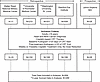
BACKGROUND Cisplatin is often the cytotoxic drug of choice for chemoradiation therapy (CRT) for head and neck squamous cell carcinoma (HNSCC), but it can lead to irreversible hearing loss. There may be similar oncologic outcomes but different toxicity profiles depending on whether cisplatin is given at 75–100 mg/m2 every 3 weeks or 30–40 mg/mg2 weekly. This study compares cisplatin-induced hearing loss in patients with HNSCC receiving similar cumulative doses of cisplatin administered either on higher-dose or lower-dose treatment schedules.METHODS Using the Enhancing Cancer Hearing Outcomes (ECHO) dataset from 5 academic centers, we conducted a multicenter retrospective cohort study of adults (≥18 years) with HNSCC receiving cisplatin-based CRT. Participants were grouped by cisplatin dose schedule: every 3 weeks (≥75 mg/m²) or weekly (<75 mg/m²). Hearing loss was assessed using American Speech-Language-Hearing Association (ASHA) and Common Terminology Criteria for Adverse Events (CTCAE) v5.0 threshold shift criteria based on audiograms obtained ≤120 days before and after treatment. Risk differences and predictors of hearing loss were evaluated using χ2 analyses and multivariate regression. Kaplan-Meier curves assessed overall and disease-free survival.RESULTS Among 564 participants (1,127 ears), lower-dose weekly cisplatin was associated with significantly lower incidence of hearing loss (ASHA criteria: 57% vs. 82%; CTCAE criteria: 39% vs. 69%). CTCAE grade ≥2 hearing loss occurred in 18% of the weekly group versus 50% of the 3-week group. Multivariate analysis confirmed treatment schedule as an independent predictor of ototoxicity. Two-year survival outcomes did not differ between groups.CONCLUSIONS Weekly low-dose cisplatin significantly reduced the incidence and severity of hearing loss without compromising survival, supporting its broader use in CRT for HNSCC.
Authors
Katharine A. Fernandez, Abu S. Chowdhury, Amanda Bonczkowski, Paul D. Allen, Maura H. Campbell, David S. Lee, Charvi Malhotra, Brandi R. Page, Deborah A. Mulford, Candice Evita Ortiz, Peter L. Santa Maria, Peter Kullar, Saad A. Khan, Shawn D. Newlands, Nicole C. Schmitt, Lisa L. Cunningham

Abstract
BACKGROUND Icosapent ethyl (IPE), an ethyl ester of eicosapentaenoic acid (EPA), reduces cardiovascular disease (CVD), but the mechanism remains elusive. We examined the effect of IPE supplementation on lipoprotein subclasses, lipidomes, and pro-atherogenic properties.METHODS Using 3 independent metabolomic platforms, we examined the effect of high-dose IPE supplementation for 28 days on fatty acid profiles, lipoprotein subclasses, lipidomes, and pro-atherogenic properties in normolipidemic volunteers (n = 38).RESULTS IPE supplementation increased lipoprotein EPA on average 4-fold within 7 days, returning to baseline after a 7-day washout. Notably, the incorporation displayed marked interindividual variance, negatively correlating with baseline levels. We identified persistent participant-specific lipoprotein fingerprints despite uniform IPE-induced lipidome remodeling across all lipoprotein classes. This remodeling resulted in reductions in saturated, monounsaturated, and n-6 polyunsaturated fatty acids, resulting in reduced clinical risk markers, including triglyceride, remnant cholesterol, and apolipoprotein B (apoB) levels and 10-year CVD risk score. Of the pro-atherogenic properties tested, IPE significantly reduced apoB lipoprotein binding to proteoglycans, which correlated with lower apoB particle concentration, cholesterol content, and specific lipid species in LDL, including phosphatidylcholine 38:3 previously associated with CVD.CONCLUSION These findings highlight IPE’s rapid, uniform remodeling of lipoproteins and reduced proteoglycan binding, likely contributing to previously observed CVD risk reduction. Persistent interindividual lipidome signatures underscore the potential for personalized therapeutic approaches in atherosclerotic CVD treatment.TRIAL REGISTRATION NCT04152291.FUNDING Jenny and Antti Wihuri Foundation, Research Council of Finland, Sigrid Jusélius Foundation, Finnish Foundation for Cardiovascular Research, Emil Aaltonen Foundation, Ida Montin Foundation, Novo Nordisk Foundation, Finnish Cultural Foundation, and Jane and Aatos Erkko Foundation.
Authors
Lauri Äikäs, Petri T. Kovanen, Martina B. Lorey, Reijo Laaksonen, Minna Holopainen, Hanna Ruhanen, Reijo Käkelä, Matti Jauhiainen, Martin Hermansson, Katariina Öörni
Abstract
Background. The SARS-CoV-2 virus has evolved subvariants since the emergence of the omicron variant in 2021. Whether these changes impact viral shedding and transmissibility is not known. Methods. POSITIVES is a prospective longitudinal cohort of individuals with mild SARS-CoV-2 infection. Ambulatory, immunocompetent participants who did not receive antivirals self-administered 6 anterior nasal swabs over 15 days. Samples were analyzed by qPCR to quantify viral RNA, semi-quantitative viral culture to detect shedding of replication-competent virus, and whole genome sequencing to classify subvariants. Our predictor of interest was omicron subvariant: BA.1x, BA.2x, BA.4/5x, XBB.x and JN.x. Outcomes included RNA levels and duration of shedding replication-competent virus. We additionally explored whether the duration and severity of symptom correlated with duration of viral shedding and whether symptoms are a valid marker for ending isolation. Results. The median peak nasal SARS-CoV-2 RNA (6.0-6.3 log10 RNA copies/mL), median days to peak RNA (4-5 days), median days to undetectable viral RNA (10-12 days) and median days to negative viral culture (3.5-6 days) was similar across omicron subvariants. Number and severity of symptoms were also similar. For all subvariants, a sizeable percentage (range 28.2-52.0%) shed replication-competent virus after fever resolution and improvement of symptoms. Conclusion. Despite ongoing viral evolution, key aspects of viral dynamics of SARS-CoV-2 infection, including the duration of shedding replication-competent virus, have not substantially changed across omicron subvariants. Replication-competent shedding of these subvariants is detected for a large proportion of people who meet criteria for ending isolation. Funding. This work was supported by the National Institutes of Health (NIH), the Massachusetts Consortium on Pathogen Readiness, and the Massachusetts General Hospital Department of Medicine.
Authors
Julie Boucau, Owen T. Glover, Caitlin Marino, Gregory E. Edelstein, Manish C. Choudhary, Yijia Li, Brooke M. Leeman, Zahra Reynolds, Karry Su, Dessie Tien, Chase B. Mandell, Eliza Passell, Andrew Alexandrescu, Emory Abar, Mamadou Barry, Dibya Ghimire, Tammy D. Vyas, Jatin M. Vyas, Jacob E. Lemieux, Jonathan Z. Li, Mark J. Siedner, Amy K. Barczak
Abstract
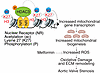
Aortic valve stenosis is a progressive and increasingly prevalent disease in older adults, with no approved pharmacologic therapies to prevent or slow its progression. Although genetic risk factors have been identified, the contribution of epigenetic regulation remains poorly understood. Here, we demonstrated that histone deacetylase 3 (HDAC3) maintains aortic valve structure by suppressing mitochondrial biogenesis and preserving extracellular matrix integrity in valvular interstitial fibroblasts. Human stenotic valves displayed elevated acetylation of histone H3 at lysine 27 (H3K27ac) and reduced HDAC3 activity in diseased regions. Mice lacking HDAC3 in aortic valves developed aortic valve stenosis, disrupted collagen organization, increased H3K27ac, and premature mortality. Mechanistically, HDAC3 loss led to activation of nuclear hormone receptor–regulated mitochondrial gene programs, increased oxidative phosphorylation, and reactive oxygen species–induced damage. Treatment with metformin, a mitochondrial complex I inhibitor, restored redox balance, preserved collagen structure, and improved valve function in Hdac3-deficient mice. Supporting these experimental findings, retrospective clinical analysis revealed a significantly lower prevalence and slower progression of aortic valve stenosis in patients treated with metformin. These results uncovered a potentially previously unrecognized role for HDAC3 in coordinating epigenetic and metabolic homeostasis in the aortic valve, suggesting that targeting mitochondrial dysfunction may offer a therapeutic strategy for noncalcific aortic valve disease.
Authors
Timothy J. Cashman, Sherin Saheera, Ashley E. Blau, Edith Mensah Otabil, Nouran Y. Nagy, Thomas D. Samenuk, Timothy P. Fitzgibbons, David D. McManus, Chinmay M. Trivedi
Abstract
We conceived of a type of antitumor mechanism of action by which a soluble target in the tumor microenvironment, such as a tumor-driving growth factor, can be phagocytized along with cancer cells via antibody-dependent cellular phagocytosis (ADCP) using an antibody bispecific for the soluble target and a solid target overexpressed on the cancer cell surface. We explored this concept through engineering bispecific antibodies (BsAbs) co-targeting human epidermal growth factor receptor-2 (HER2) and vascular endothelial growth factor A (VEGFA) in an scFv-IgG format (VHS). We showed that the HER2-VEGFA BsAbs but not the parental antibodies alone or in combination induced co-phagocytosis of VEGFA and HER2-overexpressing cancer cells by tumor-associated macrophages via ADCP. In both immunocompromised and immunocompetent mice with aggressive tumors, the BsAbs demonstrated greater anti-metastasis activity and produced a greater survival benefit than the parental antibodies alone or in combination, in a manner dependent on Fcγ receptors on the macrophages. Our results provide proof of the concept that HER2-VEGFA BsAbs achieve enhanced antitumor activity by leveraging HER2 overexpressed on the cancer cell surface to induce co-phagocytosis of VEGFA. Our findings warrant clinical testing of the strategy to treat metastasis and recurrence of HER2-overexpressing solid tumors that respond to anti-VEGFA therapy.
Authors
Yang Lu, Songbo Qiu, Zhen Fan
Abstract
BACKGROUND. Understanding age-associated differences in acute and memory adaptive immunity to SARS-CoV-2 and how this contributes to more favorable outcomes in children is critically important. METHODS. We evaluated SARS-CoV-2–specific T cell, B cell, and antibody responses in 329 peripheral blood samples collected from non-hospitalized children, adolescents, and adults at three timepoints, including acute and memory timepoints. RESULTS. Most children produced robust CD4+ T cell responses during infection and developed memory CD4+ T cells; however, young children <4 years old often had undetectable CD4+ T cell responses compared to older children and adults. Young children also generated reduced frequencies of memory B cells; despite this, they mounted substantial and durable neutralizing antibody responses. CD4+ T cell responses in children were biased towards non-spike epitopes, especially in asymptomatic cases. Memory B cells in children were preferentially classical memory or, paradoxically, CXCR3+. CONCLUSION. These findings support the concept that the kinetics and composition of T and B cell responses shift across age groups and may be associated with milder COVID-19 outcomes in children.
Authors
L. Benjamin Hills, Numana Bhat, Jillian H. Hurst, Amber Myers, Thomas W. Burke, Micah T. McClain, Elizabeth Petzold, Alexandre T. Rotta, Nicholas A. Turner, Alba Grifoni, Daniela Weiskopf, Yvonne Dogariu, Genevieve G. Fouda, Sallie R. Permar, Alessandro Sette, Christopher W. Woods, Matthew S. Kelly, Shane Crotty
Abstract
BACKGROUND. Emerging evidence indicates a reduced incidence of multiple cancers in users of Glucagon-like peptide-1 receptor agonists (GLP-1RAs), drugs widely used for glycemic control and weight reduction that modulate several key regulators of metabolism. We sought to examine their association with non-small cell lung cancer (NSCLC) outcomes in overweight and obese patients and gain mechanistic insights from mouse models. METHODS. Two clinical cohorts of overweight and obese NSCLC patients—one undergoing surgical resection (n=1,177, 71 GLP-1RA users) and another receiving immune checkpoint inhibitors (ICIs; n=300, 10 GLP-1RA users), were propensity score matched for relevant covariates and analyzed for clinical outcomes. RESULTS. GLP-1RA use was associated with increased recurrence-free survival in overweight and obese patients (HR=0.41 [95%CI=0.16-1.04], p=0.026) after lobectomy. GLP-1RA treatment reduced tumor burden in obese but not normal-weight mice and altered the frequency and phenotypes of leukocyte populations and gene expression patterns in obese tumors, crucial to cancer progression and anti-tumor immunity. Concurrent GLP-1RA and immunotherapy was associated with improved overall (0.41 [0.16-1.01], 0.027) and progression-free survival (HR=0.31, [0.10-0.94], 0.019) for patients with advanced NSCLC. CONCLUSIONS. In our cohort, GLP-1RAs enhanced lung cancer-specific clinical outcomes and augment immunotherapy efficacy. Preclinical evidence suggested this effect to be obesity-restricted and mediated by immune modulation of the tumor microenvironment. FUNDING. This work was supported by a generous donation from Mr. George Duke to SY; W81XWH-21-1-0377, (GM147497), and RSG-22-071-01-TBE to VRS; 1R01 CA255515-01A1 to SY and JB; and NIH/NCI Cancer Center Support Grants P30CA013696 and P30CA016056.
Authors
Akhil Goud Pachimatla, Bailey Fitzgerald, Joyce Ogidigo, Meera Bhatia, Randall J. Smith Jr., Kalyan Ratnakaram, Sukumar Kalvapudi, Yeshwanth Vedire, Deschana Washington, Robert Vethanayagam rr, Hua-Hsin Hsiao, Spencer Rosario, Viraj R. Sanghvi, Joseph Barbi, Sai Yendamuri
No posts were found with this tag.


