(1) THE REASONS WHY. France 24’s English service delivers more information and insight about Angoulême festival: “Bam! Pow! Bubbles burst as Angoulême comics festival is cancelled”.
With the 2026 edition of the Angoulême International Comics Festival now officially cancelled, we take a look at what went wrong and who’s to blame. We dig into what pushed authors to massively boycott the 53rd edition of the festival, despite the economic losses for them and the southwestern French city.
(2) SILENT SERVICE. “Amazon Quietly Pulls Disastrous AI Dubs For Popular Anime After Outcry” reports Futurism.
If you watched the English-dubbed version of one of several popular anime on Amazon Prime Video lately, like “Banana Fish,” and “No Game, No Life,” you may have noticed something strange. The voices were generic, unexpressive, and at times robotic, completely disconnected from the action unfolding on screen. Some lines even sounded a little glitchy. In a word: it was a disaster.
The embarrassing English voices it turned out, were AI-generated. An entourage of actors didn’t sit down in a room somewhere recording take after take to bring these characters to life; instead the voice lines were automatically stitched together using what’s essentially glorified text-to-speech software, with predictably horrendous results.
Fans were furious. And the fallout on social media quickly became so vociferous that Amazon has now quietly pulled the AI dubs from several of the shows, including “Banana Fish.” The AI-generated Spanish dub for “Banana Fish” and “Vinland Saga,” however, are still available, Anime Corner noted….
(3) SOME HOPEFUL FUTURES. The Center for Science and the Imagination’s book Climate Imagination: Dispatches from Hopeful Futures was released December 2 by the MIT Press. It includes fiction (by authors Gu Shi, Vandana Singh, Hannah Onoguwe, Libia Brenda, and Laura Watts) along with essays and visual art.

Where can we look for hopeful climate futures, when the global picture seems dominated by inaction or backsliding? While influential nations and international bodies seem adrift, absent, or flatfooted in the face of an accelerating climate emergency, vigorous action is happening at local and regional levels, propelled by coalitions of advocates, researchers, community leaders, and everyday people.
In this conversation on the new book Climate Imagination: Dispatches from Hopeful Futures, we will talk with writers and thinkers from different regions to learn not only about hopeful climate stories and imaginaries but also local resources and efforts on the ground.
Edited by Joey Eschrich and Ed Finn of the Center for Science and the Imagination at Arizona State University, the book presents speculative fiction, essays, and artworks that explore possible futures shaped by climate action, grounded in real science and the complexities of actual physical and human geographies around the world. Contributors represent 17 different countries from Mexico, Germany, and Sri Lanka to Nigeria, China, Norway, Brazil, and more: Zeid Ra’ad Al Hussein, Jason Anderson, Claire Armitstead, Libia Brenda, Azucena Castro, Andrea Chapela, Nalini Chhetri, Alejandra Espino del Castillo, Fabio Fernandes, Ed Finn, Pippa Goldschmidt, Adeline Johns-Putra, Joseph Kunkel, Ken Liu, Manjana Milkoreit, Gabriela Damián Miravete, Benjamin Ong, Hannah Onoguwe, Chinelo Onwualu, Martha Riva Palacio, Anna Pigott, Kim Stanley Robinson, Gu Shi, Vandana Singh, Nigel Topping, Emma Törzs, Iliana Vargas, Laura Watts, Yudhanjaya Wijeratne, and Farhana Yamin.
There’s a virtual launch event for the book on Thursday, December 11 from 1:00-2:00 p.m. Eastern, featuring three contributors to the book: the SF writer, journalist, and data scientist Yudhanjaya Wijeratne; climate researcher Manjana Milkoreit; and SF writer and physicist Vandana Singh.
(4) HWA CROWN AWARDS. Historia Magazine revealed the winners of the HWA Crown Awards 2025, presented by the Historical Writers’ Association (HWA) to celebrate the best in recent historical writing, fiction and non-fiction.
The winners of the Gold Crown for fiction, the Non-fiction Crown and the Debut Crown were revealed on Wednesday, November 19, at an awards party at Crypt on the Green, a historic building in Clerkenwell.
HWA Gold Crown Award 2025
- The Heart in Winter by Kevin Barry (Canongate Books)
HWA Non-fiction Crown Award 2025
- Moederland by Cato Pedder (John Murray)
(5) DEEP DEPOSITS. Not to be missed is the Encyclopedia of Science Fiction’s celebration of “The Library as a Turkey That Does Not Give Thanks” by John Clute titled “Transgressive Embedment”.
… So we’re not here at the moment to thank the kind of institutional “library” after the years of plague when books, once their information “content” was abstracted into digital form, were routinely destroyed; the kind of library whose innards, like frozen elevator music, evoke the terrifying cenotaphic interior spaces Stanley Kubrick created for 2001: A Space Odyssey (1968), in order to demonstrate the denuded torpor Homo sapiens had sunk into by 2001: how desperately we needed help to mature as a species: we know the answer we gave. We can of course thank digital libraries for the abyssally fertile maps of nearly infinitve amounts of data they contain, data doors within data doors like Arabian Nightmares; but we cannot thank their makers for attempting to disable our deep intuition that in the end, after much journeying, maps are less not more. That even the profoundest of Borgesian maps can only describe more fully that which can be described. That when you misdescribe a thing in the world, the skinned torso of the Thing in the World does not become whatever. You do….
(6) S&S S.O.S. Cora Buhlert reviewed Swords of the Barbarians by Kenneth Bulmer, which she found to be “a not very good sword and sorcery novel”, for Galactic Journey: “[November 20, 1970] Year of the Cloud… and lesser lights (November Galactoscope #2)”.
… Now I happen to like sword and sorcery, and while very few authors manage to reach the heights of a Robert E. Howard, Fritz Leiber, Michael Moorcock, or C.L. Moore, even the lesser entries in the genre are at the very least entertaining. And so, when I spotted a cover (courtesy of Richard Clifton-Day) featuring a dark-haired, muscular and nearly naked barbarian with a sword squaring off against a somewhat more dressed barbarian with a red beard and horned helmet wielding a battle axe in the spinner rack of my trusty import bookstore, with a blurb promising “a sword and sorcery saga in the great tradition of Conan”, I of course took it home…
(7) U.F.FAUX. Later in November Cora returned to Galactic Journey with a review of what may well be the first found footage film ever, the 1970 UFO mockumentary The Delegation: “’[November 28, 1970] A True Fake Story: Die Delegation – eine utopische Reportage (The Delegation – a Utopian Documentary)”.
… The unaired footage looks rough and uncut. Clapperboards are visible, there are random cuts and lens flares, radio music plays in the background, the sound crackles and sometimes drops out altogether, people walk into the shot, wave at the camera and kids push in front of the camera and grin. In Washington DC, Roczinski stands outside the Pentagon and declares that the Pentagon has no official comment on UFOs. Then, he enters a car to interview a colonel of the US Air Force who notes that though the Pentagon’s official line is that there are no UFOs and no extraterrestrials, there is plenty of evidence to the contrary. The colonel also points Roczinski to a 1955 report on the UFO phenomenon by Major Donald Keyhoe who came to the conclusion that the Soviets are not responsible for the UFO sightings and an extraterrestrial origin is the only explanation. Donald Keyhoe is a real person, a former pulp writer and military officer who wrote the bestselling books The Flying Saucers Are Real and The Flying Saucer Conspiracy and co-founded the National Investigations Committee On Aerial Phenomena NICAP. Afterwards, Roczinski tries to interview the Mailers, a black couple from Washington DC who claim to have been abducted by UFOs en route to Cleveland, only to reappear a few days later in El Paso, Texas. However, the neighbours of the Mailers bodily kick Roczinski and his cameraman Gerd Hannieck out of the apartment building, complete with shaky footage….
(8) TODAY’S BIRTHDAY.
[Written by Paul Weimer.]
November 3, 1968 — Brendan Fraser, 57.
By Paul Weimer:
“Patience is a virtue…”
“Not right now it isn’t!”
Brendan Fraser, as Rick O’Connell in the three Mummy movies, proved that the old formula of pulp action that started in the 30’s, The Mummy, and was revived somewhat by the Indiana Jones films in the 80’s, could have a bit of new life in the late 90’s.
Why did The Mummy succeed when The Phantom, The Shadow and other attempts at pulp action in the Nineties failed? A lot of that I give the credit to Brendan Fraser. Straight jawed handsome hero, but with humor and a modern sensibility, The Mummy’s success is in no small part thanks to him embodying the role of the central hero.
The movies have lots of other charms, from the supporting cast (which sadly gets somewhat less sparkling as one goes from the first to the third film), and good writing (again, which slips as we go down the movies). But Fraser is the tentpole around which the film runs. (Just consider how miscast Tom Cruise was in the recent Mummy remake and you will see what I mean–Fraser could have made hay out of that role). The alternate worlds where someone else took the O’Connell role are probably poorer for that choice.
Fraser is the kind of actor whose roles often were characters you want to be, be friends with, or get romantically entangled with. He has other genre work to his credit, too. Although the movie is uneven, he’s fun in Bedazzled, selling his soul to Elizabeth Hurley’s devil. Looney Tunes: Back in Action requires an actor who can act with Toons…Fraser fits that bill, too. Journey to the Center of the Earth…I admit I got vertigo trying to watch that one.
The strains of being an actor and stardom meant that Fraser took a decade off from movies, but I am delighted that he is back. He’s in a more mature, older form. I really like his work in Doom Patrol, for instance. Robotman should be a ridiculous character, and he is, but Fraser helps sell it. He played a villain in the never-released Batgirl movie (curse you, Warner Brothers). I’d like to someday see what he did with the role of Firefly.
And yes, I heard the news that there is going to be a new Mummy movie. For that, indeed, Patience is a Virtue.

(9) TODAY’S BIRTHDAY, TOO.
[Written by Cat Eldridge.]
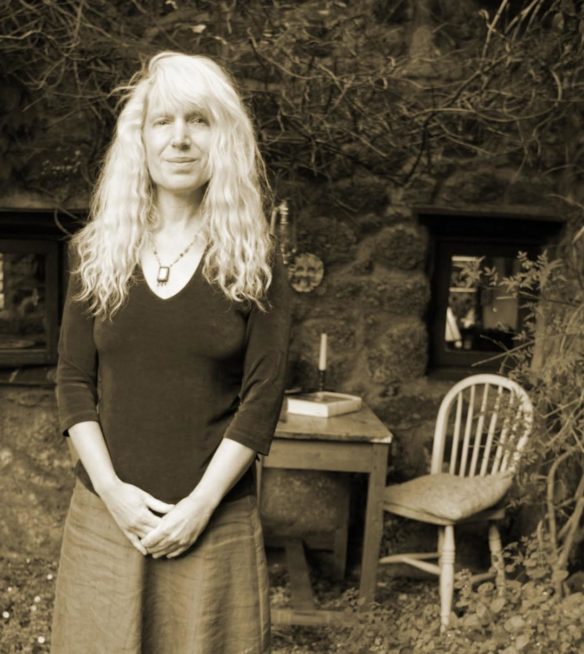
December 3, 1958 — Terri Windling, 67.
By Cat Eldridge: I first encountered Terri Windling’s writing through reading The Wood Wife, a truly extraordinary fantasy that deserved the Mythopoeic Award it won. (The Hole in the Wall bar in it would be borrowed by Charles de Lint with her permission for a scene in his Medicine Road novel, an excellent novel.) I like the American edition with Susan Sedona Boulet’s art much better than I do the British edition with the Brian Froud art as I feel it catches the tone of the novel.
I would be very remiss not mention about her stellar work as the founding editor along with Ellen Datlow of what would be called The Year’s Best Fantasy and Horror after the first volume which was simply The Year’s Best Fantasy, that being noted for those of you who would doubt correct me for not noting that. The series won three World Fantasy Awards and a Stoker as well.
They also edited the most splendid Snow White, Blood Red anthologies which were stories based on traditional folk tales. Lots of very good stuff there. Like the Mythic Fiction series is well worth reading and available at usual suspects and in digital form as well.
Oh, and I want to single out The Armless Maiden and Other Tales for Childhood which took on the difficult subject of child abuse. It garnered a much warranted Otherwise nomination.
Now let’s have a beer at the Dancing Ferret as I note her creation and editing (for the most part) of the Bordertown series. I haven’t read all of it, though I did read her first three anthologies several times and love the punks as you can see here on Life on the Border, but I’ve quite a bit of it and all of the three novels written in it, Emma Bull’s Finder: A Novel: of The Borderlands, is one of my comfort works, so she gets credit for that.
So now let’s move to an art credit for her. So have you seen the cover art for Another Way to Travel by Cats Laughing? I’ve the original pen and ink art that she did here.
Which brings me to the Old Oak Wood series which is penned by her and illustrated by Wendy Froud. Now Wikipedia and most of the reading world thinks that it consists of three lovely works — A Midsummer Night’s Faery Tale, The Winter Child and The Faeries of Spring Cottage.
But there’s a story that Terri wrote that never got published anywhere but on Green Man. It’s an Excerpt from The Old Oak Chronicles: Interviews with Famous Personages by Professor Arnel Rootmuster. It’s a charming story, so go ahead and read it.
(10) COMICS SECTION.
- BirdBrains found a bad sign.
- Heart of the City falls into movies.
- Off the Mark knows one substance is impervious!
- Reality Check finds one detail of a TV series unbelievable, if you can believe that.
- Saturday Morning Breakfast Cereal predicts
- Yaffle pays full attention to the man behind the curtain.
(11) JEOPARDY! [Item by Andrew Porter.] On last night’s Jeopardy!, the category was “Pulp Fiction.” Here are 4 screenshots from the show. And no, I didn’t get all of the clues.


(12) TIME TRAVEL ANTHEM. [Item by Steven French.] A little tangential perhaps but here’s Chris Hayes on writing the song “The Power of Love” for Back to the Future: “We didn’t think Back to the Future sounded plausible – or good’: Huey Lewis and the News on The Power of Love” in the Guardian.
When I wrote it, I had no idea what was going to happen or how popular it was going to be. It ended up being an integral part of the whole Back to the Future franchise, the biggest song in our career, and gave us our first No 1, which was exciting. What’s weird about it, though, is that the song really has nothing to do with the film whatsoever. We were given a synopsis of the screenplay of the movie, and I read through the whole thing and I remember thinking to myself: “This doesn’t sound plausible or like it’s going to be good.” And boy was I wrong!
(13) THEREMIN NEWS. [Item by Dann.] The New York Times recently had a piece on the theremin. Thought it might be of interest for obvious reasons. Although the authors didn’t cover the most obvious reason for some odd reason. Most unreasonable of them. “The Beguiling, Misunderstood Theremin” at Archive.ph.
… Utopian visions of liberation have been entwined in the theremin’s history for as long as it has existed. The inventor of the instrument, the Russian-born engineer Leon Theremin, told The New York Times in 1927 that his “apparatus,” which he believed could produce an unprecedented range of tonal colors and sounds, “frees the composer from the despotism of the 12-note tempered piano scale, to which even violinists must adapt themselves.”
Theremin, a physicist and amateur cellist, would go on to serve time in a Siberian labor camp, spy for the Soviet government and invent an electronic security system used at Sing Sing prison in Ossining, N.Y. But first, he created his musical apparatus by accident. He was developing an electronic device for measuring the density of gases when he realized that the sounds it emitted changed when he moved his hands.
In the late 1920s, RCA began to manufacture and sell the theremin, making it the first mass-produced electronic instrument. Today, perhaps 140 original models remain. “At the time that it came out, it was promoted as being easily playable,” Chrysler said, standing in front of an original RCA theremin housed in the Metropolitan Museum of Art’s music gallery, “which of course wasn’t true.”…
(14) WHAT WOULD IT BE LIKE IF THE EARTH DID NOT HAVE ANY AXIAL TILT? [Item by SF Concatenation’s Jonathan Cowie.] Curious Cases is a BBC Radio 4 programme hosted by a scientist and comedian who has a passion for science on the side. This week they looked at the ‘what if’ scenario of the Earth not having any axial tilt.
Because the Earth has tilt, we obviously get seasons and this in itself would mess up a lot of biology. Many multicellular terrestrial species use the seasons to govern their life cycles breeding in the seasons of plenty.
Now, this you might not think would be a big deal. You might suppose that a non-tilted Earth would be more a mediocre place and so the absence of seasons would be no big deal. However, researchers have modeled a non-tilted Earth and it is not good news.
A non-tilted Earth would see more expansive frozen poles as well as more expansive sub-tropical zone deserts: The Sahara would be bigger as would the central Australian desert. The tropical forest zone would be reduced as would the comfortable temperate zones.
For those of us in Brit Cit, it would be like March all year round but with more and stronger storms due to changed weather track patterns. Conversely, somewhere like Melbourne, Australia, would have something like 20°C days all year round. However, Melbourne would be on the edge of the expanded Australian desert and so be far drier than today: so kiss goodbye to Australia’s Darling agricultural bread basket.
The show’s hosts and one of their guests also briefly considered that a non-tilted Earth would see the dinosaur destroying asteroid miss a land impact and hit the ocean. This would reduce sulphate injection into the atmosphere, which cooled the Earth, and also increase water injection into the stratosphere so causing a warming effect. The actual difference between such a non-tilted Earth strike and what actually happened depends on how the mix of these two effects played out. However, one of the guests muses that more dinosaurs may have survived in this scenario and possible co-exist with humans today. (Have I ever told you that I have never really forgiven the dinosaurs for what they did to Raquel Welch?) Here I was minded – and sadly they did not mention this – Harry Harrison’s mid-1980s Eden trilogy of books whose central conceit is that dinosaurs survived through to today.
Could you survive an eternal winter? Or is endless summer sun a more appealing prospect? Lots of us are grateful for the seasonal changes that shape the world around us, but this week Hannah and Dara are asking what life would look like without the axial tilt that brings each hemisphere closer and further away from the sun as the seasons change each year. Listener Andrew from Melbourne wants to know what would happen if the planet stood perfectly upright, no lean, no tilt, no seasons. But what else could happen? Is Earth’s 23-degree slant the cosmic fluke that made life possible?
To find out, Hannah and Dara explore how losing the tilt reshapes climate, ecosystems, evolution and maybe even the fate of the dinosaurs.
This was another of the series’ good editions and you can access it here.

[Thanks to Cat Eldridge, SF Concatenation’s Jonathan Cowie, Mark Roth-Whitworth, Cora Buhlert, Dann, Michael Burianyk, Joey Eschrich, Kathy Sullivan, Steven French, Mike Kennedy, Andrew Porter, John King Tarpinian, and Chris Barkley for some of these stories. Title credit belongs to File 770 contributing editor of the day Brian Jones.]