Yes, You Can Differentiate Your Smart-Home Products with Bluetooth® LE
June 11, 2025
Sponsored Blog
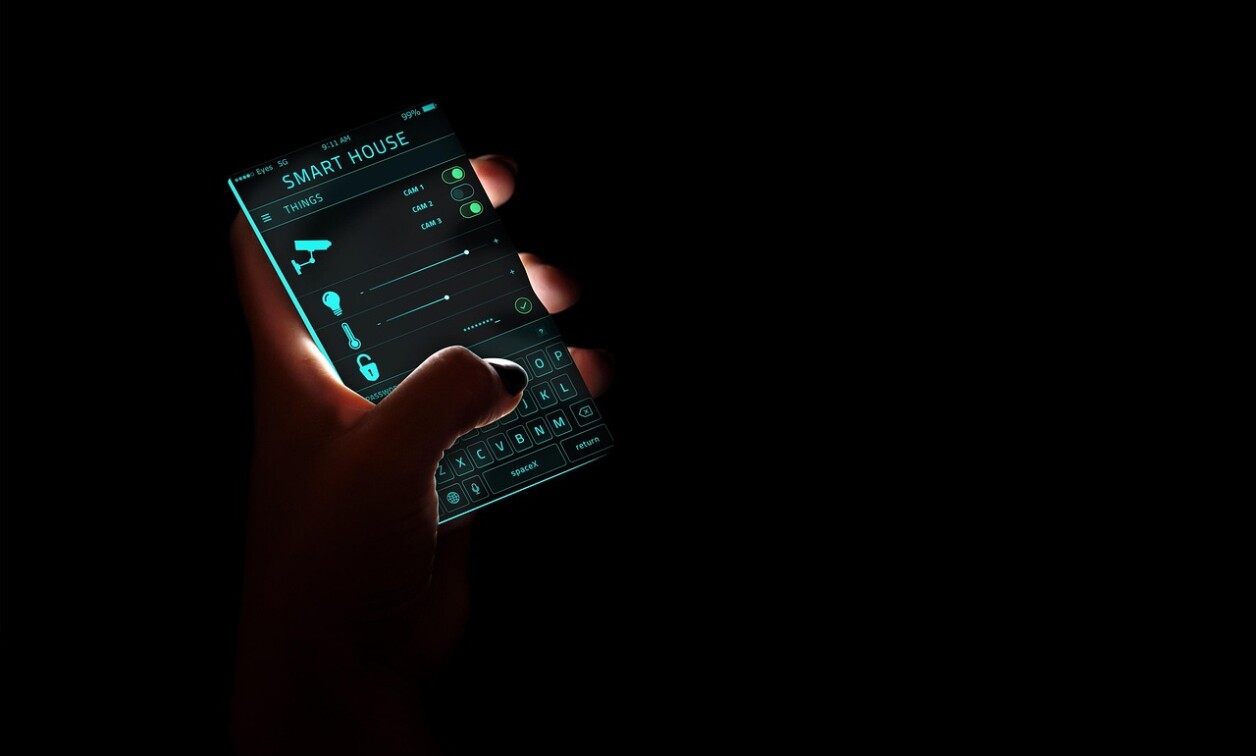
Bluetooth® Low Energy (LE) has quietly become one of the most critical enablers in the smart home ecosystem. While Wi-Fi grabs the headlines and Zigbee or Thread often get mentioned in hub-centric conversations, it’s Bluetooth® LE that’s powering many of the real-time, personal, and low-power interactions that make today’s smart homes feel intuitive and responsive.
Think about smart locks, thermostats, presence sensors, or connected lighting systems. These are devices that don’t necessarily need high data rates or long-range connectivity, but they do demand reliability, security, and ultra-low power consumption. That’s Bluetooth® LE’s sweet spot. It’s the protocol that ensures that your front door unlocks as you approach with your phone, your lights adjust based on where you are in the house, and your HVAC system modulates to save energy without you having to lift a finger.
And we’re not just talking about single-point connectivity anymore. With the advent of PAwR (Periodic Advertising with Response), which is a star topology, along with other multi-device enhancements, sensors/nodes are assigned a specific timeslot to respond in, which dramatically reduces the power consumption. As a result, Bluetooth® LE has graduated from a peripheral interface to a full-fledged backbone in many smart home topologies. Devices can now communicate with each other directly, extending range and reliability in the process, all without draining batteries or requiring complex setup.
From a design standpoint, this opens a lot of doors (pun intended) for developers. The silicon, the stack maturity, and the design tools are all there. Add to that the ubiquity of Bluetooth® in consumer smartphones and tablets, and you get a frictionless onboarding experience—the kind consumers demand, and engineers appreciate.
Now the Hard Part
With all that said, don’t assume this go-to protocol for low-power wireless communication is a walk in the park for developers. In fact, getting a Bluetooth® LE design from prototype to production-ready product is where some engineers hit speed bumps, with some ending up in the ditch altogether.
First and foremost, Bluetooth® LE stacks can be complex and fragmented. Yes, the core spec is standardized, but the implementation? Not so much. Developers often find themselves digging through SDKs that are either bloated with features they don’t need or lacking the precise functionality they do. Add in vendor-specific APIs, inconsistent documentation, and a learning curve that’s steeper than it should be, and you’ve got a recipe for wasted development cycles.
Then there’s the issue of interoperability. Bluetooth® LE is supposed to just work across devices, right? In theory, yes. In practice, differences in stack versions, mobile OS behaviors, and hardware quirks mean that what works flawlessly on one smartphone might fail silently on another. Debugging these issues, especially without access to the mobile platform’s inner workings, can be an exercise in frustration.
And let’s not forget about power optimization. The whole point of Bluetooth® LE is energy efficiency but achieving that efficiency doesn’t happen by accident. Developers have to fine-tune connection intervals, sleep modes, and advertising strategies, often with limited visibility into what’s actually going on over the air. Without the right tools and metrics, you’re essentially tuning a race car in the dark.
Take Advantage of the Tools At Your Disposal
Navigating the maze of silicon options, stacks, APIs, and development tools can turn what should be a straightforward embedded design into a debugging marathon. That’s where Infineon’s ModusToolbox™ comes in and actually earns its keep.
What sets ModusToolbox apart is that it’s not just a software development kit slapped on top of some silicon. Rather, it’s a complete ecosystem tailored for embedded engineers building connected systems. It brings together a clean, modular software architecture with tight integration to Infineon’s AIROC™ Bluetooth® LE solutions, like the CYW20829. Instead of wrestling with cryptic APIs or hunting down firmware examples that only sort of match your use case, you get production-grade middleware, configurable drivers, and real code examples that are relevant and reusable.
Even better, ModusToolbox is built with flexibility in mind. Whether you’re developing in a bare-metal environment or targeting an RTOS like FreeRTOS or Zephyr, the tools don’t box you in. It supports a command-line workflow for the hardcore firmware developers who prefer to live in a terminal, and it provides an intuitive GUI for those who want to manage their project visually. The configurators for Bluetooth, clocks, and pins work as expected, without modifications, thereby saving lots of development time.
One of the biggest advantages ModusToolbox offers is the bevy of integrated tools for Bluetooth® LE configuration and debugging. From stack initialization to profile configuration, everything is designed to streamline the typical development pain points. Pair that with Infineon’s Bluetooth Test and Debug Tool, and you’re no longer flying blind during over-the-air testing or trying to make sense of packet-level failures without the right instrumentation. The bottom line is that ModusToolbox isn’t about abstracting away the complexity of Bluetooth® LE. It’s about giving engineers the right level of control without unnecessary overhead.
Differentiate Your Bluetooth® LE Devices with the CYW20829
Then you can add Infineon’s AIROC™ Bluetooth® LE CYW20829 MCU to the mix to really push the envelope. This chip is purpose-built for the kind of high-performance, low-power connectivity today’s smart home demands, and removes the “me too” characterization from your product by maximizing differentiation.
The part integrates a 96-MHz Arm® Cortex®-M33 core for your application code, and it also includes a second M33 core dedicated solely to the Bluetooth stack. That separation of concerns means your Bluetooth performance isn’t getting bogged down when the system is busy, and your main application logic doesn’t suffer just because the radio is doing its thing. That’s a big deal in resource-constrained smart-home devices where responsiveness and reliability are non-negotiable.
In terms of range and throughput, the CYW20829 supports both LE 1M and LE 2M PHYs as well as high-speed OTA firmware updates. Combine those capabilities with Bluetooth 5.4 feature support like PAwR, and you’ve got a chip that can future-proof your design.
From a hardware integration standpoint, the CYW20829 checks the right boxes too, with 256 kbytes of SRAM, XIP from external flash via Quad-SPI, and low active power consumption. That results in fewer external components, a lower BOM cost, and more flexibility to squeeze performance out of smaller form factors. And, of course, it contains all the necessary hooks to connect with Modus Toolbox.
The bottom line is that there’s never been a better time to be developing Bluetooth® LE smart-home products.